The Moment a Toronto Protest Turned Violent: Who Answers for the Punch?
When public demonstrations spiral into physical disputes, the question of accountability cuts both ways. Here is what the legal process demands and where community resources step in.
- Every public incident involving authority figures triggers a formal review process to determine if force was justified.
- Victims of excessive force have legal pathways to file complaints and seek recourse through civilian oversight bodies.
- Community support networks and legal aid clinics exist to guide those caught in the aftermath of such disputes.
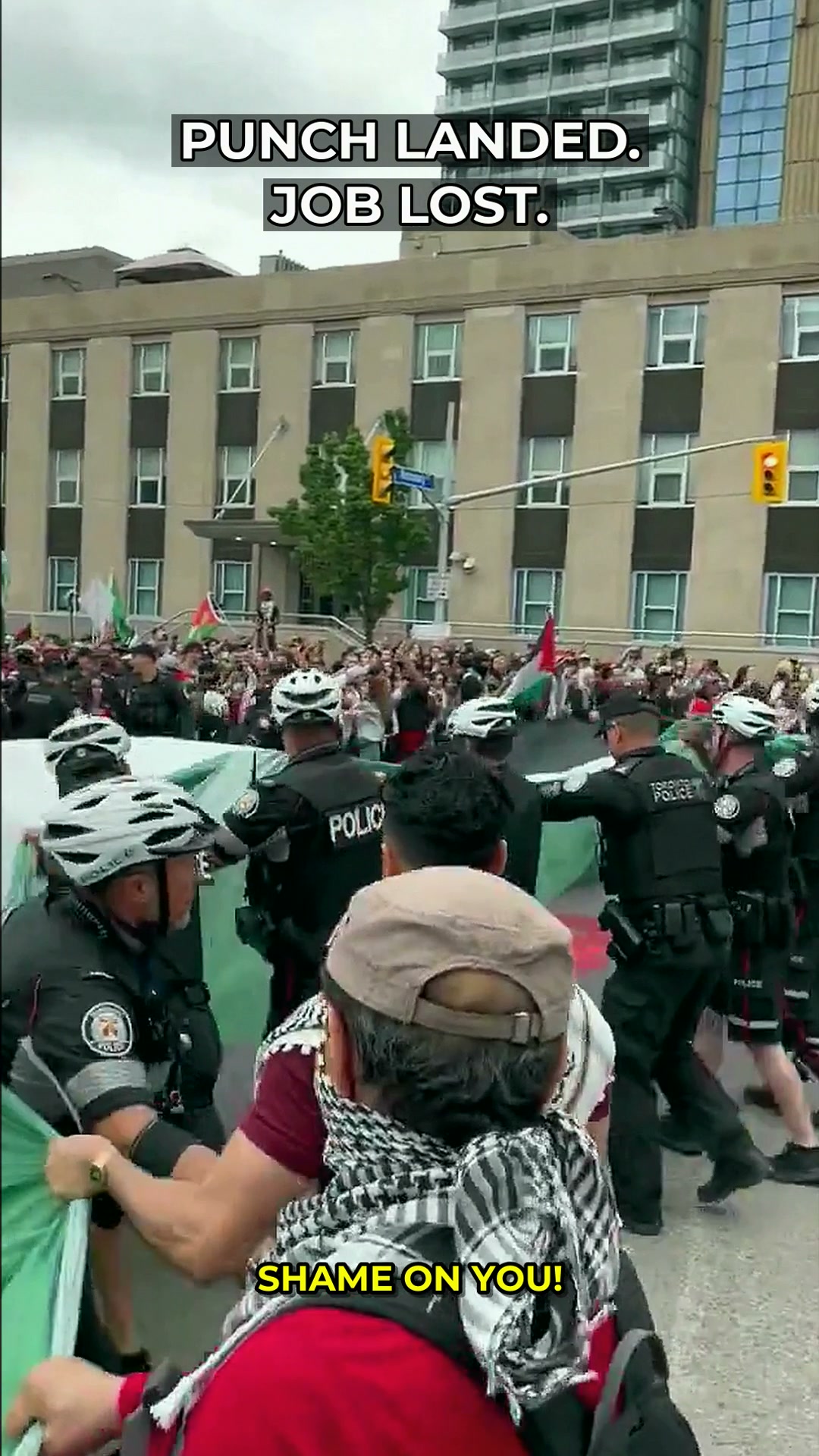
The video is jarring. A crowded street. Voices raised. A Toronto officer winds up and lands a punch square on an activist’s face. The moment splits the internet. Some see a necessary response to aggression. Others see an authority figure crossing a line that cannot be uncrossed.
What is undeniable is the aftermath. When a uniformed officer uses force, the system does not simply shrug and move on. There are protocols. There are investigations. There is a civilian review process that exists precisely for moments like this, to dissect whether the response matched the situation.
The activist’s shout, “Shame on you!” echoes long after the video cuts. That phrase is not just anger. It is a demand for accountability. And in Canada, that demand triggers a machinery built to examine every angle of an incident.
The Legal Process After the Punch
Here is the unedited truth: when a complaint is filed against an officer, it does not disappear into a drawer. The Special Investigations Unit (SIU) in Ontario is mandated to probe any incident involving police that results in serious injury or allegations of excessive force. They are independent. They interview witnesses. They review footage. They decide if charges are warranted.
But the process works both ways. If the activist did strike the officer first, as some reports suggest, that action is also under the microscope. Assaulting a peace officer in Canada is a serious offense with potential jail time. The legal system does not pick a side based on who screamed louder. It looks at the sequence of events, frame by frame if necessary.
“A single punch in a chaotic crowd does not happen in a vacuum. It is the climax of a series of decisions, each one reviewable, each one carrying consequences.”
For the average person watching from their living room, this feels distant. But it is not. This is exactly why documenting everything matters. In the age of smartphones, every protest, every dispute, every tense interaction is captured. That footage becomes evidence. It becomes the cornerstone of the legal process.

Community Accountability and Victim Support
When the dust settles and the cameras stop rolling, the people involved are left with bruises, legal fees, and sleepless nights. For the activist who took the punch, there are pathways forward. The Office of the Independent Police Review Director (OIPRD) accepts complaints from the public directly. You do not need a lawyer to file one, though having one helps.
Victim services programs in Toronto offer counseling and legal navigation support. They help ordinary citizens understand their rights when they find themselves tangled in a confrontation with authority. These resources are not widely advertised, but they exist, funded by the province, designed to catch those who fall through the cracks.
On the flip side, the officer in the video is not untouchable. Police unions often defend their members publicly, but behind the scenes, officers face internal disciplinary hearings. They can be suspended with pay, placed on administrative leave, or in severe cases, charged with assault. The badge does not grant immunity. It grants a higher standard of scrutiny.
The Legal Precedent
Canadian courts have repeatedly ruled that police use of force must be proportionate and necessary. In the 2017 case of R. v. MacDonald, the Supreme Court clarified that officers cannot use force to punish or retaliate. Force is only justified to protect life or prevent imminent harm. If the activist was already subdued or stepping back, the punch could be classified as excessive, opening the door to civil lawsuits and criminal charges.
This precedent is a double-edged sword. It demands that both sides act with restraint. The activist who throws the first punch loses moral high ground. The officer who responds with a knockout blow loses the shield of professionalism. The law does not reward the first aggressor, nor does it excuse the second one.
What happens next is not a secret. The SIU will issue a report. It will be public. It will state whether charges are recommended against the officer. Simultaneously, the Crown prosecutor will review the activist’s actions. Both individuals now live under the weight of that scrutiny. Their lives are on pause while the system grinds through its gears.
For the rest of us, this incident is a sobering reminder that public protests are volatile. They bring together strangers with strong convictions. When someone crosses the physical boundary, the consequences ripple far beyond the immediate moment. The punch is over in a second. The legal battle lasts for months.
And that is the real story here. Not just the violence, but the machinery of justice that follows. The one that determines who gets labeled victim and who gets labeled aggressor. The one that decides if a badge protects or if it accuses. The one that will, eventually, deliver a verdict that leaves one side vindicated and the other side furious.