The Unseen Cost of Intimidation: When Your Neighborhood Becomes a Stage for Public Harassment

Masked Groups Are Turning Residential Streets Into Theaters of Aggression, Leaving Families to Question What Legal Recourse Actually Exists
- Residential intimidation raises urgent questions about the scope of legal protection for workers and families in their own communities.
- Understanding your rights under employment and civil law is critical when public incidents spill over into professional consequences.
- Documentation and legal counsel are your first line of defense against both public harassment and potential employer overreach.
Imagine stepping outside your front door, not to grab the mail, but to face a wall of masked strangers screaming accusations at you. This is not a scene from a dystopian film. This is a reality on the quiet streets near Sheppard and Bathurst in Toronto, where residents report being cornered outside their own homes by a group hurling vicious personal attacks.
The video footage is jarring. The energy is aggressive. The language is designed to dehumanize. One resident is told, “You’re a baby killer,” repeatedly, while another is sarcastically thanked for “taking our home.” This is not a political debate. This is a targeted, personal assault on individuals in a space where they should feel safest: their own driveway.
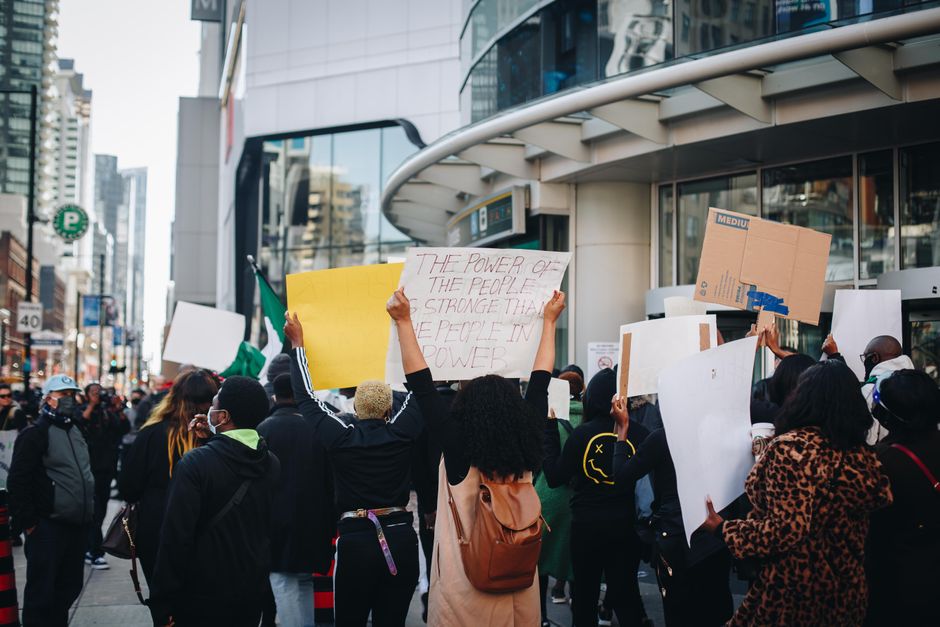
For the average worker, this scenario triggers a deep, primal anxiety. Your home is your sanctuary. Your neighborhood is your community. When that bubble is violently popped by a roaming pack, the psychological toll is immediate and severe. But beyond the fear, a more insidious question emerges: what happens to your job, your reputation, and your livelihood if this public incident is filmed and shared online without context?
This is where the conversation pivots from a street-level dispute to a critical examination of worker rights and employer accountability in the digital age.
The Legal Precedent: When Public Incident Meets Employment Law
Here is the uncomfortable truth that every working professional needs to hear: your employer’s obligation to protect you does not end at the office door, but their power to act against you based on public incidents is vast. In Canada, employment law is clear that an employer can terminate an employee for conduct that damages the company’s reputation, even if that conduct occurs on personal time and on a public street.
This is the “off-duty conduct” clause. It is a legal precedent that has been used to justify termination for everything from social media posts to public disputes. Now, imagine you are the resident in that video. You are not the aggressor. You are the target. Yet, your employer sees a viral clip of chaos outside your home and decides that association with that chaos is a “reputational risk.”
This is the silent crisis of our time. We are seeing a rise in public intimidation tactics, but the legal framework for protecting the targets—specifically their jobs—is lagging dangerously behind. The worker who is harassed on their own lawn is then forced to fight a two-front war: one against the mob in the street, and another against a Human Resources department that views them as a liability.
HR Accountability: The Second Victimization
Let’s talk about the role of Human Resources in these scenarios. Too often, HR departments operate not as protectors of the employee, but as risk managers for the company. When a client or a public figure complains about an employee’s “negative publicity,” HR’s first instinct is rarely to defend the worker. It is to distance the brand.
This leads to a terrifying reality for workers: you can be a perfect employee for a decade, and one unhinged mob outside your house can cost you your career. The burden of proof is shifted onto you. You must prove that you are not the “problem,” even though you were the one surrounded and shouted at.
Workplace discrimination laws are supposed to protect employees from unfair treatment based on race, religion, or national origin. But what happens when the harassment is directed at you for those very reasons? Does the law protect you from an employer who fires you to avoid controversy? The answer is murky, and that murkiness costs people their livelihoods every single day.
“You are not just defending your home; you are defending your paycheck, your reputation, and your future against forces that face zero consequences for their actions.”
This is the unedited truth about modern worker vulnerability. The system is not designed to protect you from the mob; it is designed to protect the corporate entity. Your legal protections against wrongful termination are only as strong as your ability to prove that the termination was directly linked to a protected characteristic, not merely to the “appearance” of controversy.

Your Only Defense: Documentation and Silence
So, what can you do? The first step is understanding that common sense is your best tool. Do not engage with the mob. Do not argue. Do not try to reason with people who have already decided that you are the enemy. Their goal is a reaction. They want the video to go viral with you screaming back. Do not give them that satisfaction.
Instead, document everything. If you are being filmed, film back. If you are being harassed, record the time, date, and the exact words used. This is not just for the local authorities; this is for your eventual meeting with your employer’s legal team. You need a clear, factual timeline that shows you were the victim of a coordinated incident, not a participant in a dispute.
Secondly, get ahead of the narrative. If you believe the incident might become public, speak to an employment lawyer before you speak to your HR department. A lawyer can advise you on your rights regarding privacy and defamation. They can help you craft a statement that protects your position without admitting to any wrongdoing.
In this new era of performative outrage, your silence is your strength, and your documentation is your shield. The individuals who storm your street face no consequences for their actions. They go home, eat dinner, and do it again the next day. But you, the working professional, carry the burden of that moment for years. It follows you to job interviews. It shows up in background checks. It lingers in the minds of your supervisors.
The system is broken. Justice is not automatic. And the only person who will fight for your livelihood is you.