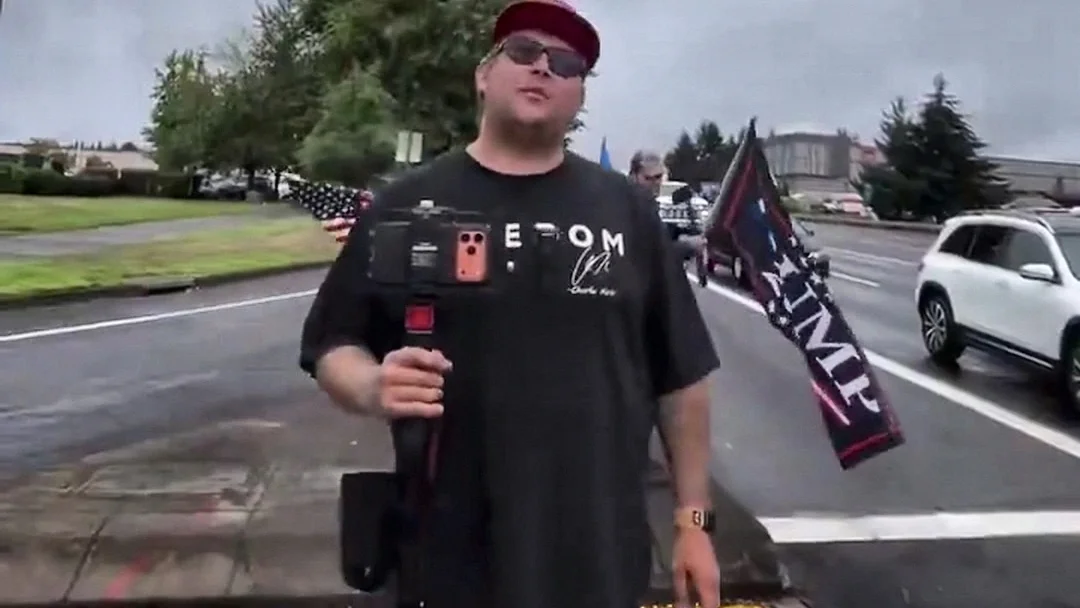
Troopers Find Driver Who Fled the Week Before
WATCH: On-scene video documentation is embedded below →
LISTEN TO THIS ARTICLE
Audio Narration • English (US)
The morning light cuts across a tinted windshield while a trooper's voice repeats the same command into the glass. Inside, a driver keeps asking what she did wrong, and the answer never comes until the door is open. That refusal to comply triggers everything that follows, and the radio traffic reveals this is not the first time the same car has been seen.
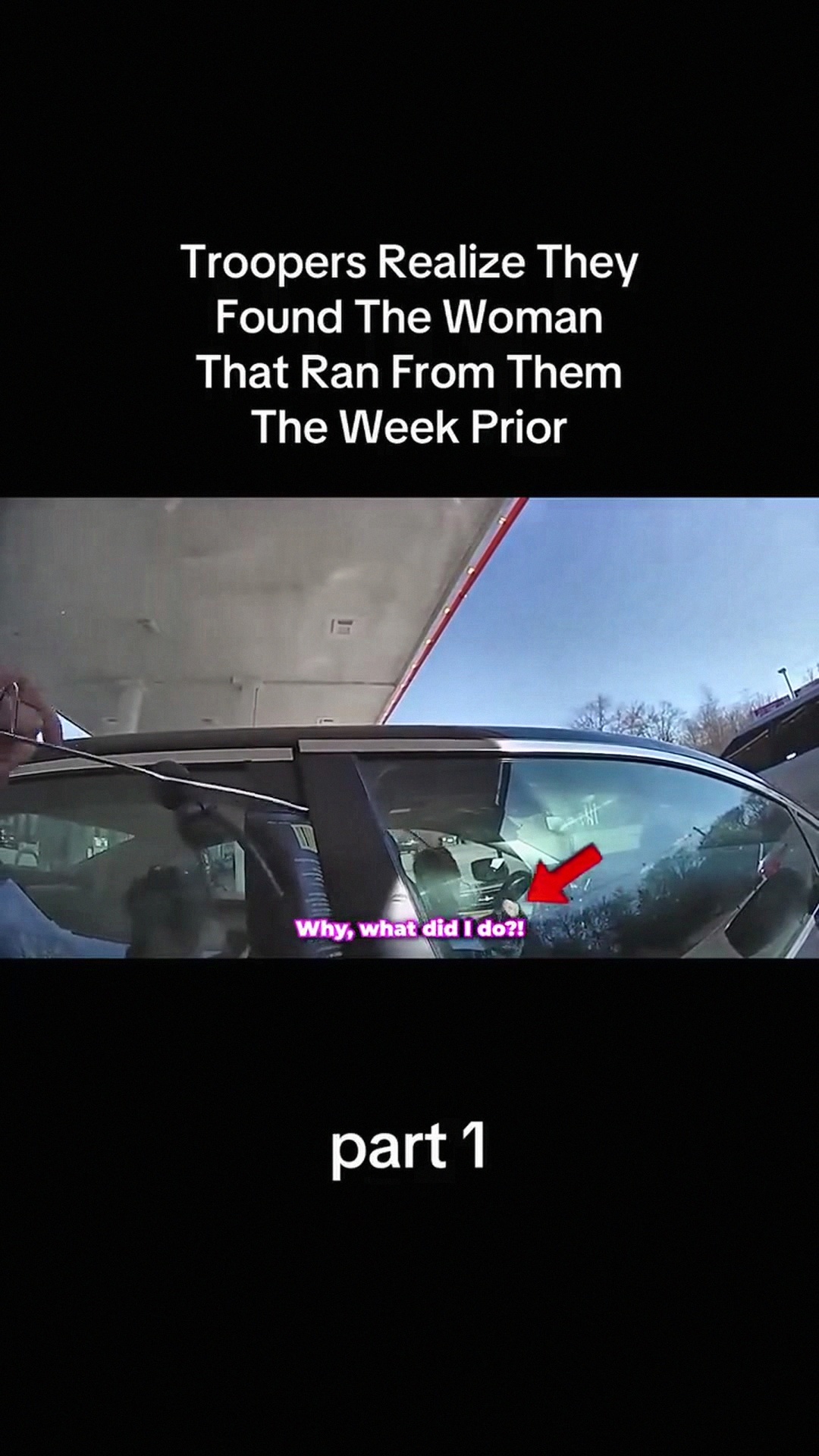
- A traffic stop begins over lane maintenance and a missing front plate, and the driver immediately questions the basis for the stop.
- The conversation hardens when the driver refuses to step out, and a trooper warns that a window may be broken to continue the stop.
- A warrant under a different name and jurisdiction emerges, turning a routine roadside stop into an identification and arrest question.
- The encounter ends with a vehicle fleeing northbound, a deflated tire, a pursuit, and a chase that winds up on the wrong car.
What the Recorded Footage Captures: Chronological Breakdown
The first seconds are almost polite. A trooper approaches the driver's side of a dark sedan and explains that the car drifted over a lane line and lacked a front plate. The driver's response is a flat denial: she did not cross the line, and the demand to open the door seems, to her, unrelated to the lane issue. The tone is not raised yet, but it is already stuck, two people restating the same sentences at each other.
Then the temperature changes. The trooper tells her he does not want to break her window, and the request to open the door becomes an ultimatum. In the frames, a gloved hand rests on the top edge of the door, then moves to the handle. The driver's voice rises into a loop of why, what did I do, and the trooper repeats that she has a warrant. She asks to see it. He says she will see it once she steps out. The windshield reflects a bare winter sky and a line of trees, and the whole argument is happening in full daylight with nowhere to hide.
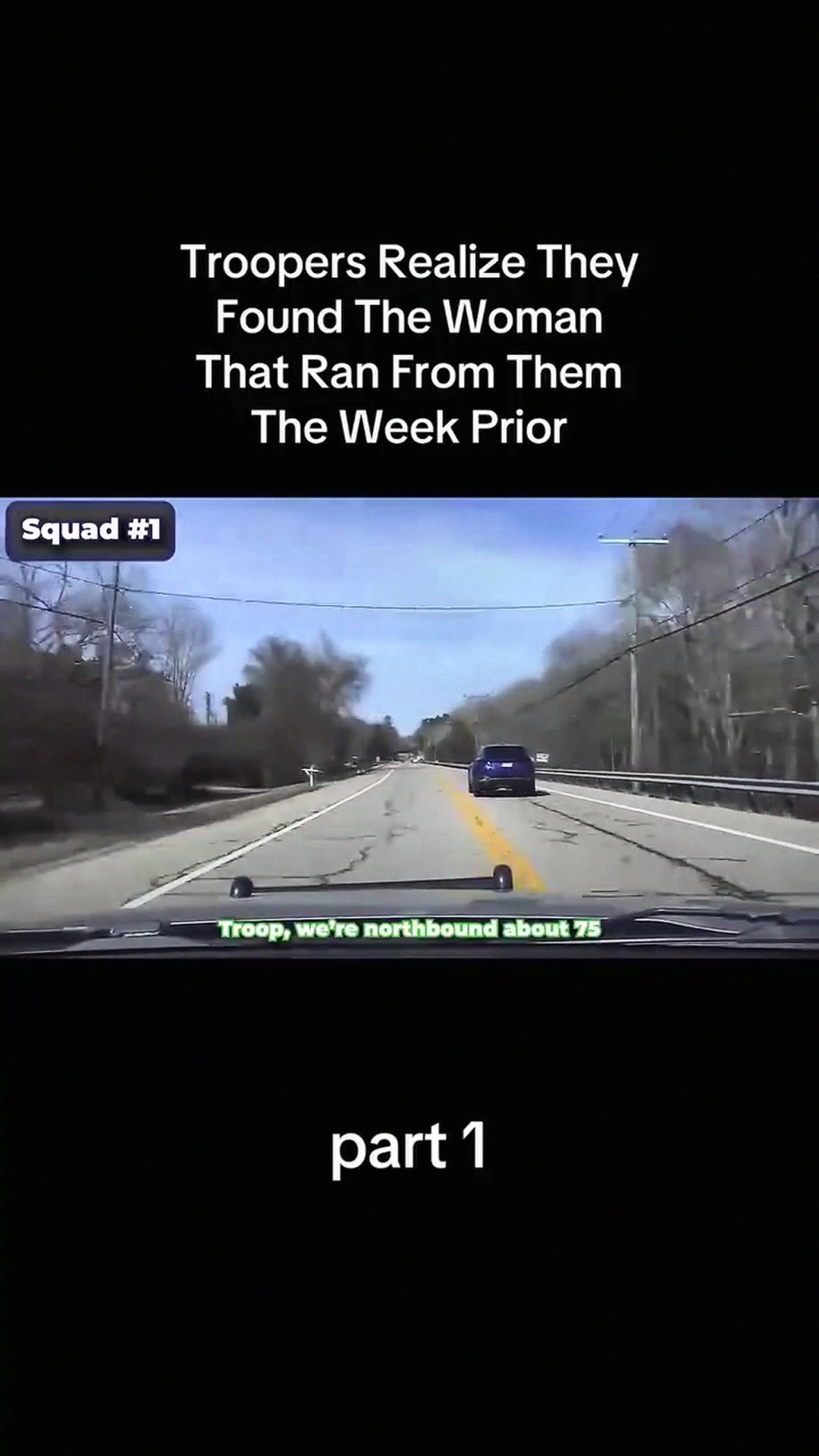
The escalation arrives in a single shift. A voice announces that a stick is coming back through the window, and then glass gives way with a sharp crack that carries across the pavement. A bystander's voice cuts in: He's breaking the window. The trooper's warning about breaking the window turns into fact. What follows is the part the clip handles in fragments, a scuffle near the open door, a warning that the car is in gear, and then the engine sound that changes everything. The car rolls forward and the scene becomes a pursuit, with the trooper calling out that she is running northbound and that a tire has been deflated.
Critical Blind Spots: What the Lens Leaves Unresolved
The camera is mounted where a uniform chest sits, which means it sees the door, the glass, and the trooper's own hands, but very little of the driver's face. Her stillness is audible rather than visible. We hear the fear in the repetition, but the frames do not tell us whether her hands were on the wheel, whether she was reaching for a phone, or whether she was crying. The record leaves that gap open.
The audio also raises a question the picture cannot answer. The warrant mentioned on the radio lands at a specific jurisdiction, and the trooper says it is from the prior week. Nothing in the clip shows the document, the name on it, or the confirmation that the person behind the glass is the person named. The driver insists she knows nothing about it, and the camera records that insistence without resolving it. The gap between what an officer believes and what the record shows is exactly where this story sits.
Then there is the second half of the tape. The pursuit calls out a highway, an off-ramp, and a speed, and the chase comes apart in confusion. A trooper reports the vehicle stopping, then hears that the car in front of him is not the right one; 455, you got the wrong one lands like a punchline with no laugh. The footage ends with the same car still out there. Whether the driver was ever located, and whether the warrant was genuine, is not settled on camera.
Statutory Framework and Protocol Analysis
Traffic stops are built on small, specific justifications. A lane violation and a missing front plate are the kinds of observable facts that let an officer pull a car over, and once the stop is lawful, the officer can generally order the driver out. That order is not a negotiation, and a refusal can escalate to breaking glass to get to the person inside. But the escalation is supposed to be measured against a real risk, not a fixed script. The camera shows a trooper warning about the window repeatedly, which suggests the decision was deliberate rather than sudden.
| Incident Parameter | Observation at the Scene |
|---|---|
| Stated reason for stop | Lane violation and no front plate |
| Driver's response | Denies crossing the line |
| Door status | Closed and locked through repeated requests |
| Stated warrant | Named jurisdiction from the previous week |
| Window outcome | Broken after warnings |
| Vehicle outcome | Pulled forward and fled northbound |
| Pursuit result | Tire deflated; wrong vehicle stopped |
Read more:
Read more: Colorado Flood: Home Floats Down River, Slams Into Bridge →
The driver's repeated question is also a window into a wider gap. Many people do not know what a stop legally allows, and the answer given here, I'll explain more once you cooperate, does not close that gap; it widens it. A short explanation of the warrant, even through glass, might have changed the next ten minutes. Instead the conversation became a test of will, and the test happened on a public road in front of passing traffic.
Community expectations sit on both sides of that glass. Drivers expect a clear reason and a show of authority that does not feel like a trap. Officers expect compliance so the stop stays predictable. When both expectations fail at once, the outcome is a broken window and a chase, and everyone involved ends up with less information than they started with.
Core Questions and Institutional Review
- Was the warrant confirmed against the driver's identity before the window was broken, or was it matched after the fact?
- Did the driver's refusal to exit stem from a misunderstanding of the stop, or from knowledge of the warrant?
- Why did the pursuit end on the wrong vehicle, and how long did the actual car remain unaccounted for?
- What did the review of this stop conclude about the decision to escalate to breaking glass?
The final frames leave an uncomfortable picture. A trooper stands beside a car that is not the one he was chasing and says, almost to himself, that this is not the one. Somewhere northbound, the dark sedan is still moving. The video does not tell us whether the driver was ever found, whether the warrant was real, or whether the broken glass was ever explained to her. The most haunting line is still hers, asked through a closed window: What did I do? What would you have done if the answer never came before the glass broke?
LATEST DEVELOPING INCIDENT
An even more shocking incident just erupted hours ago that has stunned onlookers nationwide. Full investigative breakdown and on-scene evidence documented below.
BREAKING: READ NEXT SHOCKING INCIDENT – LATEST CASE ↓
Sidewalk Confrontation Caught on Camera in Vancouver, WA
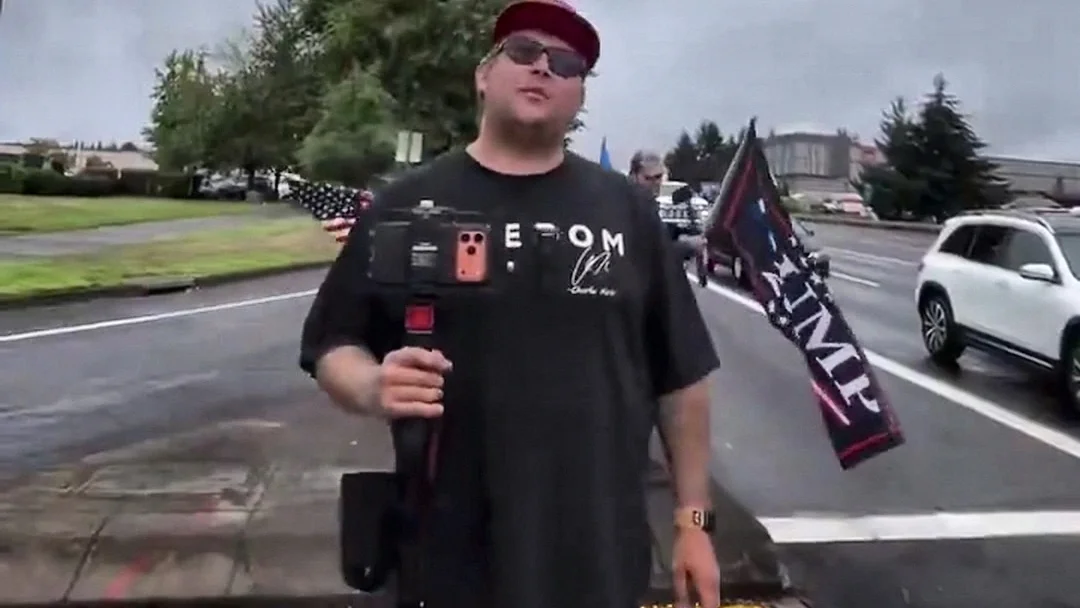
The camera shakes slightly as the man in the red cap steps backward onto a rain-slicked curb, his free hand raised. A blue banner sags across the crosswalk behind him, its white letters catching the gray November light. What began as a lone flag-bearer’s afternoon has collapsed into a single, tight loop of confrontation – one man broadcasting, another man pressing close, and a backdrop of traffic that never stops moving.
- A man wearing a red cap and dark sunglasses stands on the corner of a multi-lane roadway, holding a phone-mounted camera rig and a large flag.
- A second man in a white hoodie approaches from the right side of the frame, crossing the pavement to confront the broadcaster directly.
- The exchange escalates into a rapid verbal back-and-forth, with the broadcaster repeatedly turning his lens to frame his own face and the approaching figure.
- The confrontation plays out against a backdrop of passing vehicles, a large blue banner in the roadway, and a small American flag set up on a stand nearby.
What the Recorded Footage Captures: Chronological Breakdown
The first frames place the broadcaster near the yellow tactile paving of a curb ramp. He wears a black t-shirt with white lettering, a red cap, and dark sunglasses, and his rig – a phone clamp mounted on a short black grip – is held at chest height. The sky is flat and overcast; the asphalt shines with recent rain. Behind him, a tall sign and a line of evergreens frame a wide, multi-lane road.
Within seconds, a figure in a light-colored hoodie enters from the right, moving with purpose along the sidewalk. The broadcaster stops mid-sentence, pivots, and raises the camera. His posture shifts – shoulders back, chin lifted – as he positions himself between the curb and the approaching man. The ambient sound is a wash of tires on wet pavement and a low, steady wind.
The escalation arrives fast. The two men close the distance, and the broadcaster’s voice sharpens. He gestures with his free hand toward the road, then toward the man beside him. The man in the hoodie gestures back, and for a moment the two are locked in a tight, mirrored stance – one leaning forward, the other planted. The camera bobs as the broadcaster tries to keep both faces in frame. Then the man in the hoodie turns and walks out of the shot, and the broadcaster swings the lens back toward himself, breathing hard.
Critical Blind Spots: What the Lens Leaves Unresolved
What the recording does not show is how the encounter began. The frame opens with the broadcaster already in place, already speaking, already holding the camera. Whether the man in the hoodie approached on his own initiative or was drawn in by something said before the recording started is never made clear. The lens favors the broadcaster’s perspective – his framing, his pacing, his narration – and the other man’s full words are often muffled by traffic noise.
Off-camera context is thin. A second figure appears briefly in the background near a large American flag mounted on a stand, and a dark blue banner with white lettering lies partially in the road. Who placed that banner, and why it rests across the crosswalk, is never addressed. The surrounding sidewalk is largely empty; the only witnesses are passing drivers, none of whom stop. The mood is less explosive than it is raw – two people talking past each other while a camera records every breath.
Statutory Framework and Protocol Analysis
The encounter sits at the intersection of two ordinary activities: a person recording in a public place and a person moving through that same space. In most American jurisdictions, filming on a public sidewalk is protected, and pedestrians retain the right to pass. The friction arises when those two uses collide – when a camera becomes a barrier and a passerby becomes a subject.
| Incident Parameter | Observation at the Scene |
|---|---|
| Location | Curb ramp at a multi-lane roadway, overcast sky |
| Primary actor | Man in red cap and sunglasses, holding camera rig |
| Approaching figure | Man in light hoodie, entering from the right |
| Display present | Large blue banner in roadway, small flag on stand |
| Duration of exchange | Under one minute of visible confrontation |
| Witness presence | Passing vehicles only, no bystanders stopping |
| Recording method | Handheld phone mount, first-person framing |
Core Questions and Institutional Review
- Who initiated the verbal exchange before the camera was raised?
- Was the blue banner placed in the crosswalk intentionally, and by whom?
- Did either party attempt to leave the scene before the recording ended?
- What was said in the moments immediately after the man in the hoodie walked away?
The footage ends as abruptly as it begins – the broadcaster alone again, the road still humming, the banner still sagging across the white lines. What remains is the image of two people occupying the same small patch of wet pavement, each convinced the other was the one who crossed a line. Where does a public sidewalk stop being a shared space and start being a stage?
Practical Takeaways
- Public recording is common, but framing and proximity can turn observation into confrontation.
- Shared pedestrian space requires leave-and-let-leave; blocking a crosswalk escalates tension fast.
- Brief clips rarely show the full exchange; context matters more than the loudest moment.
- Bystanders and passing drivers are poor witnesses when no one stops to observe.
Sources
- A left-wing agitator and open-borders activist showed up at … – https://x.com/RheinAmacher/status/2117432130037059690