The Moment Private Security Crossed the Line: A Takedown, A Trauma, and the Legal Fallout No One Saw Coming
When a routine shoplifting stop turns into a vicious physical assault, the real question isn’t about the stolen goods. It is about the unchecked power of private security and the dangerous legal gray area they operate in.
- A shoplifting suspect’s defiance triggered a violent physical response from a security guard, raising immediate questions about the use of force.
- Private security guards are not police officers; their legal authority to detain and use force is strictly limited by state laws and company policy.
- Employers face massive liability for the actions of their security staff, potentially facing civil suits for assault, battery, and racial discrimination.
- Witnessing this kind of brutality creates a hostile environment for employees and customers, which is a separate legal violation.
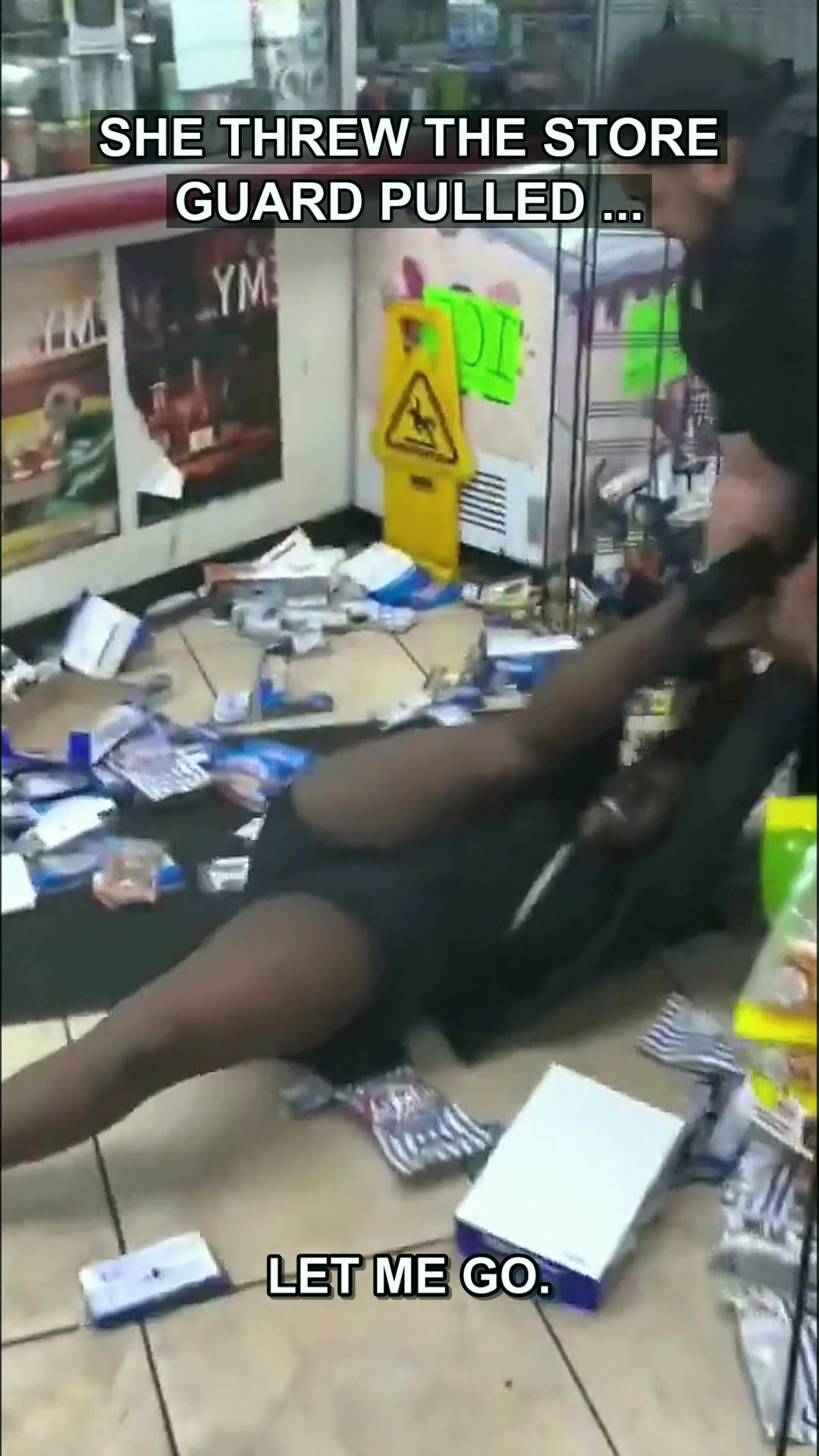
The video is chaotic, loud, and deeply unsettling. A woman is screaming, items are flying off the shelves, and a security guard has his hands tangled in her hair. In a matter of seconds, a minor theft at a minimarket escalates into a violent physical confrontation that leaves onlookers shouting and the internet divided. The footage shows the guard yanking the woman’s braids, dragging her across the floor like a ragdoll, all while she shrieks and flails. It is the kind of scene that makes you gasp and immediately ask: Is this legal?
The incident, captured on a bystander’s phone, shows the woman allegedly attempting to steal merchandise. When confronted, she did not go quietly. She became belligerent, tossing products around the store in a tantrum that turned a simple detention into a full-blown crisis. The guard, seemingly out of patience and options, resorted to a maneuver that is as visually shocking as it is legally perilous: a brutal hair-pull takedown.

Let’s get one thing straight: this is not a scene from an action movie. This is a real-life example of private security operating in a legal gray zone that most Americans don’t understand. The guard is not a police officer. He does not have the same arrest powers. Yet, in that moment, he acted as judge, jury, and executioner, using a level of force that would make even seasoned law enforcement officers wince.
This incident is a ticking time bomb for the company that employed him. While the woman’s actions were wrong, the guard’s response has transformed her from a petty thief into a potential victim with a massive legal claim. The question is no longer about what she stole, but about what he did to her body in the process.
“The moment a security guard uses physical force to subdue a non-compliant suspect, he steps out of the realm of ‘observation and reporting’ and into the high-risk world of civil liability.”
The Legal Precedent: Why “Citizen’s Arrest” Isn’t a License to Assault
Many people watching the video are split. Some argue the guard was justified because the woman was destroying property and resisting. Others are horrified by the apparent brutality. The law, however, is far less forgiving than the court of public opinion. In most states, private security guards are granted what is known as “merchant’s privilege” or “shopkeeper’s privilege.” This allows them to detain a suspected shoplifter for a reasonable amount of time to investigate the theft. The key word here is “reasonable.”
Reasonable detention does not include yanking a person’s hair out of their scalp. The use of force is only permitted in self-defense or in defense of others, and even then, it must be proportional to the threat. A person throwing merchandise is a nuisance; a person throwing punches is a threat. The video does not clearly show the woman striking the guard. Without that immediate threat, the guard’s takedown crosses the line from detention into battery. He is now the aggressor, and the store is on the hook for his actions under the legal doctrine of respondeat superior—the employer is responsible for the employee’s actions.
This is a textbook case of wrongful use of force. The guard likely violated the store’s own use-of-force policy, which typically mandates de-escalation and waiting for law enforcement. By taking matters into his own hands, he has exposed his employer to a lawsuit that could cost them millions. The woman, despite her initial wrongdoing, can now claim assault, battery, emotional distress, and potentially even racial discrimination, given the disparate impact of such aggressive tactics.
The Employer’s Nightmare: When HR Becomes the Cleanup Crew
For the company that owns this minimarket, the video is a corporate death sentence. In the age of social media, this clip is spreading like wildfire. The public is not asking about the stolen candy bars; they are asking about the guard’s brutality. The brand is now associated with violence, aggression, and a blatant disregard for human dignity. This is a public relations nightmare that will cost them customers, but the financial damage is just the beginning.
The legal team is likely already drafting a settlement offer. They know that this case will not go to trial because the video is so damning. The guard’s actions were reckless, excessive, and entirely preventable. The company will argue that the guard acted outside the scope of his training, but that defense rarely holds up in court. The jury will see the video. They will see the woman’s braids being ripped from her head. They will see the terror in her eyes. And they will award her damages for her pain and suffering.
This is the harsh reality of workplace accountability. The guard might have thought he was enforcing the law, but he was actually committing a crime. He may face criminal charges for assault, and he will almost certainly lose his job. But the real pain will be felt by the store owners who now have to explain to their insurance company why they hired a man who thinks it is acceptable to drag a woman out of a store by her hair.

For the average worker watching this, the lesson is chilling. Your safety at work depends on the training and judgment of the people around you. When a security guard is given a uniform and a badge, they are given a tremendous amount of power. If they are not properly trained to handle conflict, that power becomes a weapon. And when that weapon is used, the consequences are not just physical—they are financial, legal, and deeply personal.
Your Rights When Bosses Push Too Far
This incident is a stark look at what happens when the system fails. The woman was wrong to steal, but she did not deserve to be assaulted. The guard was wrong to use force, but he was likely just following the aggressive culture of his employer. And the store is now facing the ultimate price for creating an environment where violence is tolerated.
If you find yourself in a similar situation, whether as an employee or a customer, remember this: you do not have to accept physical abuse. You have the right to document the incident, file a police report, and seek legal counsel. The law is on your side when the force used against you is disproportionate to the threat. Do not let a security guard’s ego or a company’s negligence dictate your physical safety. The accountability has to start somewhere, and it starts with refusing to accept this kind of behavior as “just part of the job.”
The video ends with the woman being thrown out the door. The guard is breathing heavily, triumphant. But the real fight is just beginning. The lawsuit will come, the jobs will be lost, and the reputations will be destroyed. All over a few items that were probably worth less than the cost of the legal fees now piling up. It is a sobering reminder of why you should always document everything and why common sense and basic respect are truly disappearing these days.