The Raw Nerve of a Nation: When a Street Fight Exposes the Brutal Divide Over Power and Protest
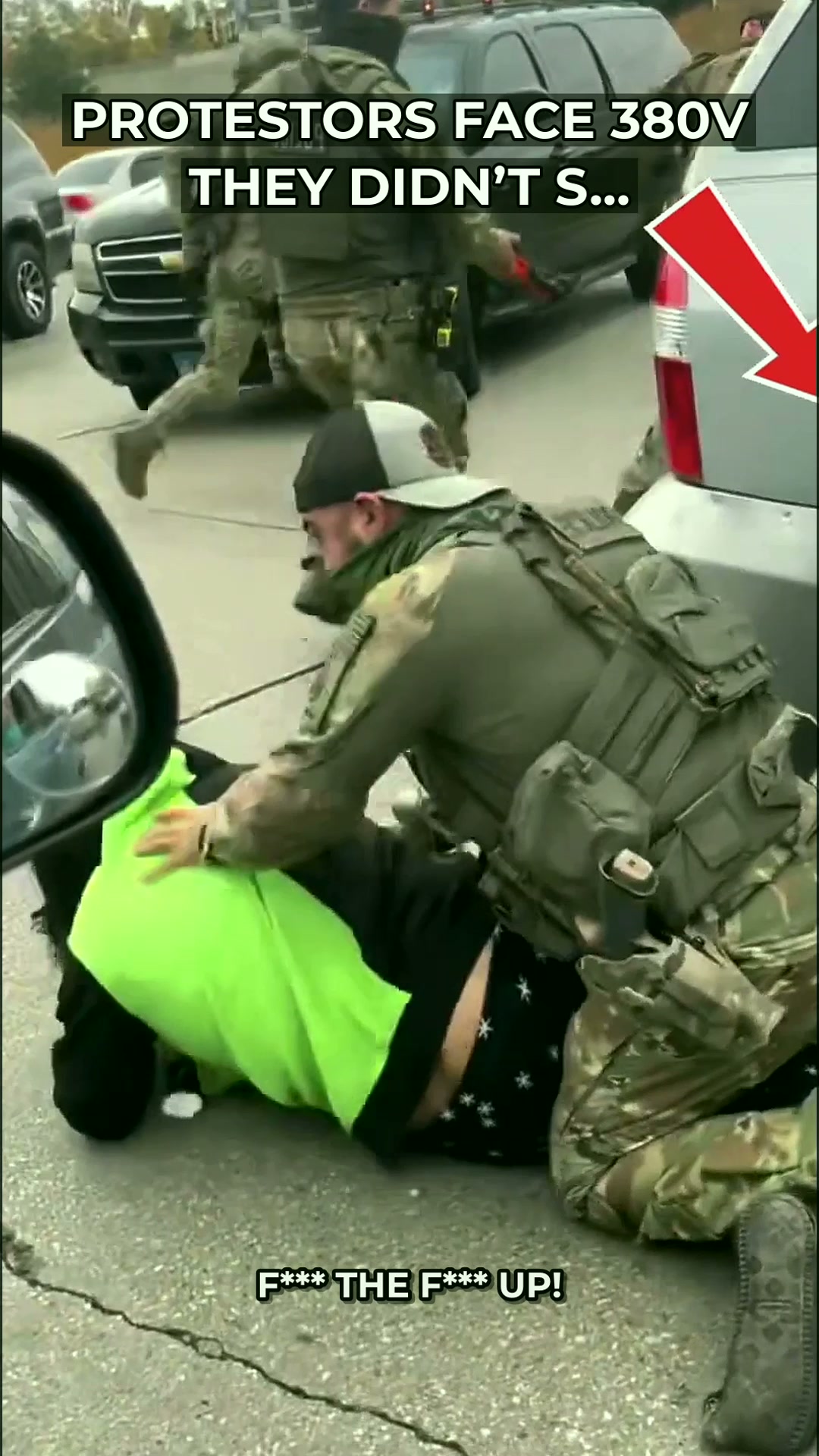
A single, chaotic video clip has ignited a firestorm, with calls for electric shock gloves against American citizens. But the real story is the fear, fury, and fragile human lines being drawn in the dust.
- The footage shows a physical struggle where protestors scream for an officer to release a woman, revealing a volatile, high-stakes standoff.
- A viral caption suggests arming agents with 380-volt shock gloves, a proposal that raises terrifying questions about escalation and the value of human life.
- Beyond the politics, this is a story about raw human instinct—the reflex to protect, the rage of the powerless, and the terrifying drift toward dehumanization.
The video hits like a punch to the gut. The camera shakes. A wall of bodies surges. You hear the guttural screams before you see the faces. “Fuck the fuck up!” a voice shrieks, raw with adrenaline. “Get back! Get back!” Another voice, desperate, cuts through the noise: “Leave her the fuck alone!”
This is not a movie scene. This is a sidewalk in America, where a routine enforcement action just detonated into a brawl. The footage is grainy, the audio is a mess of panic and rage, but the story it tells is crystal clear: a line has been crossed, and the people on the street are fighting back with their bare hands.
And then, the caption drops like a grenade. The suggestion isn’t just to win the fight, but to weaponize it. To strap 380 volts to the fingertips of federal agents. To turn a physical struggle into an electric nightmare.

Let’s be brutally honest about what that caption implies. It’s not about crowd control. It’s about punishment. It’s the language of a person who has stopped seeing protestors as citizens and started seeing them as pests to be zapped. The call for electric shock gloves is a fantasy of total dominance, a desire to skip the messy, dangerous work of de-escalation and jump straight to inflicting pain.
But the video tells a different story, one that is far more uncomfortable for those who cheer on the voltage. The protestors aren’t attacking for the sake of violence. They are reacting. The specific trigger is a woman being detained. The primal scream—”Leave her alone!”—is not a political slogan. It is a human reflex.
“The demand for shock gloves isn’t about safety. It’s about the terrifying desire to silence dissent with a jolt of pain, to make the act of protest itself a physically dangerous endeavor.”
The Human Instinct vs. The Machine
Watch the footage again. Ignore the politics for a second. Watch the body language of the protestors. Their arms are flailing, their voices are cracking. They are terrified. They are not calculating a legal strategy; they are operating on pure emotion. That fear is the core of this story. It is the fear of a community that feels hunted.
Now, imagine the counterfactual. Imagine if the agent had that glove. The screaming protestor reaches out to pull the officer away, and *zap*. 380 volts. The protestor collapses, twitching on the asphalt. Does the crowd back off? Or does the crowd surge forward in even greater rage, convinced the state is now executing its own citizens in broad daylight?
This is the unedited truth of the situation: the electric glove is a fantasy of a frictionless arrest. It assumes that pain will create compliance. But history—and plain common sense—shows that pain creates martyrs. It turns a disputed arrest into a flashpoint for a riot.
The Dangerous Seduction of the Quick Fix
There is a seductive simplicity to the shock glove. It promises total control. It removes the need for negotiation, for patience, for the exhausting work of treating agitated people like human beings. It is the ultimate tool for the agent who is tired of being yelled at, tired of being spat on, tired of the chaos.
But the tool does not exist in a vacuum. It exists in a community. And the moment that glove is used, the community will not see a law enforcement tool. They will see a torture device. The video already shows the deep well of anger that exists. The introduction of electric weapons into that mix is not a solution; it is an accelerant.
We are seeing a breakdown in the basic social contract. The protestors feel that the law is being applied as a weapon against them. The agents feel they are under siege by an unruly mob. In that powder keg, the addition of a high-voltage weapon is not just dangerous—it is an act of provocation that could ignite a fire that no one can put out.
The fact that this video is being shared with a caption endorsing violence against protestors reveals a deep sickness in the discourse. It is a fantasy of consequence without accountability. It is the dream of a person who wants to win the argument by knocking the other side unconscious.
What happens next is the real question. Does the footage become a rallying cry for more aggressive policing? Or does it become a warning sign of a society that is one bad decision away from civil conflict?
The Unresolved Reality
The clip ends. The screams fade. But the tension does not. The woman at the center of the struggle—who was she? What was her crime? The protestors who risked assault charges to pull her away—are they heroes or criminals? The agent who was grabbed—is he a victim or a provoker?
There is no clean answer. There is only the raw, unedited reality of a country where a routine stop can turn into a street war in seconds. The demand for the shock glove is a demand for a weapon that will not bring peace. It will only guarantee that the next video is bloodier.
The call for 380 volts is not a solution. It is a surrender to the worst of our instincts. And the community that watches this video knows, in their gut, that the voltage is not the answer. The answer is far harder. The answer requires looking at the fear in the protestor’s eyes and the anger in the agent’s face and finding a way to talk before someone gets hurt.

But talk is hard. Talk is slow. And the video is already out there, festering. The glove is already being cheered. The line between order and chaos is already blurring.
And the woman at the center of it all? She is just a name in a caption now. A reason to fight. A symbol. She is not a person anymore. She is a flashpoint. And that is the most terrifying part of all.