Man Blocks Street, Forces Workers to Dig Through Trash for Six Boxes
WATCH: On-scene video documentation is embedded below →
LISTEN TO THIS ARTICLE
Audio Narration • English (US)
A quiet suburban morning shattered when a resident in plaid pajama pants used his black SUV to blockade a sanitation truck, forcing two workers to climb into the hopper and hand-sort through a morning's worth of refuse to recover six boxes he claimed were mistakenly taken.
- A recycling crew collected six cardboard boxes left on the curb, not realizing the contents included clothing intended for donation.
- The homeowner pursued the truck in a black SUV, positioning the vehicle sideways across the road to halt the route entirely.
- A company representative filming the encounter narrated the confrontation as workers dug through the hopper by hand to retrieve the items.
- The confrontation concluded with the boxes being pulled from the truck, but the video captured a tense dispute over whether the boxes were clearly marked as donations.
What the Recorded Footage Captures: Chronological Breakdown
The video opens with a perspective from the cab of a sanitation truck, looking out at a sun-dappled residential street lined with autumn trees. A black SUV sits angled across the roadway, its nose pointed toward the curb, effectively choking off any path forward or backward. The camera pans from the windshield to the side mirror, capturing the stillness of the blocked street. The silence is broken by the narrator's voice, calm but edged with disbelief: "So this is what we're dealing with."
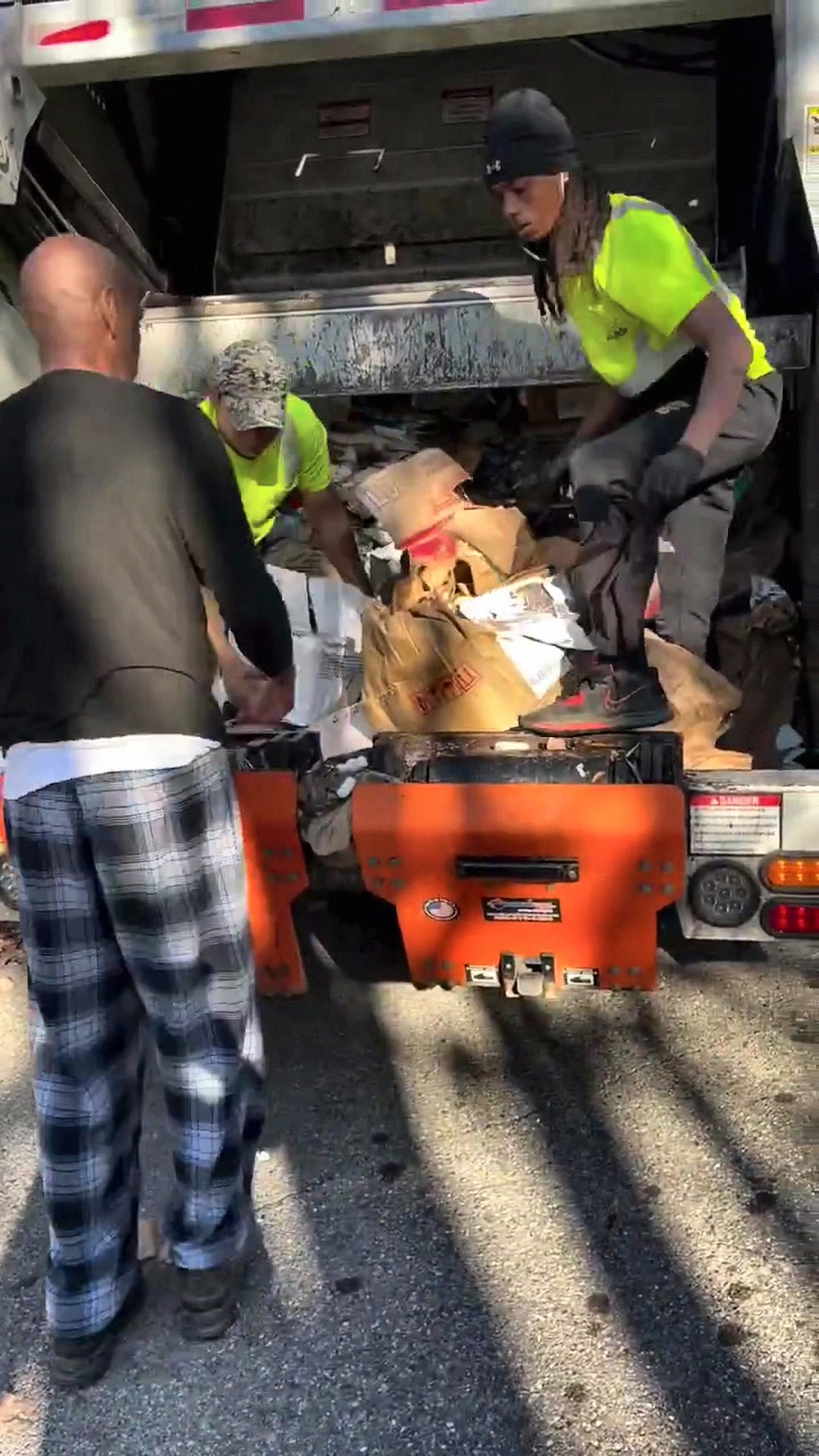
The lens then cuts to the rear of the truck, where the orange hopper sits open like a mechanical mouth. Two workers in high-visibility neon yellow vests are visible, one perched on the edge of the hopper, the other leaning deep inside. The narrator, stepping closer, explains the situation to the camera. "The gentleman said he had six boxes on the curb. They're boxes. Excuse me, sir. Sir, I got you." The camera swings around to reveal the homeowner, a man in a black long-sleeve shirt and loose plaid pajama pants, standing with his back to the lens. His posture is rigid, hands at his sides, a figure of quiet, simmering frustration.
The workers begin tossing items out of the hopper – cardboard, paper, a white bag – searching for the missing donation. "So we're a recycle truck. We picked up the six boxes and we go on up the street," the narrator continues. "On the way back down the street, this is what we're dealing with. So he has the entire street blocked off. He's making these guys dig in a hopper to pull out clothes that he had in a box. That was for donation." The camera lingers on the workers' hands, sorting frantically through loose debris while the homeowner stands motionless, watching. The narrator's voice drops slightly, turning to the man: "Tell the whole story. I just want you to, you know. Tell the whole story."
The footage captures the quiet humiliation of the workers, who are forced to perform a manual search in the middle of the street. One worker, wearing a black beanie, balances on the metal edge of the hopper, his body bent at an awkward angle as he sifts through refuse. The other, wearing a camouflage cap, works from the ground, pulling out armfuls of paper and cardboard. The homeowner remains a silent, unmoving presence, his back a wall of resistance against the camera's gaze.
Critical Blind Spots: What the Lens Leaves Unresolved
What the video does not capture is the moment the boxes were originally placed on the curb. The narrator states they were "on the side of the curb," but the critical question remains: were they marked as donations? The footage shows only the aftermath – the frantic search – but offers no visual evidence of how the boxes appeared before pickup. The homeowner's claim rests on an assumption of clear labeling; the workers' actions rest on a standard protocol of taking what sits at the curb.
The camera also leaves the homeowner's face largely unseen. His back is to the lens for nearly the entire confrontation, his expression hidden. We see only his posture – the set of his shoulders, the stillness of his stance – which suggests anger, but we cannot hear his voice or his version of events in the moment. The narrator's commentary frames the scene, but the homeowner's perspective is filtered through the camera operator's interpretation.
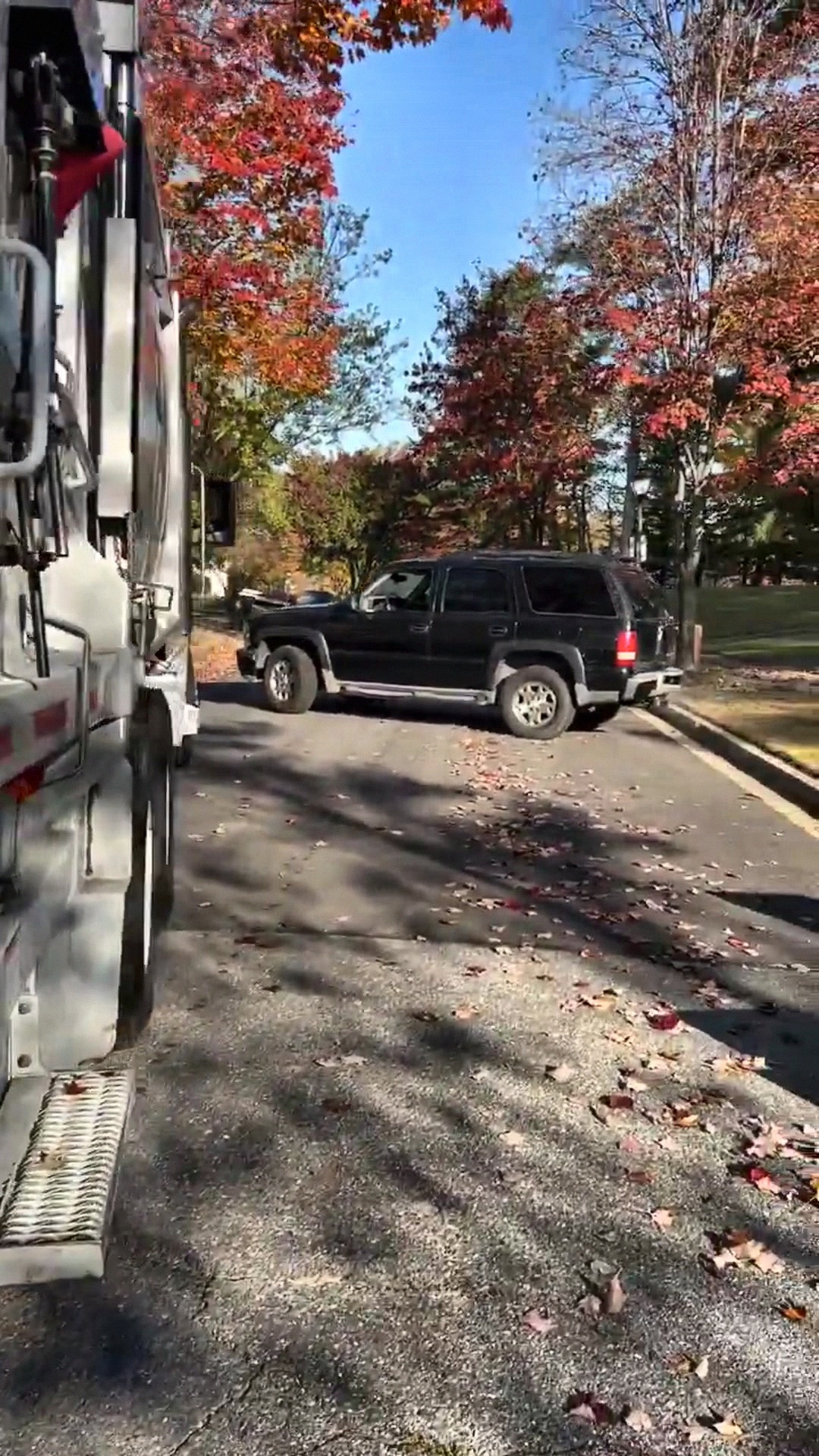
Furthermore, the video does not show the actual blocking of the road. We see the SUV already parked across the street, but the sequence of events – how the man maneuvered his vehicle to stop the truck, whether there was a verbal exchange before the camera started rolling – is missing. The footage begins mid-confrontation, leaving the initial escalation a blank spot.
Statutory Framework and Protocol Analysis
In most American municipalities, the legal definition of "discarded property" hinges on placement at the curb. Once an item is set out for collection, it is presumed to be abandoned. This creates a gray area when homeowners place donation items alongside regular trash, expecting them to be recognized as separate. The workers in this video acted according to standard protocol: they collected what was at the curb. The homeowner's decision to block the street, however, introduced a layer of civic disruption that complicated the situation.
The confrontation raises questions about communication and signage. Did the homeowner clearly mark the boxes as donations? Did the workers have any reason to believe the boxes were anything other than refuse? The video does not provide definitive answers, but it highlights a common friction point between residents and sanitation crews: the ambiguity of curbside pickup. The narrator's repeated phrase "they're boxes to us" underscores the workers' perspective – without clear labeling, cardboard is cardboard.
| Incident Parameter | Observation at the Scene |
|---|---|
| Time of day | Morning, bright sunlight, long shadows |
| Location | Residential street, autumn trees, suburban setting |
| Vehicles involved | Black SUV, sanitation truck with open hopper |
| Personnel | Two workers in neon vests, one driver, one homeowner |
| Cause of dispute | Six boxes of donation clothing collected as recycling |
| Resolution action | Workers manually searched hopper for missing items |
| Communication style | Verbal, tense, mediated by camera operator |
Read more:
Read more: Officer Pins Young Man as Bystanders Scream to Stop →
The narrator, who describes himself as filming for his company, serves as an informal mediator. His repeated request to "tell the whole story" suggests he wants the homeowner to articulate his grievance on record. But the homeowner remains silent, his back a testament to his refusal to engage with the camera. This silence is itself a form of communication – a refusal to perform for the lens, a rejection of the narrator's framing.
Core Questions and Institutional Review
- Were the six boxes clearly labeled as donations, or were they indistinguishable from regular recycling?
- Did the homeowner attempt to communicate with the sanitation crew before resorting to blocking the street?
- What was the duration of the roadblock, and did it delay other services or residents?
- Did the workers recover all six boxes intact, or were some items lost or damaged in the hopper?
The scene ends with the workers still digging, the homeowner still standing, the camera still rolling. The narrator's voice trails off, leaving viewers to wonder how the confrontation resolved. The video captures a moment of civic friction, but it leaves the deeper questions unanswered. What does this confrontation say about the relationship between residents and the people who collect their trash? And when does a mistake – a simple box of clothes – become a public disruption? The answer, like the boxes in the hopper, remains buried under layers of paper and cardboard, waiting to be pulled out and examined.
LATEST DEVELOPING INCIDENT
An even more shocking incident just erupted hours ago that has stunned onlookers nationwide. Full investigative breakdown and on-scene evidence documented below.
BREAKING: READ NEXT SHOCKING INCIDENT – LATEST CASE ↓
Woman’s Terrifying Plea at Chevron Sparks Mistaken Identity Questions
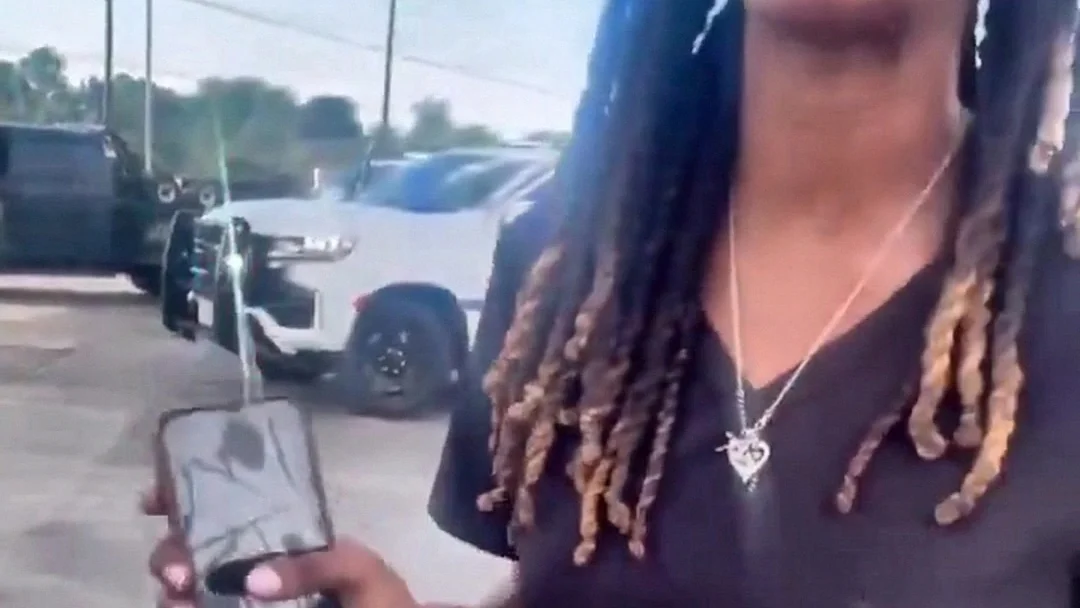
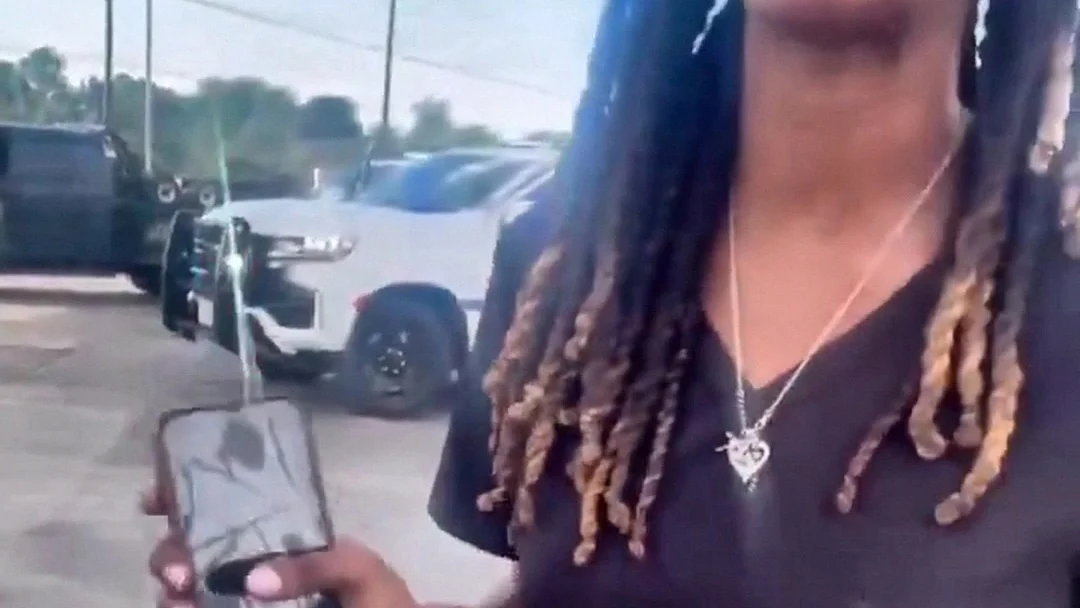
A midday stop at a Chevron station spiraled into a traumatizing scene when a woman found herself surrounded by deputies over what she insists was a case of mistaken identity. Her repeated, trembling questions about what she had done echo across the asphalt, captured by a bystander's rolling camera. The footage shows a confrontation that escalated from a traffic stop to a physical takedown, leaving a community demanding a full accounting of how a routine encounter went so wrong.
- A woman is pulled over at a Chevron gas station in the Houston area, with a black SUV parked beneath the station's canopy.
- She repeatedly asks what she has done, demanding to know the reason for the stop as deputies order her to turn around.
- A bystander begins recording, capturing the woman's distress and the tense exchange over whether the encounter is being documented.
- The woman describes being slammed to the ground and having a weapon drawn on her, a claim that is central to the public's demand for answers.
What the Recorded Footage Captures: Chronological Breakdown
The footage opens in a bright, unremarkable setting – a Chevron station with a white canopy overhead and a clear blue sky. A large black SUV is parked near the pumps, and a woman in a dark V-neck t-shirt, her long dreadlocks streaked with blonde, stands near the vehicle. Her hands are visibly empty, but the air is thick with tension as she becomes the focus of multiple officers. The camera, held by a bystander standing behind her, captures her turning her head in disbelief, her phone clutched in her hand as she tries to make sense of the sudden escalation.
"What are y'all doing? What are y'all doing to me?"
The audio captures her voice rising in panic. She repeats the question like a mantra, each repetition more desperate than the last. "I didn't do nothing," she insists, her tone cracking as she struggles to understand the commands being directed at her. A deputy's voice cuts through, flat and procedural: "Just turn around, ma'am." The instruction is repeated, the words landing with mechanical calm against her growing hysteria. Her disbelief sharpens into frustration: "What the dispute is going on?" She looks toward the bystander, seeking an ally in the lens that is now recording her worst moment.
At the peak of the confrontation, the woman delivers a rapid-fire series of questions, her voice breaking. She demands to know why she was stopped, claiming she was not speeding and was not told the reason for the traffic stop. "Y'all didn't even tell me what the dispute I'm doing," she cries out. The bystander's presence becomes a lifeline; she asks directly if the entire encounter is being captured on camera. "Do you got all of this on camera, sir?" she asks, her voice wavering between defiance and fear. The camera operator responds, acknowledging that the first part was missed, but the lens stays focused on her as she continues to plead. "Why'd you just pull me over and pull a weapon out me?" she demands, the accusation hanging in the air.
Critical Blind Spots: What the Lens Leaves Unresolved
For all the raw emotion captured in the two-minute clip, the footage itself is a fragment. The camera operator admits early on that the first part of the encounter was missed, leaving a crucial gap in the record. Before the recording began, the stop had already escalated to the point of armed officers and an order to turn around. What led to that moment – the initial traffic stop, the reason the woman was flagged, the deputy's initial approach – remains off-screen, a void that both protects and obscures.
The video also raises questions about the physical altercation that preceded it. The woman's claim that she was "slammed to the ground" and had a weapon drawn on her is not fully captured. Instead, what the footage shows is the aftermath of that takedown: the woman standing, visibly distressed, trying to process what has just happened to her. The tension in her body posture, the way she holds her phone as if it is a shield, and the unspoken fear in her eyes tell a story of a person who feels fundamentally unsafe, even as she insists on her innocence.
Finally, the identity of the woman remains a mystery. She is a face and a voice in the crowd, a woman in her thirties or late twenties with long, tinted dreadlocks and a silver heart necklace swinging against her chest. The footage does not reveal her name, and the deputies' perspective is absent. We do not know what information they were acting on, whether they believed they had the right person, or how they interpreted her compliance. The scene is a one-sided portrait of fear, leaving viewers to wonder what invisible chain of events brought armed men to a gas station over a case of mistaken identity.
Statutory Framework and Protocol Analysis
In the state of Texas, a traffic stop is a limited detention that requires an officer to have reasonable suspicion of a violation. When the stop escalates – such as the deployment of multiple deputies and the drawing of weapons – the legal burden on the officers grows significantly. The actions captured on camera raise critical questions about the balance between officer safety and the constitutional protections afforded to the person stopped. The woman's repeated assertions that she was never told why she was pulled over, and her claim of a weapon being drawn during a traffic stop, point to a potential disconnect between the stated reason for the stop and the level of force used.
Furthermore, the presence of a bystander with a camera is a vital, often legally protected form of community oversight. The camera person's role in this incident was not just passive documentation; the woman's request for the recording to continue suggests she recognized it as a form of protection. This dynamic – a citizen's demand for accountability, witnessed by a third party – speaks to a broader community expectation that law enforcement interactions should be transparent. The footage itself becomes evidence in the public square, a record that will be examined and re-examined by those seeking to understand how a simple traffic stop could turn into a terrifying ordeal.
| Incident Parameter | Recorded On-Scene Evidence |
|---|---|
| Location | A Chevron gas station with a white canopy and a black SUV parked nearby. |
| Approximate Time | Daytime, clear skies, and bright sunlight based on shadows and visibility. |
| Subject Appearance | A woman with long, blonde-tipped dreadlocks in a black t-shirt and silver necklace. |
| Verbal Exchange | The woman repeatedly questions why she is being detained; deputies order her to turn around. |
| Physical Action | The woman stands near her vehicle; the footage captures the aftermath of a claimed takedown. |
| Bystander Role | A camera operator records the incident; the woman asks if it is being captured. |
| Aftermath Observed | The woman is left in distress, asking for the truck to be turned off and processed. |
Core Questions and Institutional Review
- What was the specific reason for the traffic stop, and why was it never communicated to the woman before deputies ordered her to turn around?
- At what point in the encounter were weapons drawn, and what threat assessment justified that escalation?
- How did the deputies' understanding of the situation evolve, and did they ultimately acknowledge a case of mistaken identity?
- What is the official account of the physical takedown that the woman says occurred before the camera began rolling?
The footage ends not with a resolution but with a lingering unease. The woman, still visibly shaken, has been left to process a brush with armed force that she insists was built on a misunderstanding. The camera catches her in the aftermath, holding her phone, her expression a mix of relief and disbelief. The bystander who recorded it becomes an unwitting witness, his footage the only counterweight to an official narrative that has yet to be fully told. As this incident moves from a gas station parking lot into the arena of public scrutiny, one question remains unanswered: when a citizen's word is the only thing standing between them and unexplained force, how do we ensure the record tells the whole story?