Field investigator’s DUI Stop on a Florida Keys Highway
WATCH: On-scene video documentation is embedded below →
LISTEN TO THIS ARTICLE
Audio Narration • English (US)
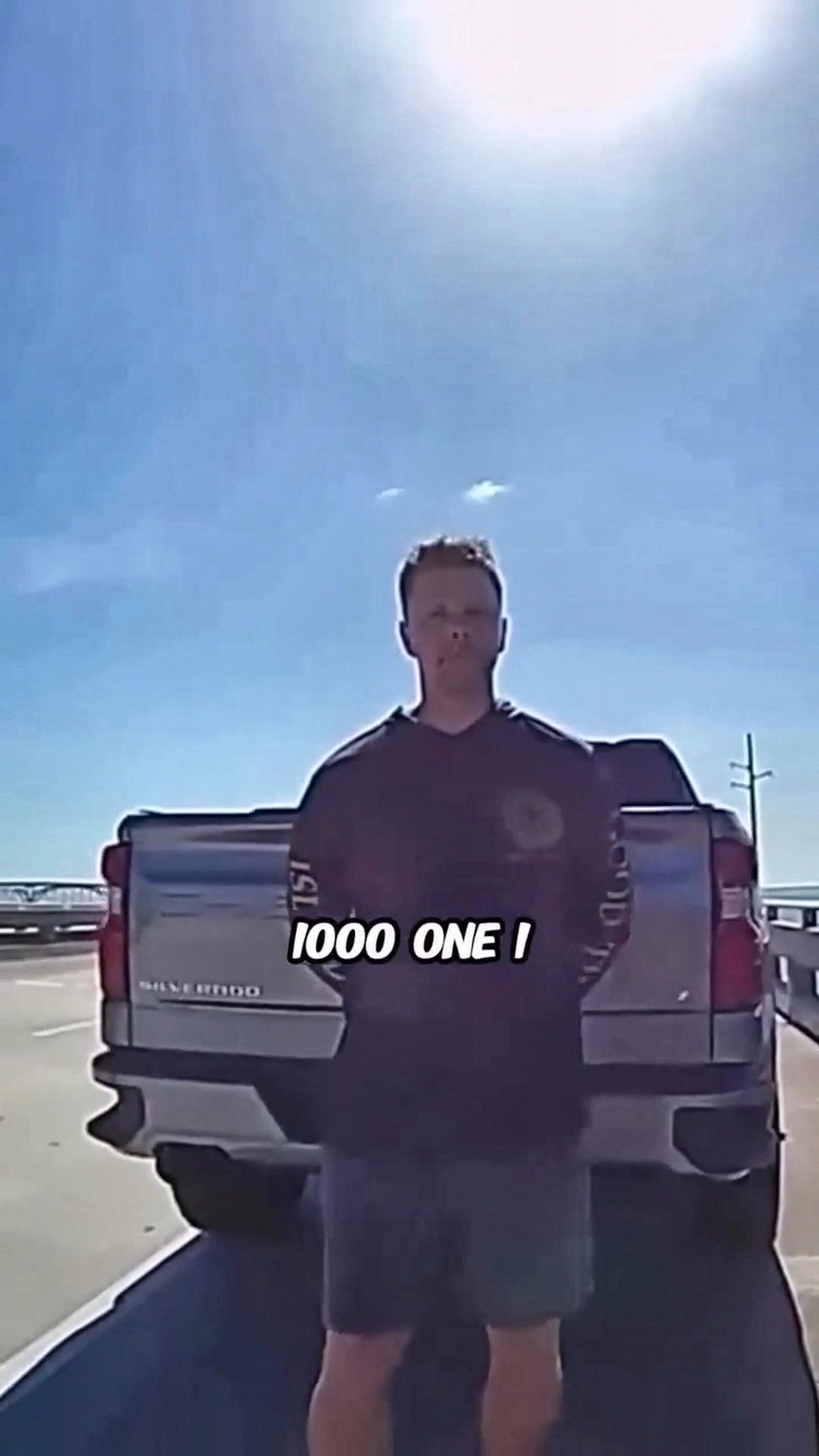
The sun is brutal over the Overseas Highway, the kind of glare that turns a windshield into a mirror and a traffic stop into theater. A man in a black long-sleeve shirt and dark shorts leans against the tailgate of a gray Chevrolet Silverado, arms folded, jaw tight, as a deputy asks a question he clearly believes he should never have to answer. What follows is not a chase or a shouting match, but something quieter and far more revealing: a slow, uncomfortable negotiation over whether a federal badge outranks a Florida roadside.
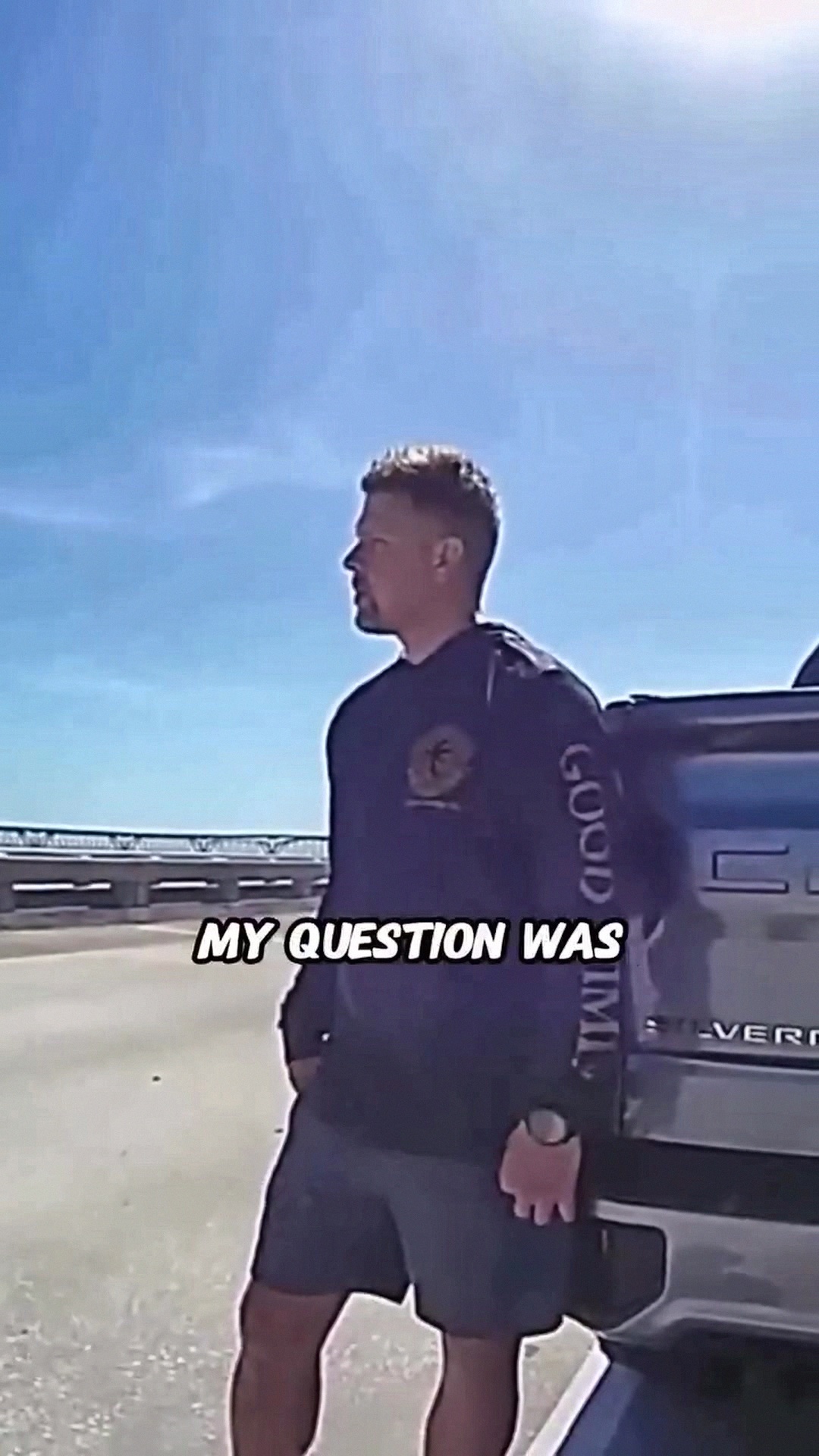
- A traffic stop unfolds along a sunlit stretch of road near Islamorada in the Florida Keys, where deputies observed a gray Chevrolet Silverado swerving before pulling it over.
- The driver identifies himself as federal law enforcement, repeatedly invoking his agency affiliation while a deputy asks for identification and an explanation of where he is coming from and going.
- The deputy reports bloodshot, glassy eyes, the odor of alcohol, and asks the driver to step out and perform standardized field sobriety exercises at the rear of the truck.
- The encounter ends with the driver placed under arrest for driving under the influence, with two children present in the vehicle and the man pleading that his divorce and custody situation not play out in front of them.
What the Recorded Footage Captures: Chronological Breakdown
The frame opens in hard daylight, the camera low and angled upward. The man stands beside the bed of his Silverado, one hand rubbing the back of his neck, weight shifted onto one leg. Subtitles flash across the bottom of the screen as he says, "I'm federal." The deputy's response is flat and procedural: who do you work for? "DHS," the man answers. When asked for identification, the answer is a soft, almost apologetic, "No, I don't." The exchange is polite on the surface, but the air around it is thick – the man's shoulders are raised, his answers clipped, and the deputy's tone never rises above conversational.
The conversation turns geographic. The deputy recounts the man's own account of his route – coming from Miami, headed to Islamorada, then back to Miami – and asks what the purpose of the trip was. "Are we really doing this right now?" the man says, and the phrase lands like a door being pushed shut. The deputy holds the line: "Sir, I'm just asking you a simple question." Then the observations arrive in a measured list – the eyes are bloodshot, they look glassy, the driving had appeared to swerve. The man challenges each point, asking to see the evidence, offering a photograph as proof. He mentions his own credentials, saying he is SFST certified; the deputy replies that he is as well, and adds that he is a drug recognition expert.
That is the pivot. The man's voice tightens. "I'm just, I'm going through a divorce. I'm taking my kids, man." The deputy's answer is calm and unyielding: "I'm not taking your kids from me, man. I'm just making sure that you're safe to drive the car." The man is asked to return to a starting position, left foot on the line, right foot in front. He stalls – "Give me a minute" – then volunteers to demonstrate the one-leg stand himself. The deputy waits, then says gently that they cannot stand on the shoulder forever. The man invokes his federal status again, then his divorce again, then asks the deputy whether he knows what it is like to be in law enforcement.
Critical Blind Spots: What the Lens Leaves Unresolved
What the camera never shows is the first thirty seconds – the reason the deputy chose to initiate the stop in the first place. We hear the description of swerving, but we do not see it. There is no dash-camera view of the Silverado drifting across the lane, no measurement of speed, no context about the time of day or the traffic density on that stretch of the Keys. The entire foundation of the stop rests on an officer's narrated observation, which is standard but invisible.
The second gap is the interior of the truck. Two children are inside, referenced repeatedly but never framed. Their ages, their seats, their awareness of what is happening outside the window – none of that is captured. The man's plea not to do this in front of his kids is the emotional center of the video, and yet the kids themselves are an absence, a silence the camera cannot fill. Whatever they saw or heard that afternoon exists only in their memory.
The third gap is the sequence around the arrest. Between the counting exercises and the moment the man is told he is under arrest, there is a gap in the visible record – a strip of time where the dialogue jumps and the postures change. The exact compliance test results, the field sobriety scoring, and whether a breath or blood sample was ultimately provided are not shown. What remains is the confrontation itself, not the evidentiary chain that followed it.
Statutory Framework and Protocol Analysis
The encounter illustrates a protocol under strain rather than a protocol breakdown. The deputy follows a recognizable script: identify, observe, articulate, instruct, warn, arrest. The man counters with a different script – professional courtesy, jurisdictional identity, personal crisis. Neither script has a mechanism for the other. The badge does not function as a shield in the statute, and the divorce does not function as a defense. What makes the footage compelling is the collision of two systems of expectation: one built on rank and one built on observable facts.
| Incident Parameter | Observation at the Scene |
|---|---|
| Location context | Sunlit roadway shoulder near Islamorada, Florida Keys |
| Vehicle | Gray Chevrolet Silverado pickup |
| Driver's stated affiliation | Federal law enforcement, DHS |
| Identification produced | None, by the driver's own admission |
| Officer's articulated observations | Bloodshot and glassy eyes, odor of alcohol, reported swerving |
| Self-reported consumption | Approximately four drinks |
| Presence of passengers | Two children inside the vehicle |
Read more:
Read more: Florida Learjet Crash: Co-Pilot’s Final Text Before Impact →
The larger question is one of professional culture. Law enforcement officers know the field sobriety playbook better than almost anyone; that knowledge can produce cooperation, or it can produce resistance dressed in technical language. Throughout the clip, the man's fluency – the references to certification, the request for a supervisor, the negotiation over time – reads less like confusion and more like someone searching for a procedural exit that the statute does not provide. The deputy, by contrast, stays inside the lines: he does not mock, does not escalate, and repeats the same simple question about safety.
Core Questions and Institutional Review
- What specific driving behavior prompted the initial stop, and does any recorded record of that observation exist beyond the deputy's verbal account?
- Were the standardized field sobriety exercises completed, and what were the documented results prior to the arrest decision?
- How are agency protocols supposed to address a driver who invokes federal employment status during a state-level impaired-driving investigation?
- What review, if any, followed within the driver's own agency after the arrest and the public release of the footage?
The tape ends not with a resolution but with a sentence that hangs in the air: "I'm not the one that drank today and drove." It is a line that reframes everything before it – a man asking the camera, the deputy, and perhaps himself to see the situation as something other than what the statute sees. Whether that reframing ever reached anyone with the power to change the outcome is not visible in the frames. What is visible is a sunlit shoulder, a parked truck, and two people standing on opposite sides of a line that neither can move.
What would you have done if a routine question on a roadside suddenly collided with the worst week of your life?
LATEST DEVELOPING INCIDENT
An even more shocking incident just erupted hours ago that has stunned onlookers nationwide. Full investigative breakdown and on-scene evidence documented below.
BREAKING: READ NEXT SHOCKING INCIDENT – LATEST CASE ↓
Dashcam Captures Fireball Over Florida Before Jet Crash
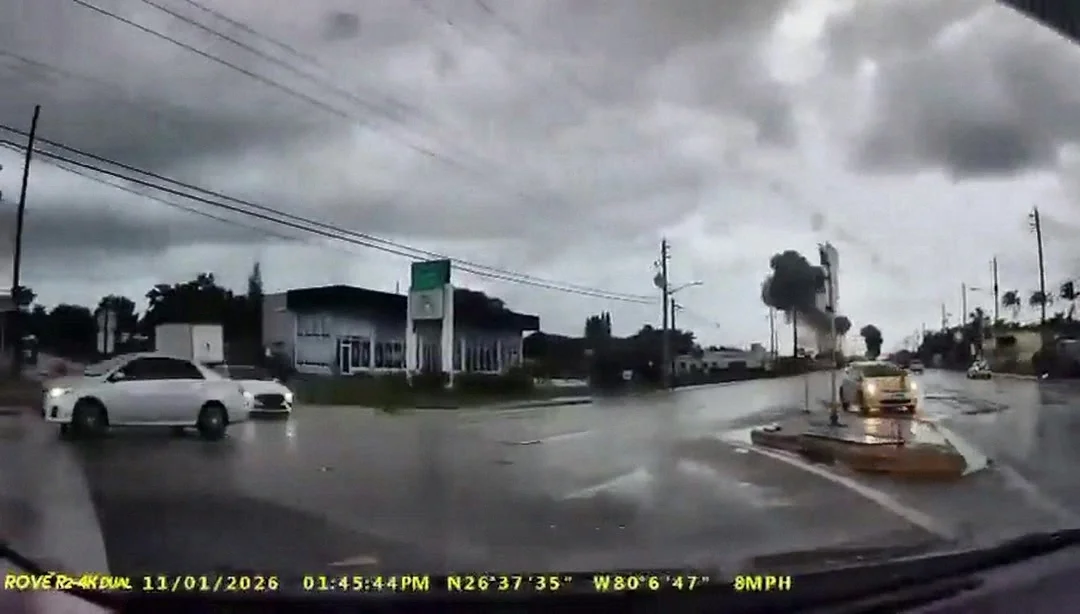
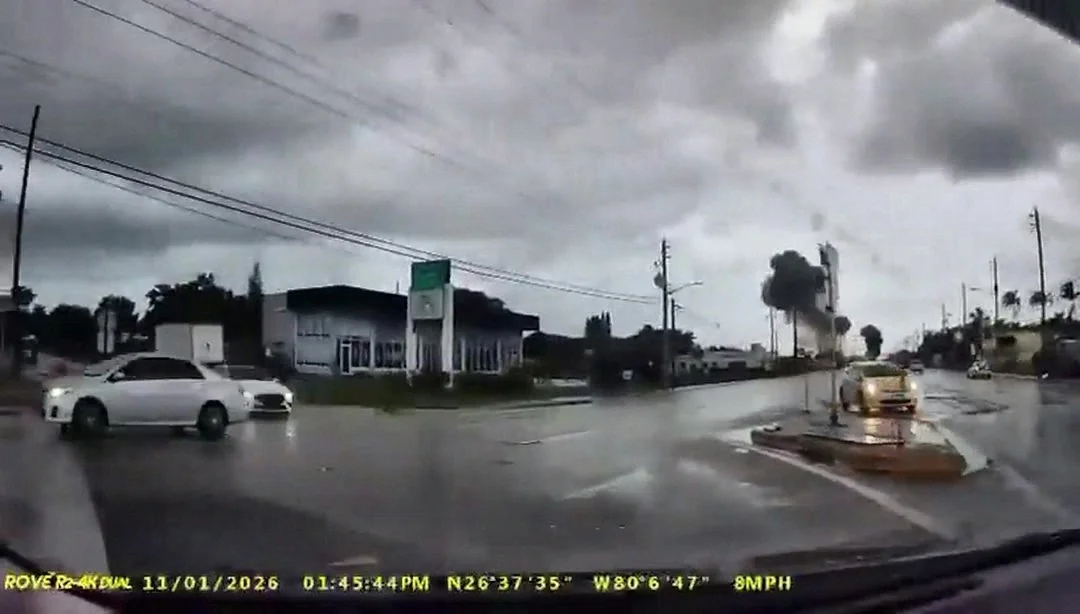
A routine drive along a rain-slicked Palm Beach County artery turns surreal when a bright flash erupts near the horizon, prompting the driver behind the wheel to stammer in disbelief. Within seconds the ordinary commute becomes the only moving record of a business jet falling out of a bruised sky – and the first human voice attached to a disaster that would claim nine lives.
- A dashboard camera mounted in a passenger vehicle records a westbound commute through Greenacres, Florida, on a wet, overcast afternoon.
- Roughly two minutes into the clip, a vivid orange fireball blooms low on the horizon ahead of the windshield, far off the roadway.
- The driver reacts audibly, his voice cracking between confusion and alarm as the glow expands against the gray sky.
- The recording ends before any emergency response is visible, leaving only the aftermath to be reconstructed from official statements and later footage.
What the Recorded Footage Captures: Chronological Breakdown
The clip opens on a wide, flat commercial corridor. Power lines stitch the gray sky together; a bus idles to the left; a dark sedan runs ahead with its taillights smeared by the wet asphalt. Rain has clearly fallen – the road holds a sheen that throws every headlight back at the lens. The dashcam overlay ticks forward in the corner, a small green ribbon of coordinates and speed, confirming a steady drive under a low ceiling of cloud.
Then the frame changes character. Ahead and slightly right, a bloom of orange light rises where a treeline and low buildings should be. It is not a reflection and not a flare from the road; it pulses, widens, and pushes a column of dark smoke upward into the overcast. The driver's foot must have eased, because the pace of the passing roadside slows. His voice arrives in fragments, half-swallowed by the cabin – a man telling himself what he is going to do, then breaking off entirely.
What the lens does not do is turn toward the impact. The camera keeps its forward gaze, and the fireball remains a distant, almost cinematic smudge behind a billboard and a line of palms. That restraint is what makes the clip unnerving: the disaster is close enough to light up the windshield and far enough that the driver cannot yet understand it. The final seconds show a hand – off-frame movement, a small jolt – and then the video simply stops.
"I'm going to go to the house and I'm going to go to the house. What the dispute? Thank you."
That scrambled audio is the only testimony the public has from the moment of impact, and it carries the flat, stunned cadence of a person whose brain has not yet caught up with his eyes.
Critical Blind Spots: What the Lens Leaves Unresolved
The windshield frames a narrow slice of a much larger event. The camera never shows the aircraft itself, never captures the descent profile, and never records the final attitude of the jet before it struck. Everything about the seconds preceding the fireball – the engine note, the bank angle, the altitude – sits outside the frame, available only to radar tracks and cockpit recordings that the public will not hear for months.
The driver's vantage is also deeply limited by distance and weather. A low cloud deck and wet pavement flatten contrast; the fireball he sees is already a rendered image of something happening perhaps a mile away. What he believes he is watching – a house fire, an explosion, something on the ground – may not match what actually fell from the sky. His own words on the tape suggest he is still assembling the puzzle in real time.
And then there is the absence of aftermath. No smoke plume is tracked, no emergency vehicles appear, no bystanders walk into frame. The clip ends with the mystery at its peak, which is precisely why it spread so quickly: viewers are handed a flash and a curse word, and left to supply the rest themselves.
Statutory Framework and Protocol Analysis
Federal accident investigation in the United States follows a highly structured sequence. A lead agency takes custody of the wreckage, the flight records, and the air traffic transcripts, then issues preliminary factual reports before any probable-cause determination. That process is deliberately slow, because early narratives – especially those built from a single bystander video – routinely collapse under the weight of the actual data.
Local agencies, meanwhile, handle the ground-level response: securing the debris field, accounting for residents, and coordinating with the federal team. In a densely built corridor like this one, where a jet can come down within sight of a commercial strip and a residential block, the protocol immediately widens to include structural damage assessment and neighborhood safety. The dashcam merely marks the moment the event entered public view; the institutional machinery that follows runs on paperwork, not spectacle.
| Incident Parameter | Recorded On-Scene Evidence |
|---|---|
| Location context | Flat commercial corridor in Greenacres, Palm Beach County, Florida |
| Time stamp on footage | Mid-afternoon, roughly 1:45 p.m. local, single continuous dashcam file |
| Weather conditions | Heavy overcast, wet pavement, low visibility near the horizon |
| Visible event | Bright orange fireball rising near a treeline ahead of the vehicle |
| Driver reaction | Audible, stunned vocalization captured on the cabin microphone |
| Camera behavior | Forward-facing only; no pan toward the impact point |
| Recording endpoint | Clip ends seconds after the flash, with no emergency response visible |
Core Questions and Institutional Review
- What was the aircraft's altitude and airspeed at the moment it became visible to ground observers?
- Did the driver's forward-facing camera record any portion of the descent that investigators could use for timing?
- How quickly did emergency units reach the debris field after the flash, and what did they find on arrival?
- Which official body will release the first factual report, and what will it confirm about the nine people aboard?
The dashcam has become the defining artifact of this story not because it explains anything, but because it captures the exact instant a distant tragedy becomes personal – a man driving home in the rain, a voice cracking, a glow on the horizon he cannot name. Everything after that belongs to investigators, families, and the slow work of reconstruction. What remains is a question the footage itself cannot answer: when a disaster appears in your windshield, how long does it take before you understand what you are actually looking at?
Practical Takeaways
- Treat single-source dashcam clips as timeline anchors, not explanations; they establish when an event became visible, not why it happened.
- Verify aircraft type, casualty figures, and cause only through official investigative releases.
- Note the environmental context – weather, visibility, and distance – because these distort what a lens appears to show.
Sources consulted: social media posts and broadcast coverage documenting the Greenacres, Florida crash footage.
Sources
- https://x.com/mb5epx/status/2117248387997483263
- https://www.youtube.com/watch?v=3sFlYRgPBYY
- https://www.facebook.com/aljarida.ma/videos/-%D9%81%D9%84%D9%88%D8%B1%D9%8A%D8%AF%D8%A7-%D9%85%D8%B4%D8%A7%D9%87%D8%AF-%D8%AA%D9%88%D8%AB%D9%82-%D8%A7%D9%84%D9%84%D8%AD%D8%B8%D8%A7%D8%AA-%D8%A7%D9%84%D8%A3%D9%88%D9%84%D9%89-%D9%84%D8%B3%D9%82%D9%88%D8%B7-%D8%A7%D9%84%D8%B7%D8%A7%D8%A6%D8%B1%D8%A9-%D8%A7%D9%84%D8%AE%D8%A7%D8%B5%D8%A9-%D9%88%D8%A7%D8%AE%D8%AA%D9%81%D8%A7%D8%A6%D9%87%D8%A7-%D8%AF%D9%88%D9%86-%D8%A3%D8%AB%D8%B1-%D8%A7%D9%84%D8%AC%D8%B1%D9%8A%D8%AF/2861463807569930/