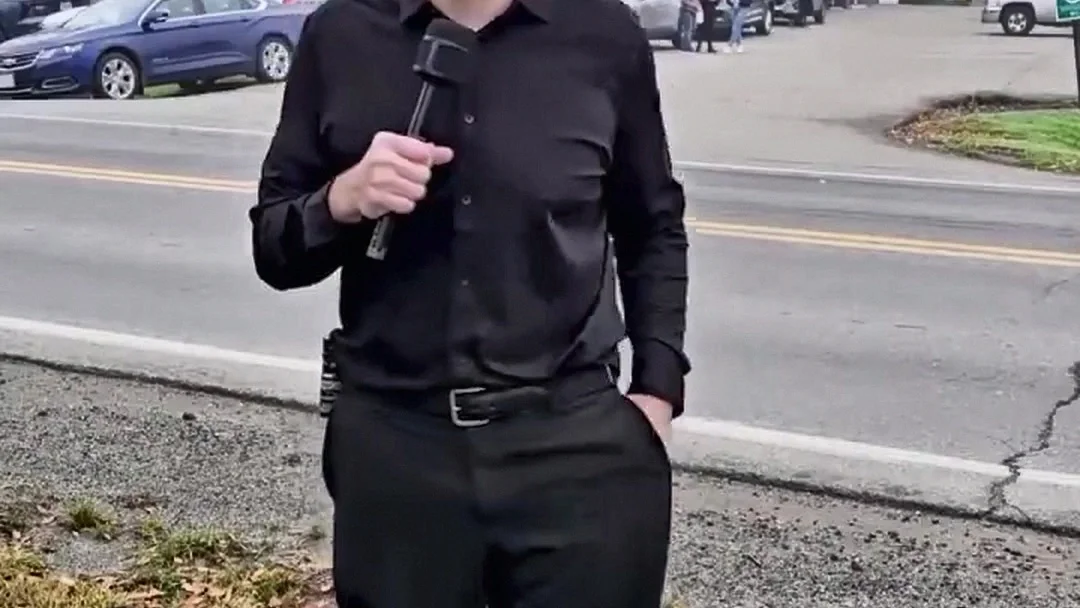
Deputy Wades Into Swamp to Save Veteran in Crisis
WATCH: On-scene video documentation is embedded below →
LISTEN TO THIS ARTICLE
Audio Narration • English (US)
The black water swallowed the tree trunks whole, and somewhere between them stood a man who had already decided the world was done with him. A Hillsborough County Sheriff's deputy waded forward through the flooded cypress, body camera rolling, voice steady – not shouting orders, but offering something far more fragile: a handshake. What happened next in that murky Florida woodland would hinge entirely on whether a stranger's calm could outlast a veteran's despair.
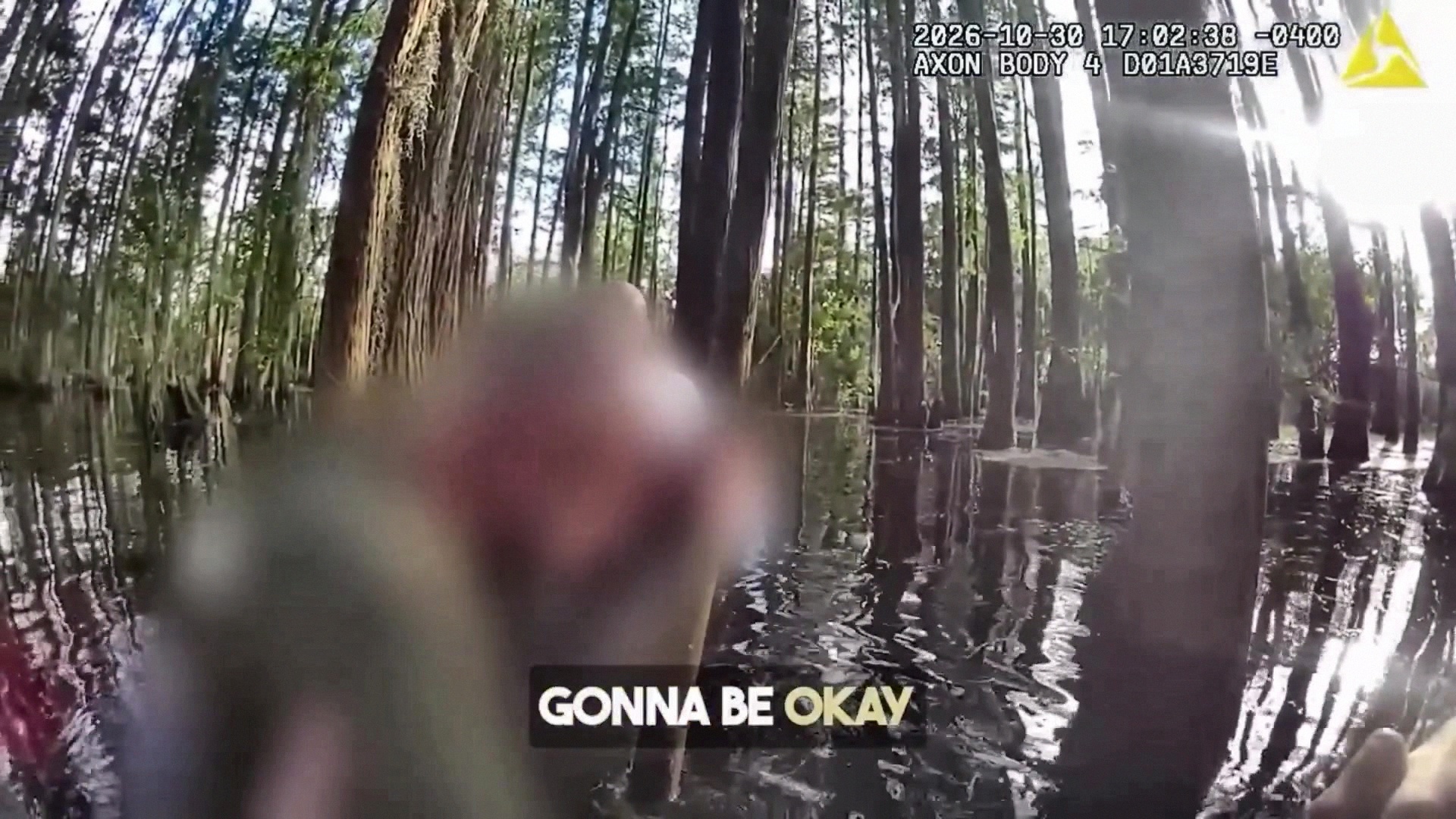
- A Florida sheriff's team responded after a military veteran fled on foot into a densely wooded swamp, showing signs of being suicidal.
- Body-worn camera footage captures deputies wading through waist-deep water, calling out gently rather than closing in aggressively.
- The veteran, visibly blurred in the released frames, hesitated behind tree trunks before accepting an extended hand and a verbal acknowledgment of his service.
- The encounter ended with the man walking out under his own power, escorted by the deputy who had waded in beside him.
What the Recorded Footage Captures: Chronological Breakdown
The footage opens on a cathedral of flooded timber, sunlight cutting in narrow shafts through the cypress canopy. The water is flat and dark, mirroring the trees so precisely that the horizon disappears. The camera – mounted on a deputy's chest – bobs gently as he moves, and the only sounds are the soft slosh of each step and the distant call of birds. Then a voice, warm and unhurried, cuts across the stillness: "Hey, I see you behind the tree. Come here, dude. We're here to help you."
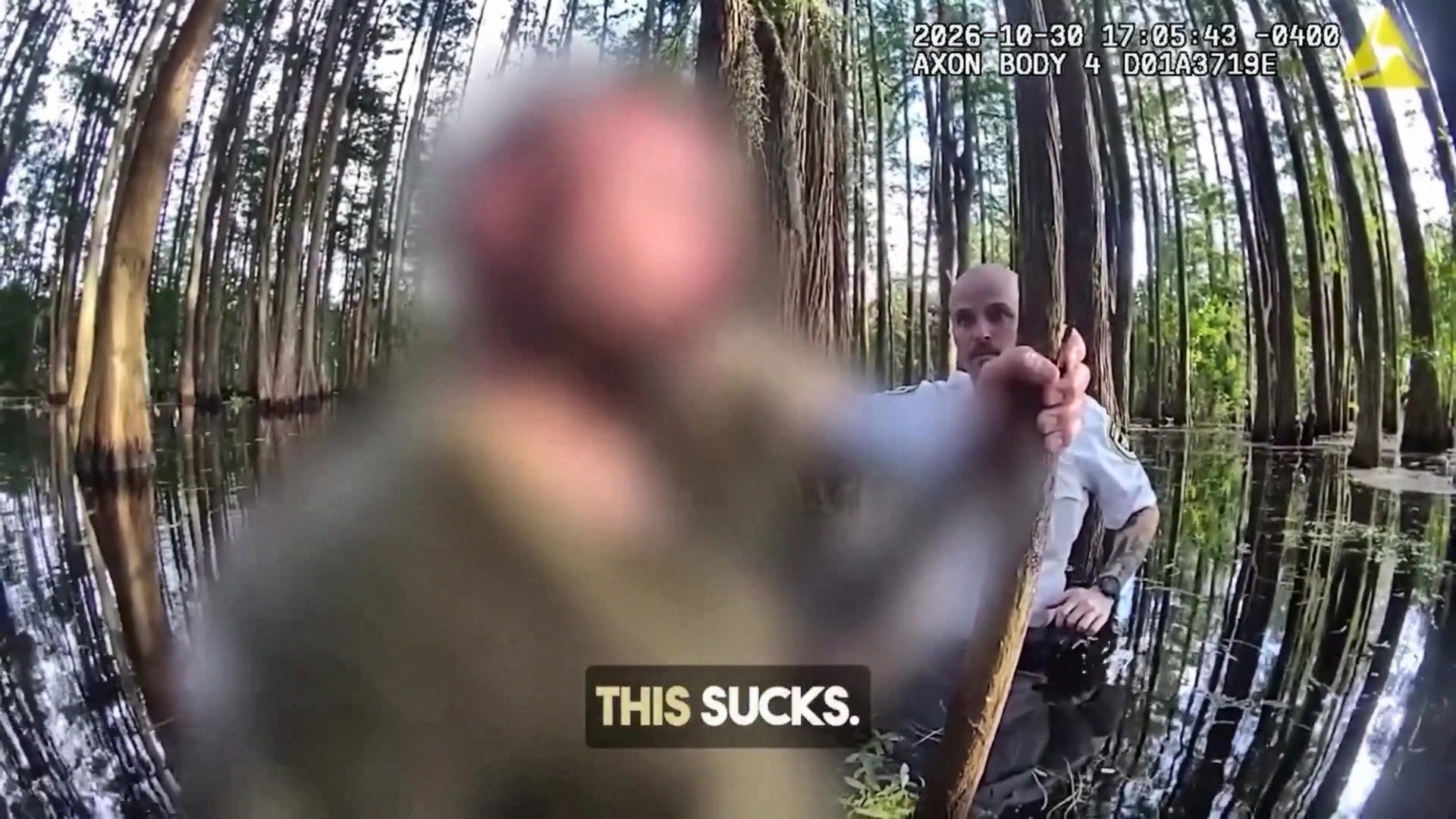
The man does not step out immediately. The camera catches only glimpses – a blurred shape, shoulders hunched, a figure half-hidden by the wide base of a cypress. The deputy keeps talking, repeating the same promise in different words, each time softer: "We're not trying to cause you harm. We want to help you. Come here. We're here to help you, okay? We don't want to hurt you. You're not in trouble." The phrasing matters. Every sentence is built to remove a reason to run.
When the man finally extends his arm, the moment lands like a held breath released. The deputy takes his hand and adds something unexpected – a direct acknowledgment of service: "And I appreciate your service. Listen, can I shake your hand?" The response is raw and immediate. "Heatedly just get me out of here," the man says, and the deputy answers without missing a beat: "I'll get you out of here. Come on, buddy."
Critical Blind Spots: What the Lens Leaves Unresolved
The camera shows only what the deputy sees, and that angle hides everything behind him. How many other deputies were staged in the tree line is never made visible. Whether a crisis negotiator or a mental health clinician was on scene, and at what distance, cannot be determined from the frames. The water depth is obvious – it reaches the deputy's waist – but the terrain beneath it, the sinkholes and submerged roots that make such swamps treacherous, remains invisible.
The most significant blind spot is time. The released footage feels continuous, but body-worn camera files are frequently edited for brevity. How long the man stood behind that tree before answering, and how long he had been in the water before deputies arrived, are questions the public record does not answer. The man's face is deliberately blurred throughout, protecting his identity – and also removing the visual cues that would tell a viewer how close to the edge he truly was.
What the lens also cannot convey is the internal calculation. At what point did the veteran decide the voice in the swamp was genuine rather than a tactic? The audio captures the words, but not the silence between them – the pauses where a single wrong sentence could have sent him deeper into the timber.
Statutory Framework and Protocol Analysis
Florida's involuntary examination framework allows for temporary custody of a person who appears to be a danger to themselves, but the mechanics of that process are never visible in this footage. What is visible is a deliberate choice to earn cooperation instead of applying it. The deputy could have ordered the man out. Instead, he offered a handshake and a shared admission: "I've gone through some dark times, too. All right, but there's light at the end of the tunnel. I promise you. Okay, but right here in the middle of this swamp is not it."
That line – practical, almost wry – reframes the swamp itself as the problem rather than the man as the problem. It is a de-escalation move that costs nothing and risks everything. The man's reply, "Yeah, this sucks," is the first sign the two of them are standing in the same reality.
| Incident Parameter | Recorded On-Scene Evidence |
|---|---|
| Location type | Flooded cypress swamp, densely wooded |
| Water depth at contact | Approximately waist-deep on the deputy |
| Initial posture of subject | Partially concealed behind a tree trunk |
| First verbal approach | "We're here to help you" repeated calmly |
| De-escalation technique | Extended handshake and acknowledgment of service |
| Subject's turning point | "Just get me out of here" |
| Resolution shown | Subject walks out alongside the deputy |
Read more:
Read more: Crews Scramble as Live Shot Setup Cleared from Sidewalk →
Core Questions and Institutional Review
- What was the total duration between the first sighting of the subject and the moment he took the deputy's hand?
- Were mental health professionals or crisis intervention specialists involved at any stage of the response?
- What follow-up care was arranged for the veteran after he left the water?
- How often do agency body-camera releases blur the subject's face, and what is the standard for determining when release is appropriate?
The footage ends as abruptly as it began. The deputy says "Let's get the dispute out of here," the man answers "Thanks, man. Appreciate you," and the camera turns back toward the tree line. There is no dramatic ending, no announcement of what happens next – just two men wading out of a swamp together, one of them newly responsible for the other's survival. The public is left to wonder what a single calm voice actually changed that afternoon, and whether the same approach would work as well the next time.
It raises a question worth sitting with: when someone has already fled into the dark, what does it take to make them believe a stranger is telling the truth?
LATEST DEVELOPING INCIDENT
An even more shocking incident just erupted hours ago that has stunned onlookers nationwide. Full investigative breakdown and on-scene evidence documented below.
BREAKING: READ NEXT SHOCKING INCIDENT – LATEST CASE ↓
Reporter Nearly Run Over Outside Maine Treatment Center
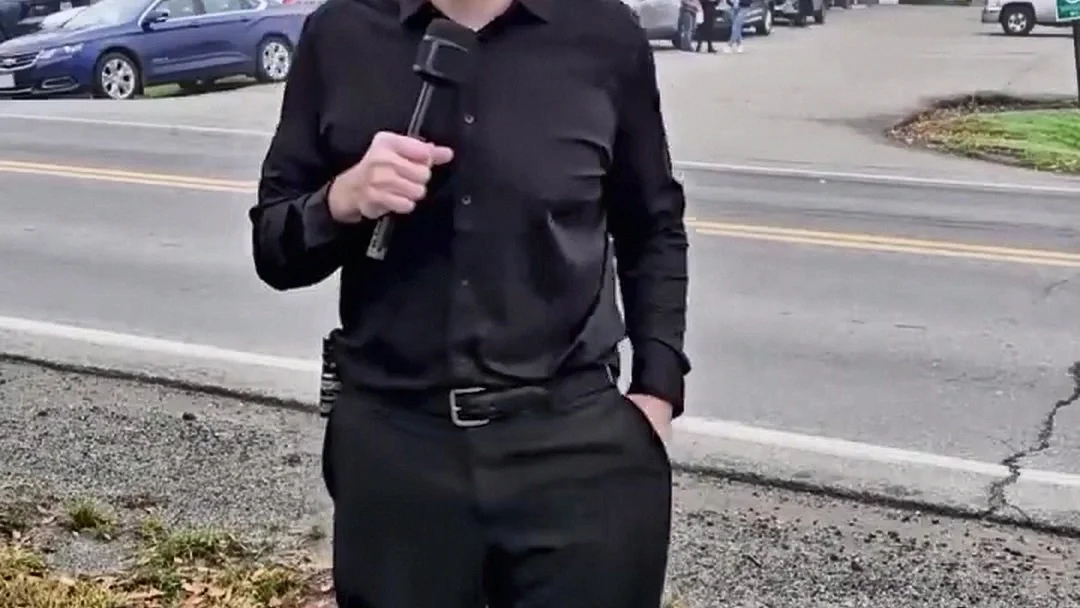
A routine sidewalk broadcast outside a Bangor treatment center became a flashpoint when a driver pulled into the frame and questioned why the reporter was there at all. The exchange moved from a tense question of privacy to a sudden surge of a vehicle, leaving the man holding the microphone scrambling for a clear line of retreat. What began as a calm introduction outside a low grey building would escalate into a confrontation that raised far more questions about public boundaries than it answered.
- A reporter identifies himself on camera as Daniel while standing on a public roadside outside Bangor Comprehensive Treatment Center in Maine.
- A driver leaving the property confronts him over the camera, framing the recording as an invasion of patient confidentiality.
- The dispute turns kinetic when the driver reportedly accelerates a Jeep toward the reporter, forcing him to break away from his position.
- Several people are seen entering and leaving vehicles on the lot as the exchange continues, and a license plate is read aloud on camera as the tension reaches its peak.
What the Recorded Footage Captures: Chronological Breakdown
The tape opens with an almost neighborly calm. A man in a black button-down shirt and a white-and-black cap stands on a grassy verge with a microphone in hand, the flat grey sky pressing down on an industrial stretch of road. He introduces himself as Daniel, offers a friendly greeting, and then, without warning, the words turn sideways as a driver tells him he is invading people's privacy. Daniel answers with a question rather than a defense: by being in public with a camera, doing a report, filming across the road? The driver's replies stay clipped and certain, and the reporter's voice keeps its light, almost amused cadence, even as the disagreement hardens.
Then the frame jumps. The camera swings wildly into a blur of green and grey, the sky tilting, the ground sweeping through the lens, and the audio breaks into a rush of motion. The footage is momentarily useless, a smear of asphalt and grass. When the view settles, a dark Jeep is pulling away toward the lot's exit, and Daniel is reading a plate aloud, repeating the sequence 841-LZD three times as if locking a fact into the record. He turns toward the building and calls out that a patient just tried to run him over, then asks flatly whether the goal was to intimidate him.
The confrontation does not end there. A woman in a brown zip-up fleece and tinted sunglasses steps into the frame, her chin lifted, and the exchange shifts into a property-boundary argument. A voice tells him to get off the property right now, citing cameras; Daniel counters that he will move when law enforcement arrives. "Don't touch me," he says. The reply comes back, sharp and immediate: "I'm not touching you." The warning about assault charges lands next, a verbal line drawn in the gravel. "Get off property," the voice says. "Is that what you want? Do you want an assault charge?" A staff member's tilted head, a half-smile, and a raised eyebrow fill the screen between sentences, every pause doing the work of a closing door.
Critical Blind Spots: What the Lens Leaves Unresolved
The footage is a single, jittery perspective, and its worst moments are the ones it cannot show. During the blurred swing, the camera sees grass, a curb, and a flash of sky, but it cannot measure distance, speed, or intent. Whether the Jeep actually angled toward the man or merely passed close on a narrow lot remains a question the recording is not equipped to answer cleanly, and the reporter's own narration shapes the meaning before any independent account can be weighed.
The wider scene is equally incomplete. Other people appear on the lot, entering and leaving cars, and the audio mentions someone who may have been intoxicated, but no fixed vantage point grounds those claims. We do not see the driver's face, only the vehicle leaving. We do not hear the first words exchanged before the microphone was raised. And the question of where the sidewalk ends and the treatment center's private drive begins is argued aloud but never settled on camera, leaving a dispute over boundaries with no visible boundary line.
Statutory Framework and Protocol Analysis
Facilities that serve patients in recovery operate under strict confidentiality obligations, and staff are trained to protect clients from any external lens. That obligation explains the urgency in the voices on the lot, even as it collides with the reporter's equally firm position that standing on public ground with a camera is lawful. Neither side is operating from nowhere; each is following a set of reasonable expectations that happen to point in opposite directions.
What the tape reveals is a protocol gap. There is no calm intermediary, no clearly marked public right of way, no one stepping between the microphone and the moving vehicle until after the fact. Instead, the sequence runs from question to accusation to engine noise in under a minute, and the aftermath is handled through license plates and warnings rather than any structured process. The result is a confrontation that nobody escalates and nobody defuses.
| Incident Parameter | Recorded On-Scene Evidence |
|---|---|
| Location | Public roadside outside a Bangor, Maine treatment center |
| Reporter identity | Man identifying himself as Daniel, holding a microphone |
| Initial friction trigger | Driver's claim that filming invades patient privacy |
| Peak escalation point | Camera jerks into a blur as a Jeep moves past the reporter |
| Vehicle detail recorded | Plate sequence read aloud as 841-LZD |
| Boundary dispute | Verbal demands to leave the property, cited on-site cameras |
| Late-stage rhetoric | Warnings of potential assault charges as the exchange cools |
Core Questions and Institutional Review
- What was the actual distance and trajectory between the Jeep and the reporter at the moment the camera lost its footing?
- Does the location where the reporter stood fall entirely within public right of way, or did the exchange begin on private pavement?
- Who was the driver of the vehicle, and was anyone else present who could give an unscripted account of the approach?
- What did the treatment center's own staff see, and did their internal protocol for outside observers function as intended?
The visible record settles one thing clearly: a disagreement over a camera escalated into a moving vehicle, and the only witness who stayed still was the lens itself. The rest remains open, including the question that sits at the heart of every sidewalk broadcast. When does documenting a public space become an intrusion on the people who must pass through it, and who gets to decide where that line falls?
Practical Takeaways
- Public filming rights and private property lines are separate questions that a single confrontation can blur together.
- Treatment facilities face genuine confidentiality duties, and observers holding cameras should expect firm pushback.
- When a vehicle becomes part of a dispute, distance and intent matter more than any single shaky frame can prove.
- Recording a plate aloud preserves evidence, but it does not replace a full account from independent witnesses.