The $150,000 Phone Lockdown: How One Kansas District Is Forcing Gen Z to Feel the Silence
A new state law has turned the humble school hallway into a fortress of accountability. But the real story is what happens when the screens go dark.
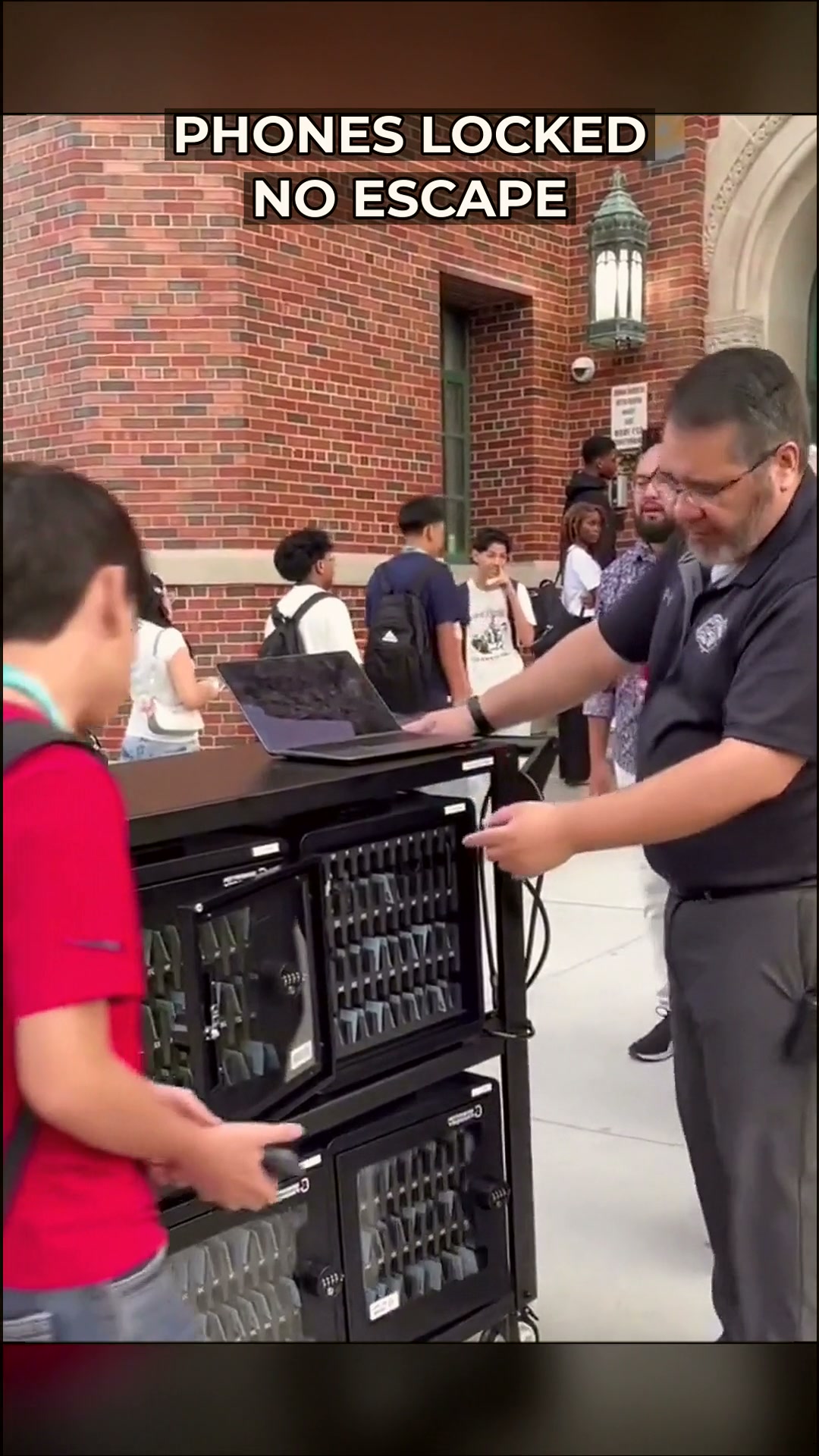
- The Kansas City, Kansas district spent $150,000 on high-tech phone lockers to comply with a new statewide cellphone ban.
- Students now face a daily ritual of surrender, trading their digital lifelines for a plastic slot before the first bell rings.
- This is a case study in how communities enforce boundaries, and what happens when common sense collides with teenage habit.
The line snaked down the hallway like a slow-moving serpent. Teenagers, backpacks heavy, eyes darting, shuffled forward in a silence that felt unnatural. In their hands, not books, not notes, but the objects of their obsession: smartphones. And at the front of the line, a new kind of authority. Not a teacher, not a principal, but a plastic cubby with a locking mechanism.
Welcome to the new reality in Kansas City, Kansas. After the state dropped the hammer on cellphones in schools, this district decided to spend a cool $150,000 on a fortress of disconnection. The message is clear: your phone is not welcome here, and we will physically take it from you to prove it.
Staff members bark instructions with military precision. “Okay, don’t lose it. Let’s go. Next one up, please.” The video footage shows the routine: a student steps forward, deposits their device, and moves on. No time for a final text. No chance for a last scroll. Just the hollow click of a locker door sealing shut.

The Ritual of Surrender
This is not about a teacher asking you to put your phone away. This is institutionalized, zero-tolerance separation. The district spent the cash to send a message that echoes from the classroom to the living room: the age of distraction is over.
Think about the psychological weight of that moment. For a generation raised on instant gratification, the act of physically handing over a phone is a jolt to the system. It is a forced detox, a daily reminder that the virtual world can wait, but the one in front of you cannot.
“Get yourself in line after you deposit your phone.” It sounds like a prison intake, not a public school.
The staff member in the video keeps it moving, her tone a mix of drill sergeant and babysitter. The students comply, but you can almost feel the tension radiating off their shoulders. The lockers are not just storage; they are a monument to a cultural shift that is sweeping the nation.
The Price of Focus
Is $150,000 a lot to pay for silence? In an era where school budgets are stretched thinner than a dollar-store tarp, it is a bold statement of priorities. The district is betting that the cost of the lockers is less than the cost of a distracted generation. They are investing in the idea that a student who is not staring at a screen might actually look up, listen, and learn.
Parents are left in a strange position. Do they cheer a policy that forces their children to unplug? Or do they worry about the loneliness and anxiety that might surface when the digital crutch is kicked away? This is the unspoken fear in the hallway. The lockers are locked, but the emotions are not.
This is exactly why our community needs to stay vigilant. The policy is about more than just phones. It is a test of resilience. It is about teaching young people that their worth is not measured in likes or streaks, but in the content of their character and the focus of their minds.
The Unedited Truth of a Digital Detox
The real story here is not the lockers. It is the moment of impact. When a student reaches into their pocket, feels the smooth glass of their phone, and then has to let go, there is a flicker of something. Anxiety. Relief. Anger. Or maybe just a bizarre sense of freedom.
The district has drawn a line in the sand. They have said that the classroom is sacred ground, and the noise of the outside world must stop at the door. It is a controversial stance, but it is a stance nonetheless. And in a world that is drowning in ambiguity, there is something oddly refreshing about a rule that is so absolute.
The silence, however, is deafening. The lockers are full, the students are seated, and the lesson begins. But the question hangs in the air like a fog: what happens when the bell rings and the phones come back out? The addiction does not disappear; it just waits. And the district knows it. The lockers are a bandage, not a cure. But it is a start. And for now, that is all anyone can ask for.