The Uncomfortable Truth About Employer Overreach and the Mob Mentality Outside Your Door
When protests turn personal, the law is the only shield left for ordinary people trying to do their jobs.
- Workers have legal protection against hostile environments created by third parties, including protestors, under employment law.
- Employers are accountable for ensuring their staff can perform duties without intimidation or harassment, even outside the office.
- Documentation and witness statements are critical if a worker faces aggression while simply doing their job.
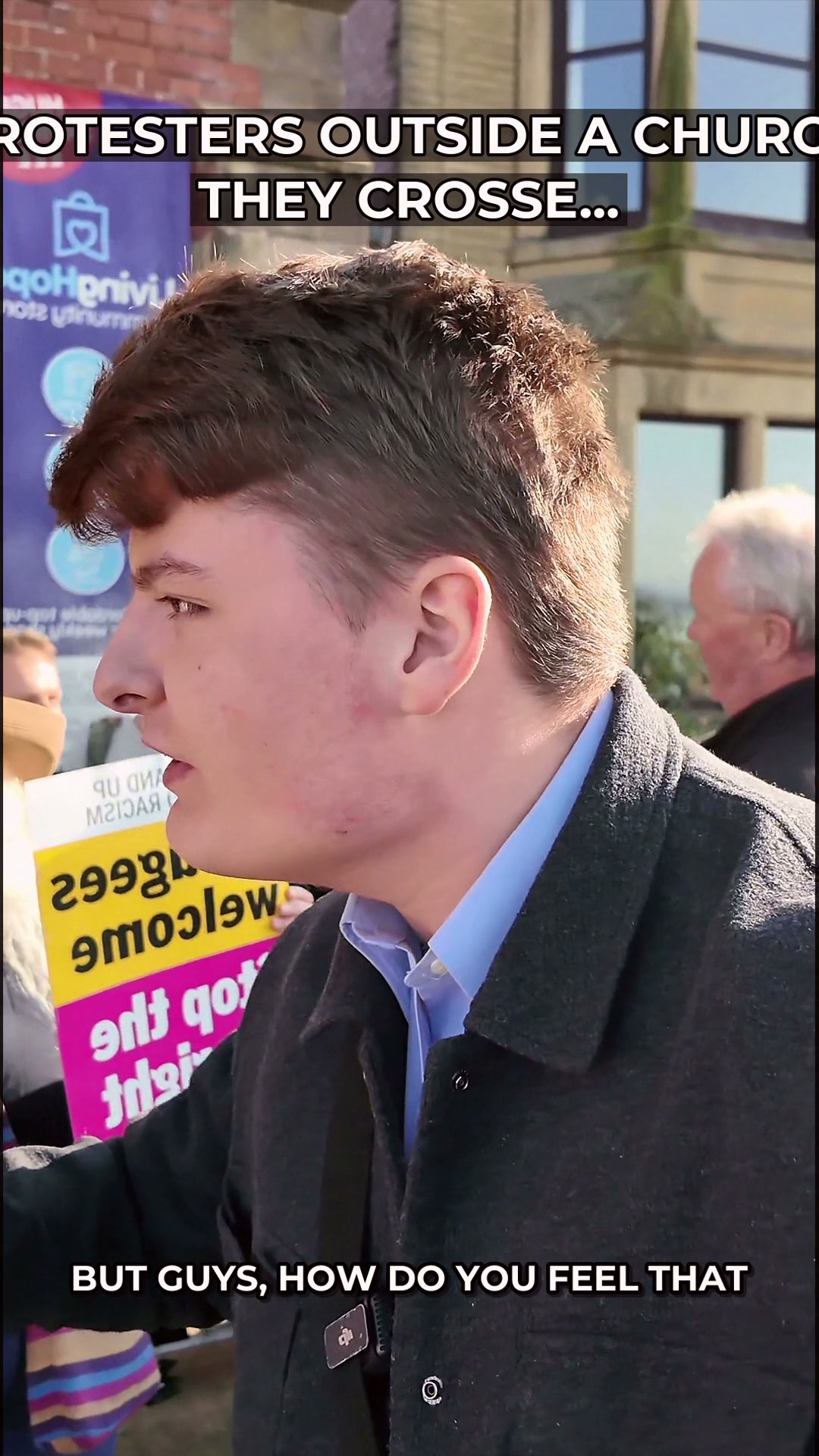
Picture this: you are walking into a church, not for a Sunday service, but for a two-day professional conference. You have a badge, a schedule, a job to do. And yet, a crowd of strangers has gathered outside, shouting, blocking the path, and questioning your very right to be there.
That is exactly what unfolded in Morecambe, where the “Make Britain Christian Again” conference met a wall of protest from “Stand Up to Bias.” The irony was not lost on the speakers inside: a mob outside a church, accusing Christians of bigotry, while actual clergymen are seated just feet away.
But the deeper story is not about theology. It is about what happens when workers, speakers, and attendees are subjected to intimidation simply for showing up. It is about employer accountability, HR failures, and the legal protections that supposedly exist but rarely get tested until it is too late.
The Cultural March Through the Institutions
The scene outside the church was chaotic. One protester physically pushed a speaker, prompting a sharp rebuke: “You don’t need to push me, lady.” That moment, caught on video, is a textbook example of how protest can tip into harassment.
For the worker inside, the question becomes: who is responsible for your safety? Your employer booked the venue. Your employer invited the speakers. But when a hostile crowd forms, does the employer have a duty to protect you from the mob?
Under UK employment law, the answer is a qualified yes. Employers have a legal obligation to provide a safe working environment, which extends to protecting staff from third-party harassment. This includes protestors, clients, or any external party who creates a hostile or intimidating atmosphere.
“You are claiming things about Christianity whilst actual clergymen are inside. That is quite interesting.”
Yet, too often, employers look the other way. They assume protest is a PR issue, not a legal one. They fail to brief staff on how to respond, fail to document incidents, and fail to contact law enforcement until someone gets hurt.
That is where accountability breaks down. The worker is left to fend for themselves, navigating a crowd that feels entitled to their time, their space, and their peace of mind.
The Legal Precedent
The law is clearer than most people think. The Equality Act 2010 protects individuals from harassment related to protected characteristics, and that protection is not limited to the office. It extends to work-related events, conferences, and even the pavement outside the venue.
Employers who ignore this exposure are not just negligent; they are setting themselves up for tribunal claims. A worker who feels unsafe, who is pushed or shouted at, may have grounds for constructive dismissal if their employer fails to act.
And here is the kicker: the protestors are not off the hook either. Physical contact, intimidation, and blockading a public path can constitute harassment under the Protection from Harassment Act 1997. A single push can be a suspect matter, not just a political statement.
Your Rights When Bosses Push Too Far
So what can a worker do when they find themselves in this situation? First, document everything. Record the time, the location, the faces, the words. If someone pushes you, report it to the authorities immediately.
Second, notify your employer in writing. Do not rely on a verbal complaint. Send an email outlining the hostile environment and request a formal risk assessment. This creates a paper trail that protects you if the situation escalates.
Third, know that you do not have to tolerate mistreatment as part of the job. A hostile environment is not a “perk” of the profession. It is a breach of your fundamental rights as a worker.
And finally, understand that your employer is not your friend. They are a legal entity with obligations. When they fail to meet those obligations, they must face consequences. That is the unedited truth of workplace accountability.
“How do you feel that you are protesting at an actual church, claiming things about Christianity, whilst actual clergymen are inside?”
The protestors in Morecambe may have gone home satisfied with their chants. But the workers they targeted are left with a lingering question: if this can happen outside a church, in broad daylight, with witnesses, what happens when the cameras are gone?

The answer is that the law becomes the only barrier between order and chaos. And when employers refuse to enforce it, the worker is left exposed, vulnerable, and alone.
This is not about politics. It is about the basic right to do your job without being shoved, shouted at, or shamed. It is about common sense and respect, two things that were in short supply on that pavement in Morecambe.

The conference continues. The speakers speak. The clergymen pray. And the workers, the ones who are paid to be there, are left to wonder if their employer will have their back when the next mob forms. That is a question no contract can answer, and no HR department can fix.