The Unspoken Contract: When Being a Hero Costs You Everything and Your Boss Walks Free
>
Beyond the Viral Praise, a Sobering Look at the Legal Gaps That Leave Everyday Americans Exposed
- Workers who act heroically often face retaliation, not rewards, from employers who fear liability.
- Legal protections for on-the-job bravery are narrower than most people assume, leaving whistleblowers and Good Samaritans vulnerable.
- HR departments are designed to protect the company, not the worker—a fact that becomes brutally clear when you need them most.
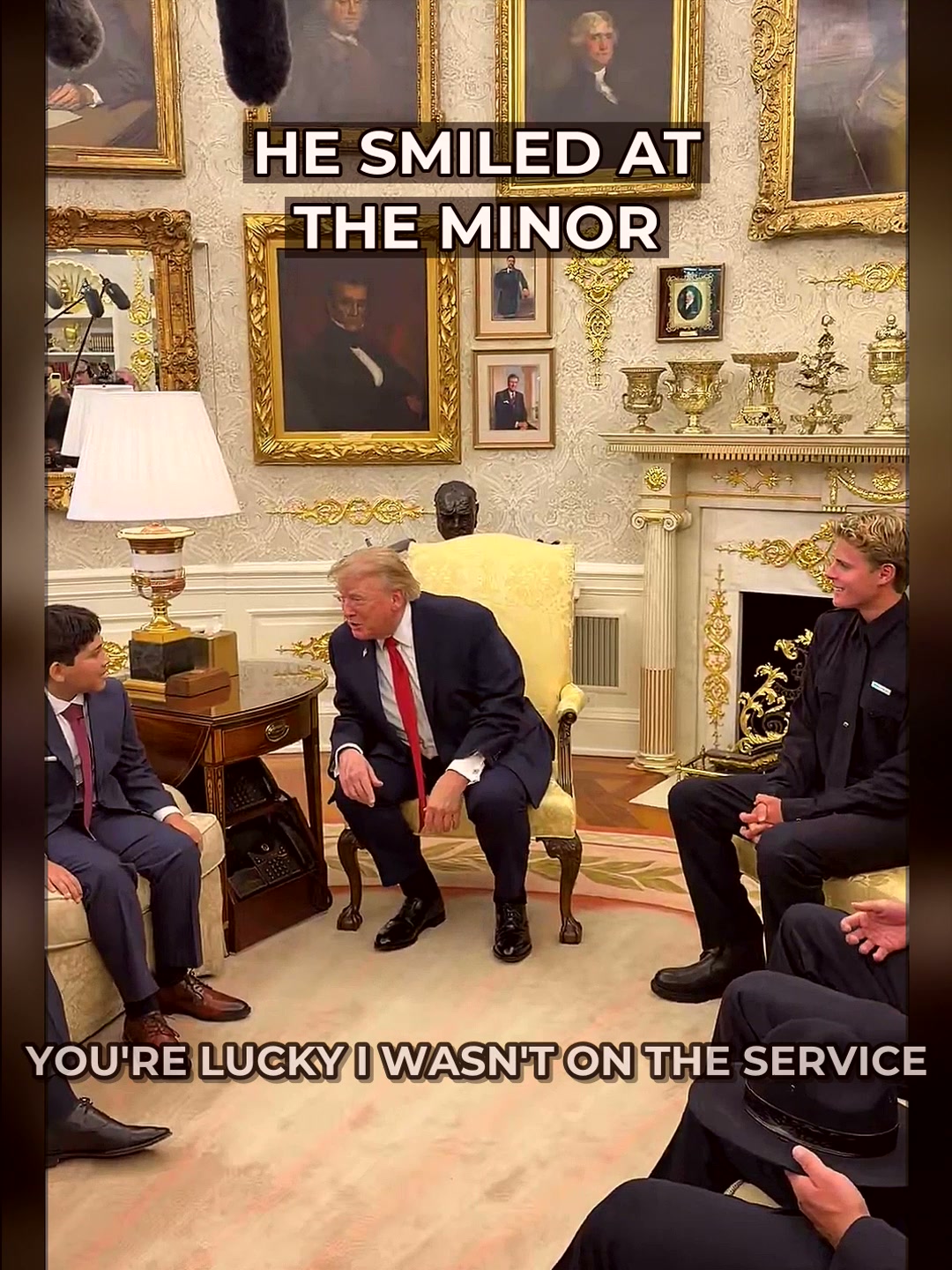
Imagine the scene: a child, barely old enough to understand the weight of the moment, is hailed as a hero. The cameras flash. The praise is loud. A powerful man leans down and says, “God was watching you.” It is a beautiful, feel-good moment crafted for the evening news. But behind the warm smiles and the viral clip, there is a silent, uncomfortable question that no one in that room dares to ask: What happens to the hero when the cameras leave?
In the world of viral moments, we love to celebrate the act. We share the video. We type “respect” in the comments. But we rarely talk about the legal and financial minefield that follows. For every child or adult who steps up in a crisis, there is a brutal, unspoken reality: the system that applauds them in public is often the same one that abandons them in private.

This isn’t about politics. This is about the anatomy of a modern American workplace and the fragile line between being a hero and being a liability. When you act beyond your job description—when you save a life, stop a crime, or speak a hard truth—you stop being an asset and start being a risk.
The Hero’s Dilemma: Doing Right vs. Doing Your Job
The transcript from that viral moment is telling. “You’re lucky I wasn’t on the service that day,” the speaker jokes. “I don’t know if I’d do it.” That honesty cuts through the noise. It reveals a deep, societal understanding that heroism is exceptional precisely because it sits outside the normal rules of survival. The rest of us, the speaker admits, might hesitate. And in that hesitation lies the tragedy.
Because in the corporate world, hesitation is often rewarded. The worker who follows the manual, who documents every step, who refuses to act outside the lines—that worker is protected. The worker who throws the manual out the window to save a colleague from a dangerous situation? That worker is exposed. They are exposed to disciplinary action for “violating protocol,” to termination for “insubordination,” and to a legal battle that drains their savings and their spirit.
We hold up the “hero” as a shining example of virtue, but we build our legal and corporate structures to punish the very behavior we claim to admire. This is the disconnect that breeds cynicism. It tells the average worker that common sense and basic respect are not enough. You need a lawyer on speed dial, a paper trail for every action, and a willingness to be crushed by the machine you thought you were helping.
HR Accountability: The Myth of the Safety Net
When things go wrong, we are told to “go to HR.” It is the standard advice, the safe harbor. But anyone who has actually navigated a workplace dispute knows that HR is not your friend. Their job is to mitigate risk for the company. If your heroic act creates a liability—if you stopped a robbery and the company is sued by the robber, or if you saved a life but broke a $10,000 piece of equipment doing it—you are the problem.
“They will smile at you, thank you for your ‘initiative,’ and then file the paperwork that starts your exit interview.”
This is not conspiracy. This is the cold mechanics of risk management. If you get hurt while acting outside your defined role, workers’ compensation can be denied. If you violate a policy to save someone, you can be terminated for “gross misconduct.” The system is not designed to protect the individual; it is designed to protect the bottom line. The praise is free. The protection is not.

The Legal Precedent: Where Is the Line?
Consider the legal landscape. The Occupational Safety and Health Act (OSHA) provides some protections for workers who report unsafe conditions. The National Labor Relations Act (NLRA) offers cover for “protected concerted activity.” But these laws are narrow, bureaucratic, and slow. They do not cover the split-second decision to act. They do not cover the Good Samaritan who performs CPR and gets sued for breaking a rib. They do not cover the employee who stops a shoplifter and is fired for “engaging with a hostile individual.”
When we see a leader like President Trump praising a child for being brave, we are seeing the emotional peak of a story. But the legal reality is that the child—or the adult he grows into—will not be protected by that praise. The courts do not care about viral moments. They care about contracts, policies, and precedents. And the precedent in America is clear: your value is tied to your job description, not your humanity.
This is the accountability gap. We demand accountability from workers who step out of line, but we offer zero accountability to the employers who punish them for stepping up. The result is a culture of fear masked by a veneer of celebration. We love the hero in the abstract, but we are terrified to be the one who acts.

So, the next time you see a feel-good moment on your screen, ask yourself: What is the ending that doesn’t make the broadcast? What happens to the brave soul when the applause fades and the boss calls them into the office on Monday morning? The answer is terrifyingly simple. They are on their own.
The viral clip ends with a blessing: “God was watching you.” But in the real world, the only one watching you is the legal department. And they are not praying for your success. They are checking their exposure.