Birthright Citizenship Under Fire: Trump Demands Congressional Action Amid SCOTUS Decision — But Will It Change the Debate’s Tone?
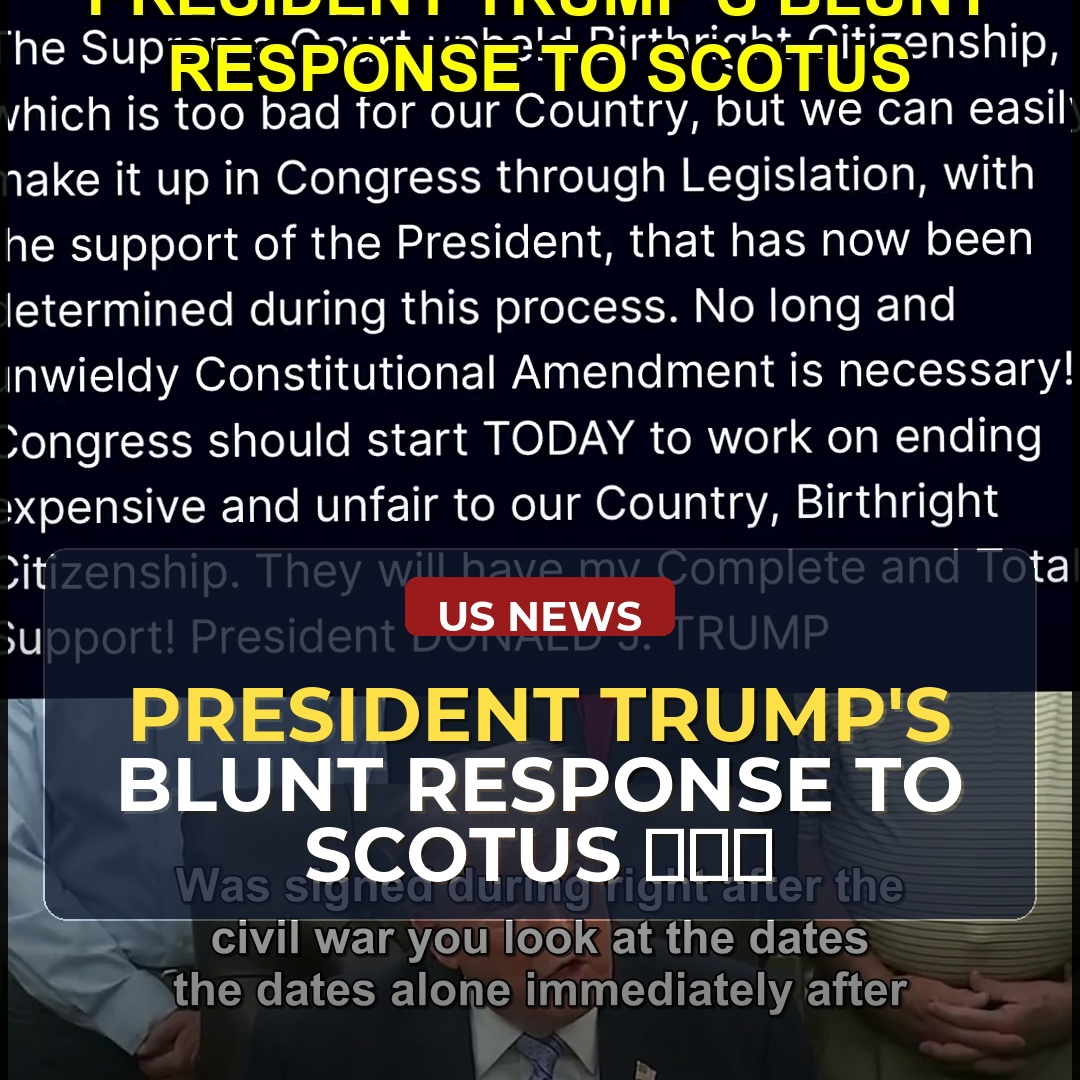
President Trump Calls for End to Birthright Citizenship Following SCOTUS Decision
The President’s Statement Sparks Debate on Immigration, Economy, and Constitutional Interpretation

In a recent statement, President Trump reacted strongly to the Supreme Court’s decision on birthright citizenship, urging Congress to take immediate action to end what he describes as an “expensive and unfair” practice. The President’s call to action has sparked a heated debate on immigration, the economy, and the interpretation of the Constitution, with many wondering what this could mean for the future of citizenship in the United States.
The issue of birthright citizenship has been a contentious one for years, with some arguing that it is a fundamental right granted by the 14th Amendment, while others see it as a loophole that can be exploited by those seeking to take advantage of the country’s welfare systems. According to President Trump, the current system is “a disaster economically” and could lead to a significant influx of people entering the country through birthright citizenship, with potentially devastating consequences for the nation’s economy and social services.
The President’s statement was made in response to a recent Supreme Court decision that has reignited the debate on birthright citizenship. While the decision itself did not directly address the issue, it has been interpreted by some as a signal that the Court may be open to reexamining the concept of birthright citizenship in the future. This has led to a flurry of activity on Capitol Hill, with some lawmakers calling for legislation to clarify or restrict the practice of granting citizenship to individuals born in the United States to non-citizen parents.
At the heart of the debate is the question of what the Constitution actually says about citizenship. The 14th Amendment, which was ratified in 1868, states that “all persons born or naturalized in the United States, and subject to the jurisdiction thereof, are citizens of the United States and of the State wherein they reside.” While this language has been interpreted by many to mean that anyone born in the United States is automatically a citizen, others argue that it was never intended to apply to the children of non-citizen parents.
Supporters of birthright citizenship argue that it is a fundamental right that has been guaranteed by the Constitution for over a century. They point out that the practice has been upheld by numerous court decisions and is an important part of the country’s tradition of welcoming immigrants and providing a safe haven for those seeking a better life. On the other hand, opponents of birthright citizenship argue that it is a magnet for illegal immigration and can lead to significant economic burdens on the country’s social services and welfare systems.
One of the key issues at play in the debate is the question of what constitutes “subject to the jurisdiction” of the United States. While some argue that this language refers only to the children of citizens or lawful permanent residents, others believe that it applies to anyone born in the United States, regardless of their parents’ immigration status. This has led to a complex and often contentious discussion about the meaning and scope of the 14th Amendment, with different interpretations and opinions on what the Constitution actually says about citizenship.
The economic implications of birthright citizenship are also a major concern for many Americans. According to some estimates, the cost of providing social services and welfare benefits to individuals who are in the country illegally could be significant, with some arguing that it could be a major drain on the country’s resources. On the other hand, others argue that immigrants, including those who are in the country illegally, contribute significantly to the economy through their labor and taxes, and that restricting birthright citizenship could have unintended consequences for the country’s economic growth and development.
As the debate over birthright citizenship continues to unfold, it is clear that the issue is complex and multifaceted, with different opinions and interpretations on what the Constitution says and what the consequences of restricting or ending the practice could be. While some argue that it is a necessary step to protect the country’s economic and national security interests, others see it as a fundamental attack on the principles of equality and justice that underpin the American system of government.
For many Americans, the issue of birthright citizenship is not just about abstract principles or constitutional interpretations, but about the very real consequences that it could have for their lives and their communities. As the country continues to grapple with the challenges of immigration and economic inequality, it is clear that the debate over birthright citizenship will only continue to grow in importance and intensity, with potentially far-reaching implications for the future of American society and politics.
In conclusion, the debate over birthright citizenship is a complex and contentious issue that raises important questions about the meaning and scope of the Constitution, the role of immigration in American society, and the economic and national security implications of restricting or ending the practice. As the country moves forward, it will be important to consider these issues carefully and thoughtfully, with a commitment to upholding the principles of justice, equality, and fairness that have always been at the heart of the American system of government.

Ultimately, the decision on whether to restrict or end birthright citizenship will depend on the will of the American people and their elected representatives. As the debate continues to unfold, it will be important to consider the potential consequences of any changes to the current system, and to ensure that any decisions that are made are guided by a commitment to the principles of justice, equality, and fairness that have always been at the heart of American democracy.