The Cost of Chaos: When On-The-Clock Brawls Expose the Ugly Truth About Employer Accountability
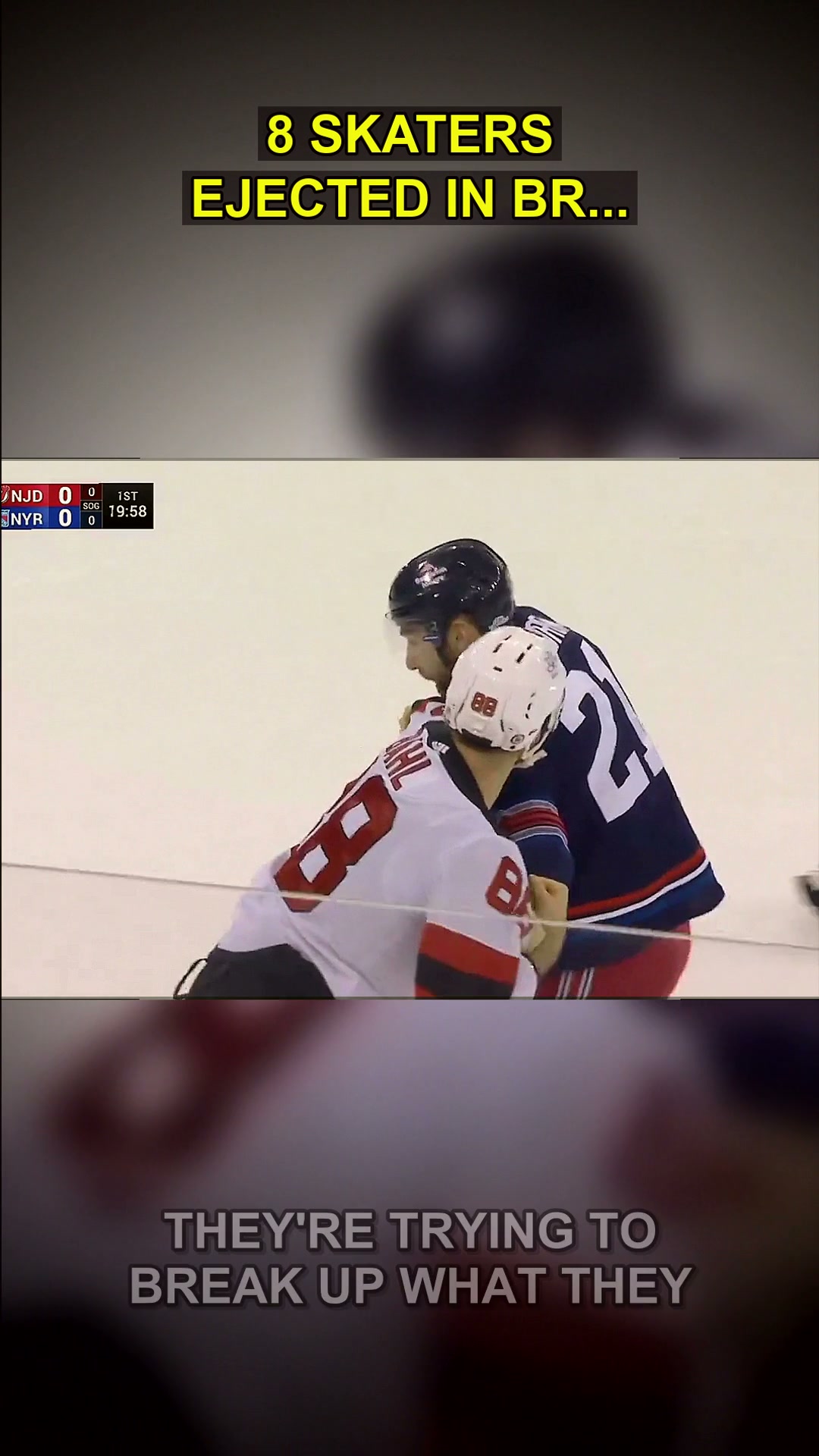
Eight players tossed before the game even found its rhythm—but the real fallout is a brutal lesson in workplace consequences, legal gray areas, and the price of toxic culture.
- Professional athletes are employees too—and their conduct on the clock is governed by strict labor contracts that supersede emotion.
- When a “workplace dispute” turns physical, the employer (the team and the league) holds the ultimate power to discipline, fine, or terminate.
- The Rangers-Devils brawl highlights a universal truth: toxic workplace culture doesn’t just disappear; it boils over, and the consequences are often career-altering.
Imagine clocking into your shift, barely getting through the door, and within seconds you are physically entangled with a colleague from a rival department. Your boss doesn’t stop it. The security guard is overwhelmed. And before you know it, you are escorted out—job status uncertain, reputation in tatters, and a disciplinary hearing looming.
That is essentially what happened at Madison Square Garden. The New York Rangers and New Jersey Devils dropped the puck, and instead of a strategic play, all ten skaters on the ice dropped their gloves. Five simultaneous fights. Four officials scrambling. Eight players ejected before the game clock even mattered.
But let’s step back from the highlight reel. The visceral thrill of the chaos fades quickly when you realize the underlying narrative here is about power, rules, and who gets to write the check when tempers flare.

The Unwritten Rules of the Workplace
The reported genesis of this explosion? An incident earlier in the month. A grudge. A perceived lack of respect. Hockey has a long-standing, unspoken code that says you answer for your transgressions physically. But in the modern era of employment law and multi-million-dollar contracts, that code sits in direct conflict with the actual legal framework governing these athletes.
These players are not just gladiators for public entertainment. They are employees. They operate under a collective bargaining agreement—a massive, legally binding document that outlines what happens when an employee engages in conduct detrimental to the company. The “company” in this scenario is the National Hockey League.
When Matt Rempe and the Devils’ player finally separated, when the referees regained control, the league office in New York (ironically, the same city as the home team) immediately shifted into HR mode. Fines are coming. Suspensions are inevitable. The “investigation” has already started.
Let’s be blunt. The Rangers and the Devils are not innocent bystanders here. These organizations cultivate aggression. They recruit players specifically for their physicality. They pay them bonuses for “grit.” And then, when that aggression spills over the invisible line, they throw their hands up and discipline the individual, absolving the institution of any responsibility.
It is a classic case of employer overreach meeting employer denial. The very culture that creates the powder keg is never held accountable for the explosion.
The Financial Repercussions of a Split-Second Decision
For the skaters involved, the math is brutal. Let’s talk about the actual cost of this outburst. The league’s standard fine for a first-offense instigator penalty is around $2,000. For players earning millions, that is pocket change. But the suspension—the loss of game checks—is where the pain lives.
A single-game suspension for a player making $5 million annually costs roughly $60,000 in lost wages. Ejections like this often trigger automatic supplemental discipline reviews. The “Department of Player Safety” acts as the ultimate HR tribunal, and their rulings are final, binding, and often financially devastating.
This is the unedited truth about worker rights in high-stakes environments: your passion can be weaponized against you. The same aggression that secures your roster spot on Tuesday can get you fined, benched, and publicly shamed on Wednesday. The line between “valued asset” and “liability” is thinner than the blade of a skate.
“The hypocrisy is staggering. They are paid to be violent, praised for being aggressive, and then legally punished when that aggression exceeds a completely arbitrary threshold. Who is really accountable here?”

Beyond the individual fines, there is the matter of team accountability. The Rangers organization now faces the reality of playing without key players. The Devils face the same. This is where the abstract concept of “employer accountability” becomes tangible. The management teams that failed to de-escalate the tension between these clubs are the same management teams that must now scramble to field a competitive roster.
They will absorb the losses. They will pay the replacement players. And they will do so without a single dollar being docked from their own executive bonuses. The worker takes the hit. The institution moves on.
The Legal Precedent
This isn’t just a sports story. Look at the legal framework that governs these moments. In the broader employment law context, what happened at the Garden is a textbook example of “workplace violence” policy violations. Under Occupational Safety and Health Administration (OSHA) guidelines, employers have a general duty to provide a workplace free of recognized hazards. Did the NHL and its teams fail that duty by allowing a known grudge match to escalate into a full-scale brawl within seconds of the opening whistle?
The players themselves, however, have limited recourse. Their union, the NHL Players’ Association, can file grievances. But the standard for overturning a suspension for fighting is incredibly high. The league argues that fighting is a “hazard of the profession” and that players consent to physical contact when they step on the ice.
This legal argument is the same one used to deny workers’ compensation claims in contact sports. By stepping onto the ice, you are presumed to have accepted the inherent risks. But did Rempe accept the risk of being ejected for a fight that was orchestrated by the tension between the teams? Did he consent to losing game checks for behavior that his employer directly incentivized?
In a normal office, if a manager encouraged aggressive sales tactics and then fired a salesperson for being too aggressive, the wrongful termination lawsuit would write itself. In the NHL, the collective bargaining agreement preempts most state and federal employment laws. The players have traded their rights to a jury trial for the right to play the game. It is a Faustian bargain that leaves them utterly exposed.

The silence from the league office is deafening. They will release a statement, hand out suspensions, and declare the matter closed. But the root cause—the culture of vengeance, the lack of de-escalation protocols, the acceptance of violence as a legitimate problem-solving tool—remains untouched.
We watch these games for entertainment. We cheer the hits. We love the fights. But when the dust settles and the disciplinary letters go out, we are watching a microcosm of every broken workplace in America. The powerful set the rules. The workers break them. The workers pay the price.
The only difference is that in your office, the “fight” is a nasty email chain or a passive-aggressive comment in a meeting. The consequences are the same: someone gets thrown under the bus, and the culture remains toxic. The Rangers and the Devils just did it with a full arena watching and millions of dollars on the line.
The ejections are final. The suspensions are coming. And the message is clear: in the game of employer versus employee, the house always wins.