The Unwritten Rule of the Coffee Shop: Why Refusing to Order Isn’t a Civil Right, It’s an Entitlement
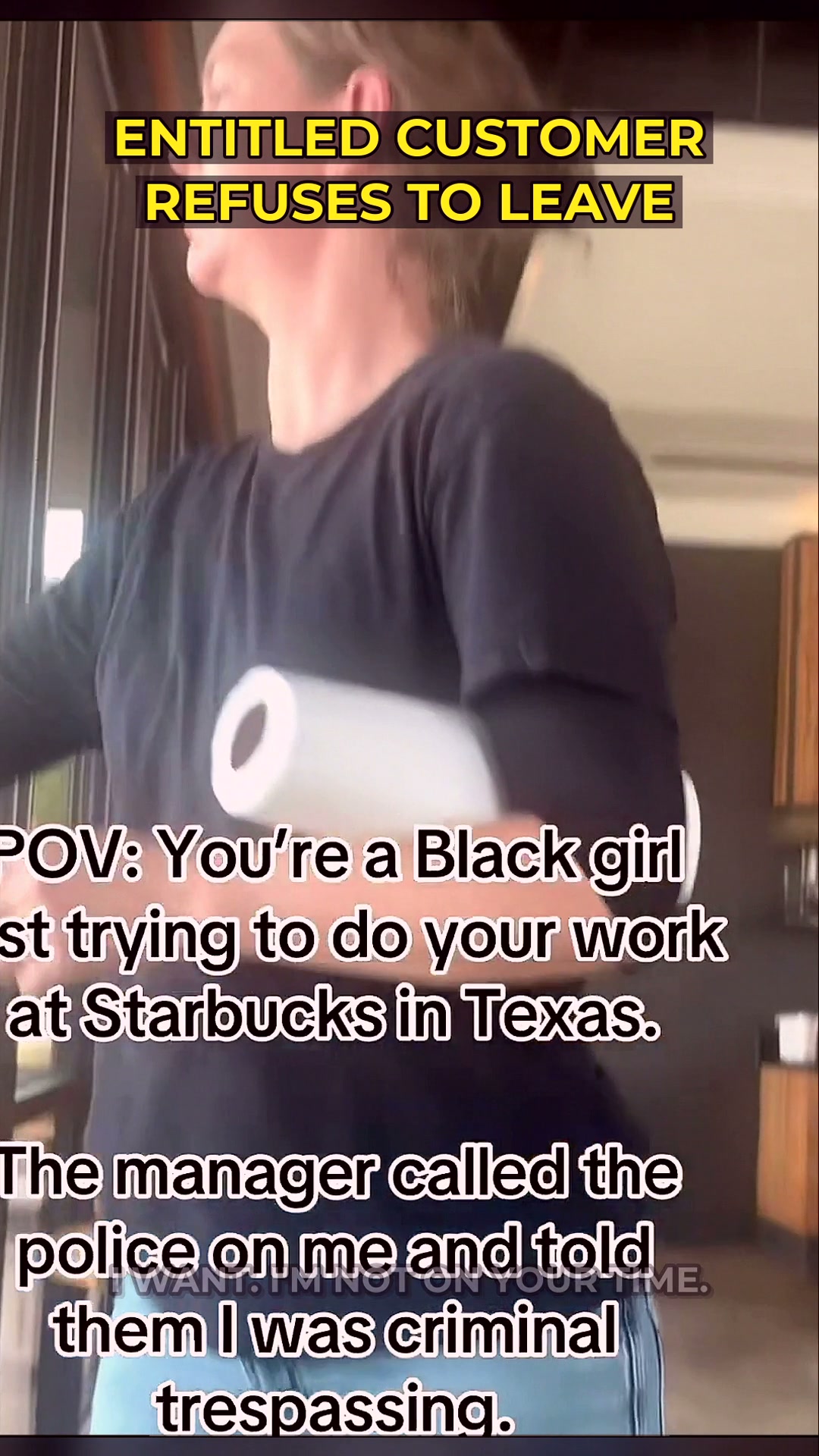
When a customer confuses a private business’s patio with a public park, the conversation shifts from lattes to liability.
- Private businesses maintain the legal right to set seating policies, including requiring a purchase for table use.
- Accusations of discrimination require evidence of discriminatory intent, not just a request to follow store rules.
- Understanding the distinction between public accommodation laws and private property rights is essential for navigating daily life.
Imagine settling into a booth at your local diner, pulling out your laptop, and planning to sit there for sixty minutes without ordering a single cup of coffee. When the waitress asks if you’d like to see a menu, you hold up a hand and say, “I’ll order whenever I’m ready. I’m not on your time.”
Sounds absurd, doesn’t it? Yet, that is precisely the scenario unfolding in a viral video that has the internet collectively raising an eyebrow. A customer at a Starbucks, having occupied a seat for an hour without a purchase, decided that the manager’s polite request to either order or exit was a personal slight rooted in race.
“You’re bothering me because I’m black,” the customer exclaims, turning a straightforward business policy into a moment of high drama. The manager, tasked with enforcing a simple rule, suddenly finds themselves in the crosshairs of an accusation that carries significant weight.
This isn’t a complicated legal battle waiting for a courtroom. It’s a matter of common sense and basic respect. The customer in question fails to grasp a fundamental concept: a Starbucks is not a public library. It is not a community center. It is a privately-owned commercial establishment operating on razor-thin margins to provide a service.
When you walk into a business, you are agreeing to participate in a transaction. The space, the lighting, the Wi-Fi, and the air conditioning are not public utilities. They are amenities offered to paying customers. Using them without any intention of buying something is, at best, a misunderstanding of social norms and, at worst, a form of petty theft of resources.
“I do my work here every single day. I’ve been here for one hour. I can order something whenever I want. I’m not on your time.”
This statement reveals a staggering level of entitlement. It suggests a belief that one’s personal schedule and needs supersede the rules of the establishment. It also conveniently ignores the fact that the manager is not on the customer’s time either. The manager has a job to do, a job that includes ensuring that tables turn over and that paying customers have a place to sit.
The Legal Precedent
Let’s be clear about the law. Under the Civil Rights Act of 1964, businesses open to the public—like restaurants and coffee shops—cannot discriminate based on race, color, religion, or national origin. This is a sacred principle. However, this law does not grant individuals the right to occupy a business’s property indefinitely without purchasing anything. It does not shield a customer from the consequences of violating a reasonable, uniformly applied store policy.
The distinction is critical. A store cannot ask a Black customer to leave because they are Black. That is illegal discrimination. But a store can absolutely ask any customer, regardless of race, to leave because they are loitering, being disruptive, or failing to make a purchase. In this case, the manager’s request appears to be entirely policy-based, not race-based.
Equating a request to follow the rules with racial prejudice is a dangerous game. It dilutes the meaning of true discrimination and creates a “boy who cried wolf” scenario that ultimately harms those who face genuine bias. When every disagreement is framed as a hate crime, the system becomes clogged with false alarms, and real victims find it harder to be heard.

The Cost of Entitlement
Beyond the immediate dispute, there is a broader economic reality that the customer seems to ignore. The price of a coffee is not just paying for the beans and water. It is paying for the rent, the barista’s wage, the electricity, and the music licensing fees. It is what keeps the lights on and the Wi-Fi fast.
When a person occupies a table for an hour without buying a single item, they are effectively taking money out of the pockets of the employees and the franchise owner. They are also potentially blocking a paying customer from taking that seat. In the high-stakes world of retail, every square foot of space must generate revenue. A table occupied by a non-paying “worker” is a liability, not an asset.
This is not about a corporation being greedy. It is about the fundamental survival of a small business. For many franchise owners, the difference between profit and loss is measured in cups sold per hour. Allowing individuals to camp out without ordering is a direct hit to their bottom line.

Why This Should Concern You
If you think this is just a silly internet spat, think again. The logic on display in this video, if adopted by the masses, would lead to chaos. Imagine if everyone decided that store policies were merely “suggestions” that could be ignored whenever they felt inconvenienced.
Suddenly, you can’t find a seat at a coffee shop because it’s full of people using the free Wi-Fi without buying anything. You wait in line at a pharmacy while a customer argues about a coupon policy. You sit in a waiting room while someone disputes the appointment time. The fabric of society relies on a shared understanding of rules.
This video is a stark look at the “customer is always right” mentality taken to a toxic extreme. It is a rebellion against accountability and a rejection of the notion that our own desires have limits. The refusal to order is not a stand for justice; it is a stand against the basic reciprocal nature of commerce.
The manager, in this case, was upholding the standards that keep the business viable. They were not “bothering” the customer. They were doing their job. The customer, by refusing to either order or leave, was the one escalating the situation.

As the video ends, the customer continues to assert their right to stay, claiming they are being singled out. The manager is left with a difficult choice: physically remove the person or let the policy slide, setting a precedent for everyone else. This is the unedited truth of running a business today—caught between the letter of the law and the loudest voice in the room.
In the end, the only thing being brewed here is a bitter cup of self-importance. And the only bill that comes due is the one for common courtesy, which remains stubbornly unpaid.