The Unsettling Moment a Bystander Became the Target: What It Reveals About Our Shared Humanity
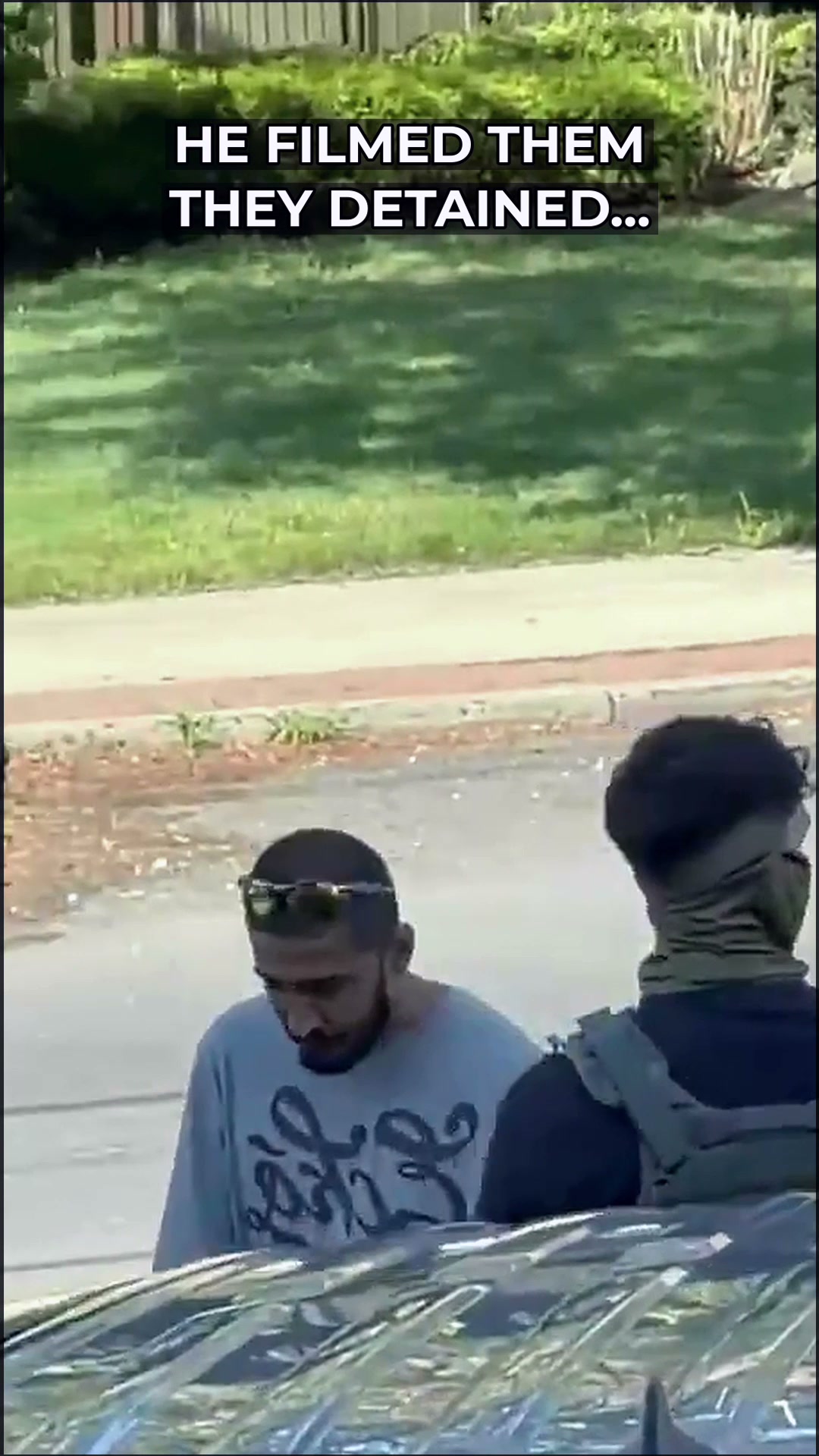
When observing quietly turns into a personal confrontation, the lines of authority and individual rights blur in a way that should concern every American.
- A routine morning of observation turned into a personal detention for one man who refused to answer questions about his status.
- The incident highlights the growing tension between public filming rights and federal authority in everyday spaces.
- Community members rallied online, sharing the encounter live, proving that a single moment of courage can spark a collective response.
Imagine standing outside your local business, phone in hand, simply documenting what is happening in front of you. You are not causing trouble. You are not obstructing anyone. You are just watching, recording, and bearing witness to an encounter that feels important to capture. Then, suddenly, the focus shifts. The authority figures turn to you, and the question comes: “What is your status?” You decline to answer, citing your right to remain silent. Moments later, you are the one being detained.
That is precisely what happened to a man named Kaleem Greg this week. He was standing at the front of a business, filming an ICE agent questioning another individual. His crime? Refusing to answer questions about his own immigration status when the agent abruptly turned the lens on him.
The video transcript captures the raw tension: “Don’t be close this morning guys. Put it on Facebook. I’m sorry? Put it on Facebook, pull up. Put it on Facebook. I am Kaleem Greg, just wanna verify your ID.” The calm in his voice, the insistence on documenting, and the request for the agent’s identification paint a picture of a man who knew his rights and was determined to exercise them.

The Power of the Unedited Truth
There is something deeply unsettling about watching a bystander become the subject of an investigation for simply being present. The man was not hiding. He was not running. He was standing in plain sight, doing what any citizen might do: observing the actions of public officials. When the agent demanded he answer questions, he refused, and that refusal was treated as an offense.
This moment is not just about one man’s experience. It is about the fragile line between authority and accountability. The agent’s demand to “verify your ID” after being asked for his own identification flips the script on who holds the power in these exchanges. It raises a chilling question: if you can be detained for politely declining to answer a question while filming in a public space, what does that mean for everyone else who might want to document their surroundings?
“Put it on Facebook, pull up.” These are the words of a man who understood that the only way to ensure the truth was recorded was to invite the entire community to watch.
The reaction from the crowd is telling. The instruction to “put it on Facebook” is not just a casual remark; it is a call to arms. It is an acknowledgment that in this moment, the only power the bystander has is the power of the shared record. By asking others to film, he is building a digital shield around himself, one that can be used to verify every claim, every action, and every word spoken.
The Human Story Behind the Confrontation
Beyond the legal implications, there is a profoundly human element to this story. This is a man who, when faced with an intimidating situation, did not panic. He did not run. He stood his ground, identified himself clearly, and asked for the same level of transparency he was being subjected to. That is a rare form of courage, and it resonates deeply with anyone who has ever felt powerless in the face of a system that seems to operate without oversight.
His calm demeanor in the video is striking. He is not yelling. He is not aggressive. He is simply repeating his request for the agent’s ID while encouraging others to document the interaction. It is a masterclass in de-escalation through transparency. He is not disputing the system; he is forcing the system to operate in the light.
This story is not just about one man’s detention. It is about what happens when a community watches out for one of its own. The people around him did not walk away. They pulled out their phones. They started recording. They became part of the record. That collective action, that instinct to protect and preserve, is what turns a single incident into a shared story of resilience.
It is incredibly frustrating to see people act like the rules don’t apply to them, especially when those rules are supposed to protect the public. But it is equally inspiring to see ordinary individuals respond with such unified composure. In a world where authority often goes unchecked, this moment serves as a powerful example of how everyday people can hold power accountable simply by refusing to look away.
What This Means for the Rest of Us
This incident is a sobering reminder of why you should always document everything. The man in the video did not know he would become the story when he started filming. He was just a witness. But when the tables turned, his decision to keep recording, and his plea for others to do the same, turned a potential violation into a matter of public record.
Common sense and basic respect are truly disappearing these days. A simple question about an agent’s ID, a polite refusal to answer a personal question, and suddenly you are in handcuffs. That is not a system operating with accountability; that is a system operating on intimidation. The only defense is vigilance, and vigilance means keeping your camera rolling.
The aftermath of this detention remains unclear. What is clear is that the man’s insistence on transparency has ignited a conversation about the limits of authority and the power of the individual. He asked for the agent’s ID, and he asked others to share the footage. He understood that the truth, once captured, cannot be undone.
As the video circulates and the community reacts, the question lingers: what happens to a person who simply wants to verify the identity of the one questioning him? The answer, at least for now, is that he gets detained. But the footage of his calm defiance, and the chorus of voices he inspired to grab their phones, will not be so easily silenced. The record is out there, and it is not going anywhere.