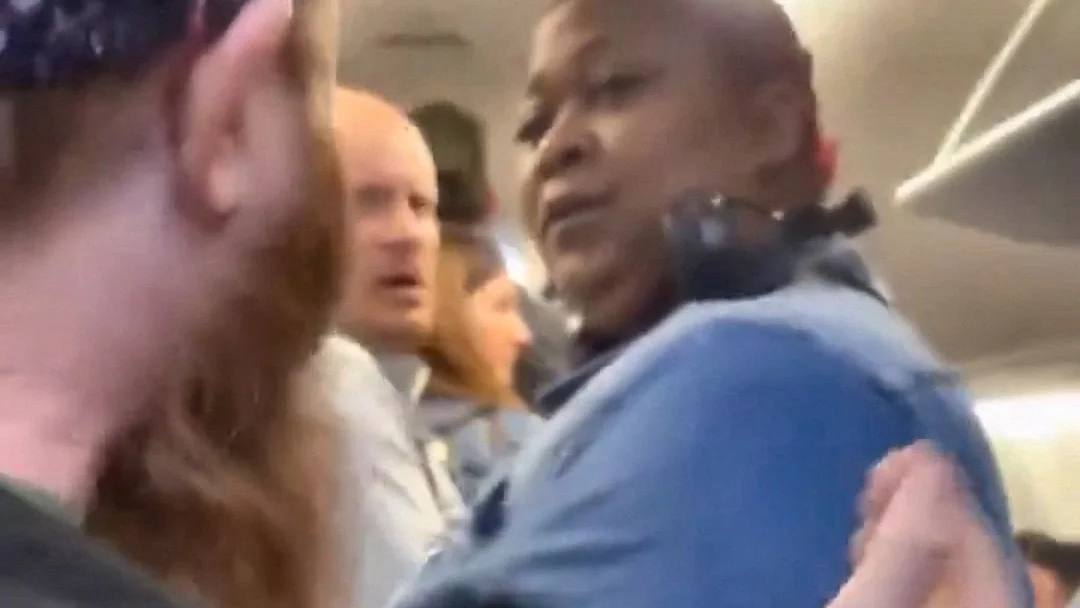
Lynnwood Truck Stripping Arrest Ends in Wild Prophecy
WATCH: On-scene video documentation is embedded below →
LISTEN TO THIS ARTICLE
Audio Narration • English (US)
The gray morning sky over Lynnwood, Washington, hung low and flat as a witness watched a man crouch beneath a parked pickup with hand tools. What began as a suspected theft in a commercial lot would end with a restraint device drawn, a pair of handcuffs, and a surreal monologue about the Russians, the Chinese, and a nation destined to burn. The camera was already rolling before anyone knew how far the encounter would go.
- A witness spotted a man underneath a truck in a commercial parking lot, actively removing components in broad daylight.
- The arriving officer found the suspect still beneath the chassis and began questioning him about ownership and identification.
- The man offered shifting explanations, then grabbed his tools and tried to move toward his own vehicle, prompting a physical stop.
- Backup arrived, a restraint device was drawn, and the suspect was secured before launching into an extended, unprovoked tirade.
What the Recorded Footage Captures: Chronological Breakdown
The dash and body-worn cameras open on a wide, overcast parking lot, the kind of sprawling commercial space where trucks idle and no one looks twice at a man working near a vehicle. An officer in a dark uniform steps out and approaches the suspect, who is still low to the ground near the truck's frame. The first exchange is calm but pointed: the officer asks whether the truck belongs to him, and the answer comes back tangled – it is going to be towed, it belongs to someone he knows, the name escapes him.
When the officer asks for identification, the man says he has none on him. The conversation tightens. The suspect says he was only trying to get a part he was missing, invoking a previous theft of his own catalytic converter as justification for harvesting an exhaust pipe. The officer presses on the ownership question, and the story shifts again. Then the man bends to gather his tools, glances toward his own vehicle, and begins walking. The officer steps in and issues a command to stop.
The physical stop arrives fast. Commands overlap – put your hands behind your back, you're under arrest – and the man resists, voice rising. A second officer arrives and a restraint device is drawn, its presence announced as a warning. The suspect is pressed against the vehicle and cuffed. In the middle of it all, he insists he is not a criminal and demands that his record be checked. What follows is a rapid, unfiltered stream of warnings about foreign powers and divine judgment, delivered while pinned against the truck.
"Very soon America will be burned according to the Bible."
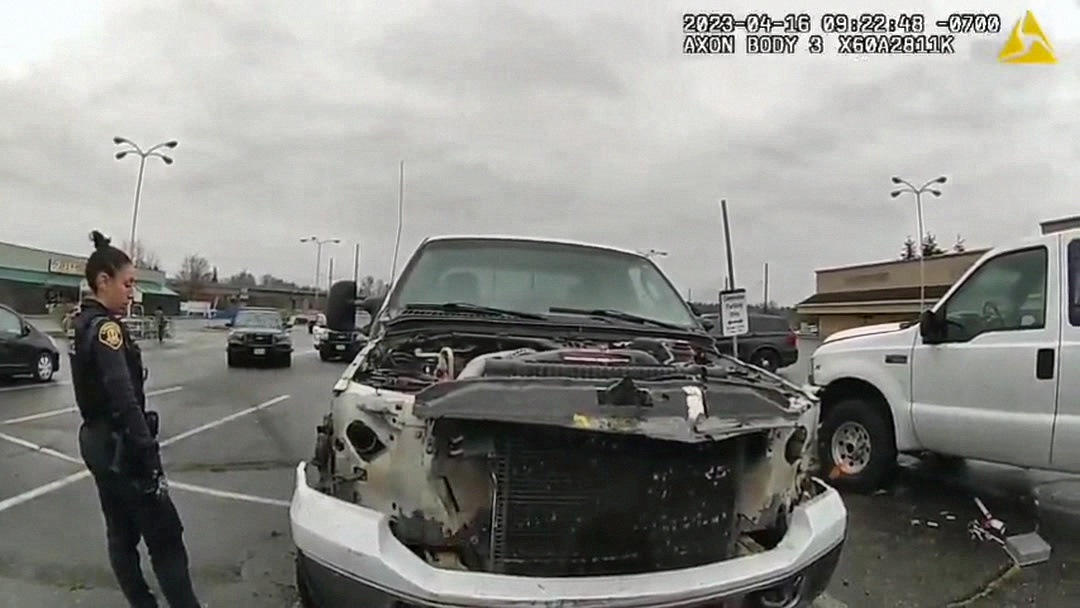
As the scene settles, officers walk the lot and examine the stripped truck. Its front end is gutted, tires flat, parts scattered. The witness explains that this is not the first visit – the same man was reportedly seen the day before, removing a quarter panel and hardware. Officers note the vehicle's identification and prepare to impound the suspect's own car pending a warrant.
Critical Blind Spots: What the Lens Leaves Unresolved
The camera captures the confrontation, but it cannot capture the twenty-four hours that preceded it. The witness describes a previous theft and a report filed the day before, yet the footage begins only when the officer arrives. How the suspect traveled to the lot, what he had already loaded into his vehicle, and how much of the damage was done on this day versus the last remains a matter of statement-taking rather than visual proof.
There is also the question of the tools and parts found inside the cab and trunk. The officers reference items inside the vehicle, and a warrant is mentioned, but the camera never follows the inventory to its conclusion. What was recovered, and what could be tied to the original report, sits outside the frame.
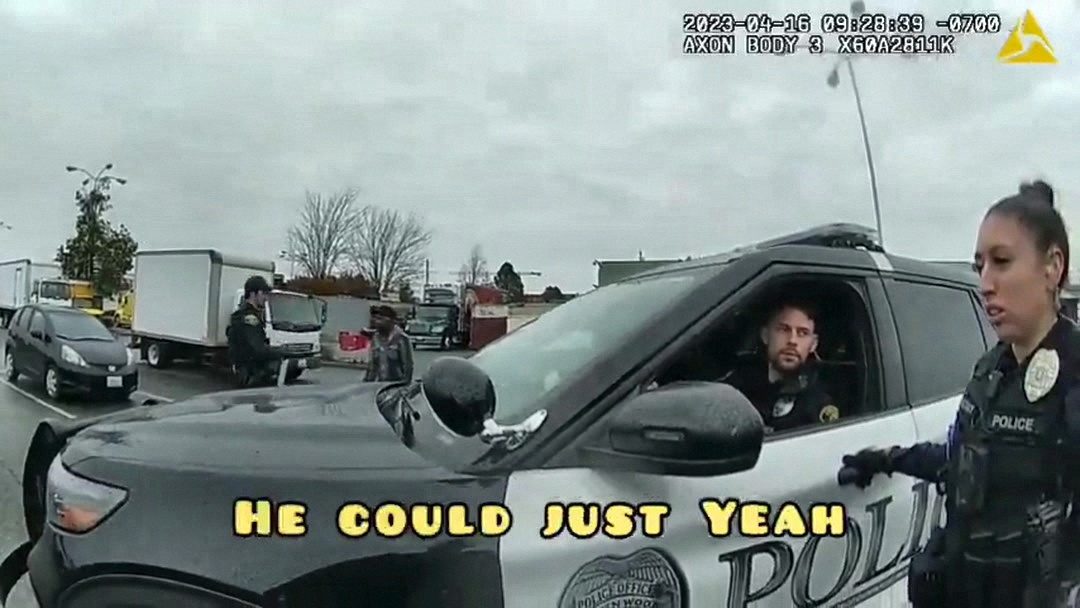
And then there is the man himself. His explanation about a stolen converter is either a convenient story or a genuine grievance, and the footage offers no independent confirmation. His sudden pivot to prophecy and geopolitics is captured in full, but the reasoning behind it – and whether it reflects genuine belief or a stress response – is left entirely unexamined.
Statutory Framework and Protocol Analysis
Under Washington law, theft of vehicle components can be charged at levels that depend on the value of the property taken, and resisting arrest is a separate offense. The officers' decision to draw a restraint device during the physical stop reflects a use-of-force continuum that escalates only when compliance is not achieved. The suspect's attempt to walk toward his own vehicle while holding tools is the pivotal moment that transforms a conversation into an arrest.
The witness's role is equally important. A private citizen who observes the act and stays on scene provides the probable cause that officers rely on, and the prior-day report gives the encounter its pattern. The truck's gutted front end and flat tires are the physical evidence that aligns with that account.
| Incident Parameter | Observation at the Scene |
|---|---|
| Location | Commercial parking lot, Lynnwood, Washington |
| Subject position at arrival | Crouched beneath the truck's chassis |
| Stated ownership | Contradictory – 'a friend,' name unknown |
| Identification offered | None on hand at first; later in pocket |
| Escalation trigger | Grabbing tools and moving toward his own vehicle |
| Restraint method | Hands-on stop, restraint device drawn as warning, handcuffed |
| Vehicle condition | Front end stripped, flat tires, parts removed |
Read more:
Read more: Campus Confrontation: Man Escorted After Alleged Charge →
Core Questions and Institutional Review
- What did the prior-day report document, and how closely does it match the damage visible on the truck?
- What items were recovered from the suspect's vehicle, and can they be tied to the earlier theft?
- Was the suspect's claim about a stolen catalytic converter ever verified or dismissed?
- How did the encounter move from a verbal request for identification to a physical stop within seconds?
The scene ends not with a resolution but with paperwork, a tow request, and a man in the back of a patrol car still talking about nations and fire. The camera stops, but the questions it raises linger over that gray parking lot. Was this a desperate man improvising his way out of a bad decision, or something stranger – and how much of what he said should anyone believe?
LATEST DEVELOPING INCIDENT
An even more shocking incident just erupted hours ago that has stunned onlookers nationwide. Full investigative breakdown and on-scene evidence documented below.
BREAKING: READ NEXT SHOCKING INCIDENT – LATEST CASE ↓
Campus Confrontation: Man Escorted After Alleged Charge
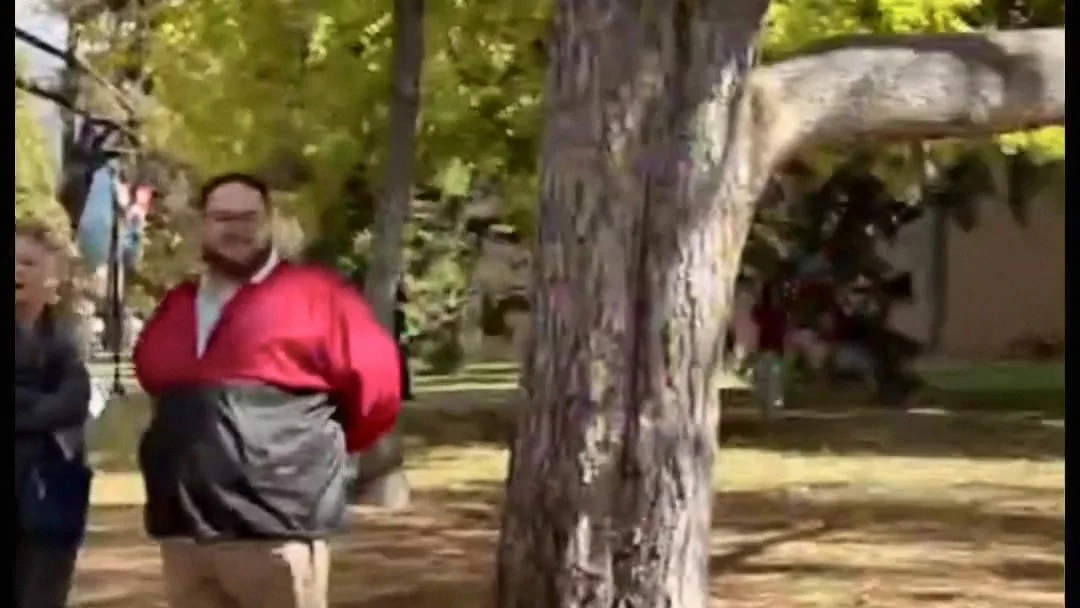
A crisp autumn afternoon on the University of New Mexico campus turned tense as a man in a bright red jacket stood his ground beneath the sprawling branches of an ancient oak tree. What began as a heated public disagreement escalated into a formal intervention, culminating in a moment of raw, unfiltered shouting that echoed across the lawn. The camera captured the entire sequence, from the initial confrontation to the final escort off the premises, leaving viewers to piece together the fragments of a deeply divisive public episode.
- The Scene: A sun-dappled grassy area on the university campus, bordered by a concrete walkway and large trees, serving as the backdrop for a public event.
- The Friction: A verbal confrontation involving a man in a red jacket and attendees of the event, with eyewitnesses alleging he charged at a speaker.
- The Intervention: Multiple law enforcement personnel approached the man, engaged in a brief dialogue, and then took him into custody by guiding him away from the crowd.
- The Aftermath: As he was escorted down the path, the man turned his head and shouted a pointed remark directed at a public figure, which was captured clearly on the audio track.
What the Recorded Footage Captures: Chronological Breakdown
The video opens with a wide shot of the campus grounds, where the sun filters through the turning leaves of a massive tree in the foreground. A man wearing a red jacket and khaki pants stands near the trunk, his posture relatively still but his attention fixed on something off-camera. The atmosphere is deceptively calm, with the ambient sounds of a busy campus event humming in the background. Suddenly, figures in dark uniforms enter the frame from the right, moving with purposeful strides toward the man.
As the officers approach, the man does not attempt to flee. Instead, he faces them, his body language a mix of resignation and defiance. The conversation is brief and mostly inaudible over the background noise, but the officers' physical cues suggest a firm directive. One officer reaches out to take his arm, and the man complies, turning to walk alongside them. The camera follows closely, capturing the shadows of the group stretching long across the concrete path as they move away from the grassy area.
As the group walks down the walkway, the man suddenly pivots his upper body toward the camera and the surrounding bystanders. With his head tilted back, he unleashes a loud, emphatic expletive directed at the former president. The shout cuts through the air, a stark contrast to the quiet compliance he had shown moments before. The officers continue to guide him forward, their grips steady, as the camera lingers on the receding figures, leaving the viewer with the echo of that final outburst.
Critical Blind Spots: What the Lens Leaves Unresolved
While the footage clearly documents the arrest and the subsequent shout, it leaves a significant gap regarding the moments immediately preceding the intervention. The camera begins recording with the man already standing at the tree, meaning the alleged charge at the speaker is not visually confirmed. Eyewitness accounts claim the man was warned about returning to the area, but the exact nature of that warning and the behavior that triggered it remain off-screen. This absence of context forces the viewer to rely on secondhand descriptions to understand the escalation.
Furthermore, the perspectives of the other individuals involved are largely missing. The camera focuses almost exclusively on the man in the red jacket and the officers. We do not see the reactions of the speaker he allegedly charged at, nor do we hear the specific words exchanged between the man and the event attendees that led to the confrontation. The identity of the person recording the video and their proximity to the event also suggest a selective viewpoint, capturing the aftermath but not the initial spark of the dispute.
Statutory Framework and Protocol Analysis
The events on the campus lawn highlight the delicate balance between free expression and public safety during large gatherings. Standard procedure for managing public events often involves establishing clear boundaries and issuing warnings to individuals who disrupt the peace. The decision to take a person into custody typically follows a failure to comply with these warnings or a perceived threat to the safety of others. In this case, the officers' approach appears measured, focusing on removal rather than physical force, which aligns with de-escalation tactics.
Community expectations on a university campus prioritize both the right to protest and the safety of attendees. When an individual is perceived to have crossed a line from verbal disagreement into physical action, the response is usually swift to prevent further conflict. The man's cooperation during the walk suggests a recognition of the officers' authority, even as he voiced his frustration verbally. The incident underscores the challenges of maintaining order when passionate beliefs collide in a public space.
| Incident Parameter | Observation at the Scene |
|---|---|
| Location | Grassy area near a large oak tree on a university campus |
| Central Figure | Man wearing a red jacket and khaki pants |
| Law Enforcement Presence | Multiple officers in dark uniforms, one with 'POLICE' on the back |
| Key Action | Man is escorted from the grass to a concrete walkway |
| Verbal Outburst | Shout directed at a public figure as he is led away |
| Duration | Footage spans from the initial approach to the escort off-screen |
| Bystander Reaction | Onlookers observe from a distance; no intervening actions |
Read more: {NOIBO}
Core Questions and Institutional Review
- What specific actions occurred immediately before the recording began that prompted the officers' intervention?
- Did the man receive a formal warning as claimed by eyewitnesses, and what was the exact timeline of that exchange?
- How will the university review the incident to ensure future events balance safety and expression?
- What are the legal consequences for the man following his arrest and the subsequent verbal outburst?
The footage leaves us with a vivid snapshot of a moment where personal conviction met institutional authority. The stark contrast between the man's quiet compliance and his sudden shout creates a lasting impression of the tension that simmered beneath the surface. As the officers and the man disappear from view, the question remains: Was this a necessary intervention to protect public safety, or a reaction to a mere expression of dissent? We invite you to share your perspective on where the line should be drawn in such public confrontations.