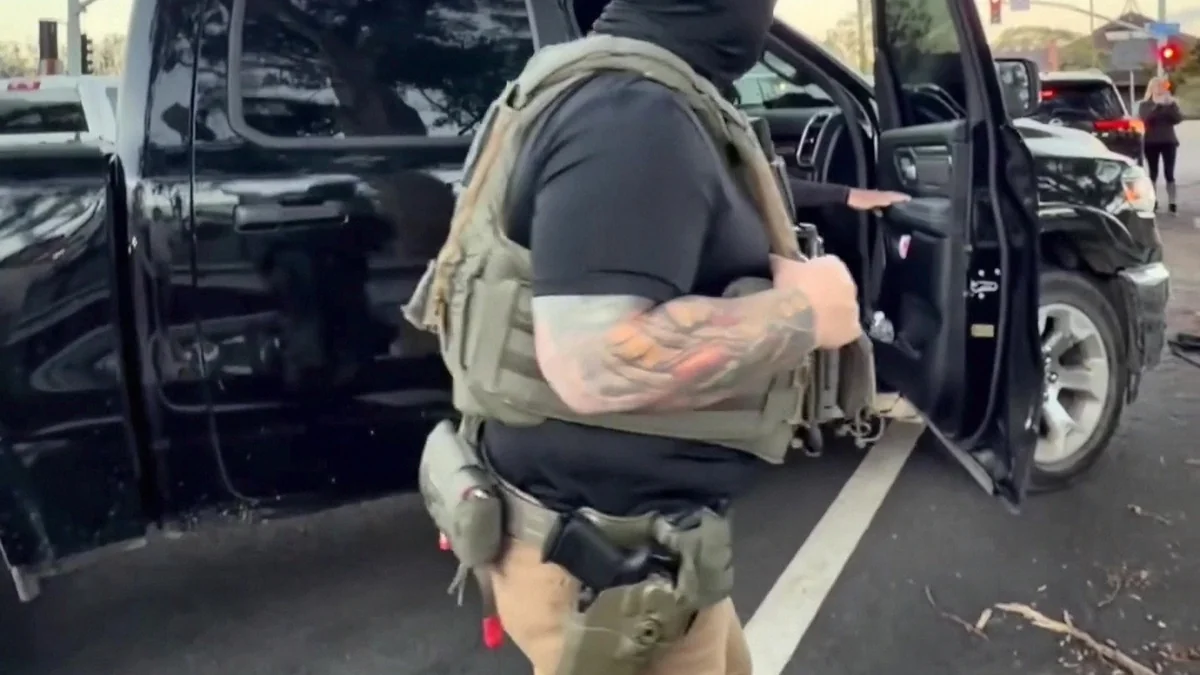
Lancaster Deputy-Involved Shooting: Bodycam Footage of Domestic Violence Standoff
WATCH: On-scene video documentation is embedded below →
LISTEN TO THIS ARTICLE
Audio Narration • English (US)
Deputies Fire on Armed Man Holding Estranged Wife at Gunpoint in Lancaster
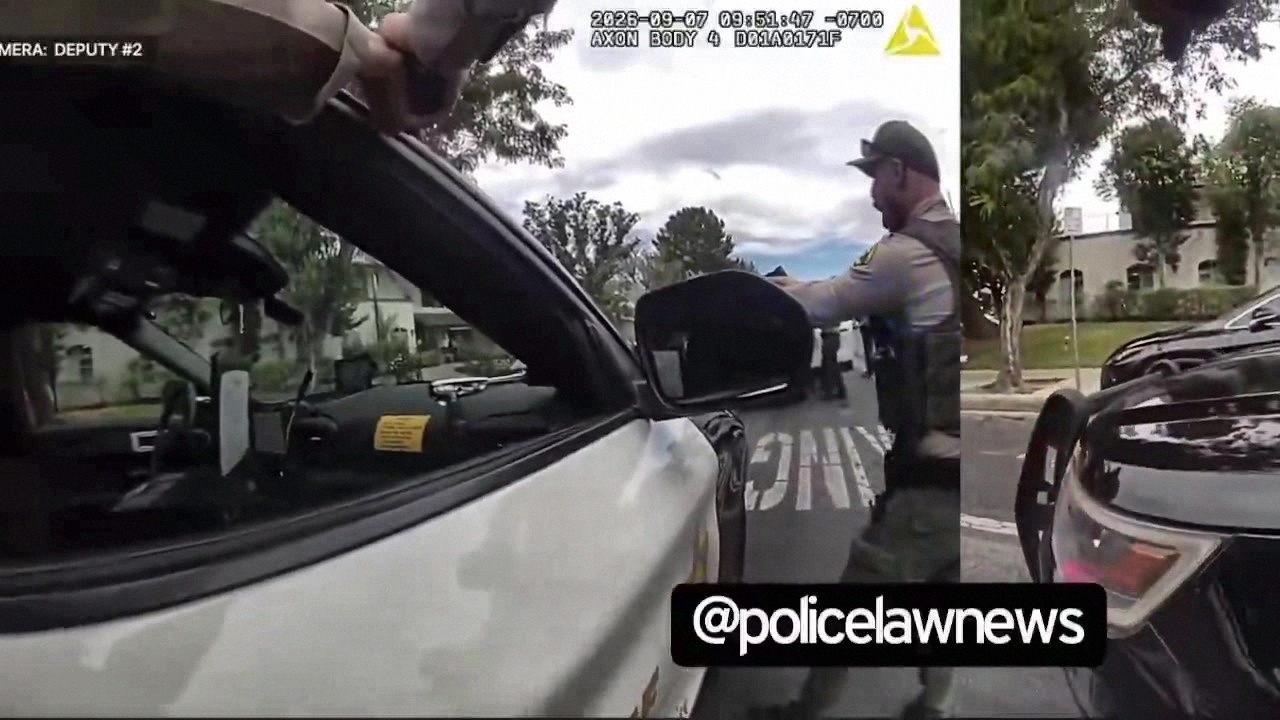
Body-worn camera footage from the Los Angeles County Sheriff's Department captures the tense, seconds-long standoff that unfolded in Lancaster, California, when deputies confronted a man accused of holding his estranged wife at gunpoint during a domestic violence call. The encounter, recorded just before 10 a.m. on a residential street, escalated rapidly as the armed suspect refused repeated commands to drop his weapon and pointed it toward responding deputies, who ultimately opened fire.
- Deputies responded to reports of a man trying to force a woman into a vehicle in the 44500 block of 15th Street West.
- The suspect, identified as 29-year-old Derek Barrientos, was found outside the residence with his arm around the victim's neck, holding a handgun.
- Barrientos refused to drop the weapon and pointed it at the woman, himself, and responding deputies.
- Two deputies fired at Barrientos, striking him multiple times and causing him to drop the handgun.
- The victim was not physically injured, and no deputies were hurt; a 9mm semiautomatic handgun with a loaded magazine was recovered.
The Domestic Violence Call and Initial Response
The dispatch log that set the morning in motion described a scene of active conflict: a man arguing with a woman and attempting to force her into a vehicle. Before deputies arrived, dispatchers relayed a critical update that the man was armed with a handgun, elevating the response from a routine domestic disturbance to a potentially lethal confrontation. Deputies quickly located the suspect outside the residence in the quiet residential neighborhood, where the situation immediately revealed itself as far more dangerous than the initial report suggested.
The suspect was later identified as 29-year-old Derek Barrientos, and the woman was described by authorities as his estranged wife. According to investigators, Barrientos had his arm wrapped around the victim's neck and was holding a handgun, effectively creating a hostage scenario in the open street. The presence of a firearm combined with the proximity of the victim left deputies with a narrow window to act, and the body-worn camera footage captures the urgency of that moment.
Confrontation and the Language of Commands
The audio track from the footage reveals a chaotic, compressed sequence of commands delivered under extreme stress. Deputies can be heard shouting repeatedly for the suspect to drop the weapon, with voices overlapping as they attempt to establish control of the scene. The radio traffic cuts through with status codes and positional updates, while deputies in the background work to reposition themselves around the suspect and the victim.
"Drop the gun now!" a deputy is heard shouting, the command repeating and multiplying as the seconds tick forward without compliance. One voice can be heard struggling for a clear advantage, reporting that the suspect is pointing the weapon directly at the officers. The audio captures the exact moment when the situation moves from negotiation to imminent threat, and the deputies recognize that they may need to fire if the weapon continues to be presented.
The footage from a second deputy's body camera shows the physical environment of the confrontation: a wide residential street, parked vehicles, and sidewalks that offered little cover. Deputies are seen moving around the patrol vehicle, trying to find a tactical angle while keeping the suspect and victim in view. The stress of the situation is audible in the chatter between officers as they coordinate their positions and try to identify a clear line of fire that does not risk the victim.
The Shooting and Immediate Aftermath
The confrontation reached its climax when deputies opened fire, striking Barrientos multiple times. The footage captures the abrupt shift in the scene as the suspect goes down and the weapon is released. The commands from deputies change instantly, shifting from the demand to drop the gun to instructions for medical aid and securing the scene. The immediate priority becomes the safety of the victim and the treatment of the wounded suspect, and deputies are seen moving cautiously toward the injured man while keeping their weapons trained on him until they are certain he no longer poses a threat.
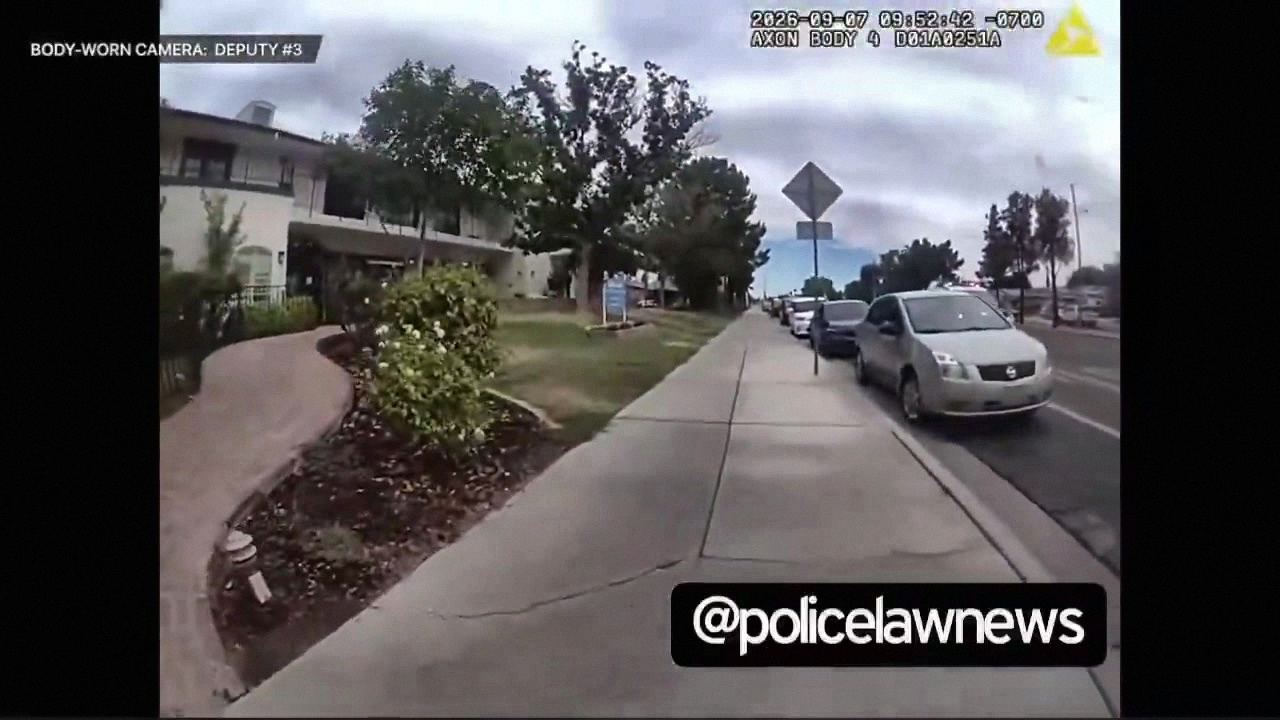
The audio picks up the urgent call for medical assistance, with deputies coordinating with fire department personnel who were staged nearby. The scene remains tense until additional units arrive and the suspect is transported to a nearby hospital. Authorities later stated that Barrientos was struck by gunfire and listed in stable condition, and the Los Angeles County Fire Department responded to provide medical aid. The victim is visible and unharmed in the aftermath, and the weapon is secured on the ground as deputies begin the process of documenting the scene and conducting interviews.
| Incident Parameter | Observation at the Scene |
|---|---|
| Date and Time | September 7, shortly before 10 a.m. |
| Location | 44500 block of 15th Street West, Lancaster, CA |
| Suspect | Derek Barrientos, 29 years old |
| Victim Present | Estranged wife, held in headlock |
| Weapon Recovered | 9mm semiautomatic handgun with loaded magazine |
| Deputies Injured | None reported |
| Victim Injury | No physical injuries reported |
How the Events Unfolded. The Legal Questions. And the Witnesses.
The sequence of events documented in the footage aligns with the official account from the Los Angeles County Sheriff's Department. Deputies were dispatched to a domestic violence call, located the suspect and victim outside the residence, observed the suspect holding a firearm, and issued commands that were not followed. When the suspect pointed the weapon at deputies, the shooting occurred. That sequence is the core of the investigation that is now underway, as authorities review the body-worn camera footage and gather statements from witnesses and involved deputies.
Witnesses in the neighborhood described a chaotic scene with officers shouting commands before shots rang out. One neighbor, speaking to local media, said she could see the suspect walk between cars with a gun before deputies told him to put it down. The witness reported hearing the commands repeated and then hearing shots fired, a sequence consistent with the footage released by the department. These accounts provide context for the split-second nature of the encounter and the difficulty of de-escalating a confrontation in which the suspect has a hostage at gunpoint.
Read more:
Read more: Newark Garbage Truck Driver Confronts Blocking Protesters →
The investigation remains active and will likely examine whether the deputies' use of force was proportional to the threat posed by the suspect. Under California law, officers may use deadly force when they reasonably believe it is necessary to defend against an imminent threat of death or serious bodily injury. The key questions will involve the exact positioning of the weapon, the timing of the commands, and whether the deputies had alternatives. The footage shows that the suspect refused to comply and continued to present the firearm, factors that will weigh heavily in the legal review.

Core Questions and Unresolved Issues
- What specific moment in the confrontation caused deputies to conclude that deadly force was necessary?
- How did the suspect react when instructed to drop the weapon, and was there any opportunity for a different outcome?
- What will the internal review determine about the deputies' tactical decisions in the seconds preceding the shooting?
The Lancaster case highlights the split-second realities of policing domestic violence calls, where the presence of a firearm and a hostage can eliminate the space for negotiation. The footage documents a confrontation that ended with one man wounded and one woman physically unharmed, a result that authorities have described as the best possible outcome given the threat that was present. The investigation will now determine whether the actions of the deputies were justified and what lessons can be drawn from the encounter.
What should have happened in those final seconds, and how do communities want law enforcement to handle armed suspects holding hostages in public view?
Sources
- Lancaster, CA DV call report — https://x.com/policelawnews/status/2113267264518840372
- Dramatic footage shows L.A. deputy in shootout with domestic violence suspect — https://ktla.com/news/local-news/lasd-video-man-shot-estranged-wife-gunpoint-lancaster/
- LA County sheriff's deputies shoot armed man in Lancaster — https://abc7.com/post/la-county-sheriffs-deputies-shoot-man-lancaster/19804194/