The Day the Ocean Got a Ticket: Why a Surf Badge Dispute Is Making Waves Far Beyond the Shore
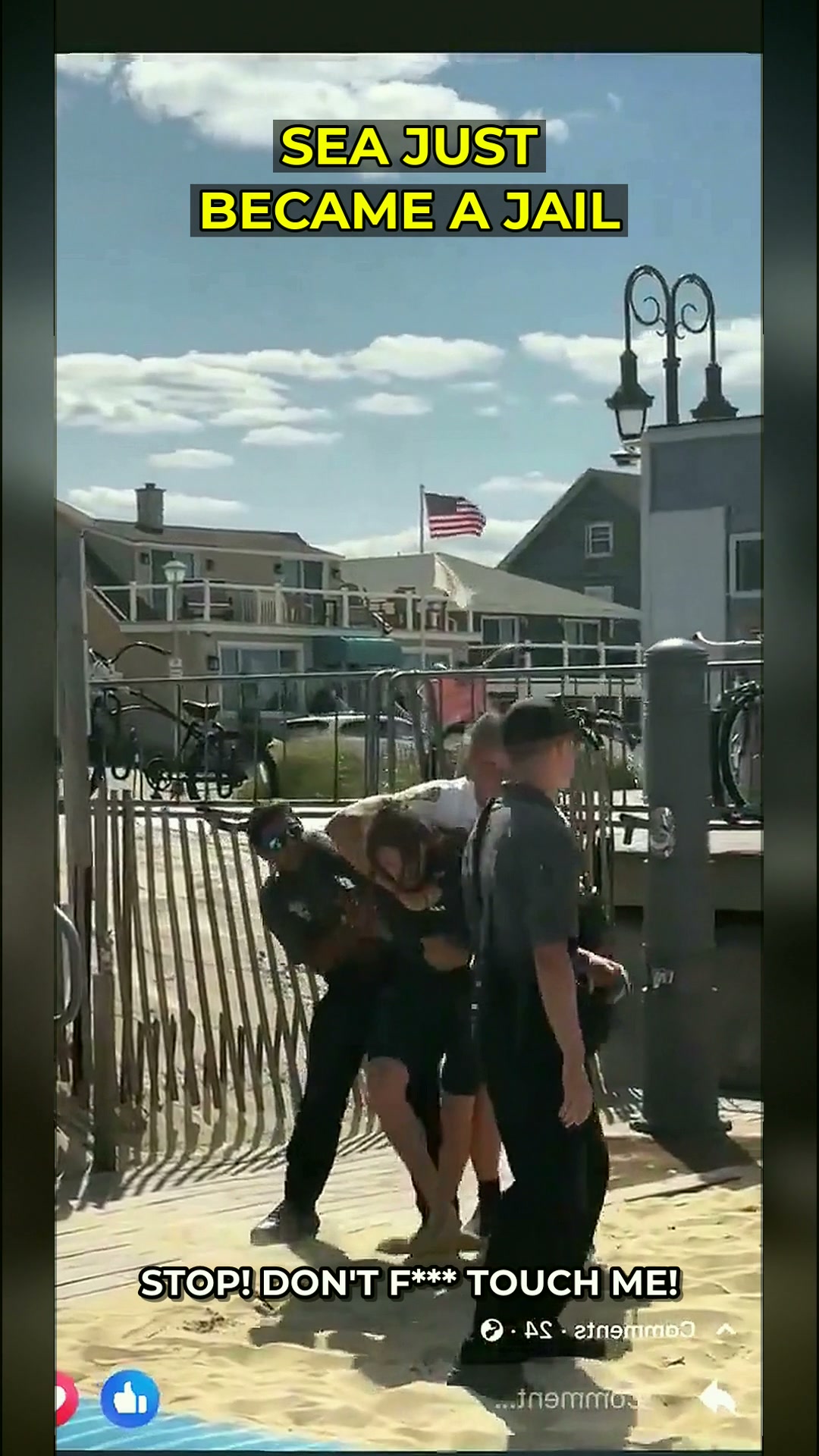
When a simple day of riding waves turns into a scene of chaos, the line between order and overreach blurs. This is the story of a community watching one of their own get tangled in a rulebook that seems to have no common sense.
- A routine beach access rule spiraled into a physical dispute caught on camera in New Jersey.
- Bystanders intervened, highlighting a growing frustration with enforcement that lacks basic respect.
- The incident raises serious questions about accountability and the application of common sense in public spaces.

The salt air, the crash of the waves, the ritual of checking the swell—it is a sacred morning for any surfer. But on this particular day in New Jersey, the only thing breaking was the peace. A young man, board under his arm, found himself at the center of a storm that had nothing to do with the weather. His crime? A missing piece of paper. His punishment? A violent struggle on the sand that left onlookers in disbelief.
This wasn’t a scene from an action movie. It was a Tuesday on the beach, where the biggest threat used to be a jellyfish sting. Instead, the footage shows a gaggle of officers surrounding one kid, their voices raised over a badge that was, according to the cries of the crowd, sitting right there in his possession. The question that echoes through the clip is one that every single person watching is thinking: Are we really policing the ocean now?
The video paints a chaotic picture. “His badge is right here,” a voice shouts, trying to reason with the wall of uniforms. “This guy’s a fucking kid.” The desperation in the bystanders’ voices is palpable. They are not watching a criminal mastermind being brought to justice; they are watching a young man be manhandled for an administrative slip-up. The raw emotion of the moment—the yelling, the pushing, the sheer confusion—is a potent cocktail that has ignited a firestorm of debate online.
The Human Cost of Zero Flexibility
Let’s be clear about what this is really about. It’s not about the badge. It’s about the interaction. It is about a system that seems to have forgotten that the people on the other side of the rulebook are human beings. When you have a group of adults surrounding a single individual over what is effectively a park pass, you have to ask yourself: where is the line between enforcing the law and breaking the spirit of the community?
This is the “unedited truth” that resonates with so many people. It is the frustration of watching a situation escalate when a simple, calm conversation would have solved everything. The young surfer was not running from the authorities; he was trying to enjoy a hobby. The escalation from “let me see your pass” to a physical takedown feels less like public safety and more like a display of dominance. It reeks of an authority that demands compliance not through respect, but through force.
“Stop! Stop! Stop! Don’t touch him!” The cries from the crowd were not just for the surfer; they were a plea for the situation to be defused, for a little bit of humanity to enter the fray.

The scene is a masterclass in how not to handle a minor infraction. Instead of de-escalation, there was confrontation. Instead of patience, there was provocation. The officers involved appear to be operating from a playbook that prioritizes dominance over dialogue. For the average person watching this at home, the fear is immediate and personal: if this is how they treat a kid with a surfboard, what happens when a simple misunderstanding occurs with someone who isn’t as young or as fit?
This is the core of the anxiety. It feeds a growing narrative that the rules are becoming more important than the people they are meant to protect. It feels like a system that is drunk on its own power, forgetting that the badge they wear is supposed to represent service, not supremacy. The sight of a grown man being put in a chokehold over a beach pass is the kind of image that sticks in the public consciousness and fuels a deep-seated concern about the state of accountability.
The Community That Pushed Back
Yet, in the middle of this madness, there is a flicker of something positive: the community. The video is not just a record of the incident; it is a testament to the instinct of the crowd to protect one of their own. The shouts of protest were not just noise; they were a wall of human resistance against what they perceived as an injustice. They were saying, “Not on our watch.” This collective action is a reminder that the spirit of a neighborhood is stronger than any uniform.
These bystanders, with their phones out and their voices raised, are the new journalists. They are the ones capturing the “unedited truth” that often gets lost in official reports. Their presence is a deterrent, a silent witness that ensures someone is held accountable for their actions. In a world where disputes can easily be swept under the rug, the eye of the public is the most powerful disinfectant we have.

The aftermath of this viral moment is still unfolding. The questions left hanging in the salty air are uncomfortable ones. How did a day at the beach turn into a battlefield? Why did the presence of a badge become more important than the absence of violence? And most importantly, what does this say about the fragile contract between those who enforce the rules and those who simply want to live their lives?
The Fragile Line Between Order and Chaos
There is a reason this video has struck such a raw nerve. It taps into a primal fear that the systems designed to protect us can sometimes turn against us over the pettiest of matters. It is the fear of the traffic stop that goes wrong, the noise complaint that turns physical, the simple question that leads to a struggle. It is the anxiety that one day, a small mistake could lead to a life-altering consequence, all because the person in charge lacked a basic level of common sense and respect.
The surfer in the video did not appear to be a hardened criminal. He looked like a kid who got caught up in a bureaucratic nightmare. The officers, on the other hand, represent the immense power of the state, a power that, in this instance, appears to have been wielded with reckless abandon. The disparity is jarring. It is a visual metaphor for the power imbalance that many Americans feel when dealing with institutions that seem to have lost their way.
The argument that “rules are rules” falls flat when the enforcement of those rules creates a greater public disturbance than the violation itself. The cost of this interaction was not just the physical toll on the young man, but the psychological toll on the entire community that witnessed it. Trust is eroded. Suspicion is sown. The beach, a place of relaxation, now carries the memory of a confrontation.
What makes moments like this worth sharing is not just the outrage, but the underlying desire for a better way. It is a cry for a system that values dialogue over dominance, and people over paperwork. The video serves as a rallying point for those who believe that accountability is not a dirty word, and that those who are given authority must also be given the highest standard of scrutiny. The waves will continue to roll in on that New Jersey shore, but the ripples from this single incident will be felt for a long time to come, a sobering reminder of how quickly order can turn into chaos when humanity is left out of the equation.