How Communities Measure Justice After Public Confrontations
# How Communities Measure Justice After Public Confrontations
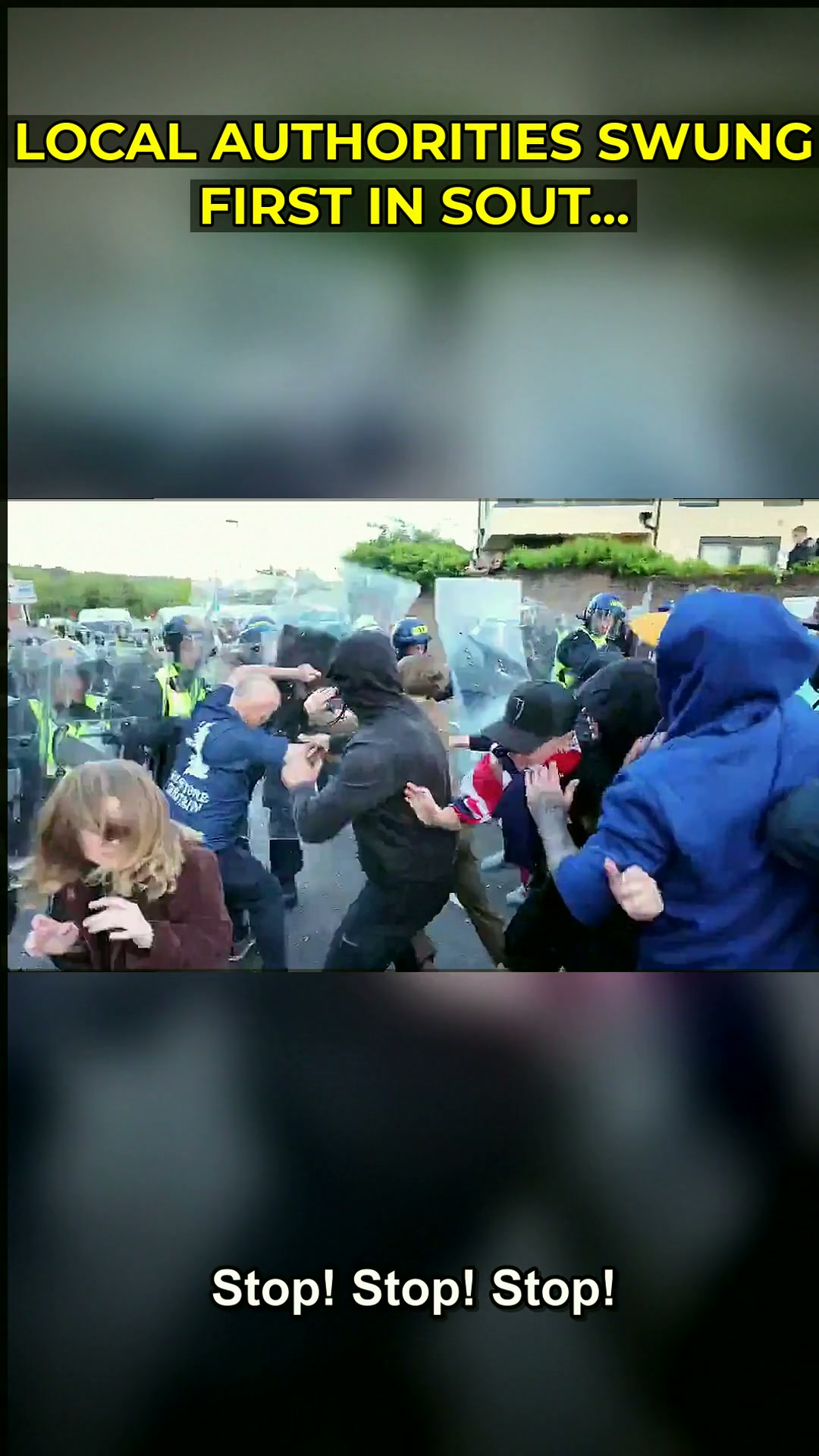
The footage emerging from Southampton presents a stark visual: a line of officers in riot shields, a crowd of demonstrators, and the sharp sound of commands to halt. These scenes, which play out in cities across the globe, often leave the public with more questions than answers. When physical force is used to manage a demonstration, the immediate reaction is often shock, but the longer-term focus must shift to the mechanisms of accountability that follow such incidents.
## The Thin Line Between Order and Escalation
In any democratic society, the police hold a mandate to maintain public order, but the methods used to achieve that order are subject to intense scrutiny. Videos from protests frequently capture a chaotic interplay where it is difficult to determine who initiated physical contact. In the Southampton incident, the footage shows a rapid escalation, with officers using shields to push back a crowd. The public’s perception of that moment—whether it was a necessary intervention to prevent violence or an aggressive overreach—often defines the subsequent debate.
What matters most in these situations is not the viral clip itself, but the procedural framework that exists to review it. The presence of body-worn cameras and independent oversight bodies is designed to provide an unedited truth that differs from a single angle on a smartphone. The initial chaos is expected; the follow-through is what defines a community’s commitment to justice.
## The Role of Legal Process in Restoring Trust
When a protest turns physical, the legal process becomes the primary arena for accountability. This involves a two-part examination: one looking at the conduct of the protesters, and the other at the conduct of the police. For citizens, the right to protest is protected, but it is not absolute; it is bounded by laws regarding public safety and obstruction.
For the authorities, the use of force is governed by principles of necessity and proportionality. If a complaint is lodged, the Independent Office for Police Conduct (IOPC) in the UK, or similar bodies in other jurisdictions, will assess whether the actions on the ground met those legal standards. This is the slow, unglamorous work of justice. It is a process that rarely satisfies those who want immediate vindication, but it is the necessary mechanism for ensuring that the power of the state is not exercised without consequence.
## Resources for Those Affected by Civil Unrest
Beyond the legal wrangling, there is a human cost to these confrontations. Individuals who feel they have been subjected to excessive force, or who have been traumatized by the violence of a crowd, often feel isolated. It is crucial for community members to know that support structures exist.
– **Victim Support Services:** Organizations like Victim Support in the UK offer free and confidential advice to anyone affected by crime or disorder, regardless of whether the police are involved.
– **Legal Aid and Advocacy:** Groups such as Liberty or the ACLU (in the US) provide legal guidance for those seeking to challenge state actions, ensuring that individuals understand their rights during police complaints.
– **Community Mediation:** Local councils often offer mediation services to help bridge the gap between the police and community groups, fostering dialogue to prevent future escalation.
## The True Measure of Accountability
The viral nature of protest footage often amplifies the anger but obscures the resolution. The true measure of justice lies not in the heat of the moment, but in the cold, deliberate review that follows. It lies in whether the police are willing to release full footage, whether independent investigators are given access, and whether the findings are made public.
For the community in Southampton, and for observers worldwide, the demand must be for transparency. The protest itself is a form of speech; the response to the protest is a test of governance. When the shields go down and the crowds disperse, the hard work of ensuring that everyone involved is held to the same standard of law is what ultimately defines whether justice has been served. Until that review is complete, the only responsible position is to demand the evidence and await the verdict of the legal system.