Halloween Porch Dispute Over 40 Juice Boxes Goes Viral
WATCH: On-scene video documentation is embedded below →
LISTEN TO THIS ARTICLE
Audio Narration • English (US)
A suburban Halloween evening turned into a sidewalk interrogation over a few dollars' worth of juice boxes, captured frame by frame as a homeowner challenged a family leaving his yard. What began as a routine handout of treats became a tense, recorded confrontation over a simple question: when a bowl is left outside, how much is too much?
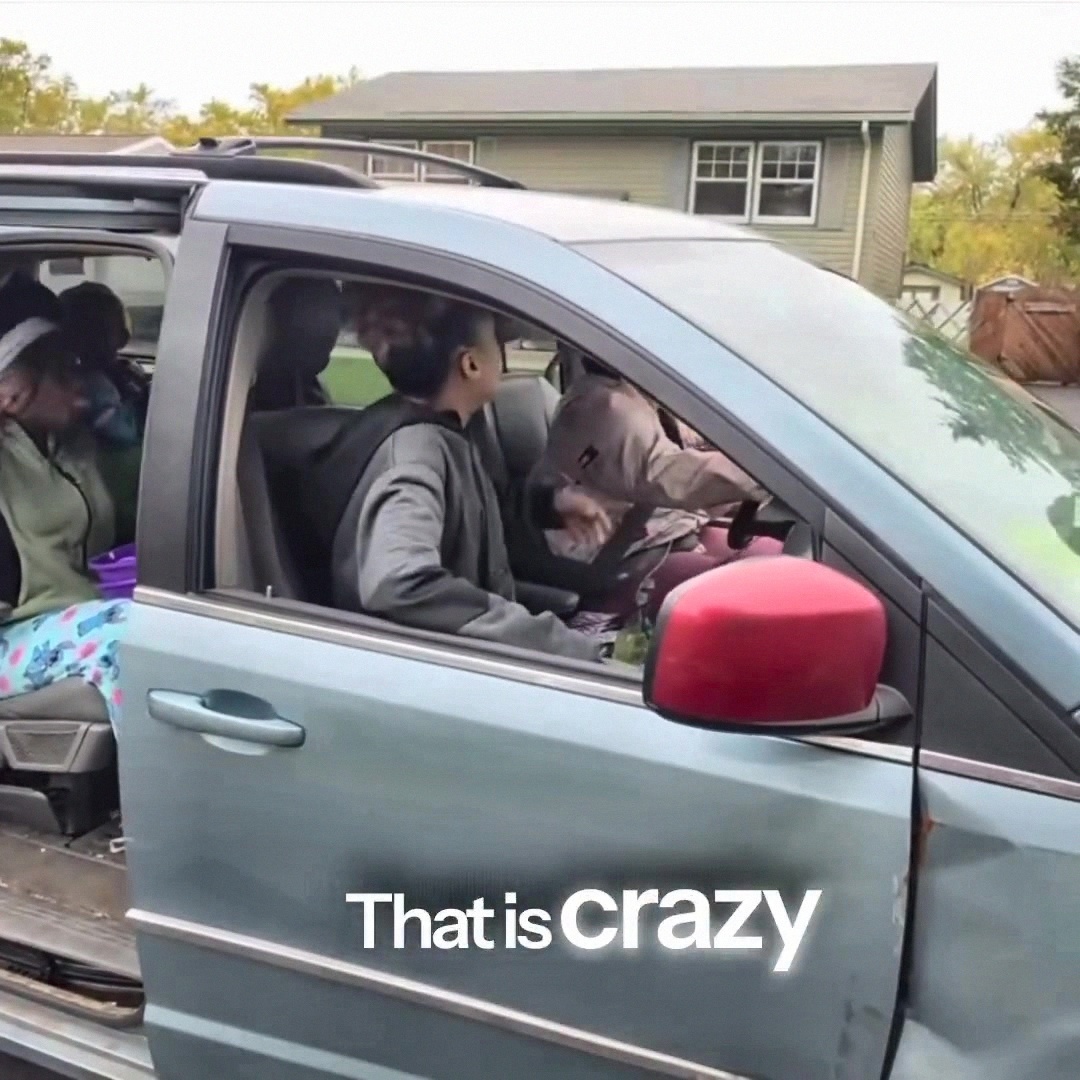
- A homeowner in Illinois confronted a family of trick-or-treaters after discovering his entire supply of juice boxes had disappeared from a porch left open for self-service.
- The confrontation was recorded on a phone and later shared widely by online commentator Matt Van Swol, whose caption described the homeowner shouting about forty missing juice boxes.
- A woman in the group pushed back, arguing that the treats were placed outside and therefore available, a rationale the homeowner rejected as theft.
- After the exchange, a child reportedly returned the juice boxes from the family's car, but the homeowner waved them off, telling the group to keep them because they had taken from other children.
What the Recorded Footage Captures: Chronological Breakdown
The footage opens on a pale green SUV parked at the curb, the family's vehicle doubling as a makeshift stage for the argument. The camera, held by the homeowner, sweeps across the side of the car where a child sits in the back seat, and the audio picks up the homeowner's voice cutting through the evening air: "You took 40 juice boxes. I did. So where's it at?"
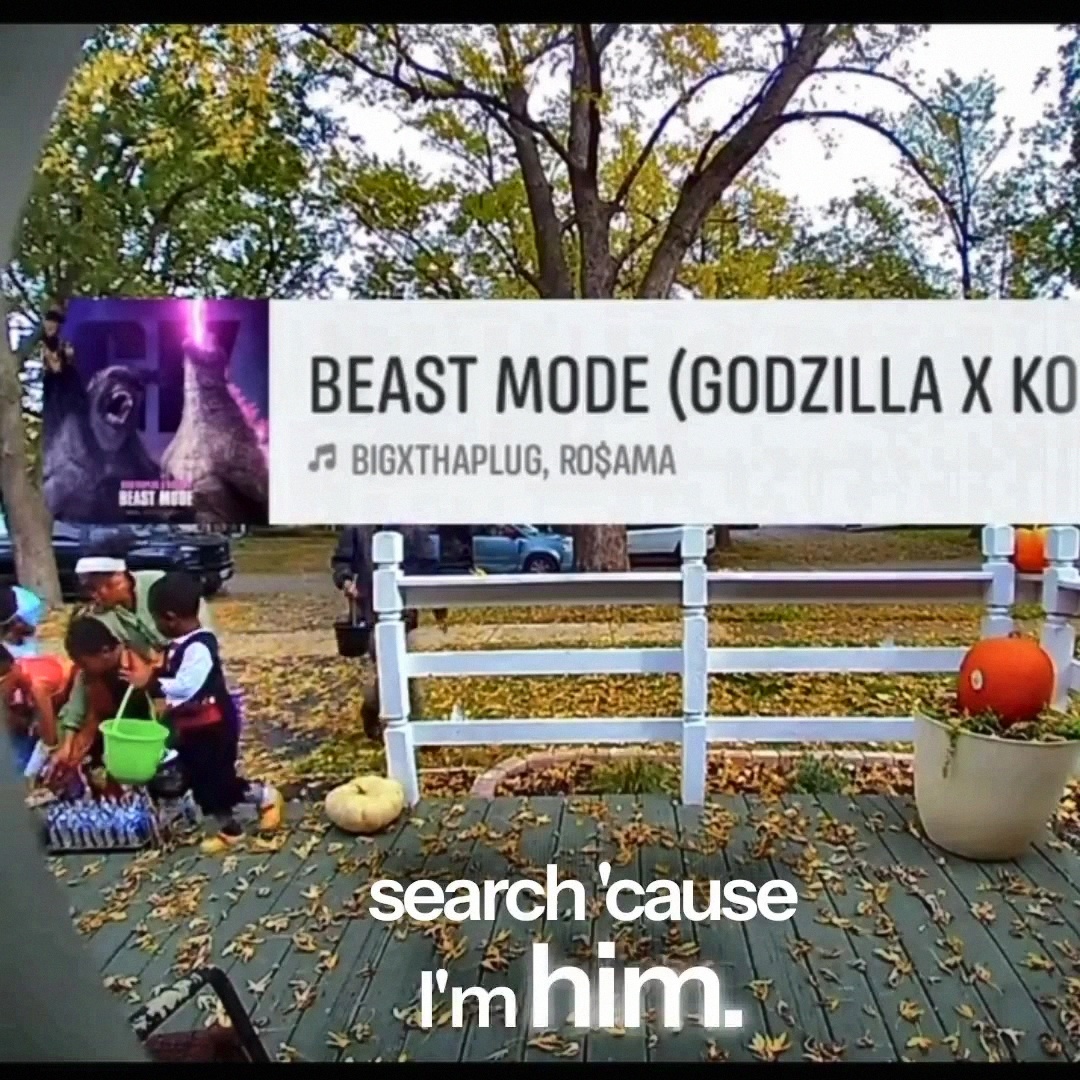
The camera then pans back toward the front yard, where a white picket fence sits behind a row of steps covered in scattered yellow leaves. Two young trick-or-treaters in costumes stand near the sidewalk, and the homeowner narrates the scene directly to his audience, a running commentary layered over the dispute. At one point a child's voice floats above the recording, and the homeowner answers, "That's not how you do stuff. You don't steal. That's what you get for stealing. You get put on blast."
The confrontation then turns back toward the vehicle. A woman in the group covers her face with her hand as the camera presses in, and the homeowner tells her, "Alright, don't give me nothing back." The tension is thick but contained, two feet of sidewalk separating the camera from the car door. The camera wobbles as voices overlap, and the homeowner insists he had more than 160 pieces out on the porch, a claim the family disputes. "I was gone 10 minutes and everything's gone," he says, the disbelief in his voice stretched thin.
The scene reaches its loudest point when the woman fires back at the camera: "Get the f*** out of my face. What's wrong with you, ruining kids' Halloween." She can be heard moving the children back into the vehicle, and the audio fills with overlapping chatter, a door closing, and the homeowner's repeated refrain about who was stealing from whom. The footage ends not in violence but in a slow deflation, the argument running out of steam as the family settles into the car and the camera keeps rolling, as if waiting for someone to admit fault.
Critical Blind Spots: What the Lens Leaves Unresolved
The recording starts well after the juice boxes vanished, which means the most important minutes of the evening played out off-camera. We never see how many treats were initially on the porch, who took what, or whether other children were cycling through during the homeowner's reported ten-minute absence. The gap between a full porch and an empty one is the entire dispute, yet the camera only arrives for the argument that followed.
It is also unclear whether the juice boxes were presented as self-serve or whether a sign invited a set limit. The homeowner says he put out more than 160 pieces; the family counters that the children did not take that many. The camera captures no inventory, no bowl, and no signage, leaving the actual quantity a matter of competing recollection.
The woman's hand covering her face is the most telling image in the footage, an instinctive shield against a phone lens now pointed at her in front of her children. What she says behind that hand is only partly audible, and the homeowner's own commentary competes with her words for space on the audio track, meaning the viewer hears an edited argument rather than a complete conversation.
Statutory Framework and Protocol Analysis
On a normal suburban street, the expectation of Halloween is straightforward: porch lights on, treats left in a bowl, children encouraged to take a reasonable handful. When a bowl is left unattended, the social contract is tested. Some homeowners accept that an unattended bowl may be emptied by a single early visitor; others expect a steady trickle of children throughout the evening.
The homeowner's response reflects a widely shared instinct that theft should not be tolerated simply because the items were left accessible. The woman's reported view, that the treats were placed outside and therefore fair game, reflects a different reading of the same porch. Both positions are visible in the comments that followed the video, which debated porch etiquette, parenting, and whether a confrontation in the street was ever the right response.
| Incident Parameter | Observation at the Scene |
|---|---|
| Location | Residential street in Illinois, reported but not independently confirmed |
| Time of year | Halloween evening, porch decorated with pumpkins and fall leaves |
| Disputed item | A supply of juice boxes removed from an unattended porch |
| Principal voices | A male homeowner holding a phone, a female parent speaking from a parked SUV |
| Bystanders | Several young children in costumes visible along the fence line |
| Resolution attempt | A child reportedly returned the juice boxes from the car |
| Documenter | Phone recording later shared online by a commentator |
Read more:
Read more: Body Cam: Memphis Foot Chase Ends in Chaos →
For homeowners, the lasting lesson is a practical one: an unattended bowl may not last the evening, and a sign with a printed limit is a cheap safeguard. For families, the footage is a reminder that a public street is not a courtroom, and a camera turned on someone's face can escalate a disagreement faster than it resolves one. The scene settles into that uncomfortable space where neither side walks away vindicated, and the neighborhood carries the story forward by word of mouth.
Core Questions and Institutional Review
- What did the porch actually look like before the camera started rolling, and how many treats were originally placed outside?
- Was there any written instruction or sign suggesting a limit per trick-or-treater, and did the family encounter it?
- What led the family to gather the remaining juice boxes and drive back toward the porch after the argument?
- Did the homeowner's stated intent, that the children had taken from other kids, ever translate into an actual return of the items?
The answers may never surface, because the argument is the only part that was recorded. Still, the video leaves an uncomfortable truth in its wake: two adults standing on a leaf-covered sidewalk, both certain they were right, neither willing to be the first to walk away. In the quiet after the camera stops, the real question is not who took the juice boxes, but what a neighborhood loses when the bowl outside becomes a test of character.
Key Takeaways
- The incident centers on a simple dispute over a supply of juice boxes left outside on Halloween.
- The recording is a running commentary by the homeowner, not a neutral document of the entire evening.
- The family viewed an accessible porch as permission, while the homeowner viewed the emptied display as theft.
- The footage offers no clear inventory, no sign, and no definitive resolution, making it a story of competing accounts.
What part of this story would you want to see verified first, the condition of the porch before the confrontation or the conversation that led the family back to return the treats?
LATEST DEVELOPING INCIDENT
An even more shocking incident just erupted hours ago that has stunned onlookers nationwide. Full investigative breakdown and on-scene evidence documented below.
BREAKING: READ NEXT SHOCKING INCIDENT – LATEST CASE ↓
Deputy Saves Choking Child During Traffic Stop
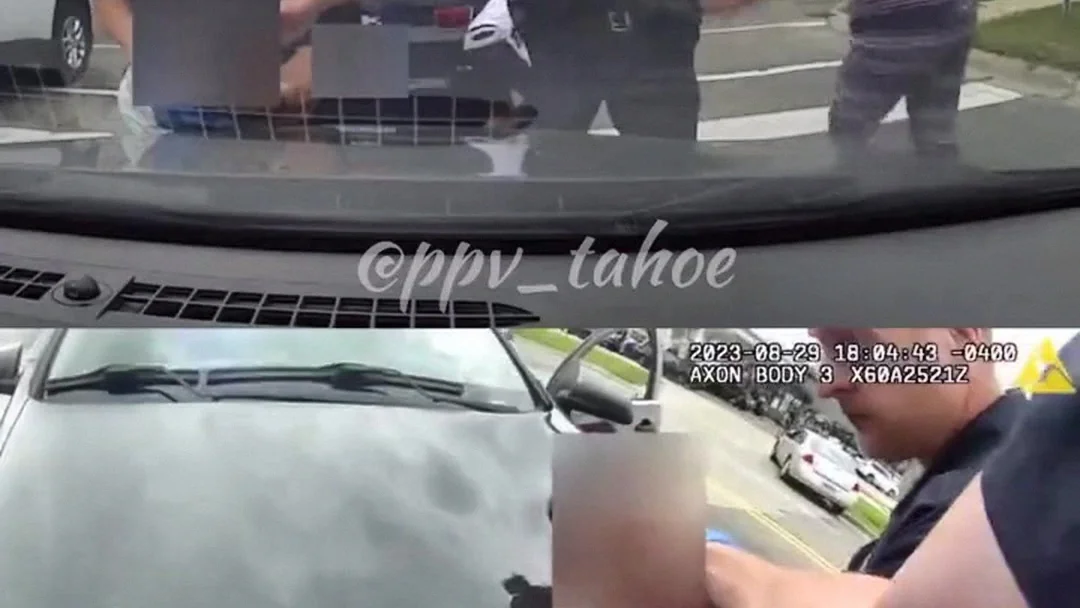
A frantic mother and father plead for their baby's life on a sunlit suburban intersection, their voices cracking as a sheriff's deputy racing against a failing pulse discovers a terrifying, unseen blockage. The dashboard camera captures the exact moment a routine traffic stop transforms into a life-or-death intervention, leaving bystanders breathless.
- The Scene: A wide, multi-lane intersection under a hazy afternoon sky, lined with traffic lights and a distant strip mall, where a dark sedan is abruptly pulled over by a deputy.
- The Friction: A couple speeds through traffic with their young son struggling to breathe, triggering a high-speed stop that instantly shifts from enforcement to emergency.
- The Intervention: The deputy, remaining remarkably calm, physically removes the child from the vehicle and clears an obstruction from his throat, while the mother's panicked cries fill the cabin.
- The Aftermath: The child begins taking in air, his coloring normalizes, and a chaotic scene transitions into tearful gratitude as the family prepares to continue to the hospital.
What the Recorded Footage Captures: Chronological Breakdown
The video opens with a split-screen perspective, showing a patrol car's dashboard view on top and a second, crisper angle of the adjacent vehicle below. The dark sedan is cornered near a crosswalk, its brake lights reflected on the asphalt. A male deputy in a dark uniform steps out, his posture rigid but controlled, while a woman in a pink top throws her hands up in the air, her body language screaming desperation before she even speaks. The audio captures the raw, jagged edges of a mother's terror: "Help! Help! Help! Can we go please? Can we go please?"
The tension spikes immediately as the deputy approaches the driver's side. The woman's voice breaks: "Oh my heatedly god, can we please go? It's like the glue! No, please don't take them!" The deputy's response is a steady, anchoring command: "I'm not gonna take them!" He leans in, and the camera catches the blur of a small, limp body being lifted from the back seat. The child is visible, and the deputy's hands begin working with urgent precision. "He's getting air. He's getting air," the deputy repeats, his voice a metronome of calm in the storm of the mother's panic. "He's coming to the hospital. They said he had COVID. And then he just started seizing."
A crowd begins to gather near the intersection, a few pedestrians pausing at the crosswalk, their faces turned toward the flashing lights. The mother's cries morph into a chant of "I found it, I found it," as the deputy maneuvers the child. A bystander's voice cuts in: "Sir, can you get up so someone doesn't run you over?" The deputy, still focused, doesn't break his gaze. Then, a shift in the atmosphere: "He's breathing. Look at him. Look at him. Okay. He's okay. They're not blue anymore." The words land like a stone dropped into still water. The mother's voice, previously a scream, softens into a trembling plea: "I need my phone. I gotta go on daddy."
Critical Blind Spots: What the Lens Leaves Unresolved
While the dashcam captures the raw emotion and the physical rescue, it leaves several critical gaps in the narrative. The exact nature of the obstruction – described only as "like the glue" – remains a mystery. Was it a piece of food, a small toy, or a medical secretion? The footage never zooms in on the child's mouth or the deputy's hands long enough to definitively identify the object. Furthermore, the child's medical history is only hinted at through the mother's frantic mention of COVID and a seizure, leaving viewers to wonder if the obstruction was related to those conditions or a separate, sudden choking incident.
The perspective is also limited by the fixed camera angles. We see the deputy's back and the mother's profile, but the child's face is blurred in the upper frame, robbing us of the visual confirmation of his distress and subsequent relief. The audio is heavily distorted by the wind and the distance, making some of the shouted dialogue difficult to parse. Additionally, the identity and role of the second person in the car – presumably the father – is never fully established. He appears only as a voice in the background, urging the mother to "pull it together," yet his physical actions during the rescue are obscured, leaving a gap in understanding the full family dynamic at play.
Statutory Framework and Protocol Analysis
When a vehicle is stopped for a traffic violation, standard procedure dictates that the officer must first ensure the safety of all parties. However, when a medical emergency is declared, the protocol pivots rapidly. The deputy's decision to physically remove the child from the vehicle, rather than waiting for an ambulance, aligns with the principle of "immediate action" in life-threatening scenarios. This is a critical judgment call: the deputy must weigh the risk of moving a potentially injured child against the certainty of a blocked airway. In this instance, the deputy's calm demeanor – repeating "he's getting air" – suggests a trained focus on the immediate task, overriding the chaos of the mother's panic.
Community expectations often revolve around the idea that law enforcement should be equipped to handle medical emergencies. While not all officers are paramedics, many are trained in basic first aid and CPR. The deputy's successful clearance of the obstruction highlights the importance of this training. The bystander's warning about being run over underscores the inherent danger of conducting a rescue in an active traffic lane. The scene also raises questions about the availability of emergency medical services; the delay in waiting for an ambulance could have been fatal, justifying the deputy's hands-on approach. The incident serves as a reminder of the split-second decisions required in the field.
| Incident Parameter | Recorded On-Scene Evidence |
|---|---|
| Location | Multi-lane intersection with traffic lights and a crosswalk |
| Weather Conditions | Overcast, hazy daylight with dry pavement |
| Involved Parties | Male deputy, female driver, male passenger, and a young child |
| Initial Action | Vehicle stopped for speeding; occupant signals medical emergency |
| Deputy's Demeanor | Calm, repetitive verbal reassurance, focused physical action |
| Medical Observation | Child described as "turning blue" and "seizing" prior to rescue |
| Resolution | Child begins breathing; color returns; family allowed to proceed |
Core Questions and Institutional Review
- What specific object or substance caused the child's airway obstruction, and was it identified after the incident?
- Did the child's recent COVID diagnosis or seizure activity contribute to the choking event, or were these separate issues?
- What was the exact timeline of the traffic stop, from the initial siren to the moment the child began breathing?
- Will the deputy receive formal recognition for his actions, and what does this incident reveal about the medical training provided to patrol officers?
The footage ends with the mother's voice, now softer, saying, "Here, put him in. I don't care. Come on you. Eddie, I need you to pull it together." The camera lingers on the empty intersection, the traffic lights cycling through their colors as if nothing extraordinary had happened. But for the family in that dark sedan, the world had shifted on its axis. The deputy's calm, steady presence in the face of a parent's worst nightmare is a testament to the quiet heroism that can occur in the most ordinary of places. Yet, the questions remain: How often do these silent emergencies go unnoticed on our roads, and what does it take for a routine stop to become a lifeline?