Fresno Officer’s Single Shot Ends Knife Hostage Standoff
WATCH: On-scene video documentation is embedded below →
LISTEN TO THIS ARTICLE
Audio Narration • English (US)
Fresno Officer Ends Knife Hostage Standoff With Single Shot
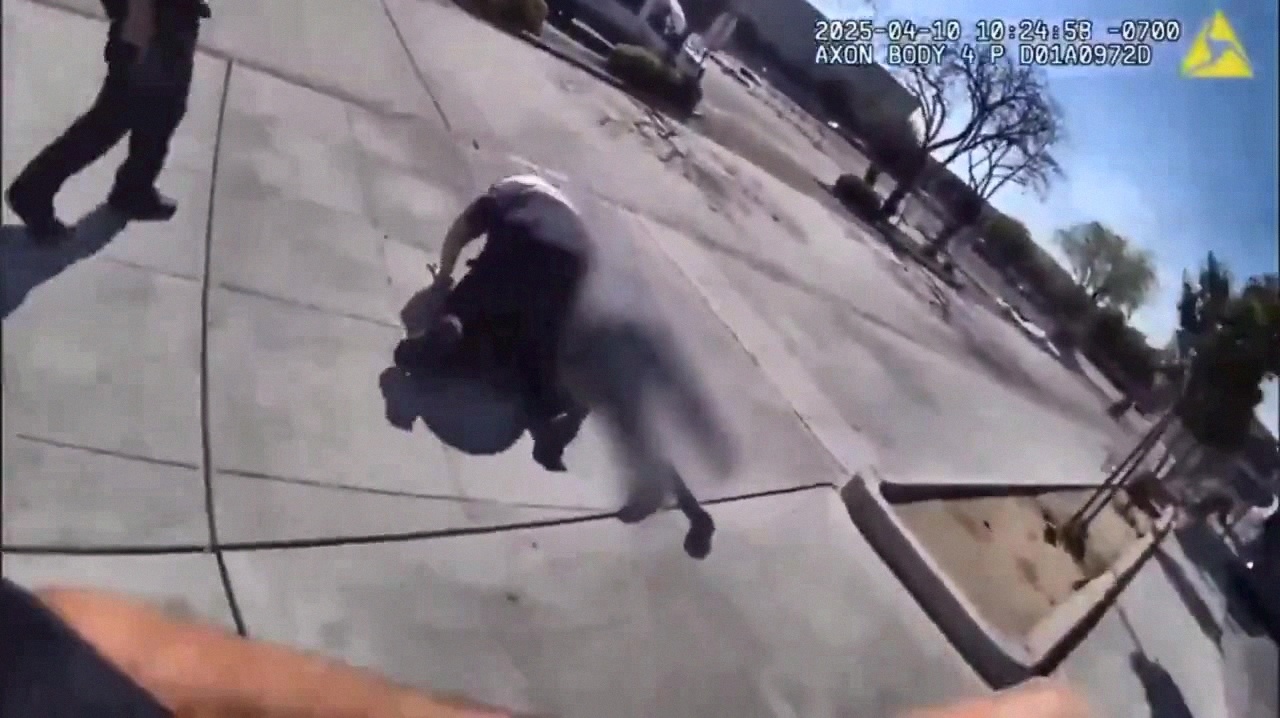
Newly surfaced body-camera footage from Fresno, California, shows a city police officer confronting a woman who was holding a knife to another person's throat. The officer repeatedly ordered her to drop the weapon before firing a single shot, an action that online observers are describing as a narrowly precise use of force in a fast-moving crisis.
- Body-worn camera footage shows a Fresno police officer approaching a woman who was holding a knife against a hostage.
- The officer issues repeated verbal commands, telling the woman to "put the knife down" while warning that she would be shot.
- The suspect is described in the source material as a 39-year-old female who was shot in the head after being given multiple chances to comply.
- Recorded audio captures the officer's voice remaining steady throughout the encounter, followed by the shot and calls for backup.
- The footage circulated widely online, drawing attention to officer training and the speed of the decision to fire.

The released material is short, but it compresses an entire use-of-force timeline into a matter of seconds: the approach, the warnings, the refusal, and the shot. Because the footage comes from a chest-mounted camera, the viewer sees precisely what the officer saw, including the physical distance between the responder and the two people at the center of the standoff.
The Commands Heard Before the Shot
According to the transcribed audio, the officer's verbal sequence is remarkably consistent. He tells the woman to put the knife down, then repeats the instruction several more times. At one point he states flatly that she is going to get shot if she does not comply. The tone does not spike or crack; it stays level even as the situation deteriorates.
The audio also contains fragments that appear to capture the suspect speaking and the officer responding with an offer or acknowledgment before the situation reaches its conclusion. What is clear from the recording is that the officer did not fire immediately upon arrival. The commands were issued first, and they were issued more than once.
Online commenters who watched the clip focused heavily on the officer's composure. One widely shared reply described the officer's voice as remaining calm both before and after the shot, calling the response "quick and precise." Another commenter framed it more bluntly, writing that it was "a damn good shot."
How the Encounter Escalated
The footage opens with the officer moving across an open concrete area toward two figures. The suspect, dressed in dark clothing, is holding a hostage. The knife is described in the source as being held to the victim's throat. From the camera's low angle, the officer's arms and sidearm dominate the foreground, placing the viewer directly inside the decision loop.
As the confrontation unfolds, the figures move and shift position, and the officer continues issuing commands. The visuals show the officer closing distance and adjusting for an angle, a detail that outside observers later commented on. One poster noted that ideally two officers would be positioned at a 90-degree angle so that at least one would have a cleaner line, but concluded that this was a situation where you take the first good shot because there is no perfect shot.
"Put the knife down. You're gonna get shot. Put the knife down."
That repeated command, captured on the body camera, forms the spine of the entire sequence. It is the verbal record that will matter most in any review of the incident, because it establishes that the officer gave the suspect an opportunity to surrender the weapon before deadly force was used.
Read more:
Read more: Arkansas Trooper Arrests Family After Speeding Stop →
Aftermath and the Officer's Response
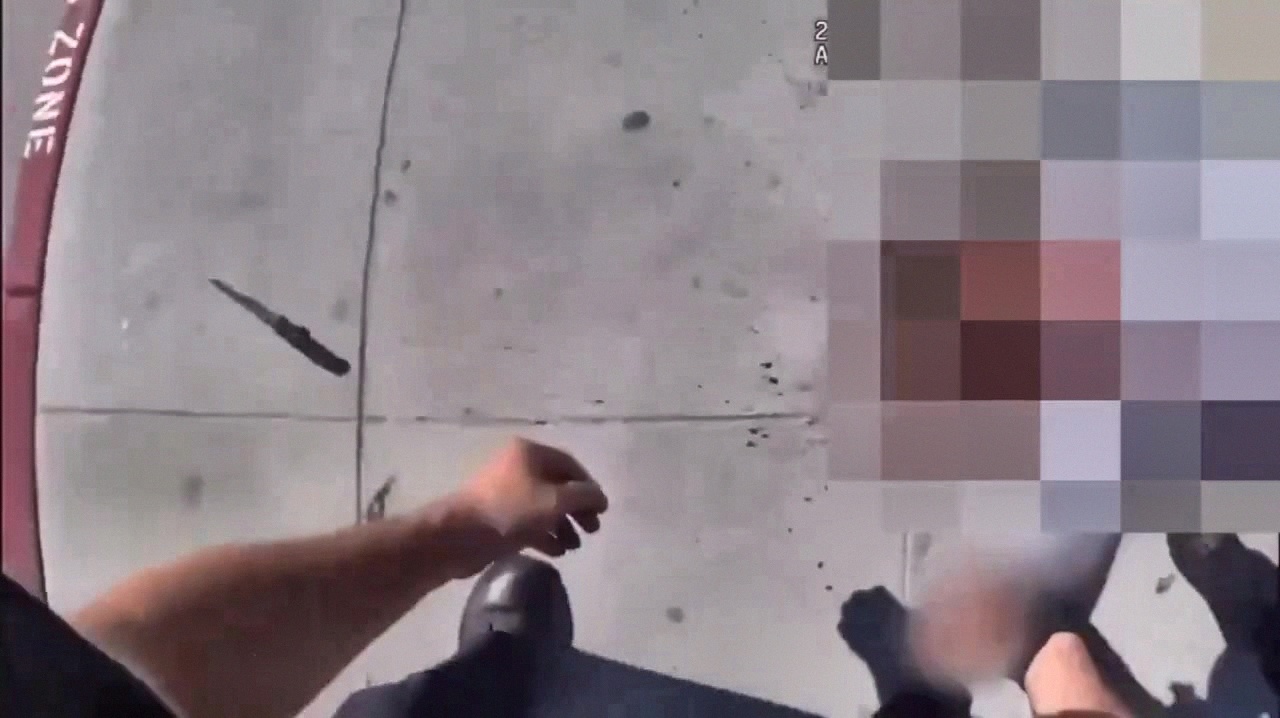
Once the shot is fired, the audio shifts to a different register. The officer calls out "shots fired" and requests backup, and other voices begin arriving on the recording. The footage shows movement toward the downed suspect and the hostage. The camera angle drops and swings as the officer moves, capturing the concrete surface and discarded items on the ground.
The source material states that the suspect was shot in the head. The footage itself does not provide a medical update or a formal account of the suspect's condition beyond what has been described in the circulating post. No official statement from the Fresno Police Department was included in the material reviewed for this report, and no court records or charging documents were available.
What the footage does document is the immediate aftermath: the officer's continued verbal control of the scene, the arrival of additional personnel, and the securing of the area. Public reaction has centered on the officer's training, with one post praising the Fresno Police Department for what it described as a life saved and evidence of a high standard of training.
| Incident Parameter | Observation at the Scene |
|---|---|
| Location identified in source | Fresno, California |
| Suspect description in source | 39-year-old female |
| Weapon described | Knife held to the hostage's throat |
| Officer commands recorded | Repeated instructions to put the knife down |
| Warning issued | Suspect told she would be shot |
| Outcome documented in source | One shot fired, suspect struck in the head |
| Post-incident audio | Officer reports shots fired and requests backup |
Questions the Footage Cannot Answer
The released clip is powerful precisely because it is limited. It shows the final seconds of a hostage crisis but not how the situation began, how the hostage came to be held, or what prompted the suspect's behavior. The original post characterized the suspect as deranged and joked that she had apparently watched too many action movies, but that characterization is commentary rather than a documented clinical or investigative finding.
It also cannot answer the questions that typically follow any critical incident involving law enforcement. Independent oversight, internal review, and public disclosure processes determine whether a use of force is found justified, and none of those determinations appear in the material available here. Readers should treat the circulating clip as one piece of evidence, not a complete account.
Core Questions and Unresolved Issues
- What circumstances led to the hostage being taken, and has the victim's condition been publicly documented?
- What did the department's internal review conclude about the officer's decision to fire rather than continue negotiating?
- Will the full body-camera footage, including the moments before the recording begins, be released in an official capacity?
What should viewers take away from a recording that shows a standoff ending in seconds after repeated warnings were ignored, and how much weight can a short clip carry in judging a split-second decision?