The Towing Trap: Hidden Legal Loopholes That Could Drain Your Savings Before You Even Know You’re a Victim
It started as a minor inconvenience. Now, it’s a financial and legal nightmare that exposes how little protection ordinary Americans actually have when private property rules collide with state civil codes.
Imagine pulling into a spot you’ve used a hundred times before. You run inside for five minutes. When you come back, your car is gone. Not stolen. Towed. And the nightmare is just beginning. This isn’t a hypothetical scenario. It’s a daily reality for thousands of Americans who find themselves caught in a brutal financial trap between a private property owner’s rules and a towing company’s predatory practices.
The vehicle owner in this case did what any reasonable person would do. They demanded answers. What they got instead was a masterclass in bureaucratic deflection and a bill that would make your head spin. The property manager claimed the vehicle was parked in violation of posted rules. The driver claimed those rules were never properly communicated. And the towing company? They just cashed the check.

The Legal Precedent: Where Private Rules Clash With State Civil Codes
Here’s what most people don’t understand until it’s too late. Private property owners have the right to set rules. But those rules don’t exist in a legal vacuum. Every state has specific statutes governing how and when a vehicle can be towed from private property. And those statutes are riddled with loopholes that favor the property owner and the towing company, not you.
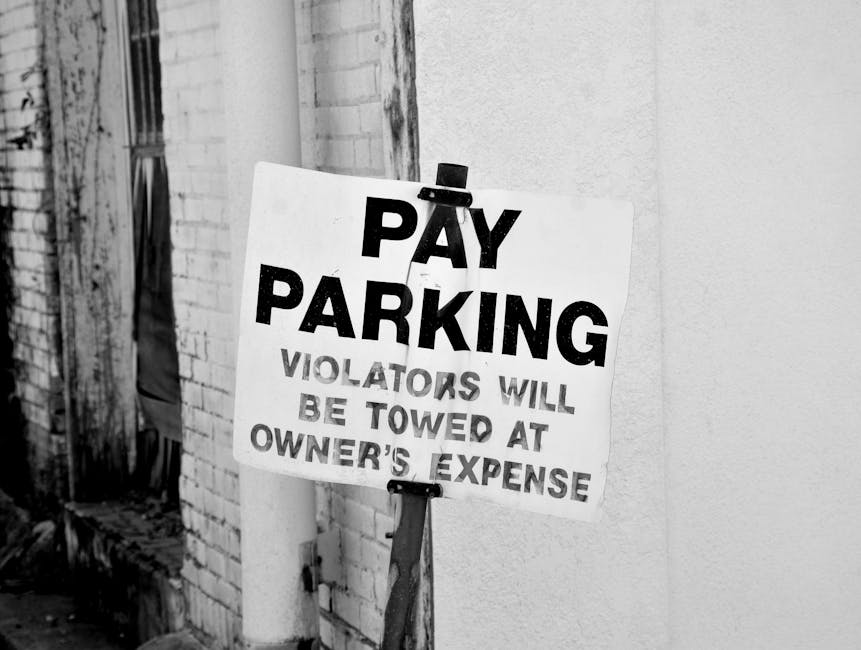
In many jurisdictions, a property owner only needs to post a sign at the entrance. That’s it. No direct notice to you. No warning. No grace period. The moment your tire touches their asphalt, you’re consenting to their rules, whether you read them or not. This is known as implied consent doctrine, and it’s one of the most powerful tools in the towing industry’s legal arsenal.
“The sign was there. That’s all the law requires in most states. You don’t have to read it. You don’t have to agree with it. By parking there, you’ve legally accepted it.”
But here’s where it gets worse. The financial liability doesn’t stop at the towing fee. Most victims don’t realize they’re also on the hook for daily storage fees that can accumulate faster than a payday loan. Fifty dollars a day. Seventy-five dollars a day. Some lots charge over a hundred. And they don’t have to notify you. They don’t have to call. Your car sits there, racking up debt, while you scramble to figure out what happened.
Civil Liability & Business Codes: Hidden Legal Risks for Local Venues
Here’s the part that should terrify every property owner and business operator in America. When you authorize a tow, you’re not just exercising property rights. You’re potentially exposing yourself to civil liability under state consumer protection laws. If the tow was wrongful, if the signage was inadequate, if the notice requirements weren’t met, the property owner can be held financially responsible for the vehicle owner’s losses.
But here’s the catch. Most property owners don’t know this. They trust the towing company to handle everything legally. And the towing company? They’re protected by contracts that shift all liability back to the property owner. It’s a legal shell game, and the person who loses is always the vehicle owner.
- Was the signage at the property legally adequate under state civil codes, or was it a trap designed to generate towing revenue?
- Did the towing company follow mandatory notification procedures, or did they exploit a loophole to maximize storage fees?
- Who bears financial liability if the tow is later ruled wrongful? The property owner, the towing company, or both?
The financial fallout extends far beyond the initial tow fee. Victims report losing wages while they fight to get their vehicles back. Some have lost jobs. Others have seen their insurance premiums spike because a tow was reported as a vehicle recovery. And the legal options available to them? They’re limited, expensive, and often not worth pursuing for a few hundred dollars.
That’s the dirty secret of the towing industry. The amounts are small enough that most people just pay. They don’t sue. They don’t fight. They absorb the loss and move on. And the system counts on that.
“It’s not about the money. It’s about the principle. They can’t just take your property and charge you for the privilege of getting it back. That’s not how this country is supposed to work.”
Similar civil confrontations across the country are forcing community leaders and local venues to confront serious liability under state regulations. Explore the full legal breakdown of related incidents →
Consumer Protection & Financial Fallout: What Precedent Does This Set?
There’s a reason this story resonates. It’s not just about a towed car. It’s about the growing sense that ordinary Americans have no recourse when powerful interests decide to extract money from them. The towing industry generates billions annually. And a significant portion of that revenue comes from people who had no idea they were violating a rule until their car was already on a hook.
Consumer protection attorneys say the system is rigged. State laws are written with input from towing industry lobbyists. Enforcement is minimal. And the burden of proof falls on the victim, who has to prove the tow was wrongful, not the other way around. It’s a reversal of justice that leaves ordinary people feeling helpless.

But there are legal options. Few people know them. Even fewer use them. In some states, you can file a complaint with the state attorney general’s office. In others, you can sue in small claims court for wrongful towing and recover up to three times the damages. The key is documentation. Photos of the signage. Receipts. Timestamps. Witness statements. Without evidence, you’re just another angry voice in a system designed to ignore you.
The vehicle owner in this case is still fighting. The towing company has refused to refund the fees. The property manager has stopped returning calls. And the legal bills are starting to add up. Meanwhile, the car sits in a storage lot, accumulating daily charges that will eventually exceed the vehicle’s value.
This is the reality of the towing trap. It’s not a mistake. It’s