Campus Hallway Camera Confrontation Leaves Both Sides At Odds
WATCH: On-scene video documentation is embedded below →
LISTEN TO THIS ARTICLE
Audio Narration • English (US)
A television cameraman is pushed and sent stumbling down a brightly lit institutional hallway after a man in a bright red jacket turns on him mid-interview. The confrontation unfolds in seconds, but the audio captured on the recording reveals a sharp disagreement over one specific question and the placement of the camera itself.
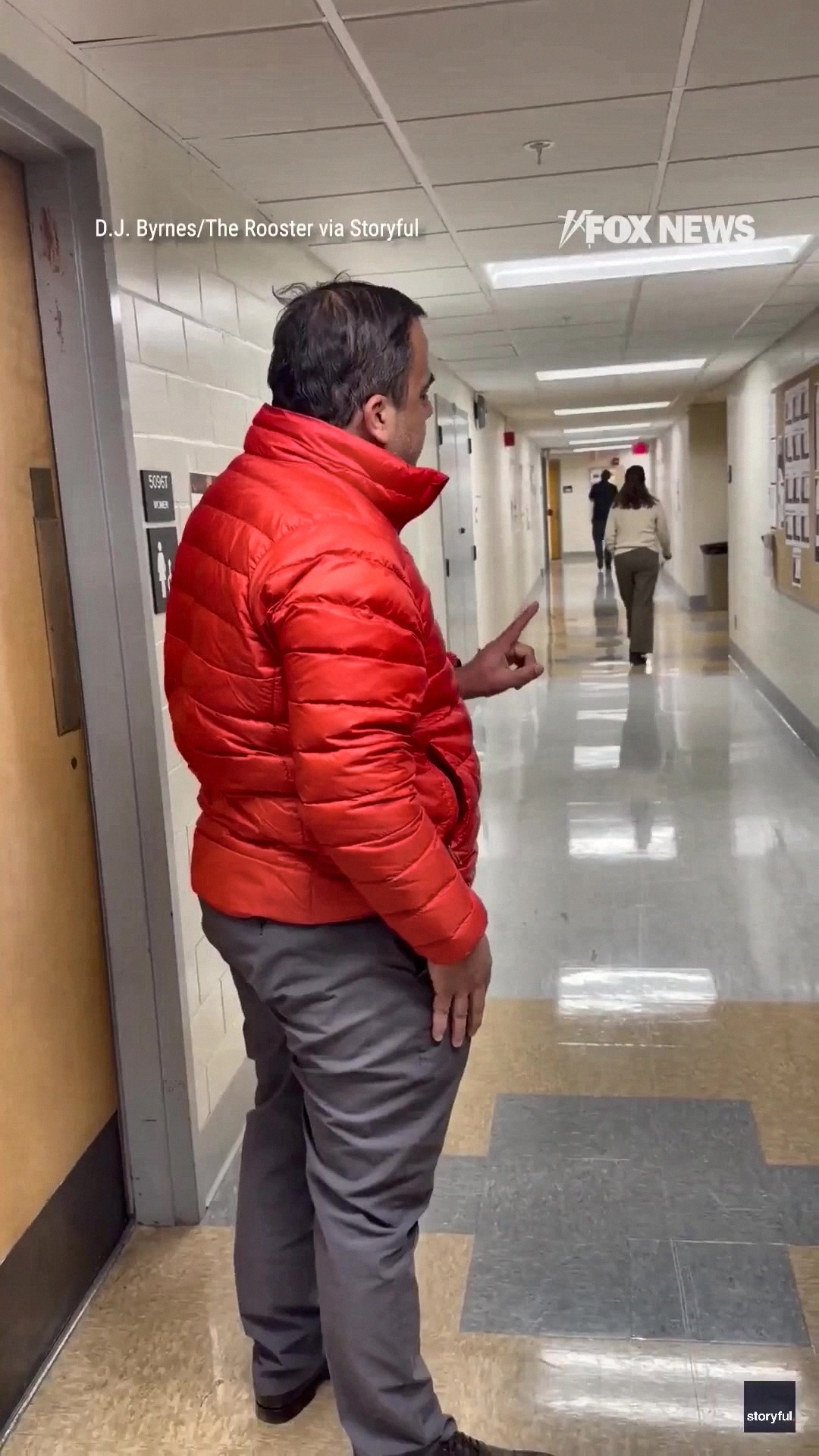
The video begins with a routine pursuit. A man walks away down a polished corridor, his back to the lens, one arm gesturing dismissively over his shoulder. A second figure, a woman, is visible further down the hall, near a bulletin board. The cameraman follows at a steady pace, the camera and the question moving together in the familiar choreography of a media ambush.
What happens next is captured in a chaotic sequence of frames: the man stops, turns, and closes the distance. The lens tilts wildly. The audio captures a rush of breath, a shouted warning, and the sound of scuffling feet on tile.
- The Scene: A continuous, brightly lit hallway inside an institutional building, with cinderblock walls, a tile floor, and a wall-mounted fire alarm strobe visible in the background. Fluorescent light reflects off the polished floor.
- The Friction: A man in a red puffer jacket and gray trousers walks away from a television camera, repeatedly gesturing over his shoulder before turning to confront the person holding it.
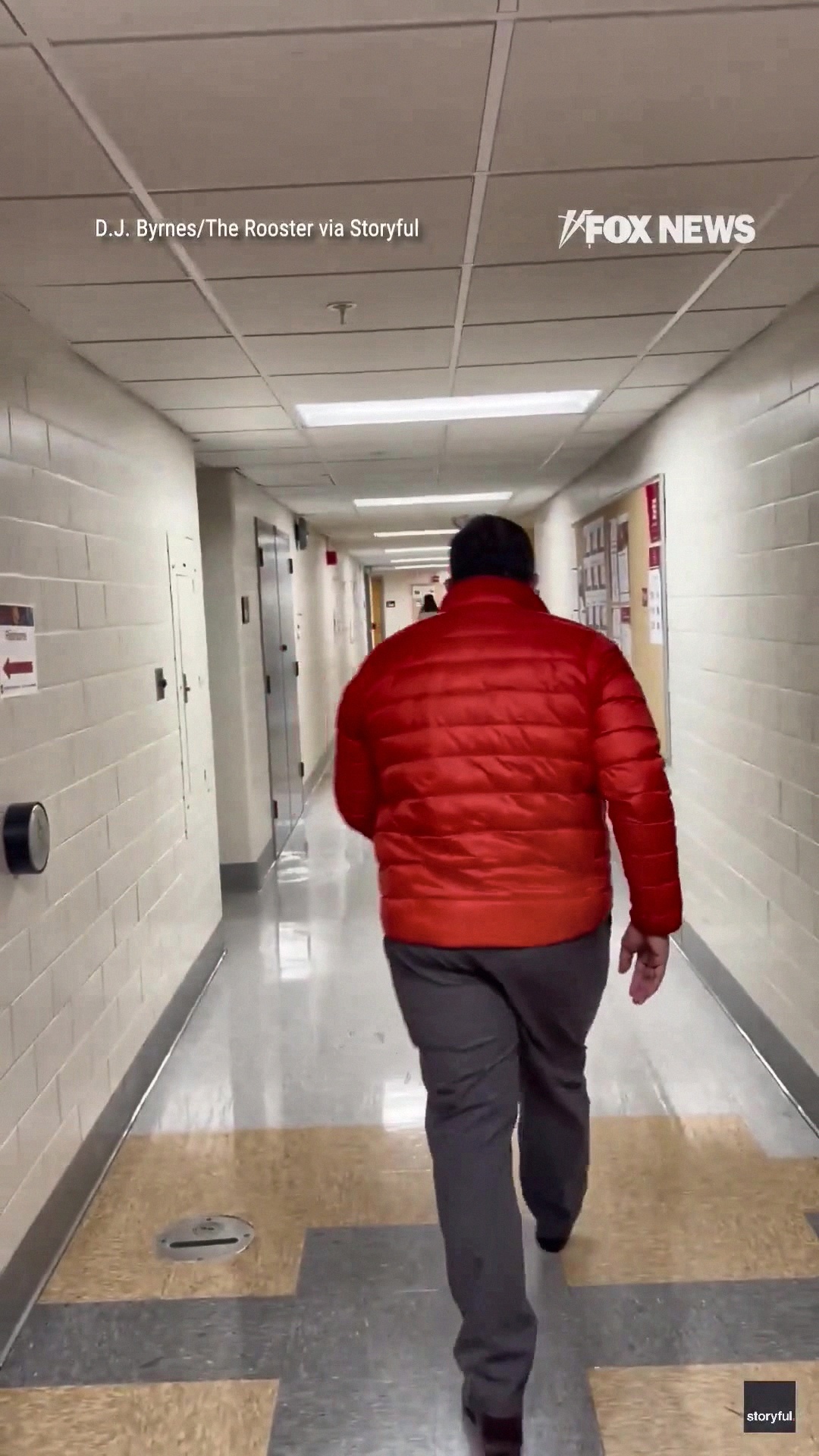
- The Intervention: The man stops, spins around, and advances directly on the camera. The lens is suddenly filled with motion and the framing collapses into a chaotic blur.
- The Aftermath: The camera catches the man backing away with both hands raised in protest before the frame drops and a voice announces that the encounter will not continue.
What the Recorded Footage Captures: Chronological Breakdown
The opening frames establish a clear physical hierarchy. The man in the red jacket holds the center of the frame, walking away at an unhurried pace with his left hand raised near his shoulder in a repeated, dismissive wave. He is not running. He is not hiding. He appears to be treating the camera as an annoyance, a presence he refuses to fully acknowledge.
"Whoa, whoa, whoa. Whoa! Ow! I told you not to put that in my face."
The turn happens fast. The man's shoulders square, his head snaps back toward the lens, and he closes the distance between himself and the camera in a single step. The frame is momentarily filled with the red fabric of his jacket as the handheld shot dips toward the floor. The audio catches overlapping voices and the shuffle of shoe soles on the tile.
"Dude, you can't do that."
What follows is a jumble of accusations traded at high volume. The cameraman insists something was done to him. The man in the red jacket insists the camera was shoved into his face. A hand points sharply downward, then upward, then back toward the lens as the two men verbally collide in the middle of the corridor.
"Put your hands on me, sir. You put your hands on me, dude."
By the final frames, the physical distance has been restored, but the tone has hardened. The man in the red jacket is no longer walking away. He is standing his ground, one hand raised near his chest, and asking with visible disbelief whether the person behind the camera is serious. The video cuts before either side can explain what happened.
Critical Blind Spots: What the Lens Leaves Unresolved
The recording that circulates online is not a wide, fixed shot. It is a first-person perspective from the person holding the camera, which means the viewer sees exactly what the cameraman wants them to see. Every detail outside that narrow frame – how close the lens actually was to the man's face, whether the cameraman stepped into the man's path, and who made contact first – is outside the visible record.
The audio is equally selective. Both men can be heard at the moment of contact, but the full exchange that preceded the turn is clipped. The viewer never hears the exact wording of the question that triggered the reaction, only the man's stated objection: that the camera was being pushed into his face. That objection is heard clearly, and it remains the central factual claim that the footage cannot independently confirm or refute.
The broader context of the encounter is also absent. The hallway is filled with institutional signage, a bulletin board covered in pinned materials, and a fire alarm strobe mounted on the wall – all markers of a public building where members of the public, staff, and media routinely pass through. The video does not establish what the cameraman was authorized to do, whether he had permission to record, or whether the man in the red jacket was a homeowner, a professional, or both.
Statutory Framework and Protocol Analysis
In American public spaces, the act of holding a camera and asking questions is generally protected activity, but that protection does not include the right to force physical contact with another person, to block their movement, or to hold a lens within inches of a face. The distinction is not public; it is physical. Once a camera is pressed into someone's personal space, the encounter stops being a question-and-answer exchange and becomes a friction point that the person being recorded may reasonably attempt to stop.
At the same time, the standard expectation for members of the public is that walking away is the appropriate response to a question they do not wish to answer. The video captures the man in the red jacket doing exactly that for the first several seconds, before the pursuit continues and the lens closes the gap. That sequence – walk away, continue, turn, and then contact – is the entire arc of the visible record.
| Incident Parameter | Observation at the Scene |
|---|---|
| Setting | Fluorescent-lit institutional hallway with cinderblock walls and polished tile |
| Initial posture | Man in red jacket walks away with dismissive hand gesture |
| Camera position | Handheld, moving at walking pace, closing distance |
| First contact claim | Cameraman states "you put your hands on me" |
| Response claim | Man states "you shoved that camera into my face" |
| Physical escalation | Frame collapses as lens dips and tilts sharply |
| Ending state | Verbal confrontation continues; recording terminates |
A second layer of protocol applies to the person holding the camera. Professional media conduct in public corridors typically includes maintaining a reasonable distance, keeping the lens out of physical proximity to a subject's face, and disengaging if a subject declines to answer. The audio does not contain a verbal request to stop recording, but it does contain a clear statement from the man that the camera was in his face – a boundary marker that arrives too late to prevent the collision.
Read more:
Read more: School Bus Releases Student Into Thigh-Deep Floodwater →
The scene's layout reinforces how quickly this escalated. The hallway offers limited lateral space, meaning a camera operator who wants to stay close to his subject has to follow directly in his path. With a wall on one side, a row of doors on the other, and a bulletin board at the far end, there is no easy way to create distance once the pursuit begins. The man's only unobstructed route – forward, toward the camera operator's position – is also the route that produces the confrontation.
Core Questions and Institutional Review
- What was the exact question being asked that prompted the man to stop and turn around?
- How close did the camera lens actually come to the man's face in the moments before the frame collapsed?
- Did either party state a clear desire to disengage before the physical contact occurred?
- What happens to the recording and the parties after the frames end, and is a fuller version of the encounter available?
The tape ends on a question hanging in the air, not an answer. A man stands in a hallway, hands raised, voice sharp with disbelief, while the person behind the lens protests that his own rights have been violated. Neither position is resolved by the frames, and the viewer is left holding both claims at once. When a camera is present for a confrontation, does it document the truth or does it become part of the dispute itself?
Practical Takeaways for Media Encounter Management
- Maintain a buffer of several feet between the lens and a subject's face at all times.
- If a subject turns and advances, step back and lower the camera rather than holding position.
- Record the exact wording of a firm disengagement request if one is made.
- Keep the full, uncut recording available for context, not only the moment of contact.
Quick Reference Checklist
- Verify the location's access rules before recording.
- Keep hands visible and the device steady during any dispute.
- Note time stamps for the start of pursuit and the moment of contact.
- Preserve original audio without edits to establish the sequence of events.
Closing Note
The visible record shows two men in a hallway, a camera moving forward, and a boundary crossed in a matter of seconds. Everything that came before and everything that followed remains outside the frame, which is precisely why the question of who is at fault continues to be argued by viewers who saw only one angle.
Ethical Framing
This account is limited to what the recording and the audible dialogue establish. No conclusions are drawn about either party's intent, employment status, or character, and no legal finding is implied. The purpose is to document the sequence and identify the gaps that the footage leaves open.
A Final Consideration for Viewers
The disagreement is a public dispute over proximity, but the video shows something more common: a person who believed he was being pushed past his limit and a person who believed he was simply asking a question. The truth likely sits somewhere between the two claims, and the record available to the public does not settle it.
LATEST DEVELOPING INCIDENT
An even more shocking incident just erupted hours ago that has stunned onlookers nationwide. Full investigative breakdown and on-scene evidence documented below.
BREAKING: READ NEXT SHOCKING INCIDENT – LATEST CASE ↓
Camera Swat at Park Event Sparks Assault Claim
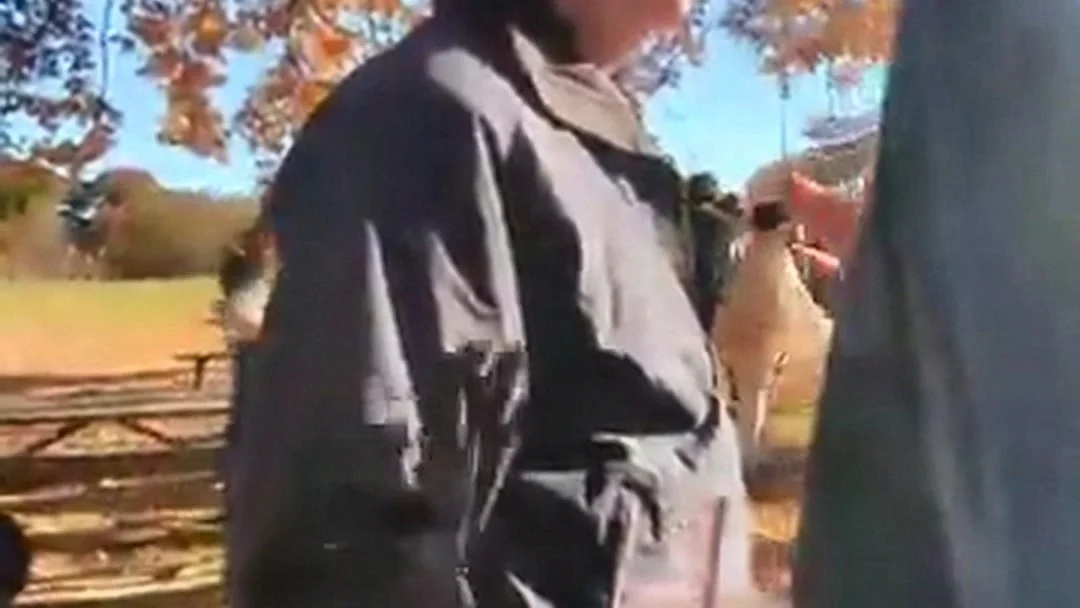
A reporter's camera frames a governor in a navy windbreaker under amber autumn leaves. Within seconds, the calm of a Saturday morning park event collapses into a disputed swat at the lens, a burst of protest, and a question that never gets answered. What the recording shows is brief, but what it leaves behind is a tangle of competing accounts about a hand, a phone, and a line that may or may not have been crossed.
- A woman recording on her phone approaches a public figure at an outdoor gathering in a park setting, pressing a question about a campaign staffer's recent traffic stop.
- The man in the navy windbreaker, sunglasses perched on his face, turns toward the lens and his hand moves abruptly in its direction.
- The woman's voice rises immediately, declaring that touching her camera constitutes an assault and that she was only asking a question.
- The encounter ends with the man walking on and the recording continuing, leaving the physical contact and its legal meaning unresolved.
What the Recorded Footage Captures: Chronological Breakdown
The footage opens in motion. A woman in a rust-colored top and dark jeans strides across a leaf-strewn path, the camera jostling with each step. Bare branches and trees heavy with orange foliage frame a bright blue sky. Other attendees drift in and out of frame, some in light coats, a few standing near picnic tables in the distance. The audio carries the easy ambient noise of an outdoor gathering – footsteps, distant chatter, wind moving through the canopy.
Then the camera finds its subject. The man in the navy windbreaker stands with one hand resting near his pocket, his posture casual but closed. His head turns slightly as the question lands. The reporter's voice is steady, almost conversational at first, asking how the mayor is working out and then pivoting to a specific claim about a campaign manager and a police stop. The phrasing is pointed but not shouted.
That is when the frame changes. The hand comes up. It is a quick, lateral motion toward the phone, and the image jolts. The reporter's voice sharpens instantly: "Wait a minute, why don't you touch my camera? You're not supposed to be touching my camera, that's assault." A second voice – softer, almost placating – cuts in with "Oh, stop, please." The reporter fires back, "What do you mean, stop, please? I was asking a question." She repeats the name of the staffer and the details of the traffic stop, her words tumbling out faster now, the camera still rolling, still pointed at the man in sunglasses who has not broken stride.
Critical Blind Spots: What the Lens Leaves Unresolved
The recording is a narrow window. It shows a hand moving toward a device, but it does not show with certainty whether contact occurred, whether the phone was struck, or whether the motion was a reflexive flick intended to create distance. The angle is tight and the movement is fast; a single frame can be read two ways depending on where the viewer pauses.
Equally unseen is what preceded the approach. How close was the camera before the question began? Was the device held at chest height or pushed toward the subject's face? Bystanders in the background appear relaxed, but their reactions are not captured in detail, and no wide shot establishes the physical spacing between the two people at the moment of the swat.
The aftermath is also incomplete. The footage does not show the exchange ending, whether anyone intervened, or whether the reporter continued to pursue the question. What remains is a fragment – a few seconds of friction preserved on a phone – and a set of claims that will have to be sorted out by people who were standing in that park.
Statutory Framework and Protocol Analysis
For reporters working in public spaces, the standard expectation is straightforward: questions may be asked, cameras may roll, and public figures are generally expected to absorb scrutiny without physically engaging with equipment. For public figures, the corresponding expectation is that they can move through an event without being physically crowded or having devices thrust into their personal space. Where those two expectations collide, the outcome is almost always a dispute about proximity and intent.
In this instance, the on-scene evidence is thin and contradictory. Supporters of the man in the windbreaker have characterized the motion as a reflexive flick with no contact, describing the reporter as having gotten too close. The reporter's own narration, captured live, frames the same motion as deliberate contact with her equipment. Both descriptions can be offered in good faith; neither is fully proven by the frame.
| Incident Parameter | Observation at the Scene |
|---|---|
| Setting | Outdoor park gathering, autumn foliage, bright midday sun |
| Principal figures | Woman recording on a phone; man in navy windbreaker and sunglasses |
| Trigger moment | A question about a staffer's traffic stop |
| Physical action | A quick lateral hand motion toward the camera |
| Verbal reaction | Reporter declares assault; a second voice urges her to stop |
| Camera stability | Sharp jolt at the moment of the hand motion |
| Resolution on tape | Man continues walking; recording continues |
The broader question is one of community norms. Public events are designed to be open, but openness does not come with a manual for how close is too close or how much a public figure must tolerate before stepping away. Organizers typically rely on informal spacing and the presence of staff to manage friction. When those soft buffers fail, the result is a few chaotic seconds that neither side controls – and a public argument that outlasts the event itself.
Core Questions and Institutional Review
- Did the hand make contact with the device, and if so, what was the force and direction of that contact?
- How close was the camera to the subject immediately before the motion, and was that distance consistent with accepted reporting practice at open events?
- What did bystanders observe from angles not represented in the single vertical recording?
- What internal review, if any, will each side conduct regarding the conduct of its personnel at public gatherings?
The answers will not come from the clip alone. They will come from statements, additional angles, and the slow work of sorting claim from counterclaim. What the recording does preserve is the moment itself: the bright leaves, the calm question, the sudden hand, and the instant shift in a stranger's voice from inquiry to accusation. Whether that moment is remembered as an overreach, an overreaction, or a misunderstanding depends entirely on facts the lens never caught.
What would you have done if a camera was pointed at you and a pointed question followed – walk away, or reach for the lens?