The Airport Meltdown That Silenced a Terminal: A Live Stream, A Threat, and the Terrifying Power of One Unhinged Moment
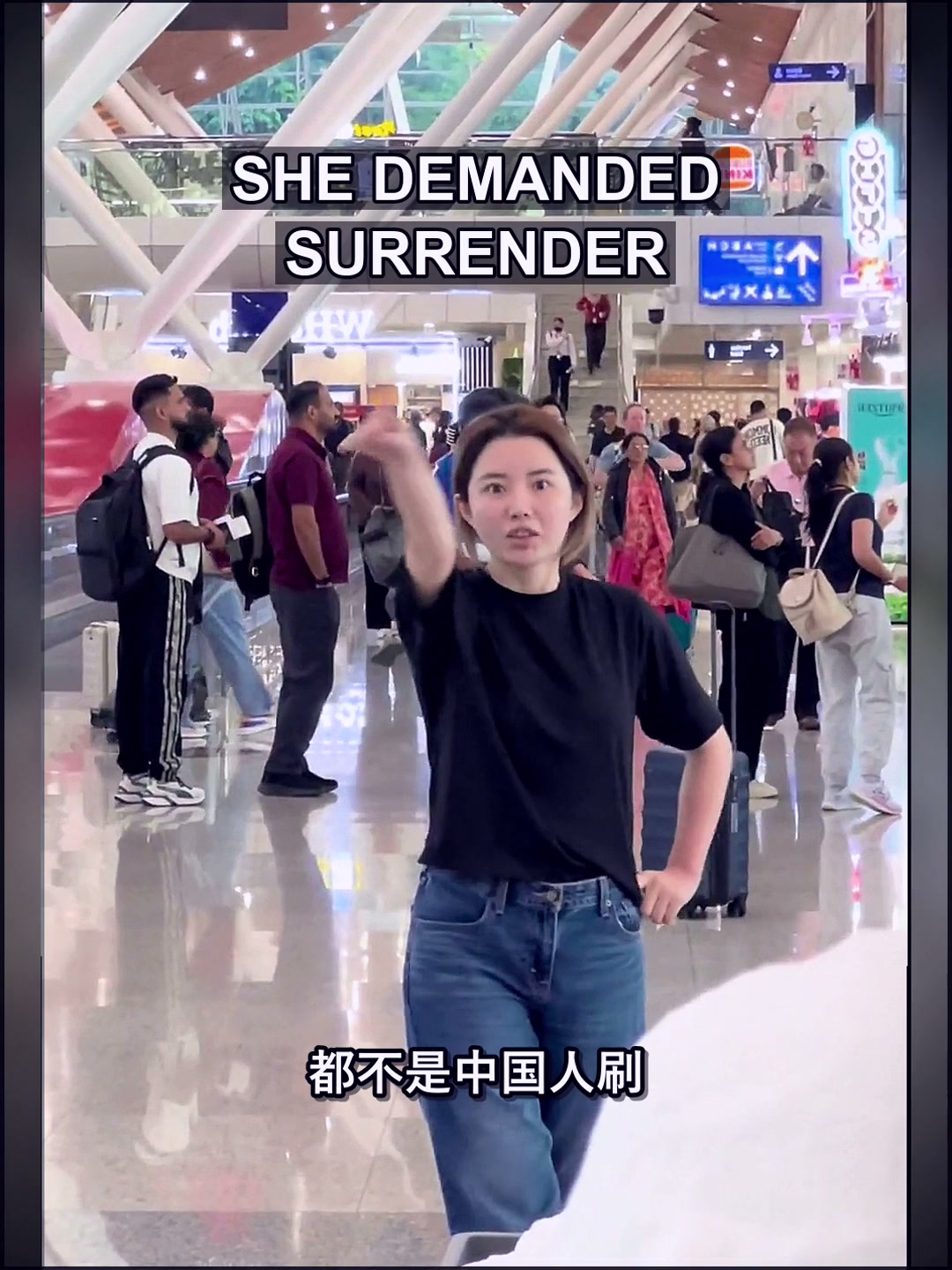
What happens when a tourist’s rage goes viral before authorities can even react? The line between a rant and a real-world security crisis just vanished.
- A woman’s explicit death threat targeting three nations was broadcast live from a major international airport.
- The incident exposes the volatile intersection of social media egos and real-world security protocols.
- It underscores a growing global anxiety: how do we handle unhinged individuals whose online rants have offline consequences?
Imagine standing in the fluorescent haze of an airport terminal, the dull roar of departure boards and rolling suitcases filling the air. You are exhausted, just trying to get to your gate. Then, a voice cuts through the noise—not asking for directions, not calling a lost child. It is a scream. A threat. A demand for entire nations to surrender.
This morning, that is exactly what happened at Kuala Lumpur International Airport. A Chinese woman, phone in hand, livestreaming to TikTok, decided she was the mouthpiece for a geopolitical meltdown. She looked into her camera and issued a chilling ultimatum aimed at Malaysia, Singapore, and Japan: surrender to China, or face the consequences.

She didn’t stop at political grandstanding. The threats turned deeply personal and terrifyingly specific. “If I die,” she declared, her voice trembling with unhinged fury, “Malaysia, everyone dies together.”
Let that sink in. This wasn’t a private rant muttered under her breath. This was a public broadcast, a digital megaphone for a threat that, in any sane world, should have triggered an immediate lockdown. The video, now circulating rapidly across social media, shows a woman completely unmoored, operating on a frequency of rage that knows no borders.
The Digital Powder Keg
What makes this moment so deeply unsettling is not just the threat itself, but the medium. She was live. She was performing. The camera was her weapon, and the audience was her accomplice. In the age of viral content, the line between a mental health crisis and a security breach has become dangerously blurred.
She taunted the viewers who weren’t “Chinese,” accusing them of not having phones, of not being able to livestream. It was a bizarre, chaotic mix of nationalism, paranoia, and a desperate need for attention that spiraled into a national security scare. She wasn’t just talking to the camera; she was daring the world to stop her.
“Singapore surrender, Japan surrender… If I die, Malaysia, everyone dies together.”
The sheer audacity is breathtaking. It is a sobering reminder of why you should always document everything, yes, but also a stark look at how fragile public order can be when one person decides to weaponize their own instability. The other travelers in that terminal became unwilling extras in a horror movie they never auditioned for.

The Legal Precedent
Under Malaysian law, uttering threats of death or harm is not a joke. It falls under the Penal Code, specifically Section 506, which carries a penalty of imprisonment. However, the modern twist here is the international dimension. By explicitly naming Singapore and Japan, this case vaults over simple local jurisdiction and enters the murky world of transnational public order offenses.
Airports are already high-security zones. A threat like this, even if born from a delusional episode, forces a cascade of responses. Security sweeps, passenger delays, and a palpable wave of fear ripple through the terminal. The authorities are now left with a difficult task: is this a criminal matter, a mental health emergency, or a diplomatic incident?
The answer, likely, is all three. And that is precisely why this moment feels like a watershed. We are watching the real-world consequences of a digital tantrum unfold in real-time. The airport, a symbol of global connection, became the stage for a very modern, very frightening disconnect from reality.
This is exactly why our community needs to stay vigilant. This isn’t just about one woman’s breakdown; it is about the environment that allows such a breakdown to become a public spectacle with potential international ramifications. She was not an agent of a state, but her words dragged three nations into a narrative of conflict.

The Unedited Truth
The unedited truth is that we are all just one bad day away from being that person on the screen. The difference is the forum. Most of us keep our darkest thoughts internal, or we vent to a friend over coffee. This woman chose the world as her confessional, and in doing so, she traded her anonymity for a lifetime of scrutiny.
She demanded “respect” for her nation, but in her rage, she displayed none for the nations she threatened or the people around her. She spoke of “justice” while threatening mass death. The cognitive dissonance is staggering, and it is a reflection of a broader, more troubling trend where online outrage is mistaken for real-world power.
What happens next is out of her hands. The video is out there, a permanent digital scar on the internet. The authorities in Malaysia will have to decide her fate, but the damage is done. The fear is planted. The question that lingers in the air, thick as jet fuel, is simple: what if she hadn’t been stopped? What if her threat was more than just words?
She said, “If I die, Malaysia, everyone dies together.” She is still alive. And we are all left wondering if the threat has been neutralized, or if it is just waiting for the next livestream to begin.