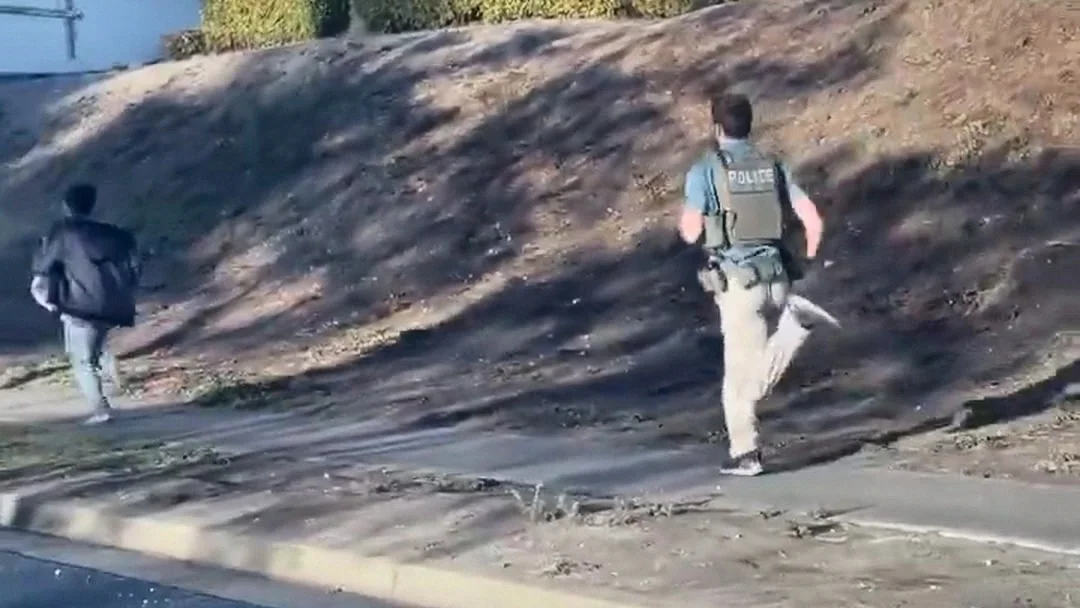
Teen Subway Surfer Critical After Fall From J Train in Brooklyn
WATCH: On-scene video documentation is embedded below →
LISTEN TO THIS ARTICLE
Audio Narration • English (US)
Working lights from emergency vehicles flicker against the steel and gravel of the elevated tracks in Brooklyn as first responders stand over the exact spot where a teenager plunged from the exterior of a moving train. The scene is fractured and tense, a frozen moment where curiosity turns into a grim calculation of survival beneath the cold rumble of the transit system.
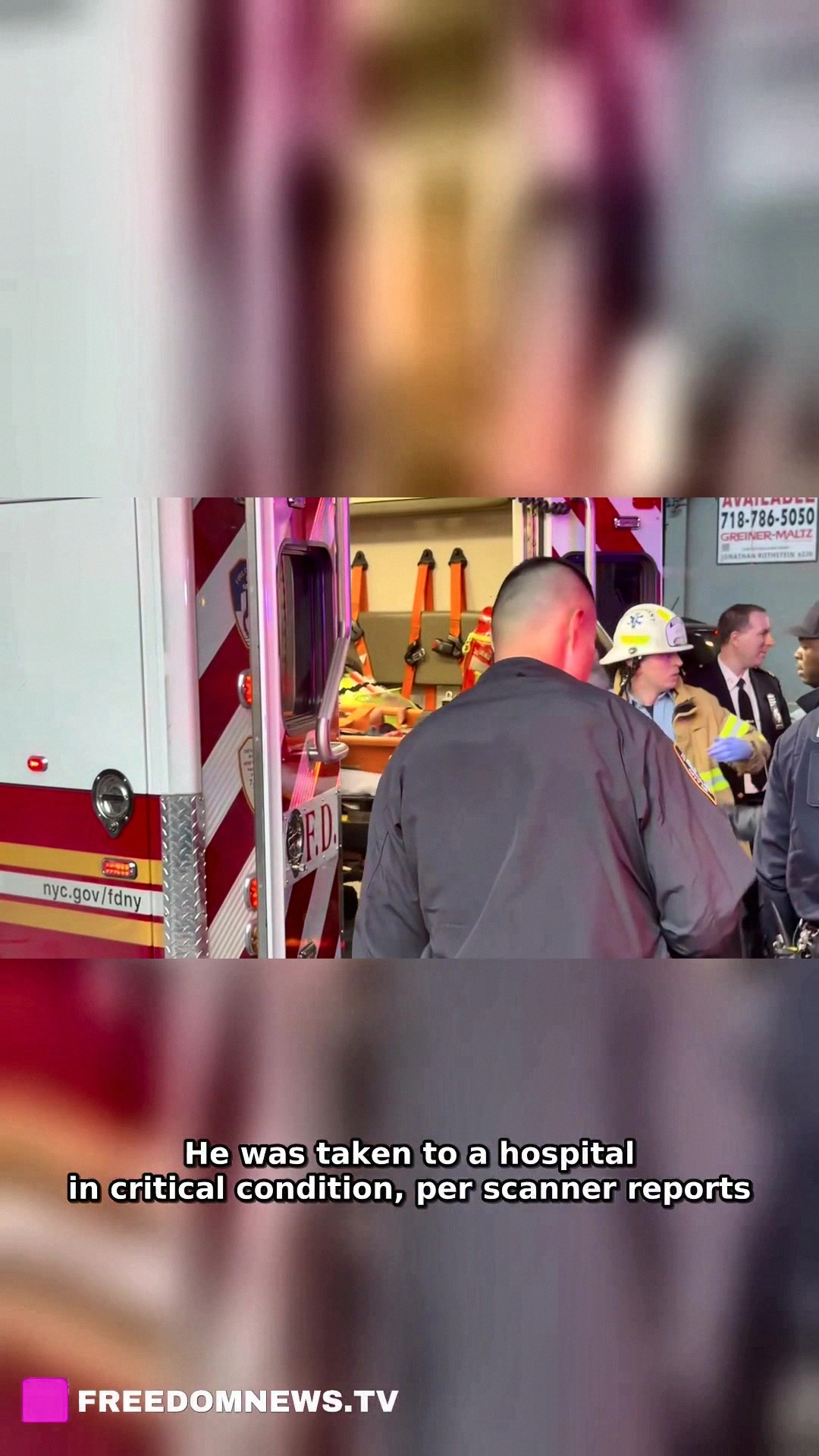
- The Scene: A section of track between the Lorimer Street and Hewes Street stations in Williamsburg, Brooklyn, segmented by elevated platforms and a steady stream of rail traffic.
- The Friction: The dangerous practice of riding on the outside of train cars, known as subway surfing, resulted in a critical fall.
- The Intervention: Emergency medical personnel, firefighters, and specialized police units converged on the tracks to remove the injured teenager and begin life-saving measures.
- The Aftermath: The teen was transported to a local hospital in critical condition as scanner reports provided the grim initial update to the community.
What the Recorded Footage Captures: Chronological Breakdown
The video opens with a quiet, almost clinical view of the tracks. A group of first responders, including a firefighter in full high-visibility gear and a police officer in a dark jacket, stand on the wooden ties between the rails. The camera captures them looking down the line, their body language heavy with the weight of what has just occurred. The ambient sound is often a low hum, punctuated by the arrival of more personnel converging on the location.
The footage quickly cuts to a more frantic scene at the rear of an FDNY ambulance. The doors are open, revealing the red and white flash of medical equipment and the presence of uniformed paramedics. A man in a dark jacket stands with his back to the camera, his posture rigid as he watches the activity inside the vehicle. The tension here is palpable; it is the critical zone where the rush to save a life meets the inevitable wait for the outcome.
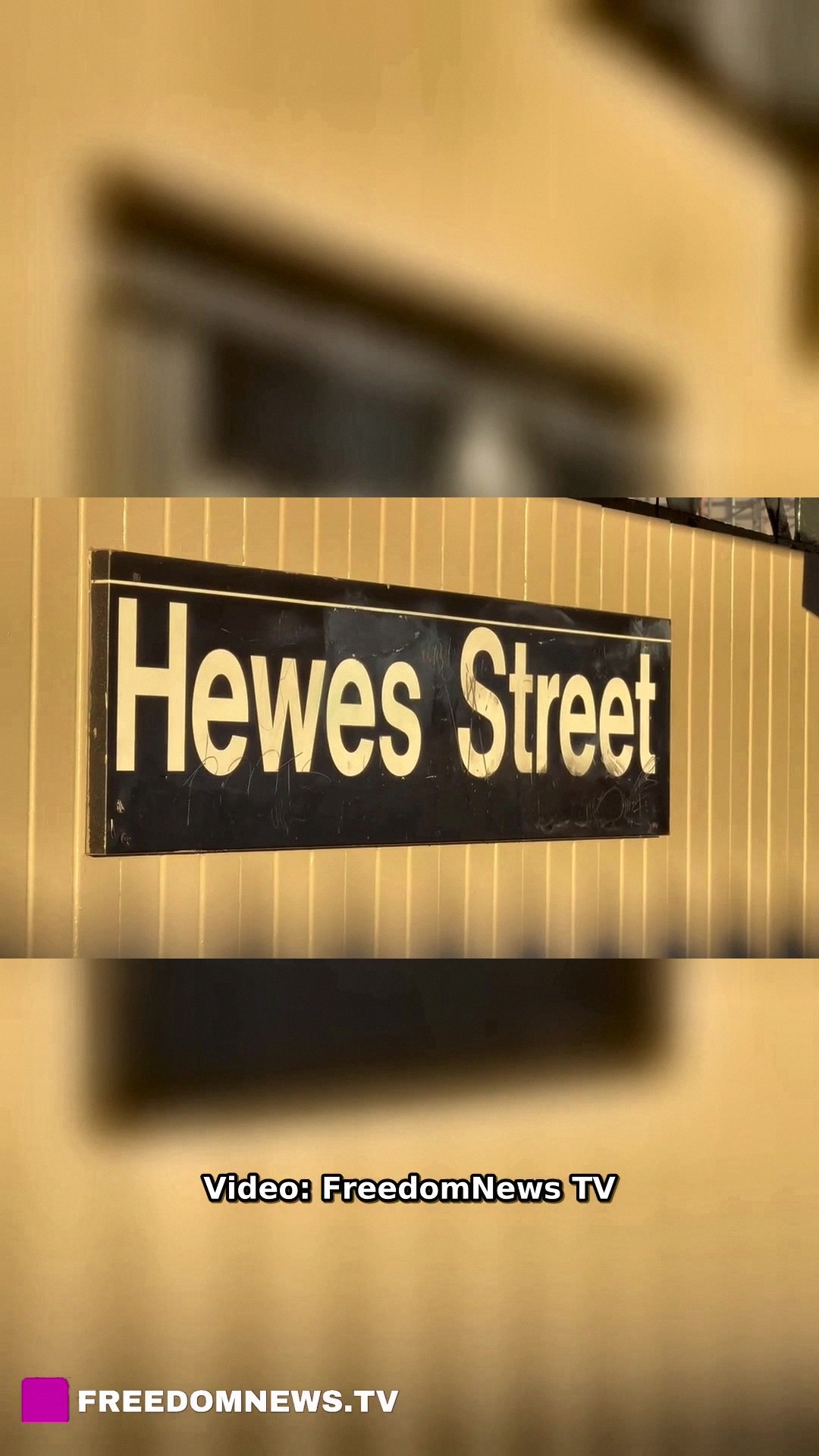
A stark reminder of the location appears on screen: a close-up of the black and gold Hewes Street station sign. This simple graphic anchors the chaos to a specific, mundane coordinate in the city. It is between this station and the next that the accident occurred, transforming a routine commute into a scene of emergency response.
Critical Blind Spots: What the Lens Leaves Unresolved
The camera, by necessity, only captures the immediate aftermath. It is impossible to see the sequence of events that led to the fall. The video leaves a massive void where the 10% beginning and 40% tension of the story should be. We do not see the moment the teenager climbed the train, nor the seconds of terror as the train accelerated or shifted on the tracks.
The perspective is also limited to the responders' view on the ground. We cannot see the train that the teen fell from, nor the reactions of the other passengers who may have witnessed the fall from the safety of the car. The true emotional weight of the incident is hidden behind the calm, professional demeanor of the emergency crews. Their unspoken tension is there, but the specific details of the rescue operation are obscured by the bodies of the personnel and the confines of the ambulance bay.
Statutory Framework and Protocol Analysis
Standard procedure for an incident on active train tracks requires an immediate power-down and a coordinated approach between transit authority personnel and emergency services. The presence of multiple agencies, including the FDNY and NYPD Emergency Service Units, reflects the high complexity of the rescue. The priority is always scene safety followed by rapid extrication to a trauma center.
| Incident Parameter | Observation at the Scene |
|---|---|
| Location of Incident | Between Lorimer Street and Hewes Street stations |
| Patient Condition | Reported as critical by emergency personnel |
| Rescue Personnel | FDNY, EMS, and NYPD ESU active on tracks |
| Means of Extraction | Removal from the trackbed via specialized equipment |
| Transport Destination | Hospital facility |
| Evidence of Location | Visible Hewes Street station signage |
| Scene Status | Active emergency response and investigation |
Read more:
Read more: Bodycam: Teen Flees into Dollar Store, Hidden Weapon Struggle →
Core Questions and Institutional Review
- Did the teen act alone, or were other individuals present on the exterior of the train at the time of the fall?
- What specific safety barriers exist at the J train line to prevent access to the exterior of the cars?
- Were there any warning signs or preventative measures in place prior to the incident?
- How quickly were emergency services able to access the trackbed given the elevation of the station?
As the lights of the emergency vehicles fade from the scene, the community is left to grapple with a familiar and terrifying narrative of youth, risk, and the unforgiving reality of the subway tracks. The investigation into how a moment of thrill turned into a critical medical emergency will continue long after the train schedules resume.
LATEST DEVELOPING INCIDENT
An even more shocking incident just erupted hours ago that has stunned onlookers nationwide. Full investigative breakdown and on-scene evidence documented below.
BREAKING: READ NEXT SHOCKING INCIDENT – LATEST CASE ↓
Foot Chase Near Salinas Hospital Caught on Camera
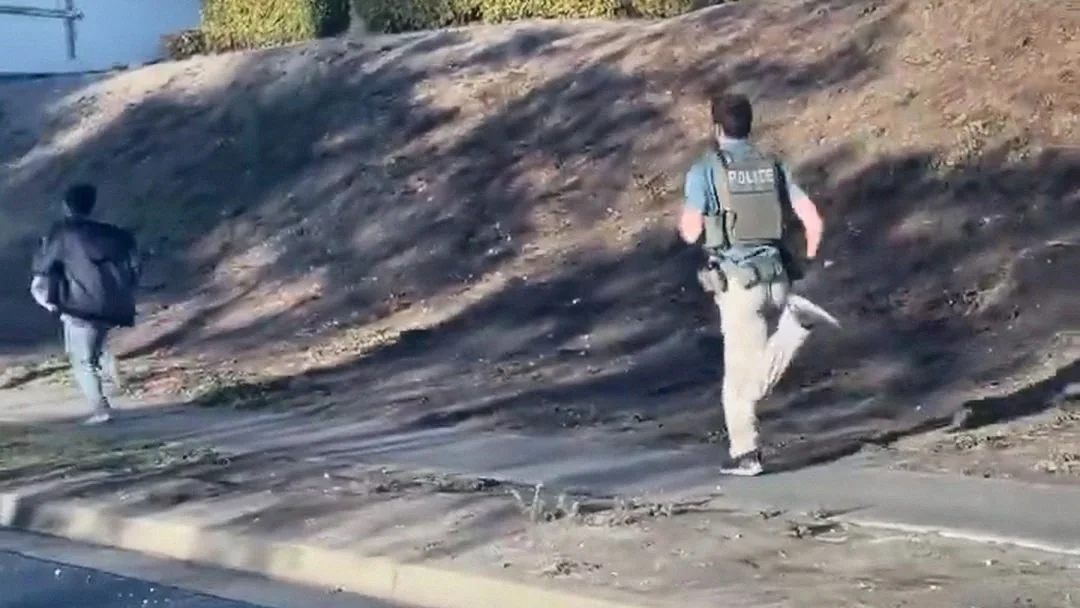
The engine idles in the foreground, a low, steady hum beneath the crisp morning air. Through the windshield, a man in a tactical vest is running. He is not jogging. He is pursuing. A few dozen yards ahead, another man is moving fast along a sidewalk near Natividad Hospital, and the camera rolling from inside a parked vehicle captures every stride. What makes this footage so unsettling is not the speed of the chase, but the quiet, ordinary context: a clear blue sky, a manicured slope of grass, a hospital campus, and a car that happened to be there.
- A witness identified only as Jose Chavez recorded the encounter near Constitution Boulevard in Salinas, California, on a Sunday morning around 7:31 a.m.
- The footage shows a man wearing a vest marked as law enforcement running in pursuit of a second man along a public sidewalk.
- Chavez identifies the pursuer as an Investigators and states that the man being chased had just been released from the county jail.
- The video captures only the middle of the event: it does not show how the pursuit began, nor does it show how it ended or what happened to either man afterward.
What the Recorded Footage Captures: Chronological Breakdown
The clip opens with a view through the windshield of a parked car. The morning light is sharp and angled, casting long shadows from the trees and the low retaining wall that borders the sidewalk. A man in a light blue shirt, khaki pants, and a dark tactical vest comes into frame from the left, moving at a full run. His posture is forward-leaning, arms pumping, eyes locked on something ahead. A text overlay on the video identifies him as an Investigators, according to the person who submitted the footage.
Ahead of him, near the edge of the frame, a second man is walking quickly, then breaking into a run. He is smaller in the frame, dressed in dark clothing, and moving along the same sidewalk that curves gently uphill toward the hospital campus. The camera pans to follow them, and for a few seconds, the only things visible are two figures in motion against a backdrop of green hedges and a chain-link fence. There is no shouting audible in the clip, no sirens, no dramatic confrontation. Just the sound of the car engine and the visual of two men running in the early morning quiet.
At around the sixty-percent mark of the footage, the camera zooms in tight on the pursuer. The vest is clearly visible, and so is the determined set of his jaw. The second man has widened the gap slightly, heading toward a slope of dry grass and a paved walkway that leads up toward the hospital entrance. The video then cuts, leaving the viewer suspended in the middle of the chase. A caption appears on screen: "The video doesn't show how the pursuit began or ended." That single sentence is the most important piece of context in the entire clip.
Critical Blind Spots: What the Lens Leaves Unresolved
The footage is a fragment, and it knows it. The man who recorded it, Jose Chavez, is credited as the source, and his camera is positioned inside a vehicle, likely stopped or parked along the boulevard. This vantage point means the viewer sees the chase from a distance, through glass, with the engine noise masking any words exchanged between the two men. The beginning of the encounter, the moment when the pursuer first identified himself or approached the other man, is entirely absent. So is the ending: whether the man was caught, whether he was questioned, whether he was released again, or whether he simply disappeared around a corner.
The identity of the pursuer rests on a single source: the person who submitted the video. The vest is visible, but the lettering is not clearly legible in the frames. The claim that the man being chased had just been released from the county jail is also attributed to Chavez, not confirmed by any official statement in the clip itself. These are not minor details. They are the entire architecture of the story, and they rest on the shoulders of a bystander with a phone and a moving car.
The atmosphere of the scene is worth noting. It is a Sunday morning, and the area around Natividad Hospital is quiet. The hedges are trimmed, the grass is dry from the California sun, and the sidewalk is empty except for the two men. There are no other pedestrians visible, no cars stopping, no crowd gathering. The chase unfolds in a kind of vacuum, which makes it feel both intimate and strangely clinical. The camera does not shake. The person filming does not speak. The only human reaction is the decision to keep recording.
Statutory Framework and Protocol Analysis
In any public encounter involving a person who identifies as law enforcement, standard protocol generally requires clear identification, a stated reason for the interaction, and a proportionate response to the subject's behavior. When a pursuit occurs on a public sidewalk, the agency involved typically has internal guidelines about foot chases, including when to initiate, when to disengage, and how to ensure public safety. The footage does not show whether any of these protocols were followed, because it begins after the encounter has already escalated into a run.
For the community around Constitution Boulevard, the sight of a foot chase near a hospital campus is jarring. Hospitals are places of constant foot traffic, shift changes, and vulnerable patients. A pursuit that cuts across a sidewalk in that environment raises questions about timing, location, and the balance between enforcement and public safety. The fact that the chase happened on a Sunday morning, when the area is quieter, may have reduced the risk to bystanders, but it also meant there were fewer witnesses to corroborate the account.
| Incident Parameter | Observation at the Scene |
|---|---|
| Time of day | Approximately 7:31 a.m. on a Sunday |
| Location | Constitution Boulevard near Natividad Hospital, Salinas |
| Pursuer description | Man in a light blue shirt, khaki pants, dark tactical vest |
| Subject description | Man in dark clothing, moving on foot along the sidewalk |
| Recorded duration | Brief clip capturing the middle of the pursuit only |
| Source of footage | Jose Chavez, submitted to a tip line |
| Visible outcome | None; the video cuts before the chase concludes |
Read more: {NOIBO}
Core Questions and Institutional Review
- Who was the man in the vest, and what agency, if any, did he represent at the moment of the chase?
- What was the legal basis for the pursuit, and was the man being chased informed of it?
- Why did the video end before the chase concluded, and what happened in the moments immediately after the camera stopped?
- How does the location near a hospital campus factor into the review of this encounter by any relevant oversight body?
The footage leaves the viewer with a knot of unanswered questions, but it also leaves something else: a clear image of a quiet morning interrupted by a sudden sprint. The sun was up, the grass was dry, and two men were running along a sidewalk that leads to a hospital. One of them was wearing a vest. The other was not. The camera caught a few seconds of it, and then it was over. What remains is the record, the questions, and the uneasy feeling that the most important part of the story happened just out of frame. Where does the line fall between a lawful pursuit and a moment that leaves a community wondering what they just saw?