Jailhouse Confrontation: Pop Music Meets Public Dispute
WATCH: On-scene video documentation is embedded below →
LISTEN TO THIS ARTICLE
Audio Narration • English (US)
A group of protesters and law enforcement personnel stood locked in a tense verbal confrontation outside the Men's Central Jail in Los Angeles. As the night air filled with insults and angry shouts, the mood shifted when a portable speaker erupted with the upbeat chords of a classic pop song, turning a hostile crowd into an unlikely audience.
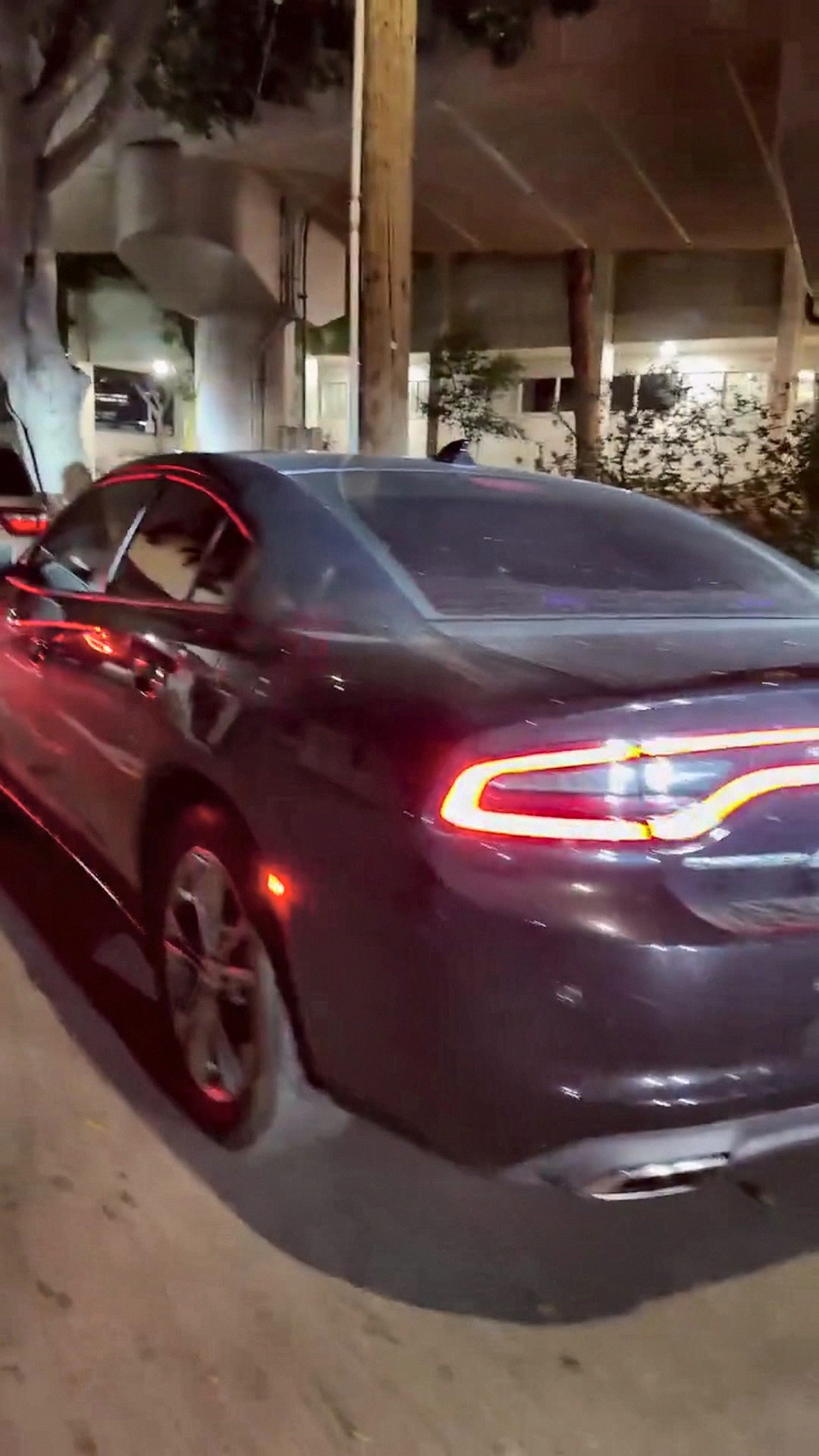
- The Scene: A group of demonstrators gathered on a public sidewalk outside a county detention facility, facing off against uniformed personnel waiting near the curb.
- The Friction: Verbal insults and aggressive gestures flew from the crowd toward the officers, who stood in a loose formation with their hands mostly at their sides.
- The Intervention: Rather than escalating the rhetoric, one of the personnel reached for a device and played a cheerful 1970s track, catching the demonstrators completely off guard.
- The Aftermath: The absurdity of the moment caused a clear shift in energy, with some demonstrators laughing and others continuing their shouts as the music played over the din.
What the Recorded Footage Captures: Chronological Breakdown
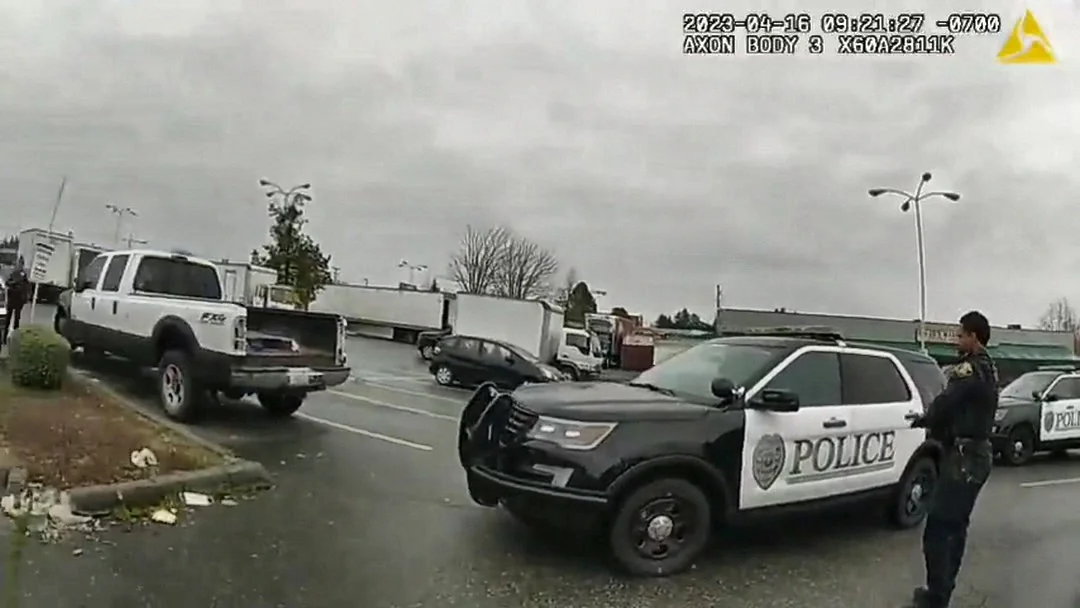
The video opens on a dimly lit street corner, illuminated by the amber glow of overhead streetlights and the red wash of taillights from a nearby vehicle. A group of demonstrators, mostly dressed in dark clothing, stands on the sidewalk and the edge of the roadway. Across an invisible boundary, a line of uniformed personnel in tactical gear waits near a row of parked cars. The initial audio is dominated by a chaotic mix of shouted questions and hostile remarks, with one voice demanding to know what the officers are doing there. The atmosphere crackles with the kind of tension that precedes a physical clash, and the body language of the crowd is rigid and confrontational.
Suddenly, the sharp, upbeat piano intro of "Why Can't We Be Friends" cuts through the shouting. The music is tinny but unmistakable, blasting from a small speaker held by one of the personnel. For a brief second, the shouting pauses, as if the crowd is trying to process the incongruity of a sunny pop anthem soundtracking a nighttime confrontation. A woman in the crowd yells out a sharp insult, but the music keeps rolling. The personnel holding the speaker remains largely expressionless, his posture relaxed as the song loops through its refrain. The camera pans across the faces of the protesters, capturing a mix of confusion, irritation, and reluctant amusement as the cheerful melody refuses to yield to the anger in the air.
The tension does not fully break, but it bends. One of the voices in the crowd shouts a slur, then another voice follows up with a string of expletives directed at the officers. Yet the overall volume of the confrontation begins to drop, the music taking up more space in the soundscape. A few demonstrators step back from the curb, their stance loosening. The video ends with the song still playing, the personnel standing exactly where they were, and the crowd still gathered but noticeably disarmed by the sheer absurdity of the moment. The camera captures the empty street stretching behind the line of cars, the night air thick with the lingering weirdness of the encounter.
Critical Blind Spots: What the Lens Leaves Unresolved
The video begins mid-encounter, leaving the origin of the confrontation entirely off-screen. What prompted the demonstrators to gather at this specific corner on this night, and how long had the two sides been facing each other before the recording started? The frames offer no glimpses of the preceding minutes, which likely contained the most heated exchanges that set the tone for the entire confrontation.
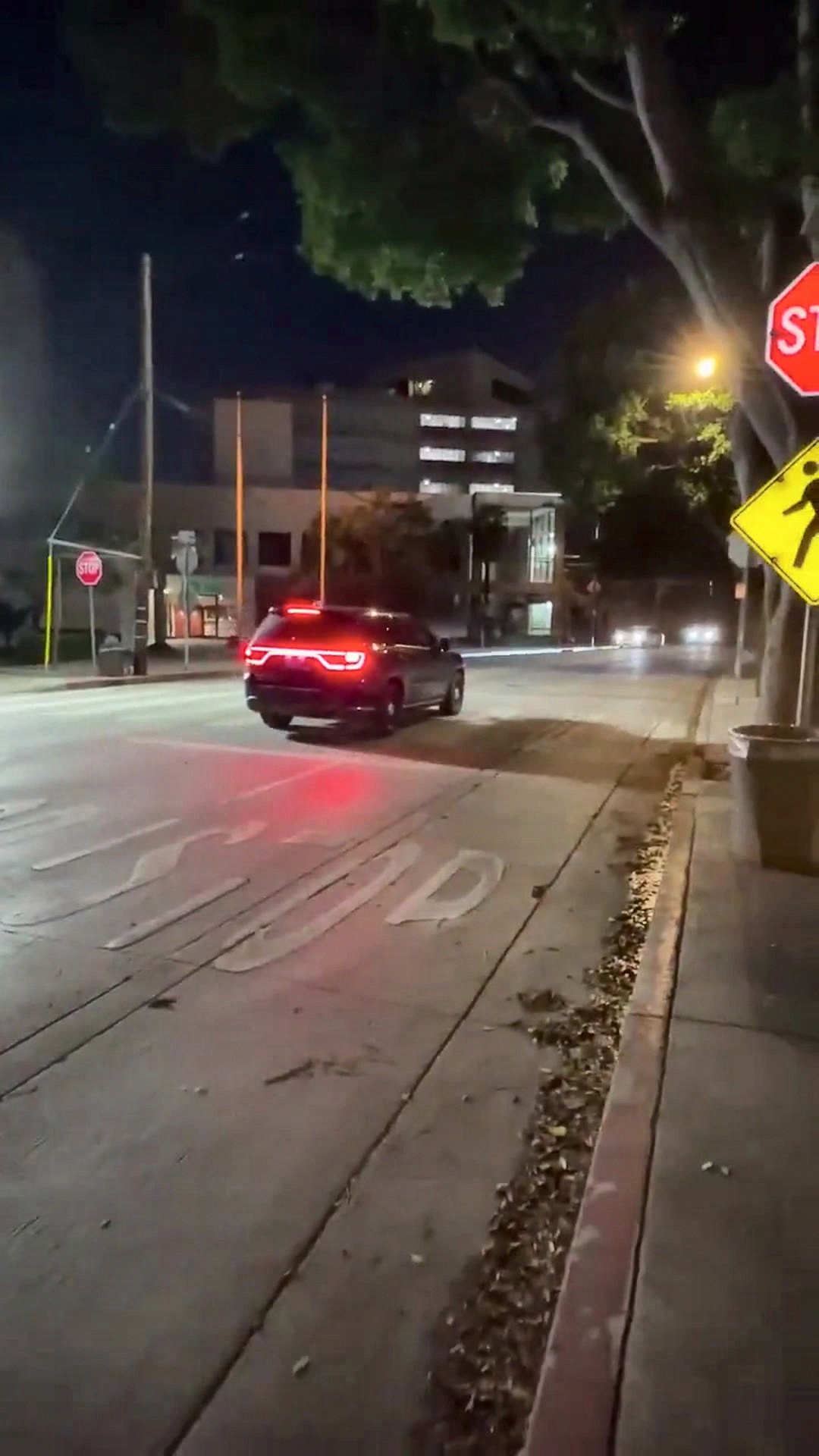
The perspective is also locked to one side of the line. The camera operator moves within the crowd, so the reactions and conversations among the uniformed personnel remain hidden. Did they plan the musical response in advance, or was it a spontaneous move by one individual? The faces of the personnel are partially obscured by distance and shadow, making it impossible to read their expressions or gauge their level of amusement or frustration. Additionally, the footage does not show the wider perimeter; other bystanders, passing traffic, and the physical layout of the jail entrance remain out of frame, leaving the full scale of the gathering unclear.
Statutory Framework and Protocol Analysis
The men and women in uniform are bound by strict operational guidelines that govern their conduct during public demonstrations. These protocols typically emphasize de-escalation, maintaining a physical distance from agitators, and avoiding any actions that could be interpreted as retaliatory or inflammatory. In this instance, the decision to play a lighthearted song rather than engage in a shouting match represents a highly unconventional approach to crowd management, one that sits in a gray area between psychological de-escalation and potential provocation.
| Incident Parameter | Recorded On-Scene Evidence |
|---|---|
| Location | Public street outside a county detention facility |
| Time of Encounter | After dark, under streetlights |
| Primary Action | Personnel playing a pop song over a speaker |
| Crowd Reaction | Mixed shouting, confusion, and some laughter |
| Duration | Brief confrontation, captured in a single continuous shot |
| Visible Crowd | Approximately a dozen demonstrators on the sidewalk |
| Officer Posture | Relaxed, standing in a loose line |
Read more:
Read more: Woman Shoves Up Plane Aisle Before Door Opens in Tense Confrontation →
Core Questions and Institutional Review
- What specific event or information brought the demonstrators to this location on this particular evening?
- Was the musical response pre-planned by the personnel on scene, or was it an improvised tactic?
- Did the playing of the song successfully reduce the hostility, or did it simply change the nature of the confrontation?
- How do standard crowd management protocols view the use of music as a de-escalation tool?
The video captures a strange, almost surreal moment where anger and pop music collide. It leaves viewers wondering whether the tactic was a clever way to defuse a volatile situation or simply a bizarre footnote in a night of civic friction. In an era where every public encounter is recorded and shared, does humor have a place in the toolkit of those tasked with keeping the peace, or does it risk making a serious dispute feel like a joke?
LATEST DEVELOPING INCIDENT
An even more shocking incident just erupted hours ago that has stunned onlookers nationwide. Full investigative breakdown and on-scene evidence documented below.
BREAKING: READ NEXT SHOCKING INCIDENT – LATEST CASE ↓
Lynnwood Truck Stripping Arrest Ends in Wild Prophecy
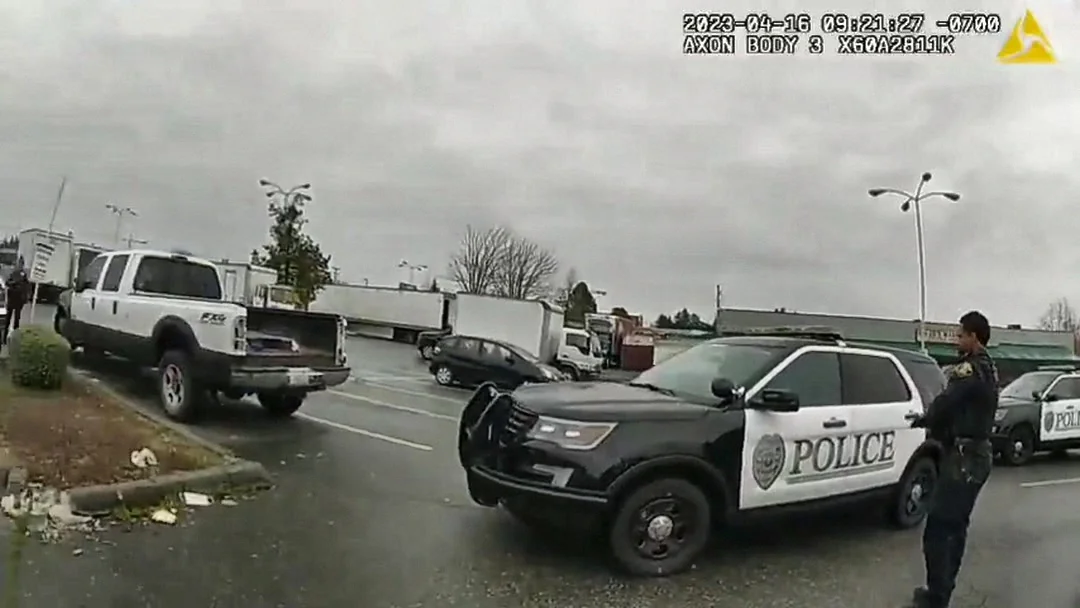
The gray morning sky over Lynnwood, Washington, hung low and flat as a witness watched a man crouch beneath a parked pickup with hand tools. What began as a suspected theft in a commercial lot would end with a restraint device drawn, a pair of handcuffs, and a surreal monologue about the Russians, the Chinese, and a nation destined to burn. The camera was already rolling before anyone knew how far the encounter would go.
- A witness spotted a man underneath a truck in a commercial parking lot, actively removing components in broad daylight.
- The arriving officer found the suspect still beneath the chassis and began questioning him about ownership and identification.
- The man offered shifting explanations, then grabbed his tools and tried to move toward his own vehicle, prompting a physical stop.
- Backup arrived, a restraint device was drawn, and the suspect was secured before launching into an extended, unprovoked tirade.
What the Recorded Footage Captures: Chronological Breakdown
The dash and body-worn cameras open on a wide, overcast parking lot, the kind of sprawling commercial space where trucks idle and no one looks twice at a man working near a vehicle. An officer in a dark uniform steps out and approaches the suspect, who is still low to the ground near the truck's frame. The first exchange is calm but pointed: the officer asks whether the truck belongs to him, and the answer comes back tangled – it is going to be towed, it belongs to someone he knows, the name escapes him.
When the officer asks for identification, the man says he has none on him. The conversation tightens. The suspect says he was only trying to get a part he was missing, invoking a previous theft of his own catalytic converter as justification for harvesting an exhaust pipe. The officer presses on the ownership question, and the story shifts again. Then the man bends to gather his tools, glances toward his own vehicle, and begins walking. The officer steps in and issues a command to stop.
The physical stop arrives fast. Commands overlap – put your hands behind your back, you're under arrest – and the man resists, voice rising. A second officer arrives and a restraint device is drawn, its presence announced as a warning. The suspect is pressed against the vehicle and cuffed. In the middle of it all, he insists he is not a criminal and demands that his record be checked. What follows is a rapid, unfiltered stream of warnings about foreign powers and divine judgment, delivered while pinned against the truck.
"Very soon America will be burned according to the Bible."
As the scene settles, officers walk the lot and examine the stripped truck. Its front end is gutted, tires flat, parts scattered. The witness explains that this is not the first visit – the same man was reportedly seen the day before, removing a quarter panel and hardware. Officers note the vehicle's identification and prepare to impound the suspect's own car pending a warrant.
Critical Blind Spots: What the Lens Leaves Unresolved
The camera captures the confrontation, but it cannot capture the twenty-four hours that preceded it. The witness describes a previous theft and a report filed the day before, yet the footage begins only when the officer arrives. How the suspect traveled to the lot, what he had already loaded into his vehicle, and how much of the damage was done on this day versus the last remains a matter of statement-taking rather than visual proof.
There is also the question of the tools and parts found inside the cab and trunk. The officers reference items inside the vehicle, and a warrant is mentioned, but the camera never follows the inventory to its conclusion. What was recovered, and what could be tied to the original report, sits outside the frame.
And then there is the man himself. His explanation about a stolen converter is either a convenient story or a genuine grievance, and the footage offers no independent confirmation. His sudden pivot to prophecy and geopolitics is captured in full, but the reasoning behind it – and whether it reflects genuine belief or a stress response – is left entirely unexamined.
Statutory Framework and Protocol Analysis
Under Washington law, theft of vehicle components can be charged at levels that depend on the value of the property taken, and resisting arrest is a separate offense. The officers' decision to draw a restraint device during the physical stop reflects a use-of-force continuum that escalates only when compliance is not achieved. The suspect's attempt to walk toward his own vehicle while holding tools is the pivotal moment that transforms a conversation into an arrest.
The witness's role is equally important. A private citizen who observes the act and stays on scene provides the probable cause that officers rely on, and the prior-day report gives the encounter its pattern. The truck's gutted front end and flat tires are the physical evidence that aligns with that account.
| Incident Parameter | Observation at the Scene |
|---|---|
| Location | Commercial parking lot, Lynnwood, Washington |
| Subject position at arrival | Crouched beneath the truck's chassis |
| Stated ownership | Contradictory – 'a friend,' name unknown |
| Identification offered | None on hand at first; later in pocket |
| Escalation trigger | Grabbing tools and moving toward his own vehicle |
| Restraint method | Hands-on stop, restraint device drawn as warning, handcuffed |
| Vehicle condition | Front end stripped, flat tires, parts removed |
Read more: {NOIBO}
Core Questions and Institutional Review
- What did the prior-day report document, and how closely does it match the damage visible on the truck?
- What items were recovered from the suspect's vehicle, and can they be tied to the earlier theft?
- Was the suspect's claim about a stolen catalytic converter ever verified or dismissed?
- How did the encounter move from a verbal request for identification to a physical stop within seconds?
The scene ends not with a resolution but with paperwork, a tow request, and a man in the back of a patrol car still talking about nations and fire. The camera stops, but the questions it raises linger over that gray parking lot. Was this a desperate man improvising his way out of a bad decision, or something stranger – and how much of what he said should anyone believe?