Tustin Officers Handcuff Fellow Officer in Viral Video
WATCH: On-scene video documentation is embedded below →
LISTEN TO THIS ARTICLE
Audio Narration • English (US)
Tustin Officers Appear to Handcuff Fellow Officer in Viral Street Scene
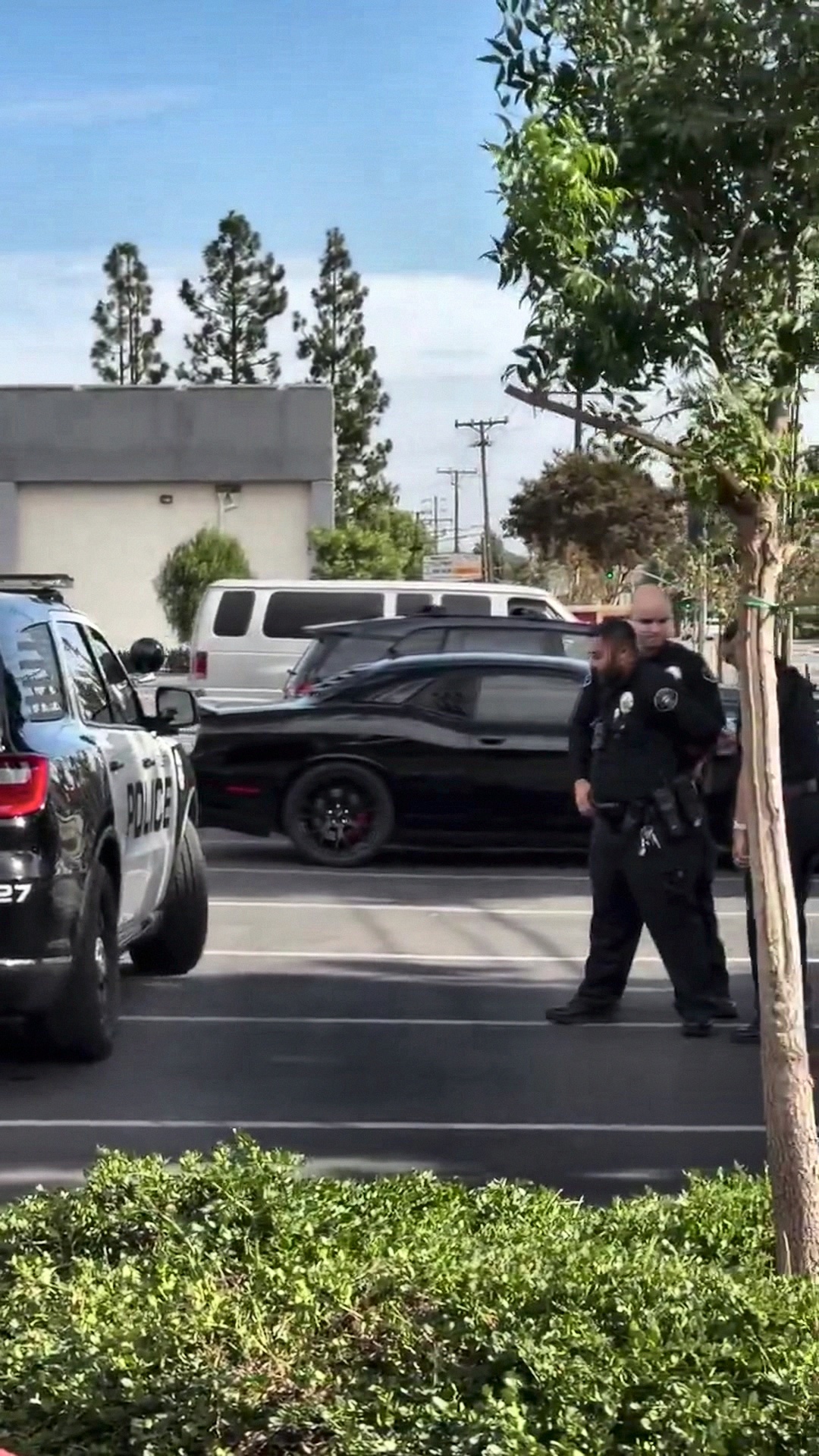
A bystander's camera captures the moment Tustin officers appear to handcuff one of their own in a busy street. The footage shows a man in a dark uniform standing beside a marked police cruiser while a fellow officer holds his arm, echoing the sounds of a stunned crowd.
- A viral video shows what appears to be a Tustin Police Department officer being handcuffed by another officer in a parking lot.
- The person behind the camera can be heard saying, "Bro, they got an officer. In handcuffs right here."
- After the footage surfaced, the department stated that the video captured a routine training exercise for a rookie officer.
- Officials stated that no officers were arrested in connection with the scene.
- The footage has prompted widespread debate about police training methods and public transparency.

The video opens on a sunlit Southern California street where a black and white police SUV is parked next to a black sedan. In the middle of the frame, a man in a dark police uniform stands with his hands behind his back. A second officer stands directly behind him, holding his arms. The scene unfolds in a busy parking area. A white pickup truck and other vehicles are visible in the background. Utility poles and trees line the street, suggesting a typical afternoon in a commercial district. On the left, the police cruiser with the number 27 marked on its rear quarter panel is clearly visible. The person filming is close enough to see the officer's posture and the physical interaction between the two men.
The bystander's audio is filled with shock. The voice exclaims, "No f***ing way. Bro, they got an officer. In handcuffs right here. The other way, bro. An officer in handcuffs. What?" The disbelief continues as the person confirms the location: "It's the Tustin Police Department. They got an officer in handcuffs right now." The audio captures the raw reaction of someone who believes they are witnessing an actual arrest of a law enforcement officer. This immediate assumption became the spark that sent the video across social media.
Read more:
Read more: Rideshare Driver Refuses Trip For Two Teens Headed To Party →
The Department's Official Response
The Tustin Police Department did not take long to address the circulating footage. According to a post from OC Scanner, the department confirmed that the viral video showing officers "arresting" another officer was actually a training moment for a rookie. The clarification was intended to quell rumors that an actual officer had been detained. The explanation described the event as a standard procedure for a new recruit learning how to handle physical interactions. The department maintains that no one was arrested and that the public was simply witness to a controlled training scenario.
The explanation, however, generated a new wave of questions. Social media users zeroed in on the specific tactic that was visible in the clip. On various platforms, commenters pointed out that it seemed unusual for a training exercise to take place in such an open, public space. Others questioned why the training involved a man in a full uniform. The footage showed real handcuffs and clear physical restraint. For those watching, the sight of an officer in cuffs is inherently dramatic, and the department's clarification did not immediately erase the skepticism that the video had created.
A Scene That Captured Public Attention
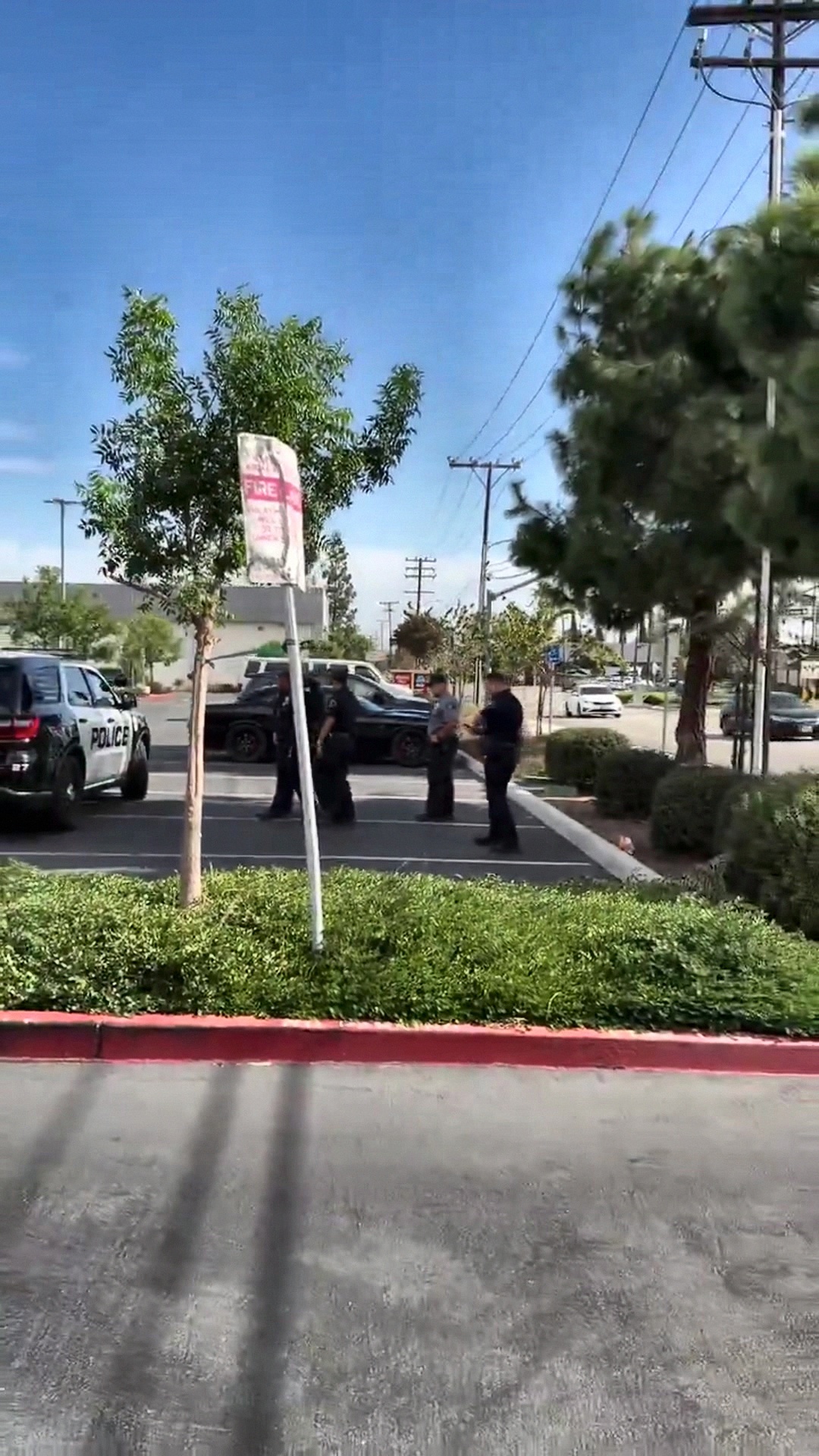
The visual details of the video contributed to the confusion. The officer being detained, a man with a beard and dark uniform, stood without resistance. The officer behind him appeared to be guiding him or checking the cuffs. In the background, a plainclothes officer and other personnel lingered near the police vehicles. The entire interaction lasted only a few seconds. The clip ends abruptly as the camera pans away. There is no audio of the officers explaining the situation, nor is there a clear sign of a training environment like cones or marked instructions. The confusion was amplified by the bystander's commentary. When the person filming says, "Hey, get off the phone, dude," it becomes clear there was an ongoing interaction between the officers and the public. The mood on the street was tense, primarily because the visual evidence was so jarring. Without understanding the context, a reasonable observer would easily believe an officer had been taken into custody.
The clip spread rapidly across platforms like Facebook and X. On the X post by OC Scanner, one user commented, "I'm glad there were no camera on some of the SWAT training I was involved in. They would've had a field day." This perspective highlights that hands-on training can look incredibly similar to an actual arrest. Another user reacted to the officer's appearance, joking, "They take the beard policy seriously over there at station 34." Meanwhile, a Facebook post featuring the video accumulated thousands of comments. Many viewers questioned why the officers were on their phones. One commenter asked, "How you gonna get mad at him recording when yall have body cams?" The conversation surrounding the video shifted from a simple arrest to a broader discussion about public interaction with law enforcement.
"No f***ing way. Bro, they got an officer. In handcuffs right here. The other way, bro. An officer in handcuffs." — Bystander audio recorded in the viral video.
The Difficulty of Verifying Training
For the public, verifying a training exercise in real-time is nearly impossible. Law enforcement agencies often conduct scenario-based training in public settings to simulate actual conditions. These exercises can include vehicle stops, building searches, and physical restraint techniques. However, when such training occurs without clear signage or announcements, it can be mistaken for a real incident. In this case, the lack of context turned a routine drill into a viral moment. The department's statement that the footage was from a "routine training exercise" is the only official explanation provided, and it has become the focal point of the public debate.
Bystanders on the street had no way to distinguish between a drill and an actual arrest. The visual evidence alone was convincing enough to spark immediate confusion. As a result, the footage has now become a case study in how easily assumptions can spread when the context is missing.
| Incident Parameter | Recorded Observation / Field Evidence |
|---|---|
| Location | Tustin, California, in a parking lot near a street intersection |
| Subject being restrained | A man wearing a dark police uniform with a visible badge |
| Response to public | The officer being restrained stood still while another officer held his arms |
| Bystander audio | Recorded voice exclaiming about an officer in handcuffs |
| Department statement | Claimed the footage was captured during a rookie training exercise |
| Statement on arrests | Department explicitly denied that any officers were arrested |
| Time of day | Daytime with clear sunlight and blue skies |
Core Questions and Unresolved Issues
- What specific training exercise was being conducted at the time, and does the department have a standard for public spaces?
- If the training was routine, why did a bystander have to ask the officer to get off the phone rather than an instructor guiding the scene?
- Could this footage have been prevented from becoming viral through better communication or public notice?
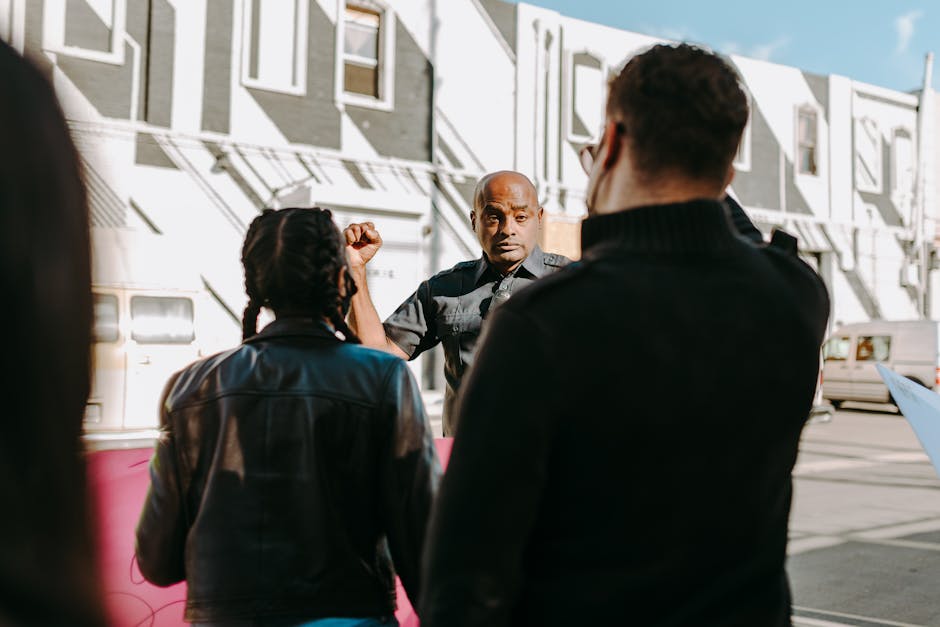
The Tustin Police Department's explanation is straightforward, but the visual record remains open to interpretation. The footage of a fellow officer being restrained in full view has sparked a broader conversation about how law enforcement behaves in the public eye. As the video continues to circulate, the disagreement between what witnesses saw and what the department claims is the central unanswered question.
Do you believe that a training exercise should be conducted in such close proximity to the public, and does this explanation change your trust in the department's transparency?
Read more
- Rideshare Driver Refuses Trip For Two Teens Headed To Party
- Lancaster Body Cam Footage Shows Deputy Standoff With Armed Man
- {“hook”: “A bystander keeps demanding to see a warrant while federal agents physically pull a restaurant owner from his vehicle.”, “bai”: “**Bystander Demands Warrant as ICE Agents Arrest New York Restaurant Owner**\n\nA tense roadside confrontation in Mount Morris, New York, unfolded on October 20 as federal immigration agents took a local restaurant owner into custody while a bystander repeatedly demanded to see an arrest warrant. The encounter, captured on camera, shows the man resisting before agents physically remove him from a white vehicle, raising immediate questions about due process and the limits of warrantless immigration enforcement.\n\n## Incident Overview and Key Developments\n\n- **Dian Zhao Lin**, a Mount Morris, New York restaurant owner, was taken into custody by ICE on October 20.\n- ICE records list the same individual under the name **Sin Di Ling**, according to the source description.\n- A bystander repeatedly asked agents whether they had a warrant and whether they had shown it to the man.\n- The man does not appear to speak English and physically resists as agents pull him from a white vehicle.\n- A verbal dispute over the man’s **keys** erupts between the bystander and agents during the arrest.\n\n## The Scene at the Vehicle\n\nThe footage opens tight on a white vehicle with its door open, sunlight glaring off the glass. A man in a red shirt is visible inside the cabin, and a federal agent in a black tactical vest marked **POLICE ICE** leans into the doorway. The camera is close enough to capture the friction of the moment, with the agent’s equipment and the vehicle’s frame filling the shot.\n\nFrom the first frames, the situation is clearly physical. The agent is not standing back to talk; he is reaching into the vehicle, and the man inside appears to be holding his ground. The camera operator’s voice cuts in almost immediately, asking whether the agents have a warrant for the arrest. That question becomes the spine of the entire recording.\n\nThe confrontation is not a chaotic chase or a hidden stakeout. It is a daylight, open-door arrest in what appears to be a public setting, with bystanders close enough to intervene verbally. That proximity is what turns a routine enforcement action into a documented dispute over procedure.\n\n[IMAGE_QUERY: federal agents in tactical vests standing beside an open vehicle door on a sunny street | CAPTION: Archival visual context documenting the incident via Pexels / Public Domain Archive.]\n\n## The Warrant Question Takes Center Stage\n\nThe most repeated line in the recording is a direct challenge: **\”Do you have a warrant for his arrest? Did you show him the warrant?\”** The question is asked more than once, and it is not answered with a document. Instead, the response captured on audio is a flat dismissal, with the agent saying he is \”good\” and does not need to comply with the demand as framed.\n\nThe bystander does not let it go. The voice presses on the man’s behalf, framing the demand as a matter of fairness: **\”I’m making sure you’re doing right by them.\”** That line reframes the encounter from a simple arrest to a question of whether the people being detained are being treated correctly. It is the moment the recording shifts from observation to advocacy.\n\nThe back-and-forth also includes a question about **why force is being used** on the man. That question lands while the physical removal is already underway, which makes it less of a procedural inquiry and more of a protest against what the camera is capturing in real time.\n\n> Important Note: The core legal dispute in this footage is whether a judicial warrant is required for this particular arrest, and the recording captures a bystander asserting that requirement while agents proceed without producing one.\n\n## The Struggle at the Door\n\nThe physical confrontation escalates as the agent works to pull the man from the vehicle. The man in the red shirt is seen resisting, and the camera captures the awkward, grinding mechanics of an arrest that is not going smoothly. Arms and shoulders fill the frame as the agent leans in, and the vehicle rocks slightly with the effort.\n\nA second voice can be heard asking for names, including **\”What’s your name? What’s your last name?\”** That request for identification is another accountability tactic, aimed at making the agents traceable after the fact. It is a familiar move for bystanders who know they cannot stop an arrest but can at least document who is carrying it out.\n\nThe man himself is largely silent in terms of English. The source description notes he does not appear to speak a word of English, which adds a layer of isolation to the scene. He is being pulled from a vehicle by agents while a stranger argues on his behalf, and the language barrier makes the bystander’s advocacy the only verbal defense in the frame.\n\n[IMAGE_QUERY: close view of an agent in a tactical vest leaning into an open car door during an arrest | CAPTION: Archival visual context documenting the incident via Pexels / Public Domain Archive.]\n\nThe agent’s face becomes visible in the frames, showing a bearded man in a green cap with sunglasses perched on the brim, a radio on his vest and a baton at his side. His expression is flat and focused, and the camera does not catch him addressing the warrant question directly beyond the brief dismissal captured in the audio.\n\n## The Dispute Over the Keys\n\nAs the removal continues, the focus narrows to a surprisingly small object: the man’s **keys**. The audio captures a rapid exchange, with someone insisting, **\”Let him get his key,\”** and the man himself repeating, **\”my key.\”** The struggle over something so mundane becomes a stand-in for the larger fight over control of the moment.\n\nA voice asks, **\”Can I have his key? Let me have his key,\”** while another voice orders someone to **\”back up.\”** The tension spikes as the bystander refuses to yield ground, and the audio captures the sharp reply: **\”No, I need to back up now. Yes, you do.\”** It is the sound of a confrontation that has moved past procedure and into pure friction.\n\nThe bystander then turns personal, asking the agent, **\”Do you feel good about yourself?\”** That line hangs over the footage because it is not a legal argument at all. It is a moral one, aimed at the person doing the arrest rather than the policy behind it.\n\n> \”Do you have a warrant for his arrest? Did you show him the warrant?\”\n\n## What the Record Actually Shows\n\nThe footage does not show a warrant being produced, nor does it show a warrant being read aloud. What it shows is a bystander demanding one and an agent continuing with the arrest. That gap is the factual core of the dispute, and it is what makes the video circulate far beyond Mount Morris.\n\n| Incident Parameter | Recorded Observation / Field Evidence |\n|—|—|\n| Date of custody | October 20, per source description |\n| Location | Mount Morris, New York |\n| Individual taken into custody | Dian Zhao Lin, listed by ICE as Sin Di Ling |\n| Occupation noted in source | Restaurant owner |\n| Vehicle involved | White vehicle with open door |\n| Bystander’s central demand | Production of an arrest warrant |\n| Language noted | Man does not appear to speak English |\n\nRead more: {NOIBO}\n\nThe recording also captures the limits of bystander intervention. The person filming can ask questions, request names, and demand documents, but none of that stops the physical removal. The video ends with the man being taken into custody and the argument over keys and backup still unresolved.\n\n[IMAGE_QUERY: wide view of a white vehicle on a sunlit street with agents and bystanders nearby | CAPTION: Archival visual context documenting the incident via Pexels / Public Domain Archive.]\n\n## Core Questions and Unresolved Issues\n\n- Did federal agents possess a judicial warrant at the time of the arrest, and was any document shown to the man or to bystanders?\n- What specific legal authority allowed the arrest to proceed without the warrant the bystander demanded?\n- How will the language barrier affect the man’s ability to understand the charges and challenge his custody?\n\n## A Local Business Owner in the Spotlight\n\nThe source identifies the man as a **restaurant owner**, which places the arrest in the context of a small community rather than an anonymous enforcement statistic. A local business owner being pulled from a vehicle in daylight is the kind of event that neighbors remember, and the video makes that personal dimension impossible to ignore.\n\nThe bystander’s repeated invocation of **\”them\”** suggests the man was not alone in the broader sense, even if he was alone in the vehicle and without English in the moment. The recording captures a community member stepping into a gap, however briefly, to demand accountability on the record.\n\nWhat remains is the footage itself: an open door, a red shirt, a tactical vest, and a voice asking the same question over and over. The video does not resolve the legal debate it has sparked, and it does not pretend to. It simply documents the moment the question was asked and the arrest continued anyway.\n\nWhat should bystanders be allowed to demand during a federal immigration arrest, and does the answer change when the person being detained cannot speak the language of the agents? \n\nfb”: ” A bystander demanded to see a warrant, and seconds later the agents kept pulling him from the car.\n\nSee how the incident ended and read the full outcome in the comments below \n\n#ICEArrest\n\n[BÌNH LUẬN]\n\nWhat happened after the camera cut: watch the full video below “, “best_frame”: 4, “inline_frames”: [2, 5], “seo”: {“seo_title”: “ICE Arrest of NY Restaurant Owner Sparks Warrant Dispute”, “meta_description”: “Bystander demands a warrant as ICE agents arrest Mount Morris restaurant owner Dian Zhao Lin on October 20, capturing a tense roadside confrontation on video.”, “slug”: “ice-arrest-mount-morris-restaurant-owner-warrant-dispute”, “focus_keyword”: “ICE arrest warrant dispute”, “category”: “Community Watch”, “tags”: [“ICE arrest”, “Mount Morris New York”, “Dian Zhao Lin”, “warrant dispute”, “immigration enforcement”, “bystander video”]}}