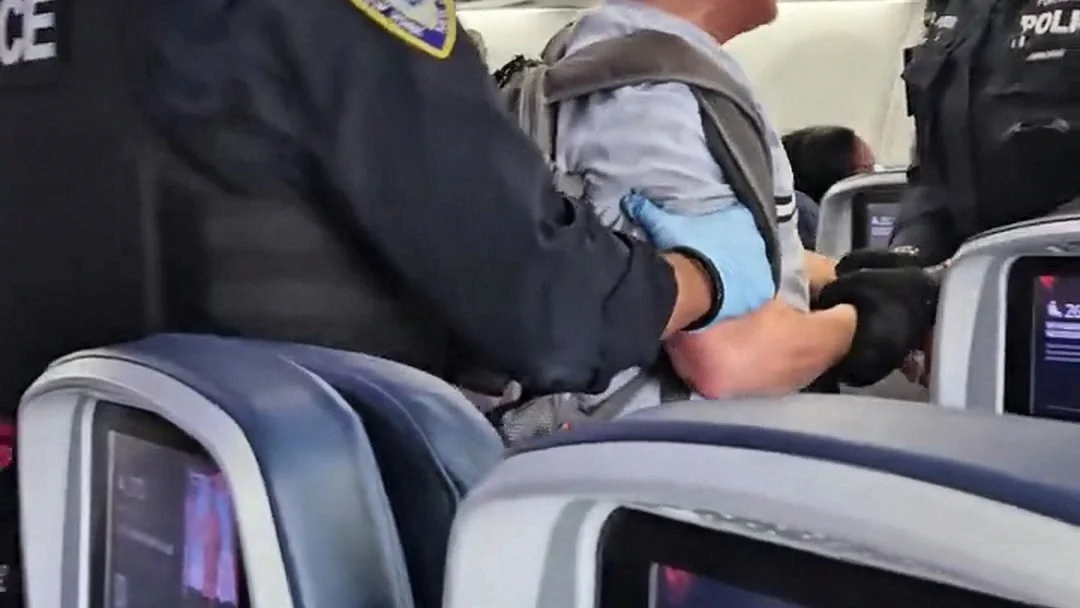
Masked ICE Agents Threaten Handcuffs in Tense Parking Lot Standoff
WATCH: On-scene video documentation is embedded below →
LISTEN TO THIS ARTICLE
Audio Narration • English (US)
Masked ICE Agents Threaten Handcuffs Behind Masked Faces as Encounter Escalates
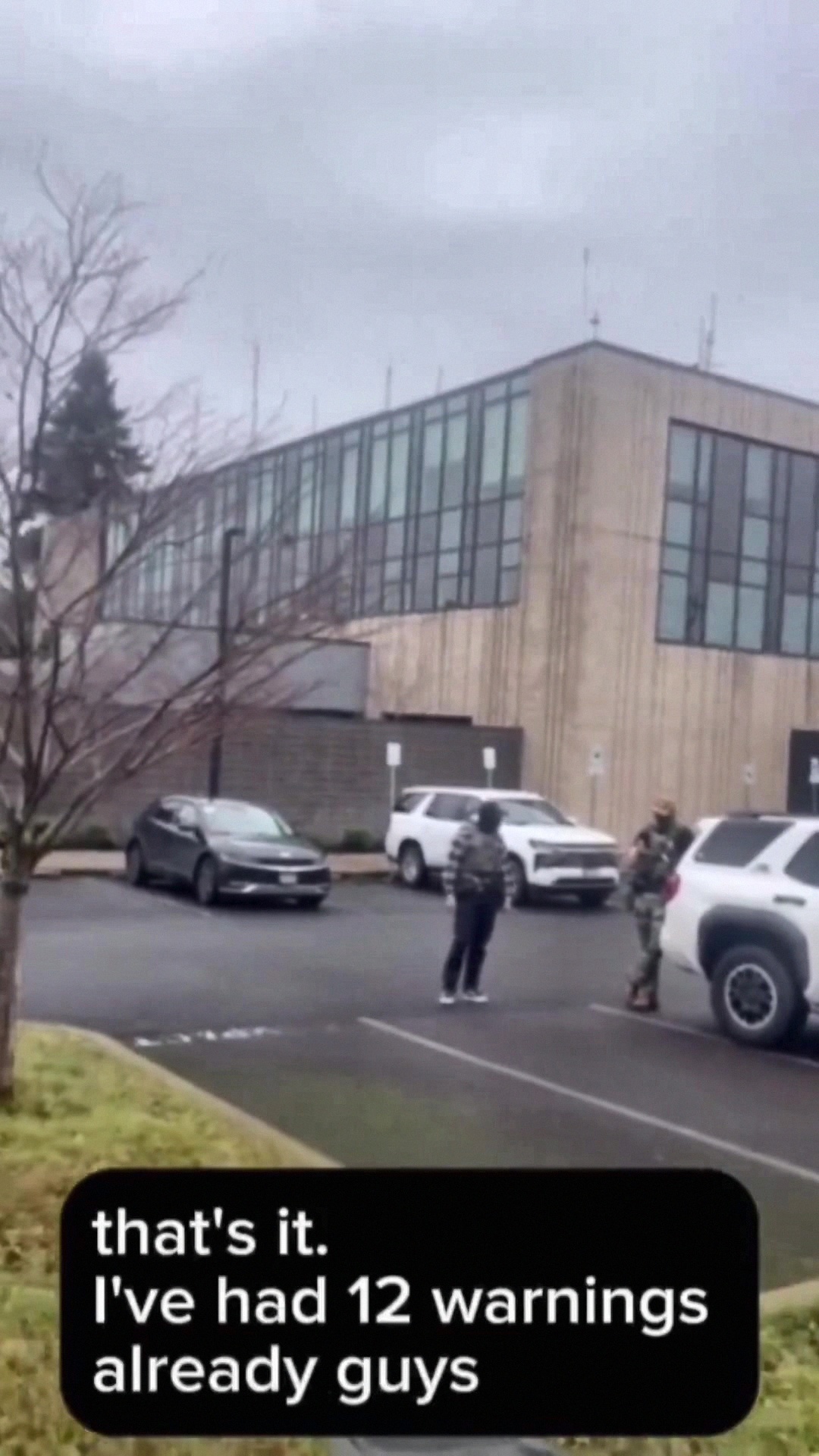
What began as a routine observation of federal officers working a parking lot unraveled into a tense, profanity-laced standoff captured on a single cellphone camera. In a video shared by political commentator Joe Walsh, a man documenting the movements of masked Immigration and Customs Enforcement personnel faces repeated warnings that he is obstructing an official operation and will be handcuffed under federal law. The confrontation, which unfolded in a rain-slicked parking area beneath an overcast sky, has since drawn hundreds of thousands of viewers and thousands of comments debating where documenting ends and obstruction begins.
- A citizen journalist captured extensive cellphone footage of several masked federal immigration officers in a parking lot lined with parked cars.
- Officers repeatedly warned the man that he was interfering with their operation and could be arrested under federal statute.
- The man filming maintained that he had not broken any law and refused to leave the area.
- The exchange escalated into sharp profanity and a direct insult hurled at the man by one agent.
- A second masked agent stood behind the primary officer during the encounter, observing the interaction.
A Warning Repeated Twelve Times
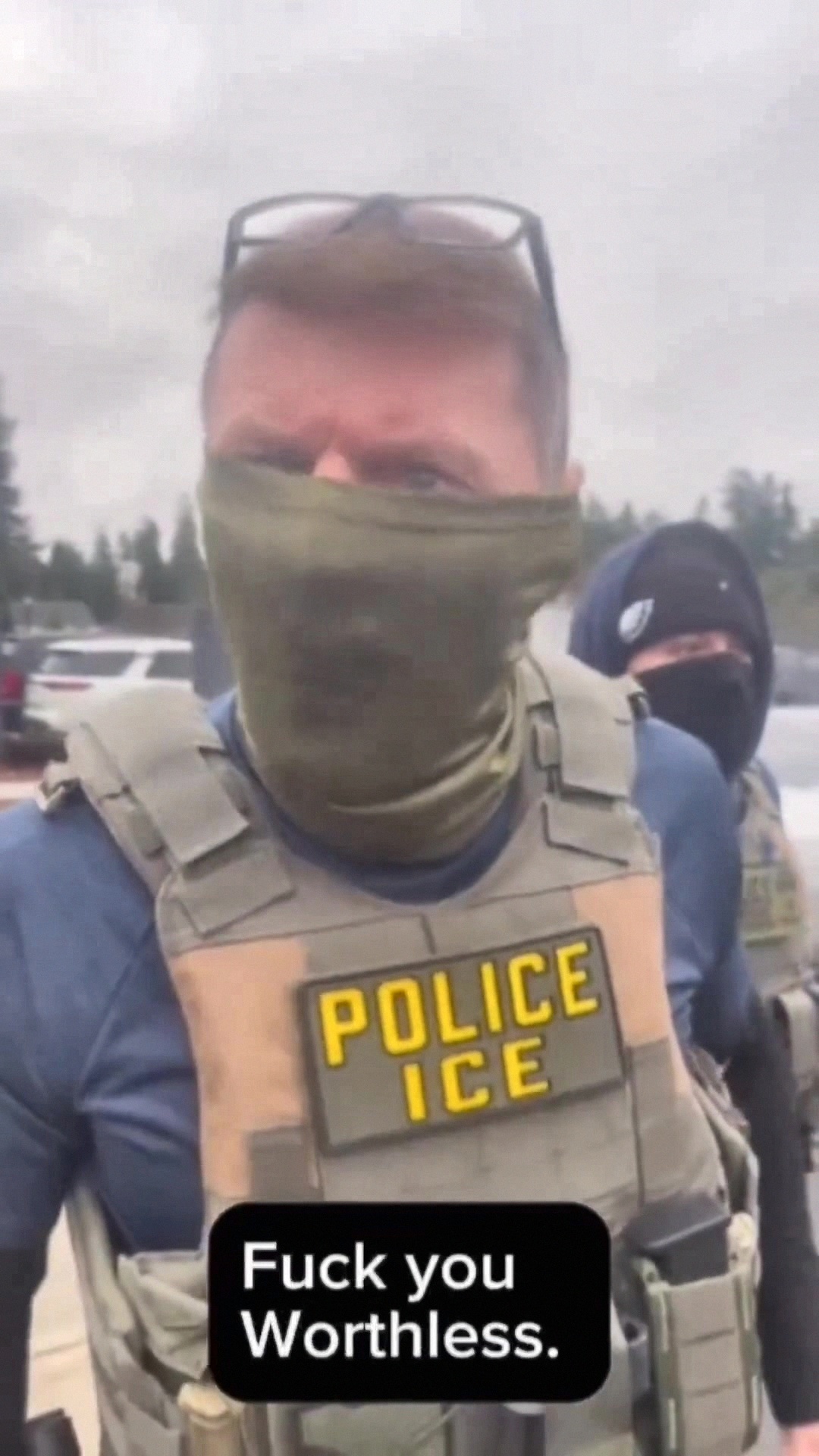
The video opens on a cold, gray morning in a wide parking lot, with a multistory commercial building behind the scene. An officer wearing a blue shirt, a tactical vest marked POLICE ICE, and a green face covering walks directly toward the camera. His approach is calm but pointed. The first words captured are a warning: the cameraman is interfering with their operations and could be arrested under 18 U.S. Code 111.
The man behind the camera does not back away. Each time the warning is repeated, he answers with the same flat refusal, insisting that he is not interfering and has broken no law. The officer repeats the phrase nearly a dozen times, layering threats of handcuffs, arrest, and prosecution onto the same claim. At one point the cameraman deadpans that the officer has memorized a lot of numbers, a dry jab that lands before the mood darkens again.
What makes the sequence unusual is the patience on both sides. Neither man raises a hand. The officer keeps his distance, though another colleague in a hood and tactical gear lingers just behind him. The cameraman keeps the lens steady. Yet the language used by both escalates steadily, moving from legal citations to insults within a matter of minutes.
The Camera Becomes the Confrontation
As the exchange drags on, the officer tells the man that raising his voice is not helping, a line that appears as an on-screen caption. The cameraman responds that he has already absorbed a dozen warnings and is tired of hearing the same threat. The two voices overlap, each cutting off the other, until the officer declares that one more interruption will result in handcuffs.
The most jarring turn comes when the cameraman, apparently trying to needle the agents, makes a crude comment. The officer behind him begins narrating into a radio, relaying what the man just said in flat official language. The moment strips the bravado out of the exchange and turns it clinical. The cameraman laughs it off, but the officer continues his warning as if nothing happened.
Read more:
Read more: Lancaster Deputy-Involved Shooting: Bodycam Footage of Domestic Violence Standoff →
Voices Raised, Boundaries Drawn
A second officer appears more prominent as the recording continues, standing behind the first and watching the camera. The cameraman tells them both to step off, calling one of the men worthless. The officer on camera fires back with the same word, his voice level but sharp. It is the point where professional restraint visibly cracks on both sides.

| Incident Parameter | Observation at the Scene |
|---|---|
| Location | Open parking lot beside a large commercial building |
| Weather | Overcast, damp pavement, bare winter trees |
| Number of officers visible | At least two masked federal officers in tactical vests |
| Primary officer markings | Vest with POLICE ICE patch and a green face covering |
| Legal citation invoked | 18 U.S. Code 111, referenced repeatedly |
| Verbal escalation | Warnings of handcuffs, arrest, and prosecution |
| Recorded exchange | Profanity and insults from both the cameraman and one officer |
"You are worthless."
That four-word retort, captured in the final frames of the sequence, is the moment the encounter stops being a discussion about legal boundaries. The cameraman repeats it back, mockingly, and tells the officers to hold their dogs back. The video cuts before anything further unfolds, leaving the viewer with a confrontation frozen at its boiling point.
The Broader Question Behind the Tape
Joe Walsh, who posted the footage publicly, framed the incident in a sharply worded caption accusing masked agents of taxpayer-funded intimidation. He argued that a badge is not a license to bully and that constitutional abuse should never be normalized, adding that people facing such machinery without legal help deserve access to guidance. The post linked to a donation-funded tool meant to help immigrants and citizens understand their rights during such encounters.
The footage itself, however, does not show an arrest, a physical struggle, or a detention. What it shows is a citizen with a phone and a group of masked officers insisting on their authority. Viewers are left to weigh a warning delivered with patience against a slur delivered with a shrug, and to decide which part of the exchange they consider the real story.
Core Questions and Unresolved Issues
- What specific action did the officers consider interference, given that the cameraman remained physically distant throughout?
- Does documenting a federal operation from a public parking lot constitute obstruction under the statute repeatedly invoked?
- What accountability exists when an on-duty officer uses demeaning language toward a member of the public?
The clip raises a familiar tension in an era when nearly every public encounter can be recorded. For the officers, a camera pointed at an active operation can complicate safety and privacy. For the man holding it, the camera is the only independent witness in the lot. Both positions are visible in the tape, and neither is resolved by the end of it.
What the recording does not settle is what happened in the minutes before the camera was raised, or whether the warnings were ever carried out. The footage stops at the shouting. For now, the public record consists of a masked face, a steady lens, and a repeated threat that never lands.
What do you think should be the standard for recording federal agents in public?