The Timeless Comedy That Still Brings Strangers Together: The Unexpected Magic of Abbott & Costello’s Masterpiece
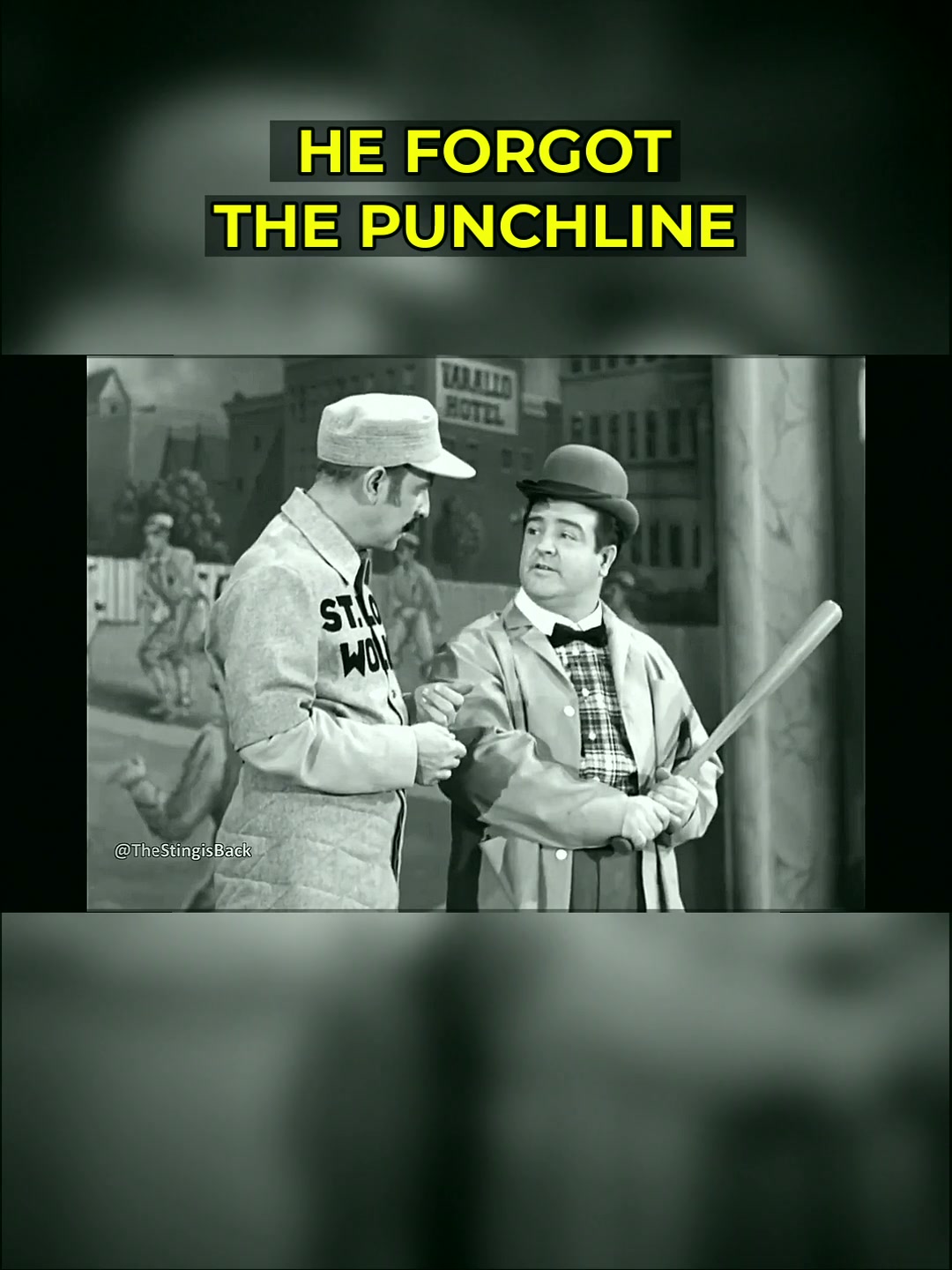
How a simple case of mistaken identity on a baseball diamond became the ultimate test of patience, a bonding ritual, and a piece of shared history that refuses to fade away.
- The 1945 filmed rendition of the routine is celebrated as the definitive version, capturing the duo at the peak of their comedic timing.
- The sketch thrives on the very human frustration of miscommunication, a feeling every single person instantly recognizes.
- Eighty years later, the routine functions as a cultural passport, allowing grandparents and grandchildren to laugh at the exact same joke together.
Imagine sitting in a living room, decades apart in age, and hearing the same question: “Who’s on first?” The answer should be simple. It is not. The confusion that follows is not just a punchline; it is a shared experience that has bridged generations for 80 years.
This is not merely a dusty relic from a bygone era of radio and black-and-white film. This is a masterclass in human connection. The 1945 version, pulled from the heights of their fame, captures a moment where two comedians turned a linguistic loop-de-loop into a piece of American heritage that still feels alive today.

The beauty of the routine lies not in the slapstick, but in the slow burn of absolute certainty. Costello is convinced he is asking a logical question. Abbott is convinced he is giving a logical answer. The collision of those two realities is where the magic happens.
It is incredibly frustrating to watch someone refuse to see the obvious. It is even funnier when that someone is us, seeing ourselves in Costello’s bewilderment. He represents every person who has ever been stuck in a conversation that makes no sense, where the other person is absolutely, positively sure they are right.
The Unspoken Bond of Confusion
Why does a routine about baseball players with absurd names still land with such force? Because it taps into a universal truth about how we communicate. We assume our words mean the same thing to everyone else. The routine shatters that assumption in under three minutes.
When you watch the 1945 performance, you are not just watching a joke. You are watching a perfect machine of timing and trust. Abbott feeds the lines with a deadpan sincerity, while Costello’s growing panic becomes the audience’s own heartbeat. The laughter is not just about the words; it is about the shared release of tension.
“The genius is not in the words themselves, but in the unwavering commitment of both men to their own version of reality. It is a dispute where neither side is wrong, and that is precisely why it is so brilliantly right.”
This specific version, the one celebrated for its 80th anniversary, represents a high-water mark. It was filmed at a time when the world was craving levity. The routine offered a pure, uncomplicated escape. It did not rely on current events or politics. It relied purely on the mechanics of a simple misunderstanding.
Watching it today is a lesson in focus. In a world of constant digital noise, here are two men, a microphone, and a single idea. They command the room without a single special effect. The power of their presence is a testament to the art of the performance.

Why This Joke Belongs to Everyone
The routine has become a piece of cultural currency. You do not need to be a baseball fan to understand the mechanics. You do not need to be a historian to appreciate the timing. You only need to have ever tried to explain something simple to someone who just does not get it.
That shared frustration is the glue. It is the reason why a father will show this to his son, and why that son will later show it to his own children. It is a handshake across time. It is a quiet acknowledgment that some things, like confusion and laughter, are timeless.
There is a deeper resonance here about community. When we laugh at Costello’s plight, we are not laughing at him. We are laughing with him. We are all Costello, trying to navigate a world where the rules are unclear and the answers seem to be hidden in plain sight.
The routine also honors the virtue of patience. Abbott never loses his cool. He simply repeats himself with a growing sense of pity for the man who cannot understand the obvious. It is a masterful display of restraint, a quality that feels increasingly rare.

As the years roll on, the routine does not age. It simply waits for new ears to hear it for the first time. The 1945 film is not an artifact to be preserved behind glass. It is a living document meant to be played, shared, and quoted.
So, the next time you hear the question, “Who’s on first?” do not roll your eyes. Lean in. Listen to the rhythm. Watch the frustration build. And remember that sometimes, the most profound connections we make with other people come from the simplest, most ridiculous misunderstandings.
The answer is always the same. The laughter is always new. And 80 years later, we are still asking the question, not because we forgot the answer, but because the journey to get there is one we never get tired of taking. The names on the team might be confusing, but the reason we keep coming back is perfectly clear.