The Quiet Fury of a Father: What a Family’s Tears at Paris Airport Reveal About Prejudice and Human Dignity
When a routine flight home becomes a public spectacle of alleged discrimination, the world watches a family’s breaking point—and finds a story about shared humanity.
- An alleged incident of religious profiling at an airport gate escalates into a deeply personal family crisis.
- The emotional toll on children becomes the focal point of a father’s desperate plea for basic respect.
- The incident ignites a global conversation about accountability, common sense, and the unedited reality of everyday bias.
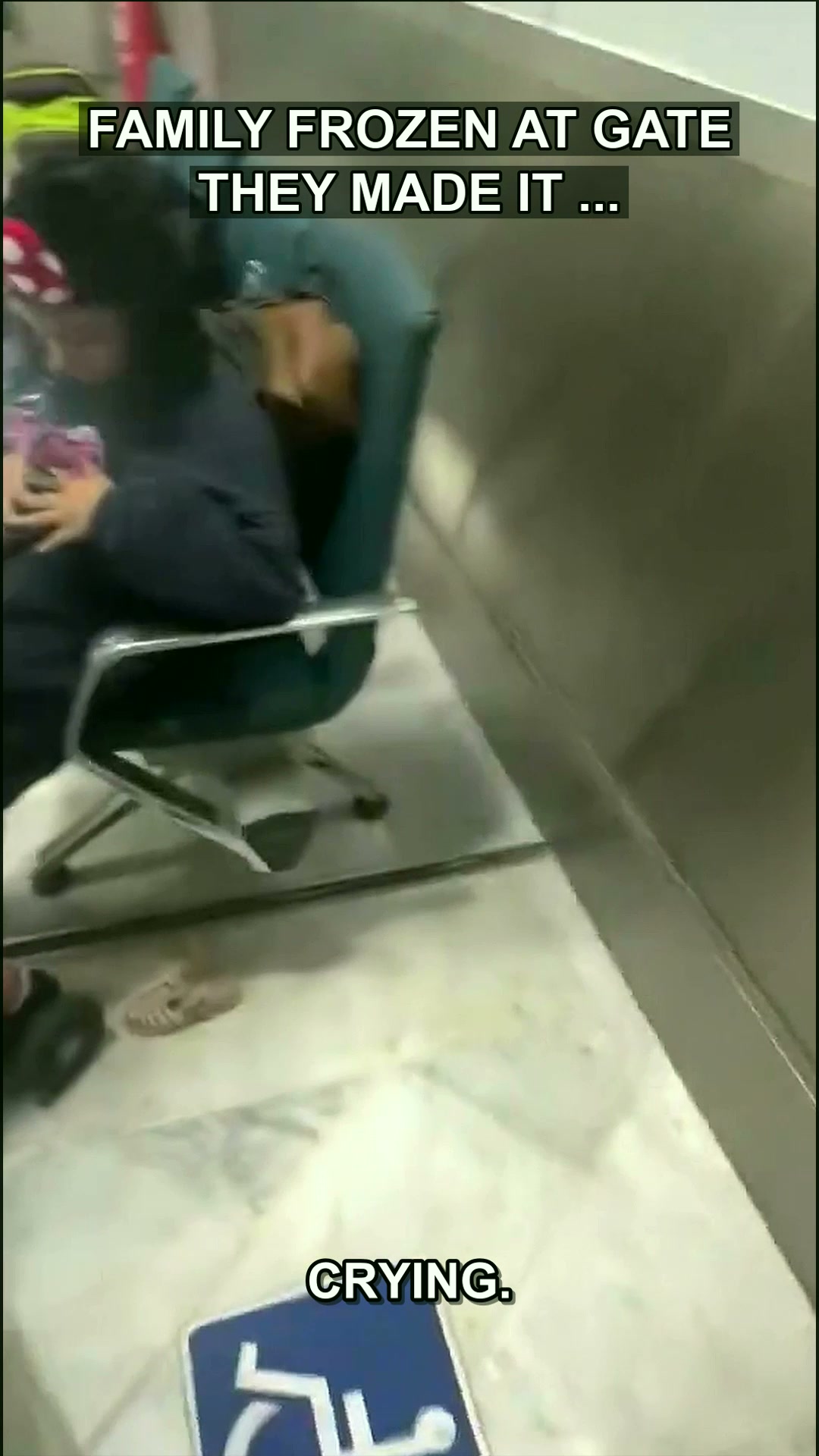
There is no sound more gut-wrenching than the collective cry of four children who do not understand why their world just collapsed. It happens in a sterile, fluorescent-lit corridor of a Paris airport, a place that should represent the freedom to travel, to reunite, to go home. Instead, for one British Muslim family, it became a stage for public humiliation.
The father’s voice trembles with a mixture of rage and disbelief as he films the scene. His wife is inconsolable. His children—his little ones—are sobbing, their tiny faces flushed with confusion and fear. The alleged trigger? A uniformed EasyJet staff member who, according to the family, decided that their presence was a problem.

“She’s being prejudiced because I’m a Muslim,” the man says, his words cutting through the noise of the terminal. He is not whispering. He is not hiding. He is a man pushed to the edge, documenting everything because he knows that without proof, his word might not matter. “My four kids are crying here. You can see every single kid is crying.”
This is not a story about a missed flight or a ticketing error. The family maintains they arrived on time. This is a story about how quickly a routine journey can turn into a nightmare when a person in a position of power decides to wield it without an ounce of common sense or mercy.
“She has no mercy on my kids. And because I’m a Muslim, I’m a Muslim with a beard.”
That final line—“I’m a Muslim with a beard”—is the unedited truth that strips away all the corporate jargon and policy talk. The father is naming what he believes is the real reason his family is being subjected to this ordeal. He is not asking for special treatment. He is asking for the basic human dignity that should be guaranteed to any passenger who has paid for a ticket and shown up on time.
The Anatomy of a Public Breakdown
What makes this incident so visceral is not just the allegation of bias, but the very public nature of the collapse. Airports are already high-anxiety environments. The pressure to board, the security checks, the announcements—it all creates a simmering tension. For this family, that tension boiled over into a scene that no parent should ever have to experience.
The father’s focus is not on himself. He is not filming to complain about a delay or a refund. His eyes are on his children, his wife. He is trying to hold his family together while a figure of authority seems determined to tear them apart. This is the core of the emotional impact: seeing a protector rendered powerless by a bureaucratic wall of indifference.

The Human Story Behind the Headline
We often talk about discrimination in abstract terms. We read statistics and legal briefs. But this video forces us to look at the face of it. We see the red, swollen eyes of a mother. We hear the desperate pleas of a father. We hear the wails of children who just want to go home to Britain.
This is the human story that gets lost in the noise of outrage. It is a story about the resilience of a family trying to navigate a system that, intentionally or not, made them feel like suspects simply for existing. The father’s decision to film was not an act of aggression; it was an act of preservation. In a world where your word is often doubted, the camera becomes the only witness that cannot be corrupted.
And what does the camera show? It shows a staff member who, according to the father, has no regard for the emotional wreckage she is leaving behind. It shows a moment where power was used not to facilitate travel, but to obstruct it.
The Legal Precedent and the Search for Accountability
Under UK and EU aviation law, airlines have a duty not to discriminate against passengers on the grounds of race or religion. The Equality Act 2010 protects British citizens from such treatment, and the European Court of Human Rights has long upheld the principle that religious identity cannot be grounds for exclusion from public services. If the family’s allegations are proven, EasyJet could face significant legal and financial consequences.
But for the family, justice is likely not about a payout. It is about accountability. It is about hearing an apology. It is about knowing that their children will not have to carry the trauma of this moment for the rest of their lives. The father’s rage is not just about the immediate incident; it is about the terrifying realization that this could happen again, anywhere, anytime.

The broader implication is a sobering reminder of why we must always document everything. In an age of contested narratives, the video is the only currency that holds power to account. This father did what any of us would hope to do: he fought back with the only tool he had. He showed the world the unedited truth.
His children will not remember the name of the airport or the flight number. They will remember the feeling of being scared. They will remember their mother crying. They will remember their father’s voice, shaking with a fury that was born out of love. And that is the image that will linger long after the hashtags fade and the news cycle moves on—a father, broken but not defeated, standing in the middle of a terminal, demanding that his family be seen as human.