Coast Guard Questions Man Over Spring Break Passengers
WATCH: On-scene video documentation is embedded below →
LISTEN TO THIS ARTICLE
Audio Narration • English (US)
A routine boarding on open water slid into something quieter and stranger when a Coast Guard officer paused the paperwork to ask a man how he had come to know the young women aboard his vessel. The exchange, captured on a phone camera inside the cabin, is calm on its surface, yet every second of it tightens around one unsettled question the officer never quite asks out loud.
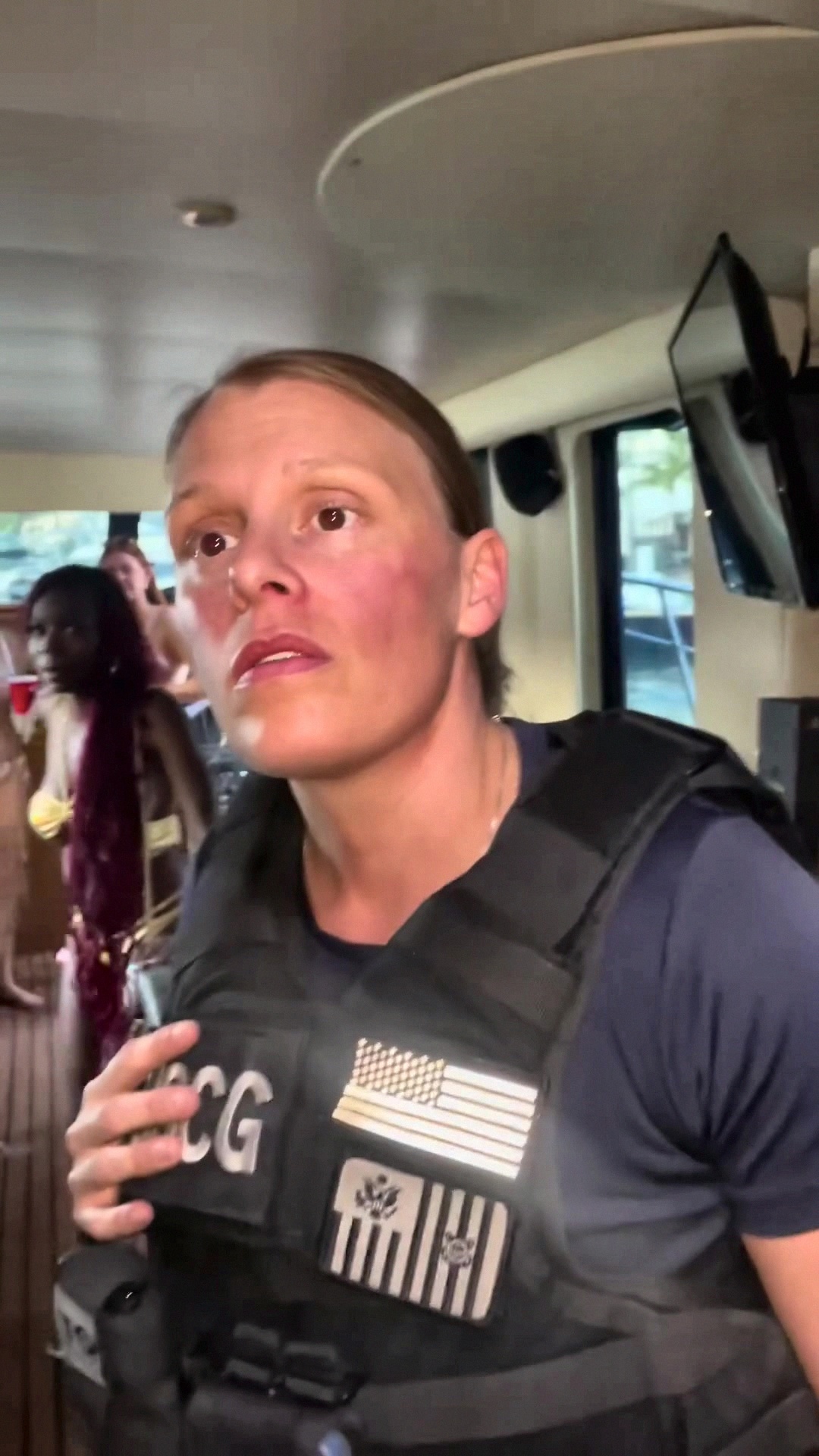
- A United States Coast Guard boarding team steps aboard a recreational vessel during what appears to be a standard on-water inspection.
- The female officer, wearing a black tactical vest marked "U.S. COAST GUARD" with a flag patch, questions the man operating the boat about the purpose of his trip.
- He describes it as a "pleasure voyage," explaining that he simply likes to have fun on the water.
- The questioning pivots from paperwork to passengers when she asks how he met the young women aboard, most of whom are visiting for spring break and are not local to the area.
What the Recorded Footage Captures: Chronological Breakdown
The clip opens tight on the officer's face, lit by the flat overhead glow of the cabin ceiling. Her expression is neutral but fixed, eyes locked forward, one hand resting near the collar of her vest as she speaks. Behind her shoulder, the boat's interior is bright and casual: red plastic cups clustered on a counter, bottles standing between them, a television mounted high on the wall, and a small group of young women drifting in and out of the background. One wears a short white outfit; another moves past in a burgundy top. The contrast between the officer's rigid posture and the loose, vacation-energy cabin behind her does most of the storytelling.
The audio is where the tension lives. "The question I asked was what the purpose of your voyage was," she says, her voice even and procedural. The man answers without hesitation: it is a pleasure voyage, he likes to have fun on the water. She repeats the phrase back to him – "A pleasure voyage?" – and he confirms it again, "A pleasure voyage." The repetition is not aggressive, but it lands like a second look at a document, a quiet check that the answer will hold.
Then the conversation turns. "So you guys are all friends, or did you pick them up?" she asks. The man explains they are visiting for spring break. She presses gently: most of them are not from here, so how does he know them? "Through friends of my other friends," he says. "Friends of your other friends," she echoes, the same measured repetition, before the clip cuts. In the final frames, the camera swings, a blur of white and blue, and the officer's back is visible as she faces the group on the benches, the words "UNITED STATES COAST GUARD" stretched across her shoulders.
Critical Blind Spots: What the Lens Leaves Unresolved
The camera only ever shows one angle, and almost always the officer's face. What the man's expression looks like as he answers, whether his hands are steady on the wheel or restless at his sides, is never captured. The young women in the background appear briefly and silently, their reactions reduced to fragments of movement – a turned head, a passing figure. Whether they are amused, uncomfortable, or entirely unbothered by the questions is left entirely to the viewer's imagination.
The recording also begins mid-inspection. Whatever documents were checked, whatever safety equipment was counted, whatever the officer said in the first minutes aboard is gone. The viewer is dropped into the conversation at the moment it shifts from procedure to people, which makes the pivot feel more abrupt and more loaded than it may have been in real time.
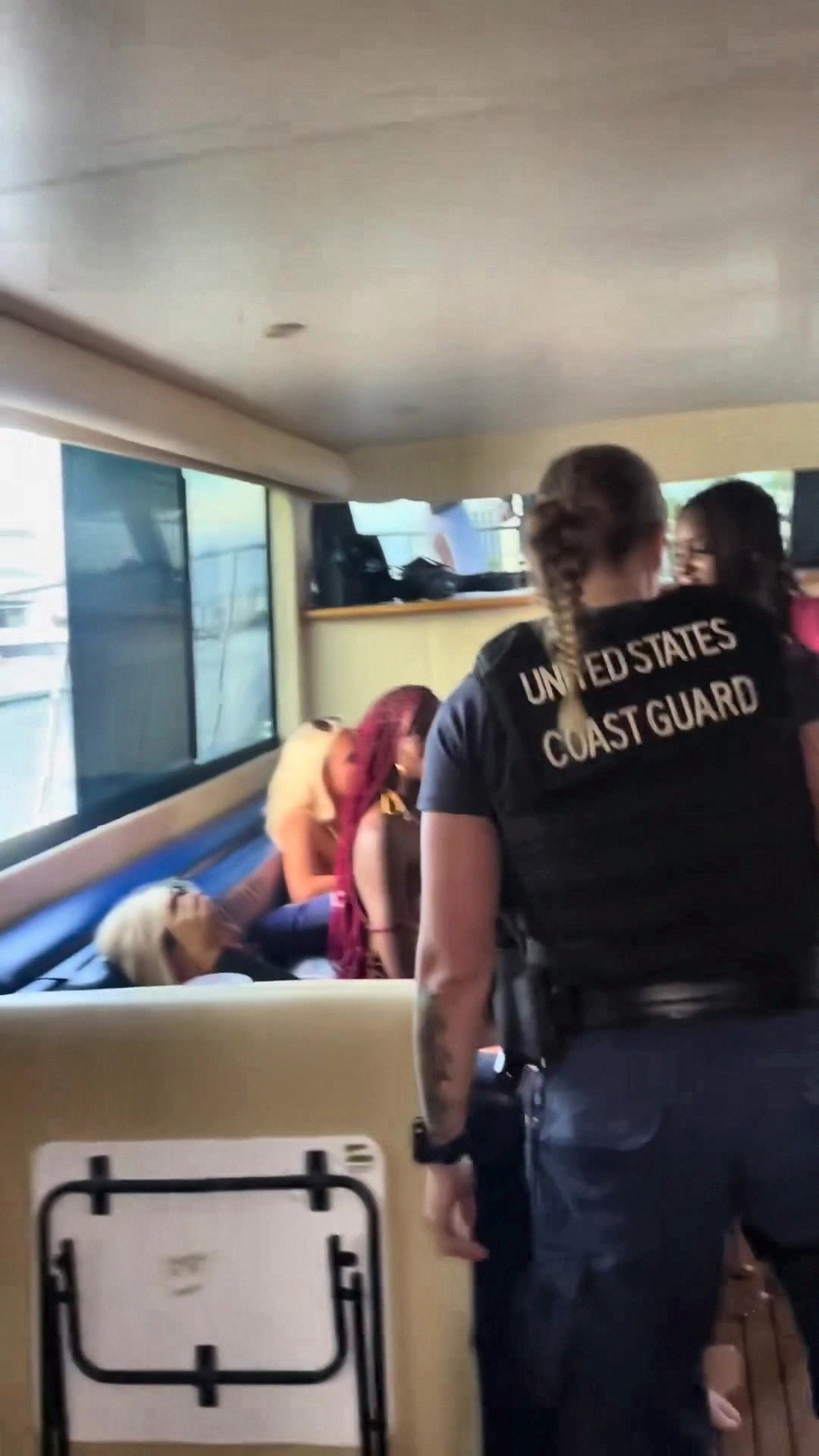
And the ending is simply missing. The clip stops at the echo of a question, not at a conclusion. There is no recorded resolution – no explanation of whether the inspection ended with a handshake or a citation, whether the boat remained anchored or continued its voyage. That gap is the space where speculation grows, and it is worth resisting.
Statutory Framework and Protocol Analysis
What stands out on the recording is not any single question but the rhythm of them. The officer never raises her voice. She does not accuse. She listens, repeats the answer back, and moves to the next thread – a technique that reads as professional and, to some viewers, quietly unnerving. The man, for his part, answers each question directly and without visible deflection, describing a social trip built around spring break visitors and overlapping friend networks.
| Incident Parameter | Recorded On-Scene Evidence |
|---|---|
| Boarding authority | Uniformed U.S. Coast Guard officer aboard in black tactical vest |
| Stated voyage purpose | "Pleasure voyage," operator says he likes to have fun on the water |
| Passenger composition | Young women described as spring break visitors, mostly non-local |
| Relationship explanation | Operator says he knows them through friends of other friends |
| Officer's tone | Calm, repetitive, procedural; no raised voice on recording |
| Cabin environment | Red cups, bottles, television, benches, casual vacation atmosphere |
| Recording endpoint | Clip ends mid-exchange; no resolution captured on camera |
Read more:
Read more: Campus Argument Escalates Into Physical Struggle on Autumn Path →
Core Questions and Institutional Review
- What was the original basis for the boarding, and was it a random safety check or prompted by something specific?
- Why did the officer's questions move from voyage purpose to the operator's relationship with his passengers?
- How did the young women aboard describe their own connection to the boat and its operator?
- What was the final outcome of the inspection, and did the vessel continue its trip afterward?
The calmest moments in the clip are the ones that linger longest – the flat delivery, the echoed answers, the young women watching from the benches without a word. Nothing in the footage proves wrongdoing, and nothing in it fully explains the line of inquiry either. What remains is a small, sealed moment on the water where a routine check and a spring break outing briefly intersected, and the camera caught only half of it. Where does a standard safety conversation end and a personal one begin – and who gets to decide?
Practical Takeaways
- Recorded interactions only show one perspective; silence and omission are not evidence of guilt.
- Routine vessel boardings commonly include questions about voyage purpose and passengers.
- Short clips ending mid-conversation invite speculation that the full record may resolve.
- Context – timing, tone, and what happened before the camera rolled – matters as much as the words captured.
LATEST DEVELOPING INCIDENT
An even more shocking incident just erupted hours ago that has stunned onlookers nationwide. Full investigative breakdown and on-scene evidence documented below.
BREAKING: READ NEXT SHOCKING INCIDENT – LATEST CASE ↓
Park Confrontation: Woman Demands English Over Music

A calm afternoon of fishing and music at a public park turned into a tense, recorded confrontation when a woman approached a group of Hispanic visitors and demanded they speak English and turn off their music. The exchange, captured on a phone camera, escalated from a sharp complaint about noise into a heated argument over language, belonging, and who has the right to enjoy a shared public space.
- A group of Hispanic visitors were fishing and playing music from a small speaker at a green, tree-lined park when a woman confronted them.
- The woman, wearing sunglasses and carrying a blue cup and a plastic bag, repeatedly demanded that they speak English and stop playing what she called "not American music."
- She threatened to call the police, invoking authorities and a public figure as justification for her complaint.
- The confrontation was recorded on a phone, showing the woman standing close to the camera, gesturing and speaking directly at the group as bystanders looked on.
What the Recorded Footage Captures: Chronological Breakdown
The video opens in bright daylight, with a wide expanse of manicured green grass and a line of trees in the background. The camera is held by someone in the group, and it is pointed directly at a woman standing near a wooden picnic table. She has short, tousled blonde hair, dark sunglasses, and a patterned top in blue, white, and maroon. In one hand she holds a blue plastic cup with a straw; in the other, a small teal bowl and a crumpled plastic bag. Her posture is stiff, her chin lifted, and her mouth is already moving before the first audible words land.
The first exchange is sharp and immediate. The woman leans in and says, "You know what? In America, we speak English." A voice from behind the camera answers, "So? We don't have to listen to English." The woman's head turns slightly, as if she did not expect the pushback. "Who said that?" she asks, her voice rising. "Who said that? English or Spanish?" The question hangs in the air, and the person filming replies calmly, "Can you speak Spanish?" The woman does not answer the question directly. Instead, she pivots to the music, saying, "I'm just gonna tell you what, senor. When the authorities come to shut your heatedly music – okay – cut it and bye."
The tone hardens. The woman gestures with the hand holding the plastic bag and says, "When I call the police, your husband is coming, and when they come down, you'll know who sent them." The camera does not flinch. The group's voices remain measured, almost flat, which seems to frustrate her further. She raises her voice and says, "All we're trying to do is fish. All we want to do is fish. We can, because all we hear is your goddamn heatedly music." A voice from the group answers simply, "We want silence." The woman fires back, "If you want silence, go to your home. And close your mouth."
Critical Blind Spots: What the Lens Leaves Unresolved
The camera captures only one angle of a much larger scene. Behind the woman, the park stretches out with other visitors visible in the distance – some walking, some standing near the water. What those bystanders saw and heard before the recording began is unknown. The video does not show how the confrontation started, whether the music was playing at a volume that could reasonably be called disruptive, or whether there had been an earlier exchange that set the tone.
The footage also leaves unanswered the question of who else was present. The woman refers to "your husband" and to "the authorities," but the camera never pans to show the full group or the people she is addressing. The voices of the group are calm and controlled, but their faces are not visible, which makes it difficult to gauge the emotional toll of the encounter. The woman's own demeanor – her quick shifts between accusation and complaint – suggests a person who feels both entitled and aggrieved, but the lens cannot tell us what she believed she was protecting or why the music mattered so much to her.
What the camera does show is the physical tension. The woman stands close, her body angled toward the camera, her hand movements sharp and repetitive. The group keeps its distance, and the camera stays steady. There is no physical contact, no thrown objects, no violence – only words, and the slow, uncomfortable pressure of a public argument that has nowhere to go.
Statutory Framework and Protocol Analysis
In most American municipalities, park rules focus on decibel limits, amplified sound restrictions, and permit requirements for large gatherings. A small speaker playing music for a group of anglers would rarely, if ever, violate those rules unless the volume crossed a specific threshold. The woman's complaint was not about decibels, however – it was about the language and the culture of the music itself, which is not something park ordinances address.
The confrontation also highlights a gap between what the law allows and what people expect from one another in shared spaces. The group had every right to fish and listen to music at a reasonable volume. The woman had every right to ask them to lower it if it bothered her. What the footage shows is the moment when a request became a demand, and a demand became a threat – a shift that turned a minor annoyance into a recorded public dispute.
| Incident Parameter | Recorded On-Scene Evidence |
|---|---|
| Setting | Open green park with trees, picnic tables, and water in the background |
| Main subject | Woman in sunglasses, patterned top, holding a blue cup and plastic bag |
| Trigger | Music playing from a small speaker near a fishing group |
| Key demand | "In America, we speak English" and turn off the music |
| Escalation | Threats to call the police and references to authorities |
| Response | Calm verbal pushback from the group, no physical contact |
| Duration | Under two minutes of recorded confrontation |
Core Questions and Institutional Review
- What was the actual volume of the music, and did it exceed any posted park rules?
- Did the woman contact park staff or authorities before or after the confrontation?
- Were there other bystanders who intervened or witnessed the exchange from the beginning?
- What was the final outcome of the encounter, and did park officials respond to the scene?
The video ends with the woman still speaking, her voice carrying across the grass as the camera holds its position. The group does not raise its voice, does not move closer, and does not stop filming. The confrontation simply runs out of momentum, leaving the viewer with the image of a sunny park, a blue cup, and a woman standing alone in her conviction. What remains is a question that the footage cannot answer: when does a disagreement about noise become a disagreement about who belongs in a public space, and who gets to decide?