Ammonia Blast at Newport Seafood Plant Sends Huge Plume
WATCH: On-scene video documentation is embedded below →
LISTEN TO THIS ARTICLE
Audio Narration • English (US)
A sudden white explosion threw a towering cloud of vapor across the Newport, Oregon waterfront, forcing an urgent evacuation around a seafood processing facility. As the plume rolled toward the street and the bay, the question that hung in the mist was simple: how close did workers and bystanders come to an invisible, choking hazard?
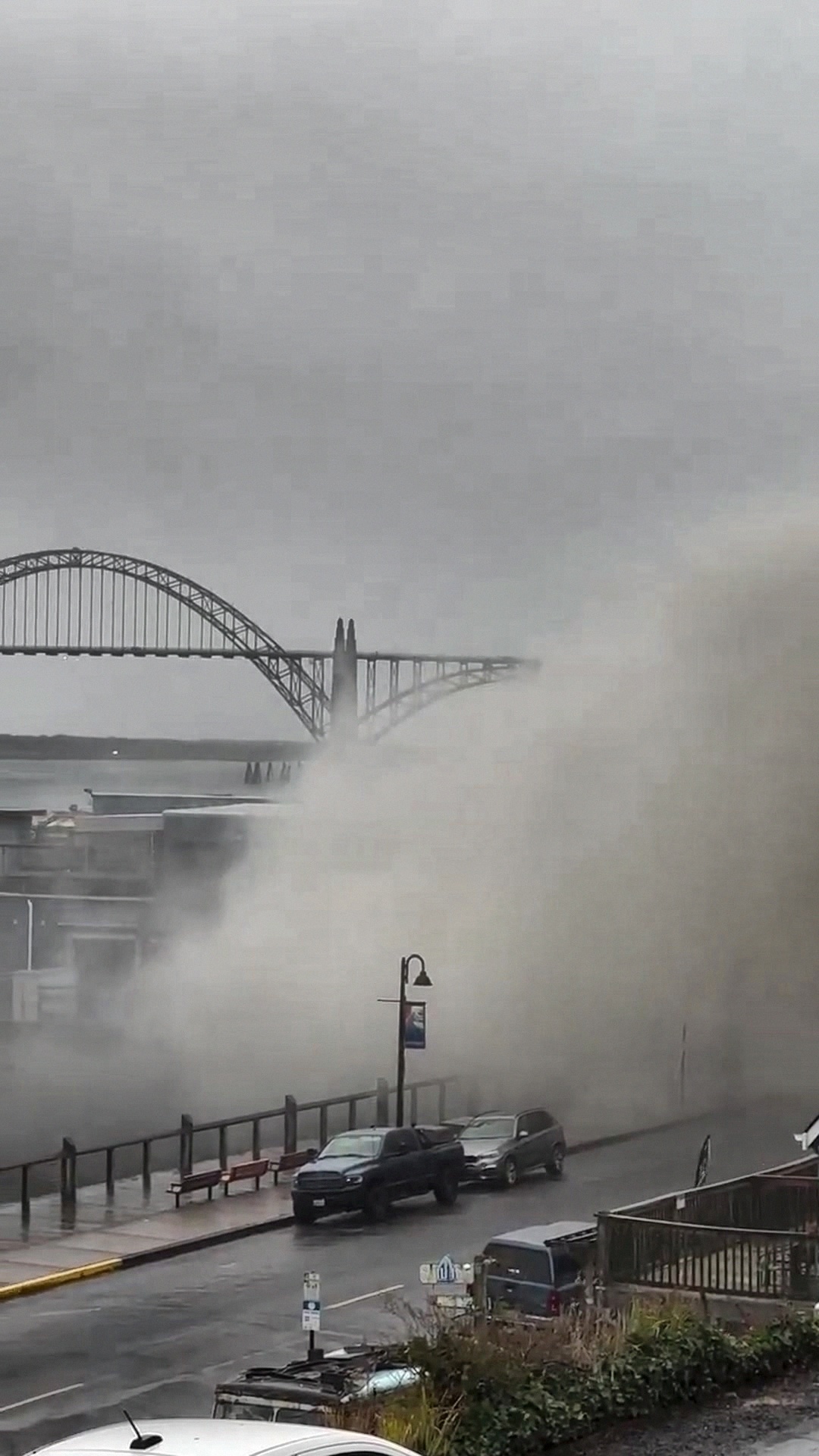
- A suspected ammonia tank failure at a seafood processing facility in Newport, Oregon sent a dense white vapor cloud billowing over the surrounding streets.
- Video captured from an elevated vantage point shows the plume swelling rapidly past parked cars and a waterfront railing, with the arched Yaquina Bay Bridge looming in the gray background.
- The area was placed under evacuation as responders moved to establish a perimeter and assess whether the tank had ruptured or was actively leaking.
- The footage ends mid-event, leaving the fate of the workers inside, the final containment timeline, and the full health assessment unresolved on camera.
What the Recorded Footage Captures: Chronological Breakdown
The clip opens in flat, overcast light. A rain-dampened roadway runs along the bottom of the frame, bordered by a black metal railing and a few parked vehicles. At first, the scene reads as ordinary coastal weather, gray sky pressing down on gray water. Then the white mass appears. It does not drift so much as pour, spilling outward in a rolling front that consumes the middle ground of the frame within seconds.
The vapor swallows the railing, then the street lamp, then the parked cars one by one. The plume thickens from a thin fog into a solid wall, bleaching out the buildings across the way and turning the waterfront into a white void. Behind it, the steel arch of the Yaquina Bay Bridge remains visible for a while, a fixed geometry against the moving mass, before the haze softens even that outline.
No fireball, no orange flash – just the quiet, total expansion of a gas cloud. The camera holds steady, a witness frozen in place while the street below empties. The last frames show the plume still growing, still curling toward the roadway, with no sign of it slowing.
Critical Blind Spots: What the Lens Leaves Unresolved
The camera sits far from the source. That distance protects the person filming, but it also strips away the crucial detail: where exactly the tank failed, whether the release was a single burst or a sustained leak, and what the workers inside the plant saw in the first seconds.
The footage also captures no faces. No one runs through the frame, no one shouts, no siren is audible over the ambient wind and water. Bystander reaction, the true gauge of how frightened people were, is entirely absent from the record – the street simply stands empty as the cloud advances.
Most importantly, the video ends before the resolution. Whether the plume dissipated on its own, whether responders shut the valve, and whether the evacuation order was lifted all happen off-screen, beyond the final frozen frame of white.
Statutory Framework and Protocol Analysis
The response to a release of this kind follows a familiar industrial-safety playbook: isolate the area, establish an upwind command post, account for every worker on shift, and test the air before allowing anyone back in. The visible evidence – an expanding cloud over a working waterfront – fits that framework, with evacuation as the first and most urgent step.
| Incident Parameter | Observation at the Scene |
|---|---|
| Location type | Coastal seafood processing facility beside a public roadway |
| Visible release | Dense white vapor plume expanding rapidly outward |
| Immediate response | Area evacuation initiated around the facility |
| Bystander presence | Street largely cleared as the cloud advanced |
| Weather conditions | Overcast, damp, low-visibility coastal light |
| Landmark in frame | Arched bridge visible behind the plume |
| Recording scope | Ends before containment or all-clear |
Read more:
Read more: Learjet 60 Crash Near West Palm Beach Leaves Burning Crater →
Communities along working waterfronts accept industrial risk as part of the local economy, but incidents like this sharpen the question of how quickly neighbors can be warned. The gap between the first visible plume and a public alert is measured in minutes, and those minutes are exactly what the camera cannot show.
Core Questions and Institutional Review
- What triggered the tank failure, and was it a sudden rupture or a slow leak that escalated?
- How many workers were inside the facility at the moment of the release, and were all of them accounted for?
- How long did the vapor remain hazardous over the roadway and nearby public spaces?
- What inspection or maintenance record preceded the incident, and will it be reviewed publicly?
The footage leaves the viewer with a single haunting image: a quiet street, a parked truck, and a wall of white swallowing the ordinary afternoon. What would you have done if you were standing on that sidewalk when the cloud began to move?
Practical Takeaways
- Never approach a visible chemical plume to film or investigate; move upwind and to higher ground.
- Follow official evacuation instructions immediately, even when the scene appears calm.
- Keep vehicle windows closed and ventilation off if a vapor cloud is nearby.
- Report the release and any respiratory symptoms to emergency responders right away.
Sources:
- Ammonia tank explodes at seafood facility in Newport, Oregon – https://www.facebook.com/thechronify/videos/ammonia-tank-explodes-at-seafood-facility-in-newport-oregon/3769975779824090/
- Fire at Seafood Processing Plant Forces Evacuations in Oregon – https://www.youtube.com/watch?v=RViFIfBb52o
- JUST IN: Ammonia tank explodes at seafood facility in Newport, Oregon – https://x.com/BNONews/status/2114406649859371268?lang=bg
LATEST DEVELOPING INCIDENT
An even more shocking incident just erupted hours ago that has stunned onlookers nationwide. Full investigative breakdown and on-scene evidence documented below.
BREAKING: READ NEXT SHOCKING INCIDENT – LATEST CASE ↓
James Comey Video Statement After Third Federal Charge
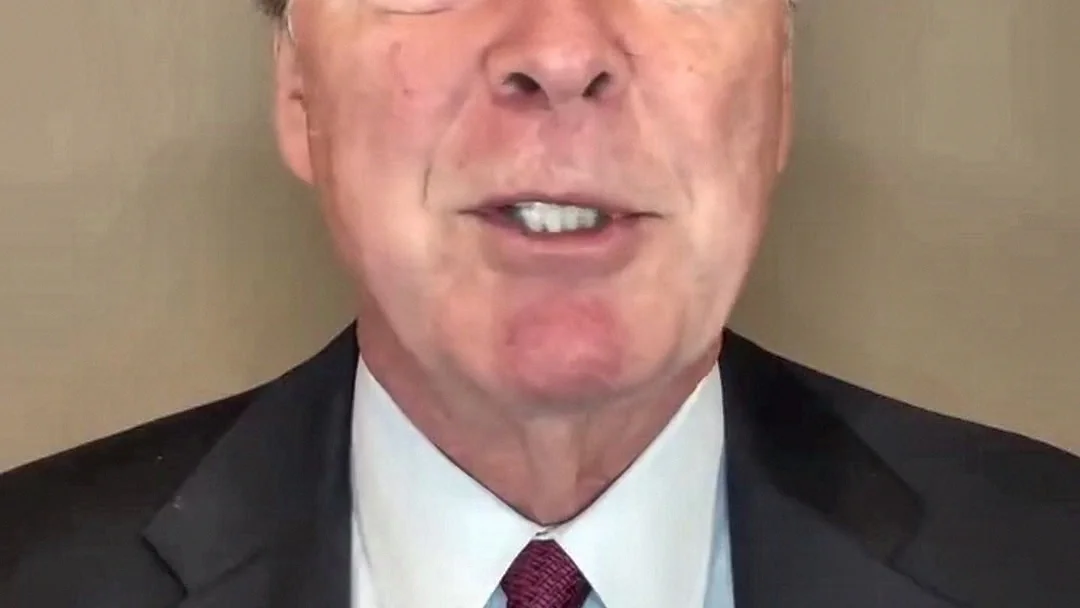
He sat framed against a plain, muted wall, a dark suit and burgundy tie projecting the composure of a man who has been here before. Within seconds, the calm gave way to a quiet, cutting defiance as he confirmed the news everyone was waiting for.
- The Setting: A tightly framed video statement, recorded in a spare room with dull, flat lighting and no audience, placing the full weight of the moment on a single face.
- The Friction: Newly unsealed federal charges landed against former FBI Director James Comey, marking a third criminal case against him, this time centered on an alleged decade-old transmission of national defense information.
- The Intervention: Comey responded through his own camera rather than a courtroom podium, issuing a pre-emptive rebuttal in which he rejected the validity of the filing and insisted his innocence.
- The Aftermath: His defense team filed a motion to dismiss the counts as time-barred, while supporters and critics alike parsed every pause and syllable of the six-minute address.
What the Recorded Footage Captures: Chronological Breakdown
The video opens with only a man and a blank background. Comey’s eyes meet the lens almost immediately, and there is a faint, almost reflexive twitch at the corner of his mouth before he speaks. The framing is unforgiving and deliberate, no desk, no seal, no handler visible in the frame. The only motion comes from his shoulders as he draws a breath, and the soft, close-miked timbre of his voice fills the silence.
"Well, they're back again," he says, and the words land with a flat, practiced weariness. The line carries a rehearsed rhythm, yet his jaw tightens slightly as he adds that it would almost be funny if it were not such an appalling abuse of the Department of Justice. The lighting stays constant, but the tension shifts: his head tilts a fraction, his eyebrows lift, and the delivery accelerates as he warns that people cannot become numb to this.
Then comes the pivot that defines the clip. "Nothing's changed with me," he says, slowing down deliberately. "I'm still innocent. I'm still not afraid of these people." His posture straightens, his chin lifts, and the surrounding frame goes still. Toward the end, the cadence softens as he references an independent federal judiciary, an amazing family, and an incredible group of lawyers. The final sentences stretch into a broader appeal, a call to stand straight and keep the faith in America.
Critical Blind Spots: What the Lens Leaves Unresolved
The camera shows one man speaking, but not the machinery that produced the moment. The charges themselves exist in sealed and unsealed filings, not in the frame, and the viewer never sees the documents, the prosecutors, or the grand jury that declined to indict. The blank wall behind him offers no context about the room, the city, or who was standing just beyond the edge of the shot.
Equally absent is the other side of the argument. The video gives no voice to the prosecutors who described evidence that Comey allegedly directed staff to speak with a reporter about specific accuracy concerns, thereby transferring classified information. Nor does it show the defense motion filed days earlier, arguing the counts are barred because the government had ten years to obtain an indictment and instead filed a criminal information.
The tight framing also hides the emotional toll. There is no crowd, no hallway noise, no visible reaction from advisers or family. What remains is a face that alternates between defiance and exhaustion, leaving the viewer to guess whether the calm is conviction, conditioning, or both.
Statutory Framework and Protocol Analysis
The video is carefully engineered for a legal and public audience simultaneously. Comey does not argue the facts of the alleged 2016 disclosure; he argues legitimacy, framing the prosecution as an abuse rather than a dispute over documents. That rhetorical choice mirrors standard crisis communications playbooks: concede nothing, reframe the fight, and direct attention to the courtroom where an independent judiciary becomes the arbiter.
| Incident Parameter | Observation at the Scene |
|---|---|
| Speaker identity | Former FBI Director James Comey, appearing alone in a video statement |
| Setting | Plain, evenly lit interior wall with no props or insignia |
| Framing | Tight close-up from chest up, static camera, no cuts |
| Wardrobe | Dark suit, light blue shirt, patterned burgundy tie |
| Tone | Composed, deliberate, with flashes of sharp defiance |
| Key verbal claim | "I'm still innocent" delivered directly to the lens |
| Reference to family | Brief mention of family and legal team near the conclusion |
Read more: {NOIBO}
What the footage cannot show is how the filing itself was constructed. Court records indicate the matter played out under seal since early October 2026, and the charges surfaced publicly only after the government moved to unseal. The defense had already filed its dismissal motion ten days before the public learned of the counts, meaning the legal fight was well underway while the public narrative had not yet begun. That gap between sealed procedure and public statement is where the case’s real leverage sits, and it explains why the video was released within hours of the documents dropping.
Core Questions and Institutional Review
- Did the government’s decision to file a criminal information instead of seeking an indictment create a procedural vulnerability that the defense can exploit?
- What specific evidence, if any, supports the claim that classified material changed hands during a press outreach effort a decade ago?
- Why did the case remain sealed for weeks before surfacing publicly, and who controlled the timing of that disclosure?
- How will the presiding court weigh the statute-of-limitations argument against the government’s stated reason for the delay?
The video ends without a question, but it leaves one hanging in the air: when a man looks directly into a camera and insists he is unafraid of the people charging him, is that a statement of fact, a strategy, or the only thing left to say? Viewers are left to weigh the calm against the paperwork, and the paperwork is still moving through the courts.
Practical Takeaways
- The third case against Comey centers on an alleged 2016 disclosure of national defense information, not on the earlier investigations that defined his tenure.
- The defense’s central argument is procedural: the ten-year window for indictment has closed, and the government filed a criminal information instead.
- Public perception will likely be shaped less by the filings than by the video, where the tone and framing carry as much weight as the words.
- The case remains unresolved, with no indictment and a dismissal motion pending, meaning the next chapter will be written in court rather than in front of a camera.
Sources referenced: NBC News, Yahoo News, and the Associated Press reporting on the unsealed filings and the video statement.