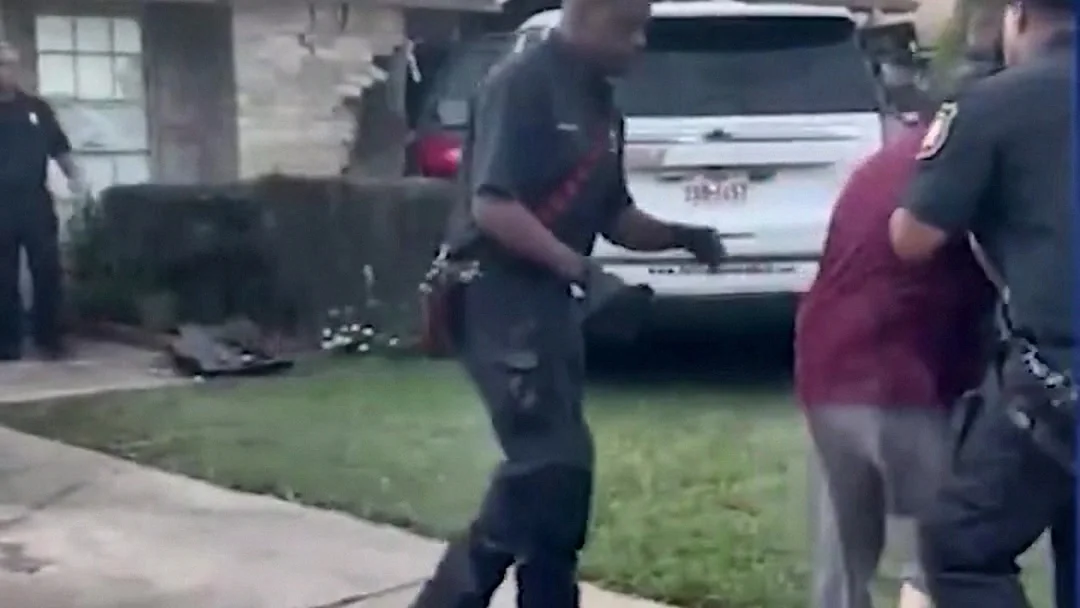
Arkansas Trooper Arrests Family After Speeding Stop
WATCH: On-scene video documentation is embedded below →
LISTEN TO THIS ARTICLE
Audio Narration • English (US)
Arkansas Trooper Escalates Speeding Stop Into Family Arrests
A routine speeding stop on a Franklin County road turned into a tense confrontation between an Arkansas State Trooper and multiple members of one family, with the encounter ending in arrests that have drawn renewed attention to how roadside disputes escalate. The recorded exchange captures the trooper repeatedly ordering a man to sit down while the man insists he is only trying to retrieve his phone.
- A woman was pulled over for speeding in Franklin County, Arkansas, according to the case account accompanying the footage.
- Her fiancé parked roughly 50 feet away to observe the traffic stop, and his father later arrived and asked for the truck keys.
- The trooper's repeated command — "Have a seat" — became the flashpoint of the recorded confrontation.
- The man refused the order, stating "I'm not sitting down" and "I'm not your dog."
- Two family members were ultimately arrested by the end of the encounter, for conduct described as protected under an Eighth Circuit ruling.

A Speeding Stop That Expanded Beyond One Driver
What began as a single traffic stop for speeding rapidly multiplied in scope. According to the account attached to the released footage, the woman behind the wheel was pulled over in Franklin County, and her fiancé chose to park about 50 feet away rather than drive on. That decision placed a second vehicle and a second person inside the trooper's field of view.
The situation grew further when the fiancé's father arrived at the scene and asked for the truck keys. At that point, three people connected to the original stop were present on the roadside, and the trooper's attention shifted from the speeding violation to the conduct of the people standing nearby.
The recorded audio captures the moment the encounter pivoted. The trooper's voice is direct as he says, "I come up to ask you a question and you come up to me being a smart" — a remark that frames the officer's perception that the interaction had turned adversarial before any physical step was taken.
The Demand to Sit and the Refusal
The central confrontation plays out in a short, repeating loop of commands and refusals. The trooper issues the instruction "Have a seat" again and again, and the man answers each time with a refusal. "I'm not sitting down," he says, and later, "I'm not your dog."
The man's stated reason for not complying is specific and repeated: his phone. "I got my phone in my bag," he says, and then, "I'm trying to take the phone out." The audio suggests he was attempting to reach the device while the trooper continued to demand he take a seat.
The trooper does not accept the explanation. He escalates the directive with "Do it now," and when the man continues to resist, the officer calls out, "Get your boss out here." The phrase signals that the trooper wanted a supervisor on scene.

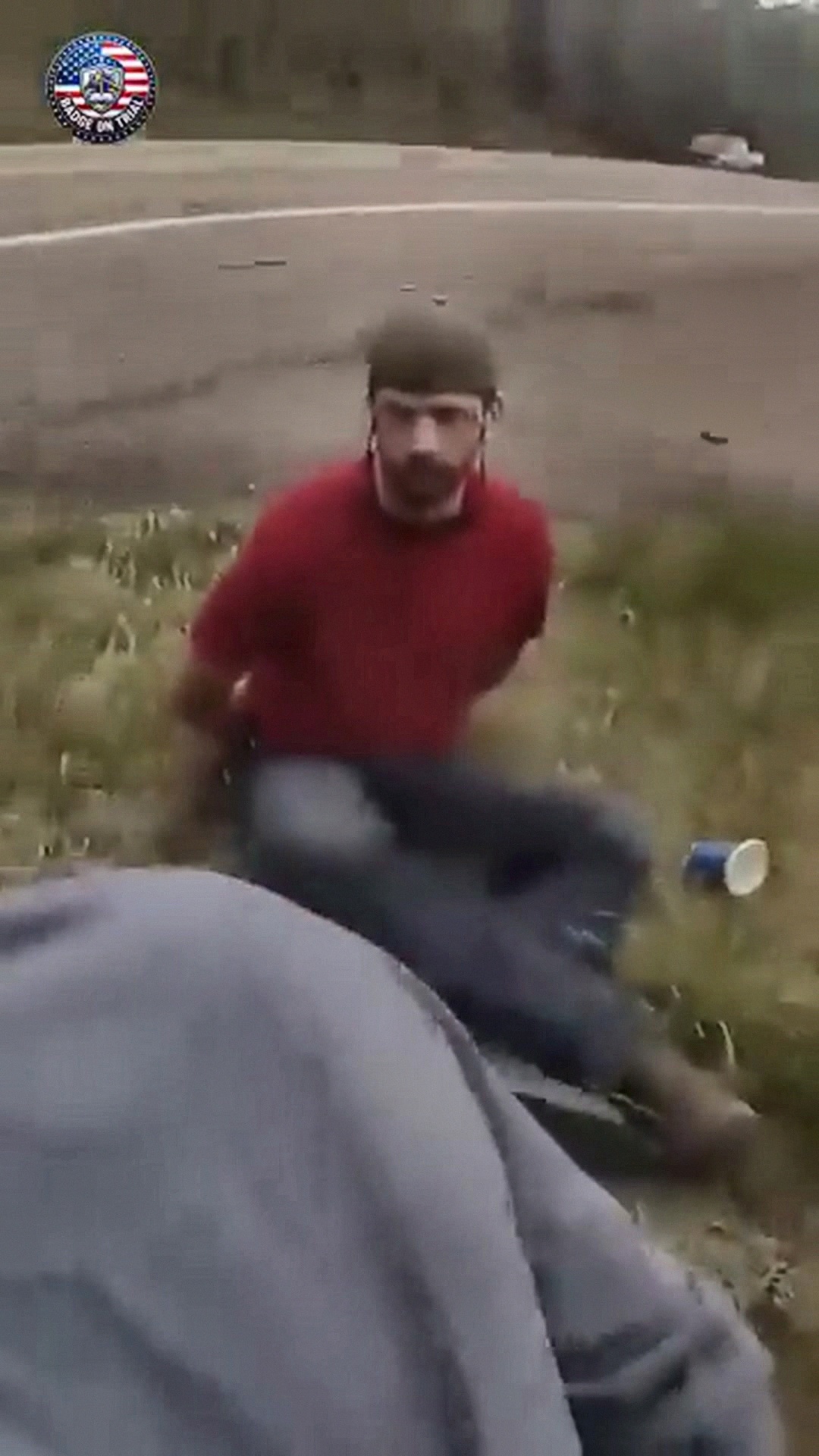
The frames capture a man in a red shirt and dark pants sitting or being brought down onto the grass beside the roadway, with a blue cup visible on the ground nearby. The visual sequence shows the physical stage of the encounter unfolding on the shoulder rather than on the pavement.
Recorded Words at the Height of the Encounter
The audio record preserves the raw back-and-forth without indicating who ultimately prevailed at each step. At one point the trooper says, "Let's go. Get him out of here," a line that suggests a decision had been made to remove someone from the immediate area.
"Have a seat. I'm not your dog. Have a seat. Get your boss out here. Have a seat. Do it now."
The exchange is repetitive by design — each command met with a refusal — and the recording offers no narration or commentary to soften either side. The trooper's tone stays fixed on compliance; the man's tone stays fixed on his phone and his refusal to be seated.
A later fragment of the audio includes the phrase "Hit you with the monster out here," which appears in the recorded exchange without additional context in the available material. The footage itself does not document what, if anything, followed that remark.
| Incident Parameter | Recorded Observation / Field Evidence |
|---|---|
| Location | Franklin County, Arkansas |
| Initial violation | Speeding stop involving a female driver |
| Second person on scene | Fiancé, parked about 50 feet away to watch |
| Third person on scene | Fiancé's father, who asked for the truck keys |
| Key command issued | "Have a seat," repeated multiple times |
| Stated reason for refusal | Man said he was trying to take his phone out of his bag |
| Recorded outcome | Two family members placed under arrest |
Read more:
Read more: Street Arrest Erupts as Crowd Confronts Officers on Camera →
Legal Questions Around the Arrests
The case account states that two family members were arrested for conduct the Eighth Circuit has ruled is constitutionally protected. That legal framing is the crux of why the footage has circulated so widely: the dispute is not only about a speeding ticket but about whether refusing a verbal command in this specific context can support an arrest.
The available material does not include a court opinion, a department statement, or a named legal filing. What it does include is the officer's own words on camera and the family's responses, which together form the evidentiary backbone of the public argument.
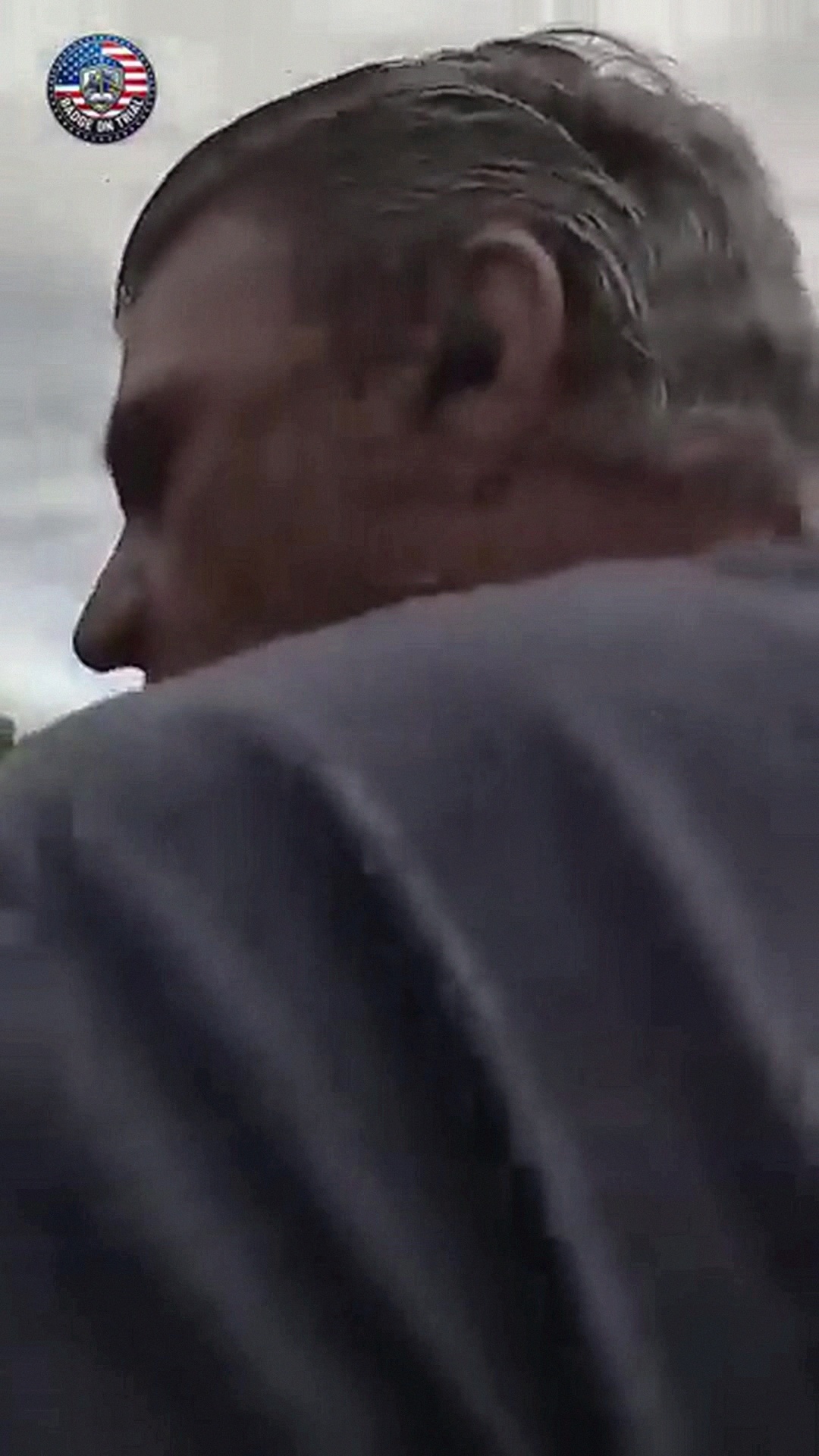
The early portion of the recording shows a close, partially framed view of a man's face and shoulder against a cloudy sky, suggesting the camera was held low or close during the opening moments. That framing matters because it establishes how near the two parties were when the commands began.
Why the Footage Keeps Drawing Scrutiny
Arkansas State Police have faced broader questions about use of force in separate, unrelated incidents, and that wider climate shapes how audiences read footage like this one. But the Franklin County stop must be evaluated on its own record: a speeding violation, a fiancé parked nearby, a father asking for keys, and a repeated order to sit.
The recorded exchange contains no indication that the man was told what would happen if he refused, nor does it show a supervisor arriving after the trooper's request. The material ends without documenting the full resolution of each arrest.
Core Questions and Unresolved Issues
- What specific charge was filed against each of the two family members arrested at the scene?
- Did a supervisor respond to the trooper's request, and at what point in the encounter?
- How does the Eighth Circuit precedent cited in the case account apply to a passenger or bystander who was not the original speeding driver?
What stands out most to you in this recorded exchange — the officer's repeated command or the man's stated reason for refusing it?