Baltimore Tip Leads to Five Arrests in Chaotic Curb Takedown
WATCH: On-scene video documentation is embedded below →
LISTEN TO THIS ARTICLE
Audio Narration • English (US)
Public Tip Triggers Chaotic Takedown Outside Baltimore Home Improvement Store
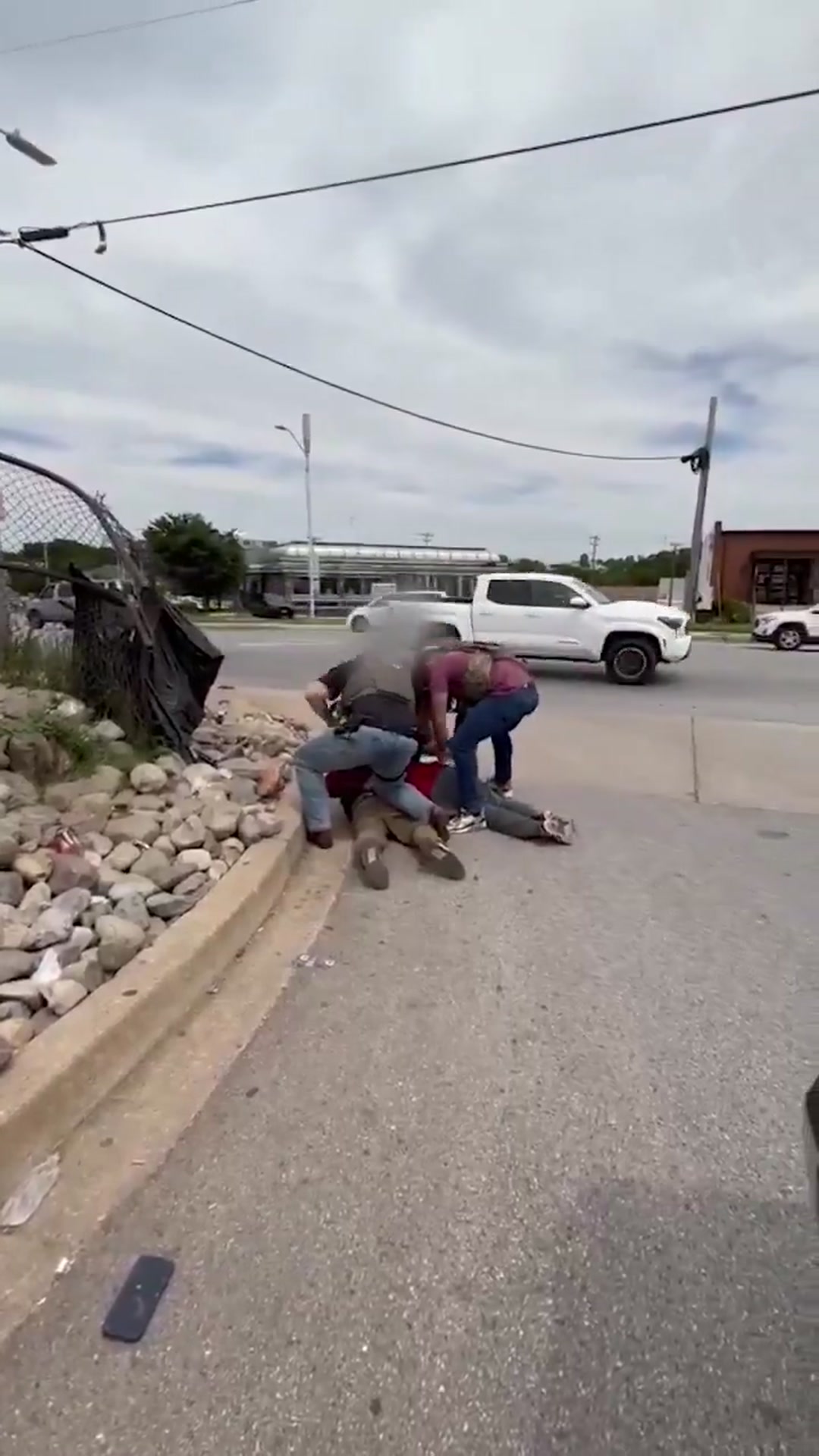
A tip from the public led to the arrests of five illegal aliens near a big-box home improvement store in Baltimore on May 20, according to the announcement accompanying a widely circulated arrest video. The footage shows agents in tactical gear pinning a man to the ground on a landscaped curb beside a busy roadway, with commands shouted as the struggle unfolds.
- A public tip prompted enforcement action near a big-box home improvement store in Baltimore on May 20.
- Five individuals described as illegal aliens were arrested in connection with the operation.
- Video footage shows agents in tactical vests holding at least one man face-down on a rock-lined curb.
- Recorded audio captures repeated commands of "down" and "hands" as the physical struggle plays out.
- The announcement was distributed by an account that promotes enforcement-themed content and links to the arrest footage.
The footage that circulated online is short but crowded with action. It opens with a man already on the ground, his body contorted against a curb planted with smooth river rocks. At least one agent in a dark tactical vest is bent over him, working to secure his arms while another figure in a maroon shirt helps hold him down. The backdrop is unremarkable and deeply ordinary: a chain-link fence strung with a black tarp, a low wall of decorative stone, and beyond it the wide asphalt of a Baltimore commercial strip where a pickup truck and a semi-truck roll past as if nothing unusual is happening.
That contrast is what makes the clip so arresting. There is no build-up, no chase captured on camera, no sweeping establishing shot of a parking lot filling with vehicles. The viewer is dropped directly into the middle of a physical struggle that has already reached its most volatile point. The gravel, the discarded scraps of trash, and the scattered white papers on the ground suggest a sudden stop rather than a planned staging area. Whatever led to this moment happened off-screen, but the announcement that accompanied the video frames it clearly: a call from a member of the public set the whole sequence in motion.
A Tip Line That Delivers
The context provided with the footage is blunt and promotional in tone. The message credits a member of the public for calling a tip line and states that the information led to the arrests of five illegal aliens near a big-box home improvement store in Baltimore on May 20. It then invites viewers to watch what it calls an action-packed arrest video, positioning the clip as proof that public reporting produces results.
The geography of the scene matches that description. The location reads as an outer edge of a large retail property, the kind of transitional strip where a landscaped island separates private parking from a public road. Trucks pass at speed in the background, and the fence line suggests a service area or maintenance boundary. It is a spot where people can be seen from every direction and where a sudden commotion is guaranteed an audience, even if the only audience captured here is the camera operator.

Read more:
Read more: Florida Theft Suspect Pinned by Patrol Car at Toll Plaza →
Reality of the Moment
The audio track adds a human texture that the images alone cannot convey. The voice on the recording cuts through with a steady stream of commands, repeating the word "down" several times before shifting to "hands." Then, almost incongruously, a quieter voice can be heard saying, "That's fine." A final line asks, "I don't know." Whether that last phrase comes from a bystander, a detainee, or the person operating the camera is not clear from the recording, but it lands with an unsettling ambiguity. It sounds like the sound of a situation that is being brought under control by force and met with uncertainty rather than resistance.
"Down, down, down, down, get down."
What the footage does not show is equally significant. There is no visible exchange of documents, no dialogue laying out the reason for the stop, and no explanation offered to the man on the ground. The agents are focused entirely on physical control, and the camera holds tight to the struggle rather than panning to the surrounding environment. That narrow framing has become a signature of enforcement footage released through unofficial channels, where the takedown is the story and the legal context is left to a caption.
| Incident Parameter | Observation at the Scene |
|---|---|
| Date of operation | May 20, as stated in the accompanying announcement |
| Location type | Near a big-box home improvement store in Baltimore |
| Trigger for action | A tip submitted by a member of the public |
| Number of arrests | Five individuals, per the announcement text |
| Physical control method | Subject held face-down by agents against a rock-lined curb |
| Recorded verbal commands | Repeated orders of "down" and "hands" |
| Camera perspective | Close, handheld, focused on the struggle on the curb |
Familiar Sequence on the Curb
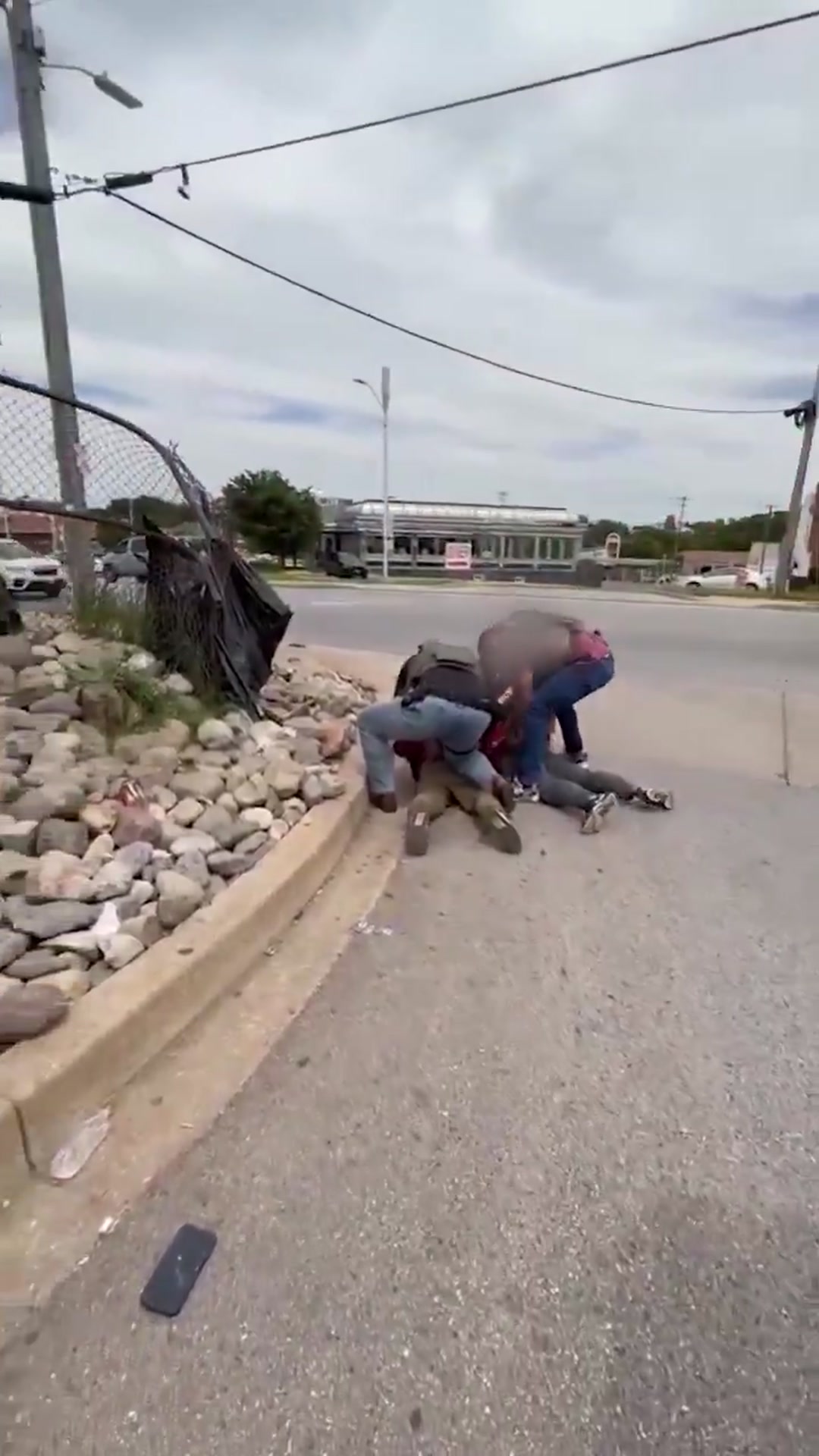
The visual sequence moves in the way these scenes often do. First comes proximity: an agent steps into frame and closes the distance in a single motion. Then comes contact: the subject is driven downward, his upper body folding toward the stones while a second person leans in to keep him from rolling free. Finally comes the hold, a period of pressure during which the shouting continues and the camera circles for a better angle. The frames show the subject in jeans and a dark shirt, one booted leg extended, his posture fully flattened before the second agent arrives to assist.
A later frame shifts the scene's geometry entirely. The action has moved slightly down the curb, near a pole bearing a white sign with parking restrictions and a yellow caution placard. A single agent in a vest with large lettering across the back now controls a man who is pressed chest-down into the rocks, his gray shirt and reddish cap visible. Scattered on the concrete alongside them are a white smartphone, a sheet of paper, and what appears to be a wrapper, small artifacts that hint at how abruptly the encounter began. Beyond the rocks, a dark pickup truck sits parked under the same overcast sky.
That later image is calmer than the first burst of footage, but it carries its own weight. The struggle has narrowed to a single agent and a single subject, suggesting that the initial flurry has been divided into individual apprehensions. The sign on the pole, the solar-powered device mounted above it, and the chain-link fence all place the moment in a specific, unglamorous pocket of the city, a place where people park and walk and where the ordinary machinery of commerce keeps running in the background.
Core Questions and Unresolved Issues
- What specific information did the public tip contain, and how was it verified before enforcement units moved in?
- Were all five arrests captured on camera, or does the footage show only one phase of the operation?
- What legal status and charges apply to the individuals detained, and what happens to them next?
The release of the clip also raises questions about how enforcement actions are narrated to the public. The announcement frames the operation as a direct success of citizen reporting, a message designed to encourage more calls. Advocates of such programs argue that public cooperation helps authorities address serious violations and removes dangerous individuals from communities. Critics counter that tips can be inaccurate, motivated by personal disputes, or shaped by bias, and that the resulting encounters can escalate before any facts are established. The video does not resolve that debate; it captures only the physical moment when a tip converts into hands-on contact on a concrete curb.

What remains visible is the raw choreography of a takedown in a public place. The shouts, the rocks, the discarded phone, and the trucks rolling past all sit in the same frame, a collision of routine city life and sudden enforcement. The man on the ground cannot be seen clearly enough to read his face in most frames, and the agents are anonymous behind vests and caps. The clip offers action without explanation, and explanation is precisely what viewers are left to seek elsewhere.
For the people who live and work near that stretch of Baltimore, the scene is a reminder that a phone call can produce a visible and immediate consequence. For everyone else, it is a brief, jarring window into an operation that began with a tip and ended with handcuffs on the curb. The full outcome, the charges, and the identities remain outside the frame, documented in records that the footage never shows.
What should the public be told when a tip-driven operation plays out in full view of passing traffic?