Confederate Flag Driver Confronted Over Controversial Car Art
WATCH: On-scene video documentation is embedded below →
LISTEN TO THIS ARTICLE
Audio Narration • English (US)
Confederate Flag Driver Confronted Over Controversial Vehicle Art
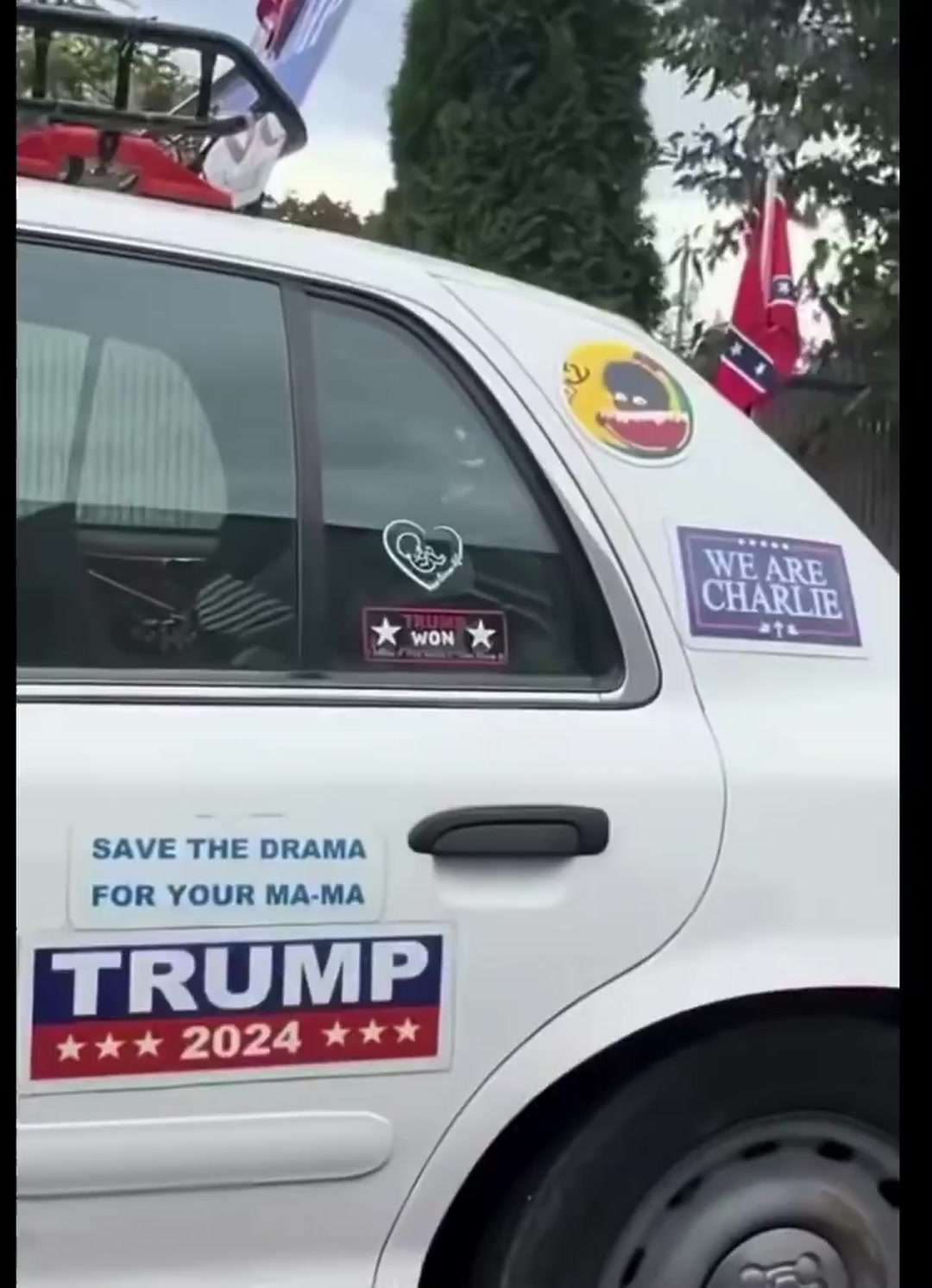
A white sedan covered in political and Confederate imagery became the center of a fierce sidewalk confrontation this week, as a pedestrian challenged the driver over the messages displayed on his vehicle and his driving behavior. The encounter, captured on video and shared by X user Suzie Rizzio, escalated into a tense debate about history, identity, and the meaning of the symbols being waved openly at passersby.
- A white sedan was recorded driving through town while displaying multiple Confederate flags and a variety of decals.
- The driver, an older white man wearing a yellow cap, was seen holding a Confederate battle flag out of his window during the encounter.
- A pedestrian confronted the driver, accusing him of impeding traffic and promoting racist imagery.
- The vehicle featured a decal of a Black child eating watermelon, which the driver defended as "cultural art."
- The confrontation included a heated exchange about the Confederate flag's historical meaning and the political figures depicted on the car.

The footage opens with a clear view of the white sedan, which appears to be an older model with a roof rack. Even before the driver speaks, the vehicle itself functions as a rolling billboard of controversial symbols. Multiple Confederate flags are mounted or held from the windows, and the body of the car is plastered with decals, including a large pink circle reading "DIXIE" and a prominent "TRUMP 2024" sticker. A bumper sticker reads "SAVE THE DRAMA FOR YOUR MA-MA," adding a jarring, casual tone to the otherwise inflammatory display.
The Confrontation Begins on the Street
As the camera rolls, a pedestrian approaches the vehicle and directly questions the driver about his motivations. The exchange is immediate and raw. The pedestrian asks the driver why he supports slavery and racism and why he feels entitled to drive around town impeding traffic. The driver does not back down. Instead, he leans out of his window and begins to defend the imagery on his car, offering a historical argument to justify the Confederate flag.
"A confederate flag, which symbolized slavery? No, you went to the wrong school," the driver says, pushing back against the pedestrian's accusation.
The driver then pivots to a personal defense, mentioning that his wife is a West Indian. This detail is used as a shield against the accusation of racism, a common rhetorical tactic in these types of public disputes. The pedestrian responds by pointing out that having a family member of a different background does not negate the harmful nature of the symbols being displayed.
A Heated Debate Over History and Meaning
The confrontation deepens as the two men debate the nuances of the driver's beliefs. The driver invokes his education, stating he attended a Catholic school where he was taught that Africans were "assimilating" and "loved this country." He claims that the symbol on his flag is actually the "St. Andrew's cross," attempting to reframe the symbol away from its association with the Confederacy. The pedestrian pushes back, asking why the driver feels the need to display a symbol that causes such pain and division.
The conversation also turns to the other decals on the car, specifically the images of political figures and the drawing of a Black child eating watermelon. The driver defends the image, calling it "cultural art" that represents "the south." This defense underscores the deep disconnect between the driver's perception of his display and the harm it causes to the community members who see it. The pedestrian questions the connection between the driver's political affiliations and the racist imagery.
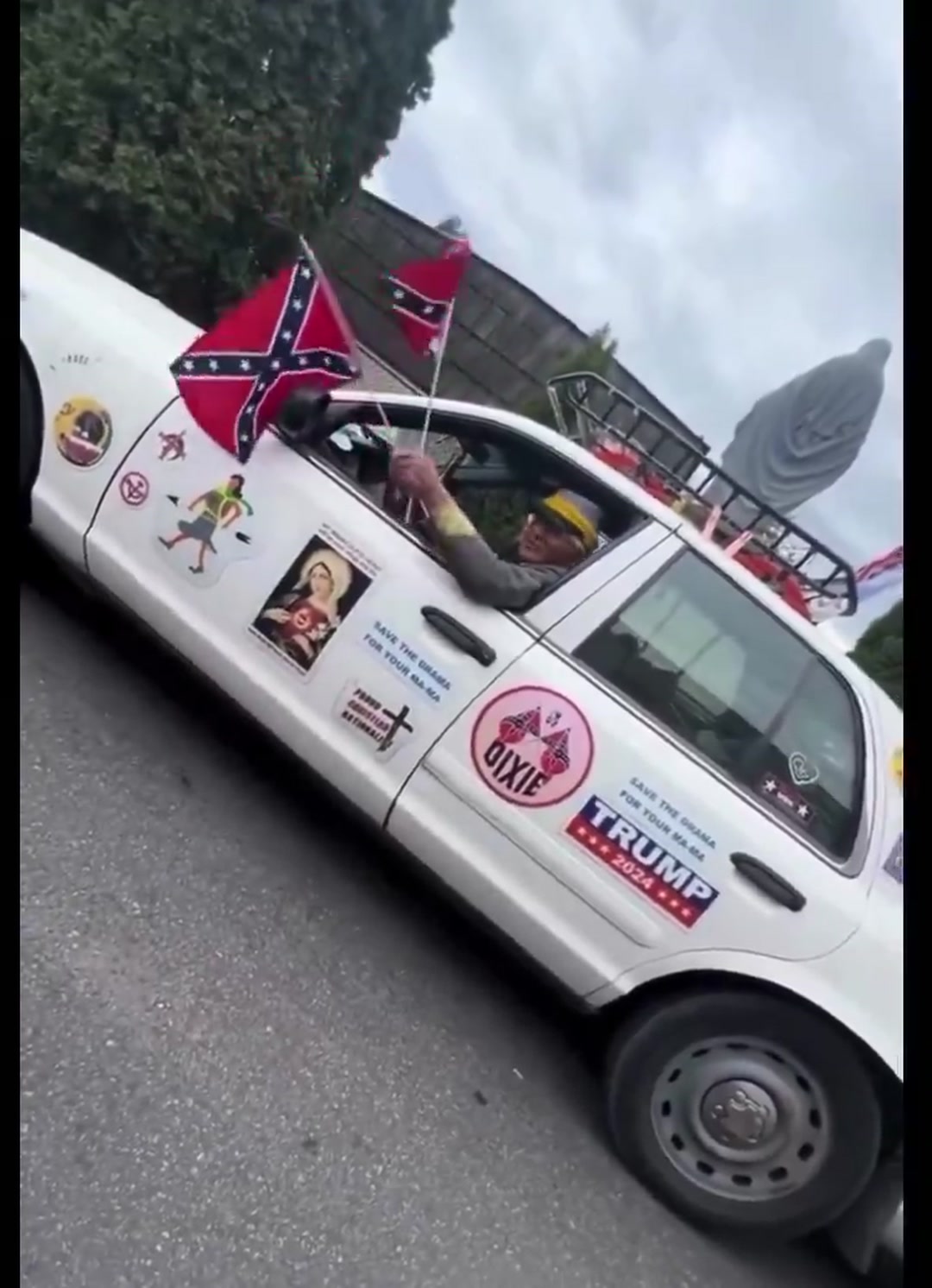

"Why do you have a black child eating a watermelon on your car right there?" the pedestrian asks, pressing the driver on the specific, racially charged nature of the image.
The Driver's Defense and the Core Questions
The driver repeats his defense that the imagery is "cultural art" and that it encapsulates what "the south is all about." He does not show any sign of remorse or acknowledgment that the display might be offensive. The pedestrian continues to challenge him, asking why he would support a "racist pedophile in office" and questioning the impact of driving a vehicle like this through a community.
Read more:
Read more: Federal Agents Form Line at Paramount Home Depot →
The exchange highlights a volatile modern reality where political expression, historical symbols, and public behavior collide. The driver uses the street as his stage, forcing an audience on anyone in traffic. The pedestrian, meanwhile, steps into the role of an informal enforcer of community standards, demanding accountability for the public display.
Recorded Observations from the Scene
| Incident Parameter | Recorded Observation / Field Evidence |
|---|---|
| Vehicle Description | White sedan with roof rack and multiple decals |
| Visible Flags | Multiple Confederate flags waved from the window |
| Driver Appearance | Older white man wearing a yellow cap |
| Key Decal 1 | "TRUMP 2024" sticker on the rear side |
| Key Decal 2 | Pink circle reading "DIXIE" |
| Key Decal 3 | Image of a Black child eating watermelon |
The confrontation was not just about a single moment; it was a reflection of the ongoing tension around public displays of controversial symbols. The video captures the raw, unfiltered reactions of both individuals. The driver clearly believes he is exercising a right to free expression, while the pedestrian views the display as a deliberate provocation and a form of harassment.
Core Questions and Unresolved Issues
- What legal protections exist for drivers who display offensive symbols on their private vehicles, and where is the line drawn when it impedes traffic?
- How should communities respond to public displays of racist imagery without escalating the situation to violence?
- Does the driver's claim of "cultural art" hold any weight in the contemporary debate over historical symbols in the American South?
The footage ends with the driver continuing to justify his position and the pedestrian walking away, leaving the viewer to ponder the deeper issues at play. The white sedan remains a fixture of the town's landscape, a moving symbol of the unresolved conflicts that still simmer beneath the surface of daily life.

"The south, you gotta have a pizza now," the driver says, his words trailing off as the conversation reaches its peak.
What do you think is the right way to handle a situation like this when you encounter it in your own neighborhood?