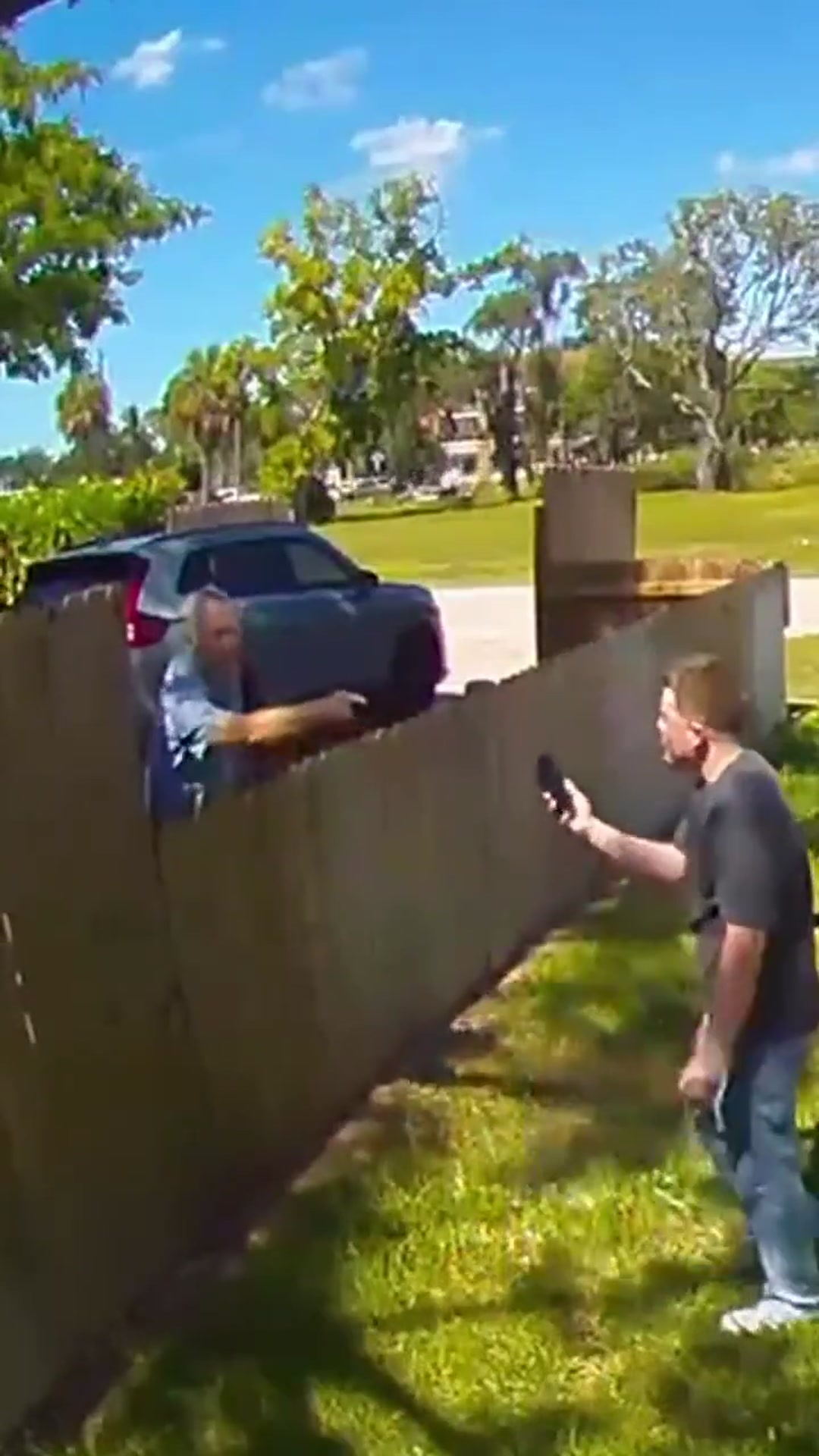
Body Cam: Two Standoffs, Two Weapons, Two Outcomes
WATCH: On-scene video documentation is embedded below →
LISTEN TO THIS ARTICLE
Audio Narration • English (US)
From Welfare Check to Point-Blank Standoff on an LA Sidewalk
A 911 call from a worried mother in Orlando and a witness report of a gun on a Los Angeles street set two separate law enforcement agencies on a collision course with men in crisis, each encounter ending in gunfire and each leaving investigators to reconstruct what a few seconds of confusion cost.
- Orange County deputies responded to a June 7, 2025, call from the mother of a 30-year-old diagnosed schizophrenic man who had stopped taking medication.
- Deputies were told the man was inside a bedroom with a knife, and they spent several minutes trying to coax him out peacefully before he charged.
- In a second case on June 5, 2025, Los Angeles officers confronted a man witnesses said was pointing a sawed-off style weapon at passing cars.
- The Los Angeles suspect was struck by gunfire, taken into custody, and later hospitalized; the weapon turned out to be a modified metal pipe.
- No officers or bystanders were injured in the Los Angeles encounter, and the case remains under investigation.
A Mother's Call and a Bedroom Door in Orlando
The sequence in Orlando began with a mother's voice on a 911 line. She told Orange County deputies that her 30-year-old son, Terry Washington Jr., had not been taking his medication and was behaving erratically in the street. The transcript of the responding call captures the exchange: "He's been diagnosed as a schizophrenic. Okay. Where's your son at right now?"
Before deputies moved toward the home at 203 North Ortman Drive around 3:30 p.m., they met with the mother, who explained that all knives had already been removed from the residence as a safety measure. That detail becomes one of the most consequential in the entire record, because it establishes what the family believed was true about the house.
Inside, deputies spoke with Washington's father. He told them his son was in a bedroom and armed with a knife. The transcription preserves the father's confusion in the moment: "I don't know. He's got a knife or something. He has a knife. He has a knife? I think he took it from me. This morning."
The deputies then settled into a negotiation posture. The audio captures their repeated, patient appeals: "Let's come on out and talk to us, buddy. Got no trouble. TJ, we just want to talk to you. We just want to talk to you. TJ. Can you come out and talk to us?" For several minutes, the approach was verbal, deliberate, and calm.
The Charge, the Struggle, and the Deputy's Head
The calm broke without warning. According to the account, Washington burst from the room and charged at a deputy with the knife in hand. What followed was a close-quarters struggle in which he grabbed at the deputy's firearm while still swinging the blade.
That combination, a drawn knife plus a hand on the service weapon, left the deputy with what the narration describes as little choice but to fire. He fired his service weapon and struck Washington. Deputies then immediately provided medical aid until paramedics arrived.
Washington was transported to a hospital, where he was pronounced deceased. The deputy involved was treated for head lacerations and is expected to make a full recovery.
The record does not contain a statement from the family, a department press conference transcript, or a timeline of the internal review. What remains documented is the call, the negotiation, the charge, and the aftermath.
A Pipe on Washington Boulevard and a Call of "Don't Move"
Two days earlier and roughly 2,500 miles west, the Los Angeles Police Department's Olympic Patrol Division received reports of an assault with a deadly weapon near Western Avenue and Washington Boulevard. Witnesses described a man pointing what appeared to be a mini shotgun at passing vehicles.
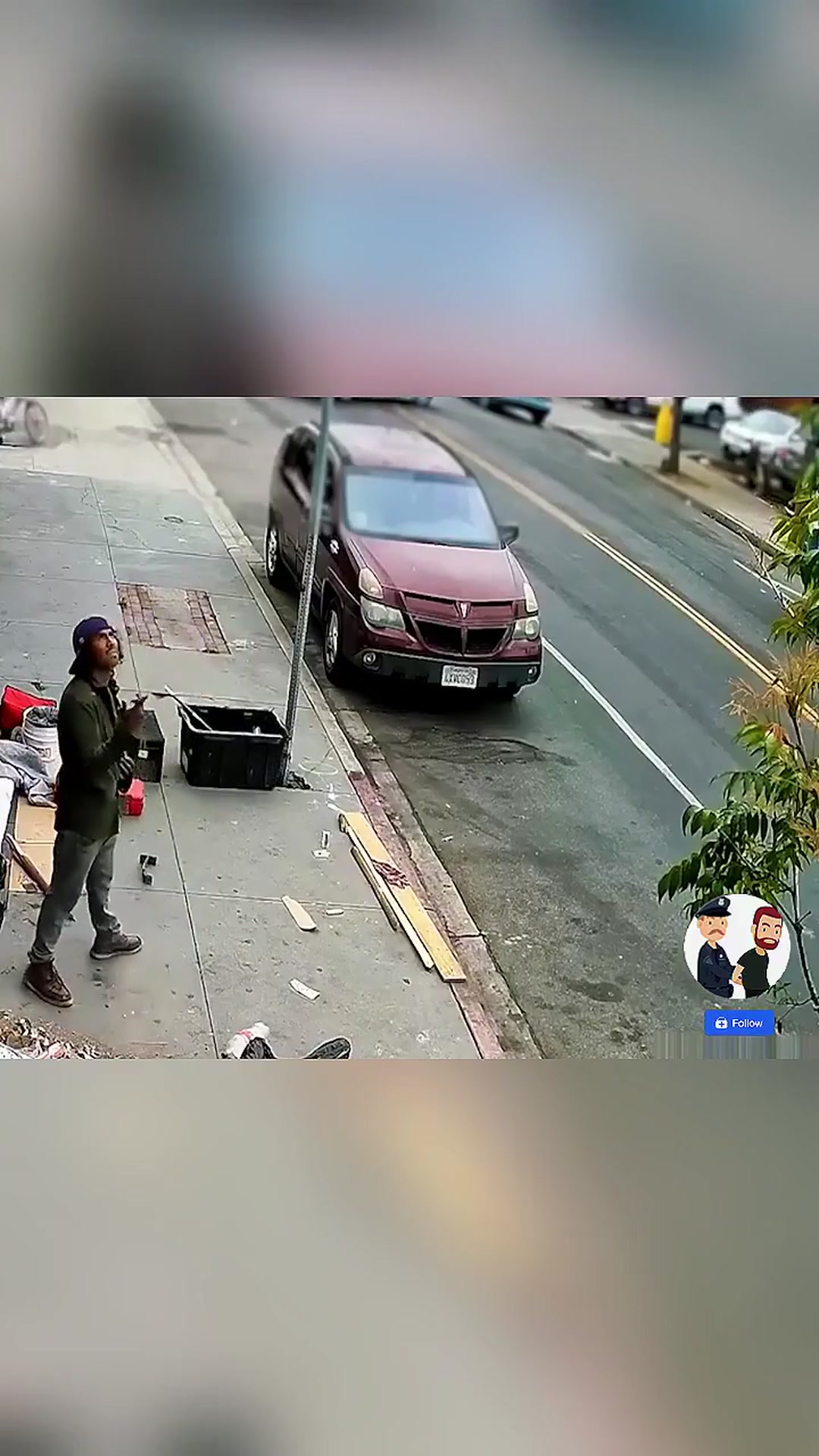
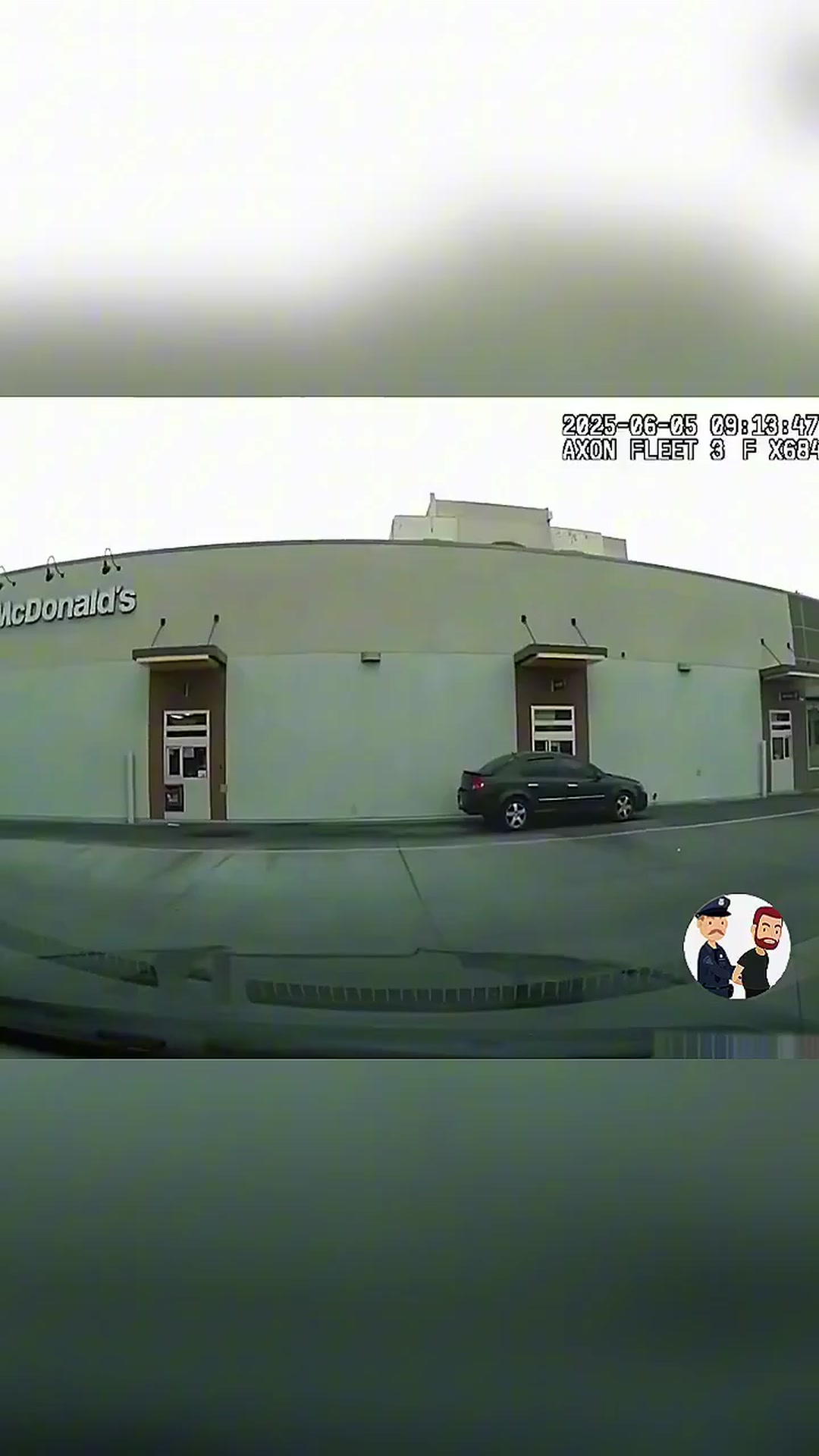
When officers arrived around 9:10 a.m. on June 5, 2025, they spotted the suspect, later identified as 37-year-old Roberto Gonzalez Flores, standing on the sidewalk of 18th Street with an object resembling a sawed-off shotgun. Body camera footage from the scene shows a glimpse of a sidewalk, a red pickup parked at the curb, and a man in a dark jacket standing near a dumpster.
Officers issued repeated verbal commands. Flores refused to comply. He crossed the street and attempted to conceal the object in his waistband. Moments later, he pulled it back out and pointed it directly at the officers.
"Don't move!"
The command appears as on-screen text in the footage at the 09:20:34 mark. Faced with a weapon aimed at them, officers discharged their weapons and struck Flores. He was quickly taken into custody and transported by the Los Angeles Fire Department to a local hospital for treatment of his injuries.

What the Weapon Turned Out to Be
Investigators later confirmed that the weapon was not a firearm, but a metal pipe modified to look like a shotgun. The fake weapon was collected as evidence. No officers or community members were harmed during the incident, and the case remains under investigation.
That single fact reshapes the entire encounter. From the officers' vantage point on that sidewalk, the object answered the only question that mattered in the moment: it looked like a shotgun, it was pointed at them, and a man had already refused repeated commands. From the investigator's vantage point afterward, it was a pipe.
The footage and timestamp overlays in the source material chart the geography of the two responses: a body camera view of a ceiling and doorframe at 16:19:36 in Orlando, a patrol vehicle's dash view near a McDonald's, a body camera pan across a shopping center parking lot at 09:14:46 in Los Angeles, and the 09:20:34 "Don't move!" frame from an 18th Street sidewalk.
Read more:
Read more: Brooklyn Arrest Chaos: Crowd Confronts NYPD on Miller Ave →
| Incident Parameter | Recorded Observation / Field Evidence |
|---|---|
| Orlando call origin | 911 call from the mother reporting erratic behavior in the street |
| Orlando respondent | Orange County deputies, June 7, 2025, around 3:30 p.m. |
| Orlando location | 203 North Ortman Drive |
| Orlando initial weapon report | Father stated his son was inside a bedroom with a knife |
| Orlando outcome | Suspect struck by gunfire, hospitalized, pronounced deceased |
| Los Angeles call origin | Witness reports of a man pointing a weapon at passing vehicles |
| Los Angeles respondent | Olympic Patrol Division, June 5, 2025, around 9:10 a.m. |
| Los Angeles location | Western Avenue and Washington Boulevard, sidewalk of 18th Street |
| Los Angeles weapon finding | Metal pipe modified to resemble a shotgun, collected as evidence |

Core Questions and Unresolved Issues
- How did a knife remain accessible in a residence where the family had already removed all knives for safety?
- What training or protocol governed the decision to approach a bedroom door rather than hold a perimeter while a crisis team was summoned?
- What standard do officers apply when a modified object is visually indistinguishable from a firearm at close range?
Both cases sit in the same narrow corridor of policing, where a person in crisis and an officer with a duty to respond meet in a space measured in seconds. In Orlando, the family had already tried to reduce the risk by clearing the home. In Los Angeles, a bystander's call pulled officers toward a man holding something that looked like a shotgun and was not. The record documents what happened next in each case, and in each case the review is still catching up to the footage.
What should a department's first move be when a family says the weapons are already gone?