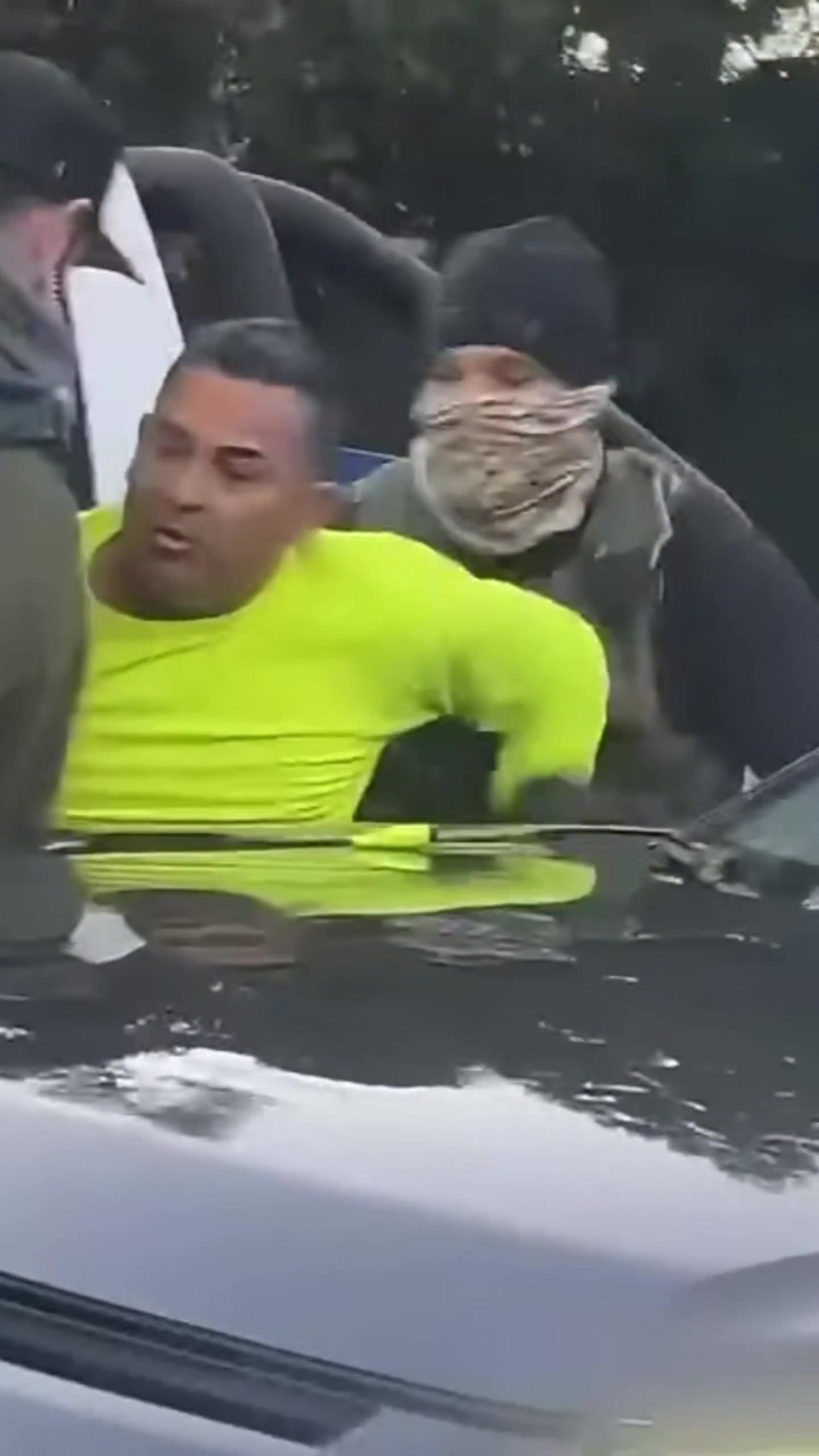
Las Vegas DUI Stop Ends in Fatal Body Camera Shooting
WATCH: On-scene video documentation is embedded below →
LISTEN TO THIS ARTICLE
Audio Narration • English (US)
Las Vegas DUI Stop Erupts Into Fatal Body Camera Shooting
A routine traffic investigation on a sunlit desert road outside Las Vegas escalates into a lethal confrontation in seconds, as body camera footage captures the moment a 21-year-old impaired driver refuses a sobriety test, sprints toward a concealed firearm, and pulls the trigger on a veteran officer.
- A 21-year-old male suspect is stopped by Las Vegas Metropolitan Police Department traffic officers after other drivers report erratic behavior.
- Officers Kenneth Pillette and Chad Betts question the man about an object allegedly thrown from his truck before requesting a field sobriety test.
- The suspect refuses the test, denies impairment, and repeatedly challenges the officers' authority before breaking away toward the roadside.
- Body camera footage shows the man retrieving a firearm and aiming it directly at an officer, with one round reportedly jamming in the chamber.
- Six shots are fired by the two officers, striking the suspect in the chest and ending the incident at the scene.
A Desert Roadside Stop With Two Competing Stories
The encounter begins under a wide, cloudless sky on the edge of the Mojave, where a white pickup truck sits parked on a gravel shoulder. Officer Kenneth Pillette, a 20-year veteran of the department, approaches the driver with a specific question: what, exactly, was thrown into the back of another vehicle that has since left the area? The young man, wearing a black hoodie with a yellow bridge graphic and a backward baseball cap, denies the accusation outright. He swears on his life that he never took anything from his truck and never transferred it to another vehicle.
The exchange is captured in the first frame of the released footage, which shows the suspect standing beside the open driver's side door with a bottle in one hand and a controlled, almost casual posture. The timestamp reads 14:54:32. Officer Pillette does not immediately escalate. He asks the question again, gives the man room to explain, and then pivots to a standard request: would the driver be willing to perform a field sobriety test? The answer is a flat no. When the officer asks for clarification, the man repeats it, adding that he is simply driving home from work and is not impaired.
The Refusal, the Run, and the Reach for a Weapon
The footage tracks the escalation in a matter of minutes. Officer Chad Betts, a 19-year veteran, is heard asking the suspect to turn around and place his hands behind his back. The suspect does not comply. He questions the arrest, asks what light he was told to turn off, and insists he does not need to do anything the officers are asking. The back-and-forth is tense but not yet violent. Then the suspect moves.
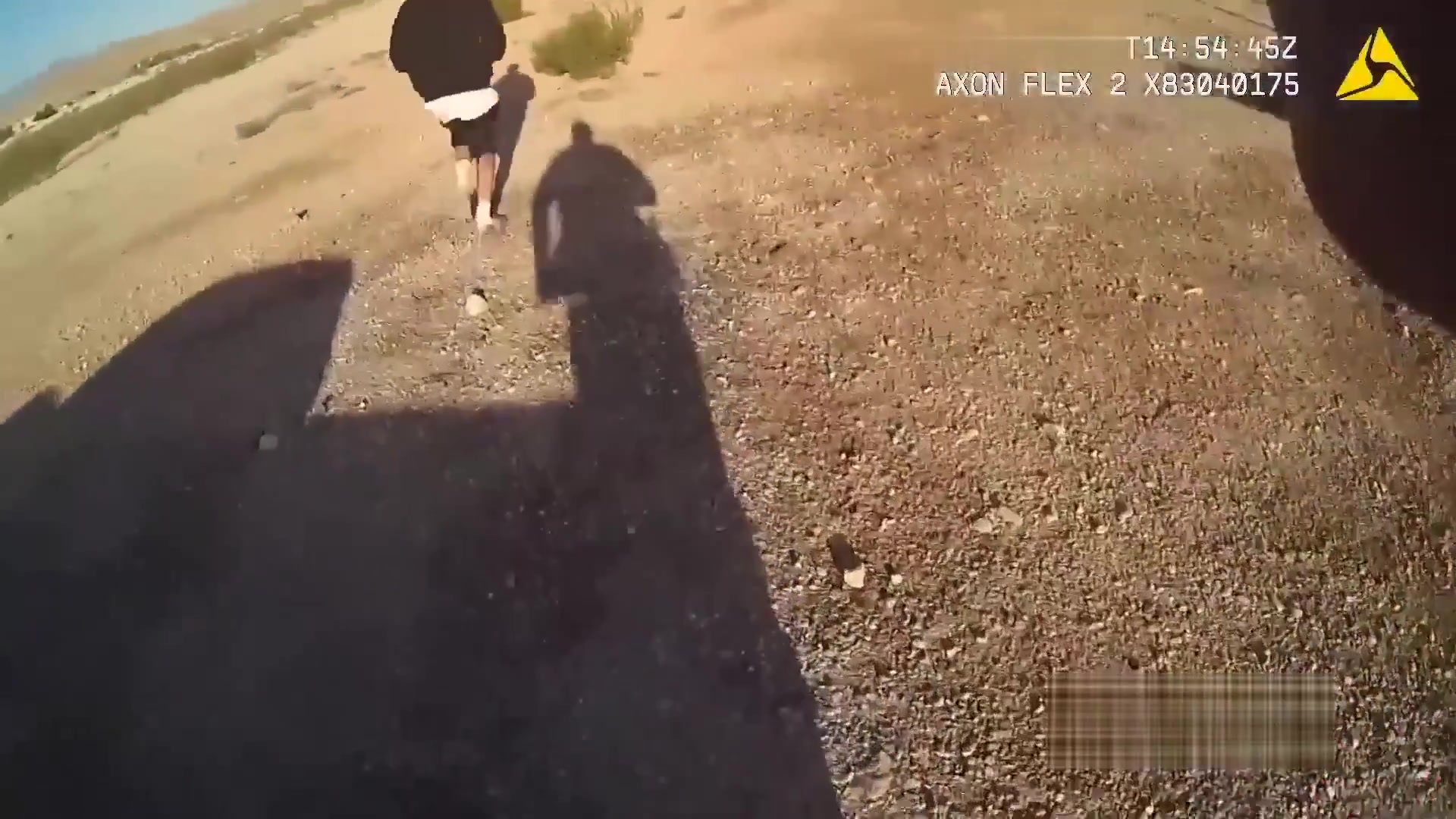
He breaks away from the truck and runs toward the open desert, his shadow stretching long across the gravel in the second frame. The camera view from one of the officers gives chase, the ground blurring beneath the lens as the suspect heads for a nearby bush. According to the official account, the man had left a firearm in that spot before officers arrived. He reaches it, picks it up, and turns back toward the pursuing officer.
Read more:
Read more: Woman’s Parking Rage Meltdown Caught on Camera →

The Moment the Trigger Is Pulled
The third frame is the pivot point of the entire incident. It shows a hand raising a compact pistol, the barrel pointed directly toward the officer's position. The timestamp reads 14:54:58. The suspect pulls the trigger. The round reportedly jammed in the chamber, preventing a second shot from being fired. It is a malfunction that would determine the next several seconds.
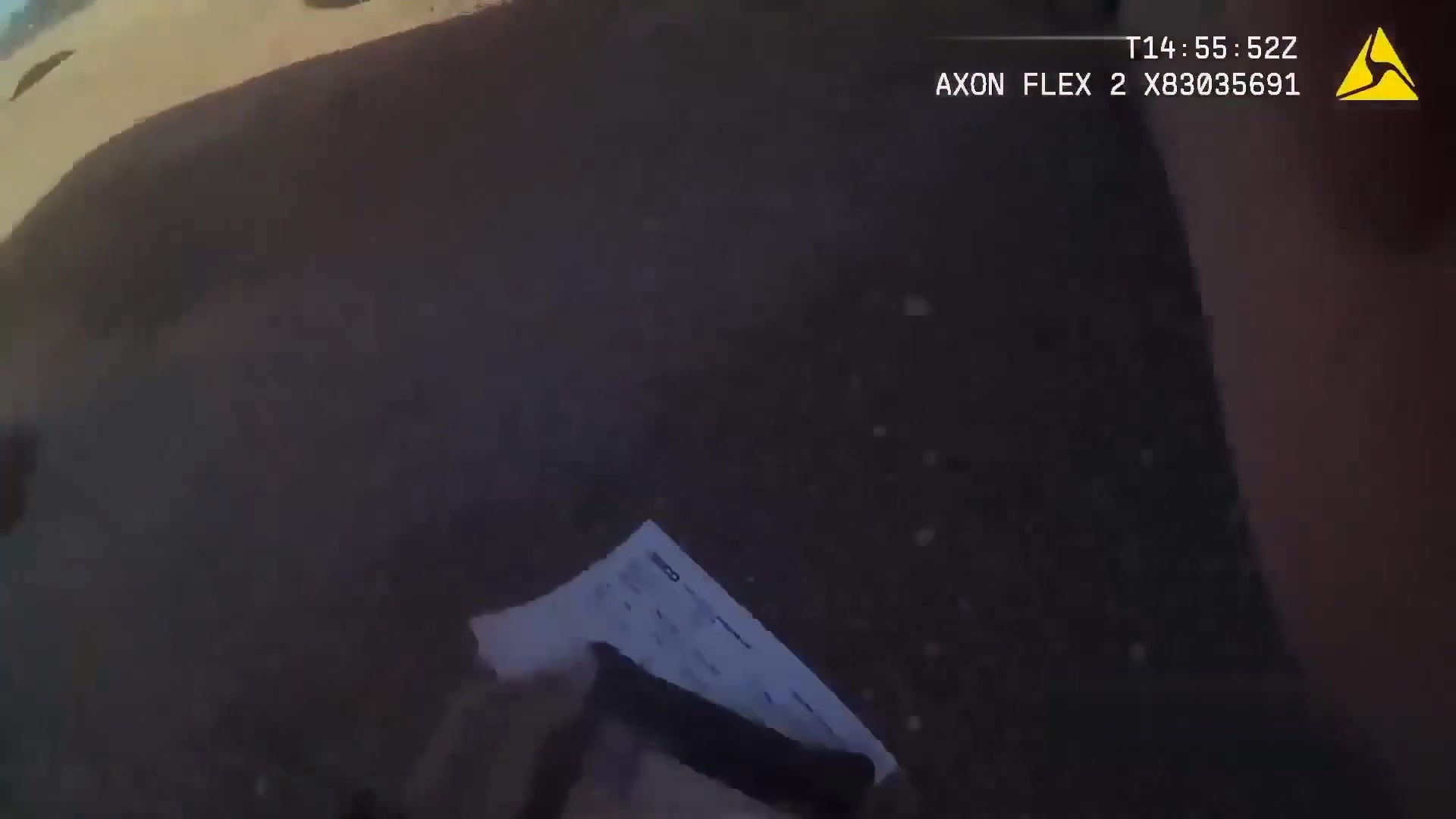
Almost simultaneously, both officers respond. Officer Pillette and Officer Betts fire a total of six rounds, according to the department's statement. The suspect is struck in the chest and falls. The video captures the immediate aftermath in the fourth frame, where the suspect is seen standing near a silver Kia Soul at the edge of the road, now under control of a different camera angle, before the scene is secured. The entire exchange, from the initial request for a sobriety test to the final shot, unfolds in roughly ninety seconds.
The audio track picks up the frantic radio traffic that follows: "Control, shots fired. Control, shots fired. General shots fired." There is no extended exchange of gunfire, no prolonged standoff. The incident is over almost as quickly as it began.
"Control, shots fired. Control, shots fired. General shots fired." — Officer radio transmission captured on body camera audio.
Mental Health Questions and a Community Divided
Public reaction to the footage has split sharply along familiar lines. Some viewers have focused on the officers' restraint, noting that only six rounds were fired and that neither officer continued firing after the threat was neutralized. Others have raised questions about whether the suspect's behavior pointed to a deeper crisis. A relative later told the Las Vegas Review-Journal that the man was suffering from serious mental health issues and that the family never saw it coming. The Review-Journal also reported that the man was described by a cousin as "detached from reality."
Those statements do not appear in the body camera footage itself, but they add a dimension to the case that the raw video cannot capture. The department has characterized the incident as an apparent suicide-by-cop scenario, though that framing remains a characterization rather than a formal finding. No conclusions have been announced regarding any internal or external review of the officers' use of force.

What the Recorded Evidence Shows
The table below summarizes the documented facts drawn from the body camera footage and the department's public statements. No additional details have been inferred.
| Incident Parameter | Observation at the Scene |
|---|---|
| Suspect age and identity | 21-year-old Kenneth Busse, identified by the department |
| Officers on scene | Kenneth Pillette, 20-year veteran; Chad Betts, 19-year veteran |
| Initial allegation | Suspect accused of throwing an object into another truck |
| Suspect's response | Denied the allegation and refused a field sobriety test |
| Weapon retrieval | Suspect ran to a nearby bush and picked up a firearm |
| First shot fired | Suspect pointed the weapon and fired at Betts; the round jammed |
| Officer response | Six total rounds fired by Pillette and Betts |
| Outcome | Suspect struck in the chest and pronounced deceased at the scene |
Core Questions and Unresolved Issues
- What led the suspect to leave a firearm in the roadside brush before the officers arrived, and does that detail change how the encounter is evaluated?
- How will the department weigh the suspect's documented mental health history against the immediate threat captured on camera?
- What review process will determine whether the officers' use of force complied with department policy, and when will its findings be made public?
The footage ends without answers to those questions. It shows only the ninety seconds that were recorded, the requests that were made, the refusal that followed, and the sudden sprint into the desert that turned a traffic investigation into a fatal shooting.
What should a traffic stop look like when an officer suspects impairment but the driver refuses every test, and what responsibility do departments carry when a person in crisis is armed?