Chains, Confrontation, and a Driveway Standoff: The Morning a Tow Truck Picked the Wrong House
She stepped outside with her coffee still warm. A stranger in a reflective vest was already hooking up her husband’s truck. What happened in the next eleven minutes would test every boundary between private property and commercial authority.
A homeowner confronted a tow truck operator actively rigging a vehicle on her private driveway before dawn. The driver claimed a work order authorized the removal. She claimed no one had the right to touch her property. What followed was a tense, recorded standoff over authorization, boundaries, and the exact moment a private driveway stops being private.
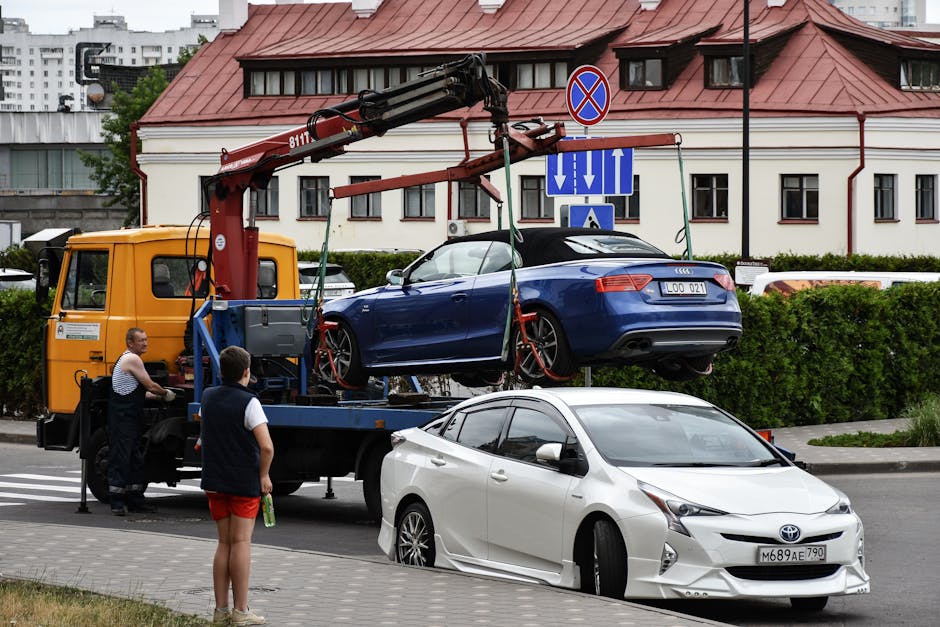
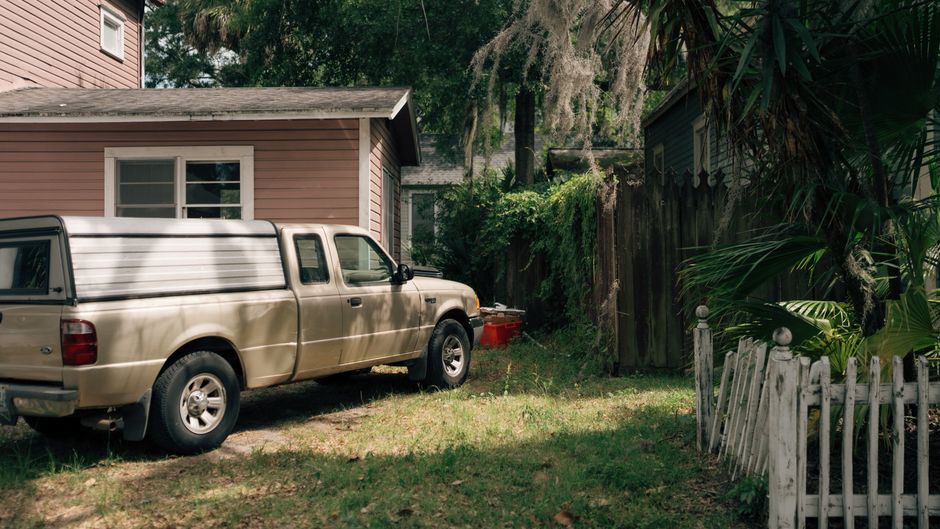
The sound that woke her wasn’t the garbage truck. It was the low hydraulic whine of a winch spooling cable across concrete. By the time she reached the front door, a man in a neon vest was crouched beside her husband’s pickup, threading a hook beneath the rear axle. The driveway was hers. The truck was hers. Nobody had knocked.
She didn’t scream. She didn’t call anyone. She walked straight toward the rig with her phone already recording, and the driver looked up like he’d been caught mid-sentence in a conversation he never wanted to have.
What happened over the next eleven minutes would become the kind of footage neighbors forward to each other at midnight, the kind that makes every homeowner on the block walk outside and stare at their own driveway like it might betray them.
The 6:30 AM Confrontation: A Quiet Morning Shattered at the Driveway Gate
The first exchange was almost polite. Almost. She asked what he was doing. He said he had a work order. She asked to see it. He gestured vaguely toward the cab of his truck and kept working the winch.
That was the moment the temperature dropped. Not because he was rude, but because he didn’t stop. The cable kept tightening. The hook kept biting. Her husband’s truck rocked slightly on its suspension, and something in her chest tightened with it.
“You need to unhook that right now,” she said, stepping between the tow truck and the pickup. Not shouting. Not hysterical. Just planted, like a fence post that had been there longer than the driveway itself.
“I don’t care what paperwork you think you have. This is my property, and you did not knock on my door.”
The driver straightened up for the first time. He was younger than his voice had suggested, maybe late twenties, with the flat, rehearsed calm of someone who had been yelled at before and learned to absorb it. He told her the vehicle had been flagged. He told her he was just doing his job. He told her, twice, that she needed to step back.
She didn’t step back. She stepped closer, angling her phone so the license plate of his truck, the hook on her bumper, and his face were all in frame at once. That detail, more than anything she said, changed the tone of the encounter.
He looked at the phone. He looked at her. He looked at the cable still taut between them like a question nobody wanted to answer.
Neighbors later said they heard raised voices but no shouting. What they didn’t hear was the part that mattered: the long, grinding silence when both of them realized neither was going to move first.
- What actually authorizes a tow operator to enter a private driveway without homeowner consent?
- What do municipal codes require before a vehicle can be hooked and removed from private property?
- How does a standoff like this end when neither side has the legal high ground in the moment?

Where Authority Ends: The Contested Line Between Private Property and Commercial Orders
Here’s what most homeowners don’t realize until it happens to them: the rules governing towing from private property are not uniform. They shift from state to state, city to city, and sometimes block to block depending on whether a property sits inside an HOA, a commercial zone, or a plain residential tract.
In many jurisdictions, a tow operator cannot legally hook a vehicle on private property without either the property owner’s direct authorization or a posted sign meeting specific size, placement, and language requirements. In others, a standing agreement between a property manager and a towing company is enough to trigger removal, even if the vehicle’s owner never received a warning.
That single provision is what turned this driveway into a battlefield. The driver believed he was within his rights because he had a work order in the cab. The homeowner believed she was within hers because the truck was on her land and no one had asked permission.
Both of them were partially right. That’s what made it dangerous.
Municipal codes in many cities also require tow operators to photograph the vehicle before hookup, document the reason for removal, and in some cases notify local police dispatch before the tow begins. When those steps are skipped, or when they happen so fast that the homeowner never gets a chance to object, the entire operation slides from “enforcement” into something closer to “taking.”
The driver in this case had not photographed anything. He had not knocked. He had not called anyone. He had simply pulled up, dropped the hook, and started winching. Whether that was negligence, laziness, or standard practice for his company is a question his dispatcher would later have to answer.
| INCIDENT PARAMETER | RECORDED DETAILS / ON-SCENE OBSERVATION |
|---|---|
| Location & Setting | Private Residential Driveway, Early Morning Hours |
| Primary Issue in Dispute | Authorization to Tow & Private Property Boundary Rights |
| Available Evidence | Homeowner Cellphone Video & Eyewitness Neighbor Accounts |
| Regulatory Authority | Local Municipal Towing Codes & State Property Statutes |
| Documentation Status | No Pre-Hookup Photographs or On-Site Authorization Presented |
Similar confrontations across the country are exposing how thin the line is between private property rights and commercial enforcement authority. Explore how related neighborhood disputes unfolded →
The Stand-Off’s Turning Point: Why the Chains Were Finally Released
For nearly four minutes, neither of them moved. The winch was silent. The cable was still hooked. The phone was still recording. And somewhere in that pause, the driver made a calculation that had nothing to do with the law and everything to do with self-preservation.
He asked her to stop recording. She said no. He said he’d call his dispatcher. She said call whoever you want. He said the truck had been flagged as abandoned. She laughed, not cruelly, but with the exhausted disbelief of someone hearing a lie so thin it barely qualified as one.
The truck was not abandoned. It was registered. It was insured. It had been parked in the same spot for three years. The idea that it had suddenly become “abandoned” overnight was not just wrong. It was insulting.
“You can call your boss. You can call the police. But that hook comes off my truck before either of them picks up.”
What actually ended the standoff was not her argument. It was the second neighbor who walked over. Then a third. By the time the driver’s phone connected to his dispatcher, there were four people standing on the lawn, none of them shouting, all of them watching.
That kind of quiet, collective attention does something to a person who is used to operating alone and unobserved. It reframes the situation. It transforms a private transaction into a public event. And for a tow operator whose entire business model depends on speed and invisibility, that is the worst possible outcome.
He unhooked the cable. He coiled it slowly, deliberately, like he was trying to reclaim some dignity from the moment. He told her she’d be hearing from his company. She told him she’d be waiting. He drove off without another word.
The truck stayed in the driveway. The neighbors went back inside. The coffee, by then, was cold.
What lingers, though, is not the confrontation itself. It’s the fact that it happened at all. A stranger with a hook and a clipboard decided, on his own, that a family’s vehicle was fair game. And the only thing standing between that vehicle and a long, expensive trip to an impound lot was a woman who happened to be awake, happened to be recording, and happened to refuse to step back.
Most people aren’t that lucky. Most people are already at work when the truck pulls up. Most driveways don’t have a neighbor willing to walk over. And most tow operators know it.
That’s the part nobody wants to think about. Not the shouting. Not the phone footage. The quiet, ordinary vulnerability of a driveway at 6:30 in the morning, when the only thing protecting your property is whether you happen to be standing in front of it.