Justice After the Hook: How Communities Hold Wrongdoers Accountable When Private Power Runs Wild
The True Measure of Justice in Local Disputes Isn’t the Screaming Match on Video — It’s What Happens in the Courtroom, the Claims Office, and the Community That Refuses to Look Away
Imagine pulling into your own parking spot after a twelve-hour shift, only to watch a tow truck driver slide a hook under your bumper while a property representative screams inches from his face. That is the scene playing out on private lots across America right now. And it raises a question most people never think about until it happens to them: after the dust settles and the phone cameras stop recording, who actually pays for the damage?
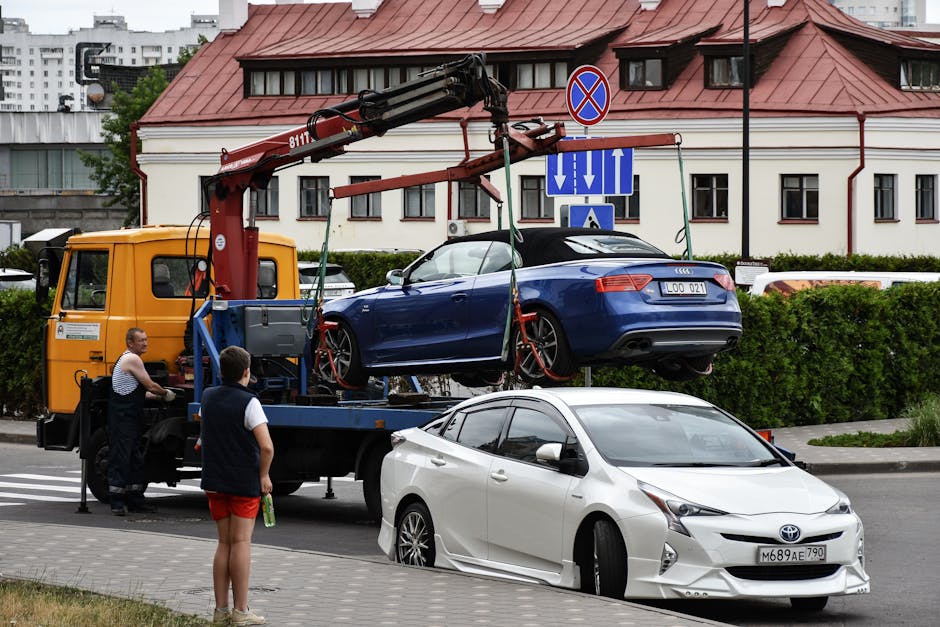
The viral clip shows a property representative in a full-volume meltdown, arms flailing, voice cracking, ordering a tow operator to drop a vehicle he was authorized to remove. The tow driver, calm and methodical, keeps working. He cites his paperwork. He cites the signage. He cites the property owner’s signature on the authorization form.
What the screaming representative does not seem to understand is that the tow operator is not the villain in this story. He is a contractor doing a job the property owner legally requested. The rage is aimed at the wrong target — and that misdirection is exactly why so many Americans lose these disputes before they even begin.
The Legal Precedent: Where Private Rules Clash With State Civil Codes
Here is what most people screaming at tow drivers do not know. In nearly every U.S. state, a property owner has the legal right to remove unauthorized vehicles from private property — provided signage meets specific size, placement, and language requirements under state transportation codes.
That means the tow operator is not acting on a whim. He is acting on a signed contract and a posted notice. If the signage is compliant and the authorization is documented, the tow is lawful. Period.
“The person screaming at the tow driver is almost never the person who actually has legal standing to stop the tow. They are performing for an audience that has already left the building.”
But here is where it gets ugly. If the signage is non-compliant — wrong size, wrong height, missing the required phone number for vehicle recovery — the entire tow can be ruled unlawful. And that is when the financial tables turn violently against the property owner.
- Was the parking signage fully compliant with state civil code requirements at the time of the tow?
- Does the vehicle owner have grounds for a wrongful tow claim and statutory damages?
- What liability falls on the property representative whose conduct was captured on camera?
Wrongful tow claims in many states allow the vehicle owner to recover not just the tow fee and storage costs, but also statutory damages that can run into the thousands. Some states allow double or triple damages. And the property owner — not the tow company — is often the one holding the bag.

Civil Liability & Business Codes: Hidden Legal Risks for Local Venues
The screaming representative in the video may think he won the moment. He did not. Every second of that recorded outburst is now potential evidence in a civil claim.
Under basic tort principles, a property representative who interferes with a lawful tow can be personally exposed to claims of conversion, negligent misrepresentation, or even intentional infliction of emotional distress if the conduct crosses certain lines. That is not theory. That is case law built over decades.
For local businesses, the stakes are even higher. A single viral incident can trigger consumer protection complaints, licensing reviews, and civil suits that drain thousands in legal fees before a single hearing is scheduled.
Community accountability does not require a courtroom. It requires neighbors who document everything, share the records, and refuse to let a screaming match become the final word.
Similar civil confrontations across the country are forcing community leaders and local venues to confront serious liability under state regulations. Explore the full legal breakdown of related incidents →
Consumer Protection & Financial Fallout: What Precedent Does This Set?
So what does justice actually look like after an incident like this? It looks like paperwork. It looks like timestamped photos. It looks like a small claims filing that most people never bother to make because they assume the system is rigged against them.
It is not. State consumer protection divisions handle thousands of wrongful tow complaints every year. Many of them result in refunds, fee reversals, and formal warnings against the property owner. The remedy exists. The question is whether the victim uses it.

For the vehicle owner in this video, the path forward is straightforward. Gather the signage photos. Pull the tow authorization. File the complaint. Document the lost time. The screaming on camera becomes the property owner’s problem, not the victim’s.
For the community watching from the sidelines, the lesson is colder. The system does not correct itself. It corrects when someone decides the humiliation on video is not the end of the story — it is the opening exhibit.
And for the property representative whose voice is now permanently attached to a viral clip? The tow fee he tried to block is the cheapest bill he will ever pay. The next one arrives with a case number attached, and no amount of screaming will make it disappear.