The Hidden Financial Liability Trap: What Every Homeowner Must Know Before Their Next Neighborhood Dispute
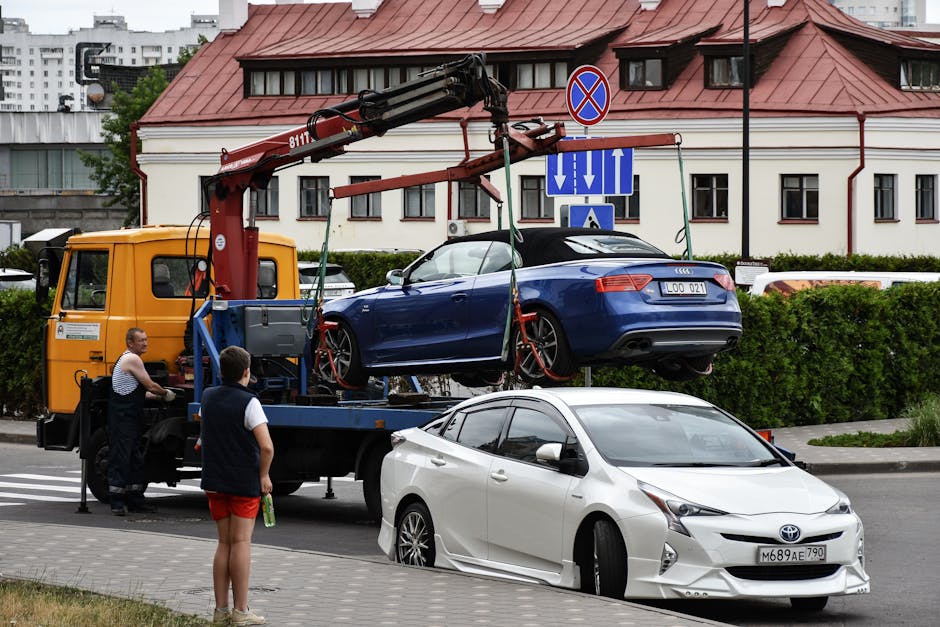
A single parking space, a tow truck, and the terrifying legal reality that could drain your savings faster than you can call a lawyer.
Imagine pulling into your own driveway after a twelve-hour shift, only to find a stranger’s vehicle parked directly in front of your garage. You knock on doors. Nobody answers. You call the number on the windshield. It goes straight to voicemail. Hours pass. Your patience evaporates. So you make a decision that feels perfectly reasonable in the moment. You call a tow company. What happens next is not a simple resolution. It is the beginning of a financial and legal quagmire that most Americans never see coming until they are already drowning in it.
The car gets hooked. The owner appears. Voices raise. Accusations fly. And suddenly, you are not the victim of a parking violation anymore. You are the target of a civil claim that could cost you thousands in legal fees, property damage liability, and court costs. This is not a hypothetical scenario. It is a pattern playing out in driveways, condo complexes, and apartment lots across the country every single week.
The Legal Precedent: Where Private Property Rules Clash With State Civil Codes
Here is what most homeowners do not understand. Your property rights are not absolute. Every state has specific statutes governing vehicle removal, and if you fail to follow them to the letter, you can be held financially liable for wrongful towing, property damage, and even emotional distress claims.
In many jurisdictions, you cannot simply call a tow truck because a car is on your property. You must post specific signage. You must provide written notice. You must give the vehicle owner a reasonable opportunity to move it. Skip any of these steps, and a judge may rule that you acted unlawfully, regardless of how justified your frustration felt in the moment.
The financial exposure does not stop at the tow itself. If the vehicle sustains any damage during removal, the property owner who authorized the tow may be named in a civil suit alongside the towing company. Insurance policies often exclude intentional acts, meaning your homeowner’s policy may refuse to cover the claim entirely.
“People think their property rights are absolute. They are not. The moment you involve a third party to remove someone else’s vehicle, you have entered a regulated legal transaction with specific statutory requirements. Ignorance is not a defense.”
This is where the nightmare deepens. The vehicle owner may claim they were only parked for a few minutes. They may produce receipts, witness statements, or security footage suggesting they had permission. Now it is your word against theirs, and you are the one with the burden of proving you followed every procedural requirement.
- Did the property owner follow state-mandated notice requirements before authorizing the tow?
- Is the homeowner’s insurance policy obligated to cover legal defense costs if a civil claim is filed?
- What financial liability does the vehicle owner face for unauthorized parking on private property?
- Can the tow company be held jointly liable if procedural violations occurred?
Civil Liability and Business Codes: Hidden Legal Risks for Local Venues
The stakes escalate dramatically when the property in question is a business. Shopping centers, restaurants, and apartment complexes face a unique legal minefield. They must balance the rights of paying customers against the rights of vehicle owners, all while complying with a patchwork of state and local regulations that vary wildly from one zip code to the next.
A single improperly authorized tow can trigger a consumer protection investigation. State attorneys general have pursued cases against property managers who engaged in what regulators deemed predatory towing practices. The financial penalties can reach six figures, and the reputational damage can shutter a small business entirely.

For individual homeowners, the risk is equally severe. Many do not realize that their standard homeowner’s insurance policy contains exclusions for intentional acts. Authorizing a tow is considered an intentional act. If a lawsuit follows, the insurance company may deny coverage, leaving the homeowner to fund their own legal defense out of pocket.
Defense costs alone can range from $5,000 to $25,000 before the case even reaches a courtroom. Add potential damages, court fees, and the possibility of a judgment against you, and the total financial exposure can easily exceed the value of the vehicle that started the entire dispute.
Similar civil confrontations across the country are forcing community leaders and local venues to confront serious liability under state regulations. Explore the full legal breakdown of related incidents →
Consumer Protection and Financial Fallout: What Precedent Does This Set?
The legal precedent being established in courts across America is sending a clear message. Property rights do not override statutory procedure. If you want to remove a vehicle from your property, you must follow the law precisely, or you become the defendant in a civil action that could financially devastate you.
Consumer protection attorneys argue that this framework exists to prevent abuse. Without procedural safeguards, any property owner could claim a vehicle was abandoned and have it towed at the owner’s expense. The regulations are designed to prevent that scenario. But the practical effect is that ordinary homeowners are left navigating a legal minefield with no map and no warning.
“The system is designed to protect vehicle owners from predatory towing. But it has created a situation where homeowners are terrified to enforce basic property boundaries because the financial risk of getting it wrong is simply too high.”
Financial advisors now recommend that homeowners document everything before authorizing any vehicle removal. Photograph the vehicle. Note the time. Check local ordinances. Send written notice if required. And above all, consult an attorney before taking action that could expose you to civil liability.

The unresolved reality is this. A parking space is not worth your life savings. But thousands of Americans are learning that lesson the hard way, one tow truck at a time. The legal options available to homeowners are limited, expensive, and often counterintuitive. And the financial accountability falls squarely on the person who thought they were simply protecting what was theirs.
Until state legislatures simplify these regulations or insurance companies expand coverage to include these disputes, every homeowner faces the same terrifying calculation. Do nothing and lose your property rights. Take action and risk everything you have worked for. The choice is yours. The consequences are not.