The Hidden Liability Trap: How a Routine Parking Dispute Exposed a Legal Loophole Costing Ordinary Americans Thousands

A single tow truck hooking up a family car can trigger a cascade of insurance denials, civil liability claims, and financial devastation that most consumers never see coming.
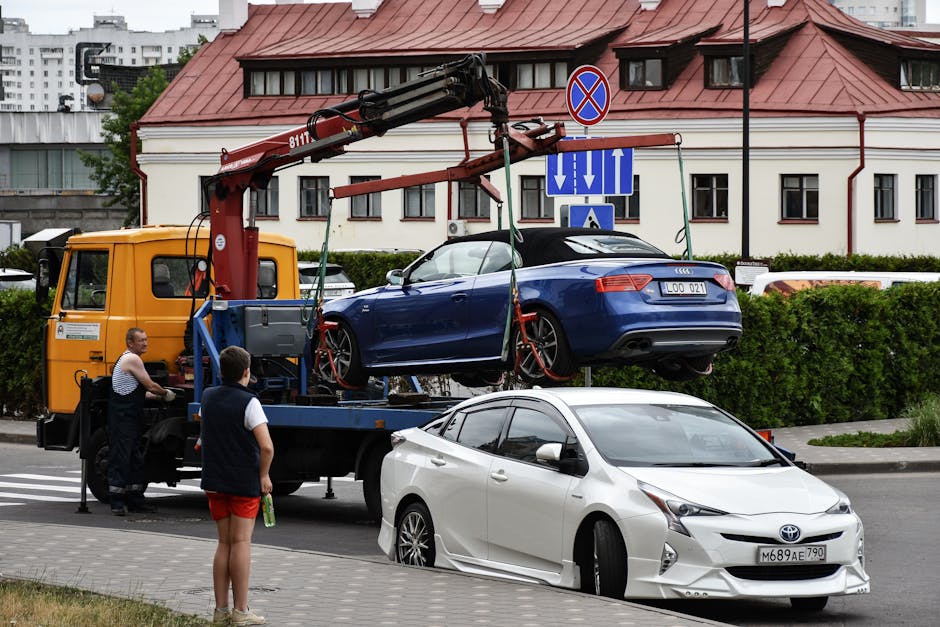
Imagine pulling into a strip mall parking lot for five minutes. You run inside, grab a coffee, and walk back out to find a tow truck operator already hooking chains to your bumper. Your heart drops. You did nothing wrong. Or did you? The sign was faded. The rules were unclear. And now, a private company is about to hold your vehicle hostage over a technicality you never agreed to.
This is not a rare scenario. It is happening in parking lots, apartment complexes, and retail centers across the country every single day. And the financial fallout is far worse than most people realize.
What starts as a simple dispute over a parking space quickly morphs into a legal quagmire involving civil liability, insurance claim denials, and consumer protection violations that leave ordinary families scrambling to recover thousands of dollars in unexpected costs.
The Legal Precedent: Where Private Rules Clash With State Civil Codes
Here is what most Americans do not understand. Private property owners and their contracted towing companies operate under a patchwork of state regulations that vary wildly from one jurisdiction to the next. What is perfectly legal in one state could constitute a consumer protection violation in another.
Many states require specific signage standards. The signs must be visible, legible, and positioned at every entrance. If a sign is faded, obscured by tree branches, or placed in a location that a reasonable person would not notice, the entire basis for the tow can collapse under legal scrutiny.
But here is where it gets worse. Most consumers never challenge the tow. They simply pay the fee, retrieve their vehicle, and move on. This silence allows predatory operators to continue their practices unchecked, knowing that the financial cost of fighting back often exceeds the cost of compliance.
“The average consumer has no idea that they may have legal recourse. They just want their car back. That fear is exactly what these operators count on.”
The civil liability implications extend far beyond the initial tow fee. Consumers who pay under pressure may be inadvertently waiving their right to challenge the charges later. The paperwork they sign to retrieve their vehicle often contains arbitration clauses and liability waivers buried in fine print.
- Did the property owner properly authorize the tow, or was the operator acting on their own initiative?
- Was the required signage compliant with state civil codes, or was it intentionally obscured?
- What legal options remain for consumers who already paid under duress and signed a liability waiver?
Civil Liability and Business Codes: Hidden Legal Risks for Local Venues
The property owners who contract with towing companies are not immune from legal exposure. Under many state business codes, they bear responsibility for ensuring that towing practices on their premises comply with consumer protection laws.
When a towing company engages in predatory practices, the property owner can be named in a civil lawsuit alongside the operator. This creates a powerful incentive for business owners to audit their towing contracts and ensure compliance. But most never do.
The financial liability can be staggering. In some jurisdictions, consumers have successfully recovered not just the tow fee, but also lost wages, rental car costs, and even emotional distress damages. These cases rarely make headlines because they settle quietly, but the precedent is building.
Insurance companies add another layer of complexity. Many auto insurance policies do not cover towing fees unless the consumer purchased a specific rider. Even then, reimbursement often requires documentation that towing operators are not required to provide.

Similar civil confrontations across the country are forcing community leaders and local venues to confront serious liability under state regulations. Explore the full legal breakdown of related incidents →
Consumer Protection and Financial Fallout: What Precedent Does This Set?
The broader implications of these disputes extend far beyond individual cases. Each time a consumer successfully challenges a predatory tow, they establish precedent that other consumers can cite in their own disputes.
State attorneys general in several jurisdictions have begun investigating patterns of complaints against specific towing operators. These investigations often reveal systematic violations of consumer protection statutes, including failure to provide required disclosures and charging fees that exceed statutory caps.
But the enforcement gap remains enormous. Most consumers never file complaints. They do not know where to turn. They do not realize that a single documented complaint can trigger a formal inquiry that leads to fines and mandatory practice changes.
The financial stakes are real. A single tow can cost between two hundred and five hundred dollars in immediate fees. Add lost wages, transportation costs, and the time required to navigate the retrieval process, and the true cost can easily exceed a thousand dollars. For families living paycheck to paycheck, that is catastrophic.
“Consumers who understand their rights and document everything have a significantly higher success rate in challenging improper tows. The system works, but only for those who know how to use it.”
Legal experts recommend that consumers photograph signage, record interactions with towing operators, and request itemized receipts for every charge. These small steps create a paper trail that can be the difference between paying a disputed fee and recovering it through legal action.
The legal options exist. The consumer rights are real. But they require action. They require documentation. And they require a willingness to challenge a system that has operated unchecked for far too long.

For now, the burden falls on individual consumers to protect themselves. The regulatory framework is fragmented. The enforcement is inconsistent. And the operators know it.
That is not a lesson. That is a warning.