Blocked at the Gate: The Shocking Campus Incident That Exposes a Broken System of Accountability

A tuition-paying student was denied entry to his own university by masked individuals — and the fallout reveals a terrifying truth about who actually protects your rights
- A UCLA student was physically blocked from entering campus by masked individuals
- The incident raises urgent questions about institutional accountability and student rights
- Legal experts say universities have a duty to protect access to education
- Workers and students alike face growing challenges when authority figures fail to act
Imagine showing up to your own workplace, badge in hand, only to find strangers blocking the door. You paid for this. You earned your spot. And yet, someone with a mask and a makeshift barricade has decided you do not belong.
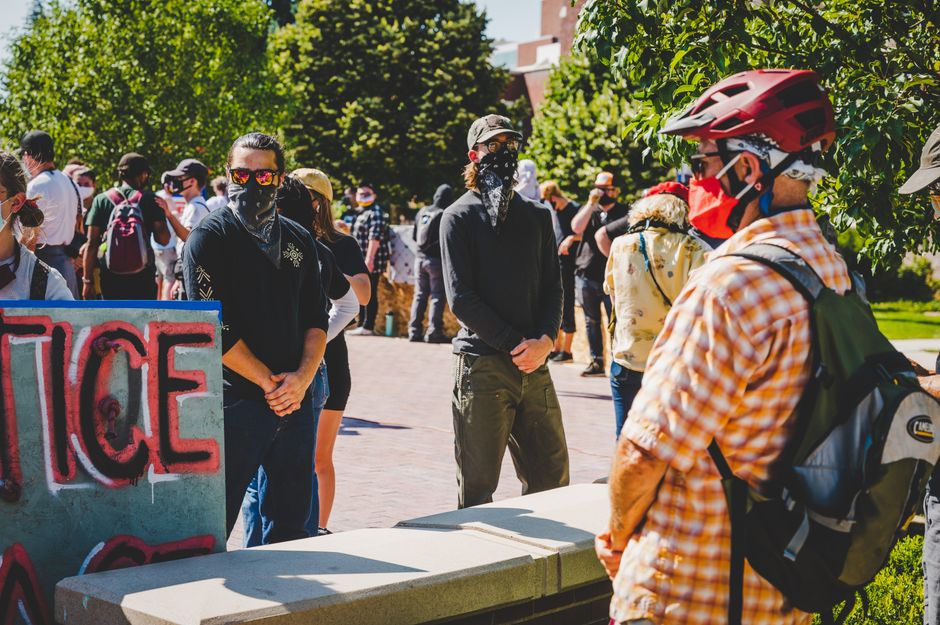
That is exactly what happened at UCLA. A student, visibly wearing a Star of David necklace, approached a campus entrance with his ID ready. He was not stopped by campus security. He was stopped by masked individuals who had taken it upon themselves to control who gets in and who stays out.
“I’m a UCLA student. I deserve to go here. We pay tuition. This is our school and they are not letting me walk in,” he said, his voice steady but strained.
When Authority Vanishes and Chaos Takes Over
Here is the part that should make every taxpayer, parent, and student furious. The people who blocked this young man were not official security personnel. They were not law enforcement. They were private individuals who decided, on their own, to enforce a rule that does not exist.
The student tried to reason with them. “This could be over in a second. Just let me and my friends go in,” he pleaded. His class was right there. His education was waiting. But the masked group refused to move.
“I’m being blocked off, not by the security guard, but by you two, you three. This is what they do. Everybody look at this.”
Notice what he said. Not by the security guard. That detail matters more than anything else in this story.

The Legal Precedent Every Worker and Student Must Understand
This is not just about one student on one day. This is about a fundamental principle that applies to every workplace, every classroom, and every institution that takes your money and promises you access in return.
Employment law and educational law share a common foundation. When an entity accepts payment — whether it is tuition or a salary — they assume a duty of care. They cannot arbitrarily deny you access to the thing you paid for. They cannot allow private individuals to enforce rules that do not exist in any handbook or policy manual.
Legal experts have long argued that institutions have an affirmative obligation to ensure safe and unobstructed access to their facilities. When they fail to do so, they open themselves up to significant liability.
“We pay tuition. This is our school. And they’re not letting me walk in.”
That quote should haunt every administrator who watched this happen and did nothing. It should haunt every HR department that has ever looked the other way when an employee was mistreated. It should haunt every institution that believes its reputation matters more than the rights of the people it serves.

What This Means for You
You might be thinking this could never happen to you. You are not a student. You do not wear religious symbols. You go to work, you do your job, you go home.
But the principle at stake here has nothing to do with religion or campus politics. It has everything to do with whether the institutions you depend on will protect your right to access what you have earned.
If a university can allow masked individuals to block a paying student from entering, what stops a company from allowing a hostile manager to block an employee from accessing their workspace? What stops an HR department from ignoring a complaint because it is easier to look away?
The answer is simple: nothing stops them. Not unless people speak up. Not unless people document everything. Not unless people demand accountability from the institutions that take their money and their time.
This student did the right thing. He stayed calm. He identified himself. He asked for help. And he documented the entire incident so the world could see what happens when authority disappears and chaos fills the void.
His final words hang in the air like a warning: “Will you let me go in? This could be over in a second.”
It was not over in a second. And for every worker, every student, and every person who has ever been told they do not belong, that silence speaks volumes.