The Moment a Classroom Lost All Respect: What Justice Looks Like When a Teacher Becomes a Target

An 18-year-old student’s explosive reaction to a simple phone policy has Nashville asking hard questions about consequences, safety, and the line between discipline and danger.
- A routine request to put a phone away escalated into a physical incident caught on video, raising serious concerns about classroom authority.
- The student involved, who is legally an adult, faces legal consequences, but the broader issue of teacher safety and support remains a pressing community concern.
- Experts emphasize that the path to accountability involves both legal follow-through and a community-wide commitment to restoring basic respect in schools.
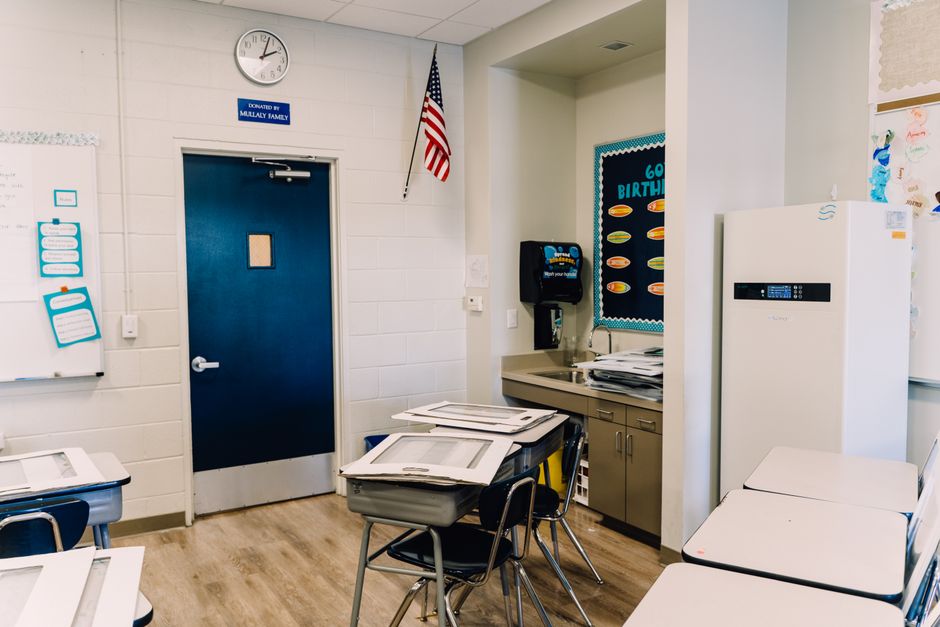
The video is the kind that makes your stomach drop. A classroom at Antioch High School in Nashville, supposed to be a sanctuary for learning, suddenly becomes the scene of a chaotic dispute. The trigger? A cell phone. The response? A teacher allegedly doused with chemical spray.
What should have been a simple command—”put the phone away”—ignited a firestorm of defiance that ended with an 18-year-old student, Kayla Smith, being taken into custody on an assault allegation. But while the legal system begins its slow grind, the raw, unedited truth of the moment leaves a bitter taste in the mouths of parents and educators across the nation.
The Blurred Lines of Discipline and Defiance
In the seconds before the incident, you can hear the tension ratcheting up. The student’s voice cuts through the ambient noise: “Don’t fucking touch me. Give me my phone.” The teacher, Caleb Bates, was doing his job—enforcing a policy that has become the frontline battle in modern education. But the reaction he received wasn’t just non-compliance; it was an escalation that turned a policy dispute into a flashpoint.
This wasn’t a middle schooler having a tantrum. This was an 18-year-old, an adult in the eyes of the law, making a split-second decision that will now ripple through her life for years to come. The “Mace is crazy” exclamations from other students in the background underscore the shock and disbelief that rippled through the room. No one expected a phone confiscation to lead to a chemical agent being deployed.
“This is exactly why our community needs to stay vigilant. If a teacher can be targeted for simply maintaining classroom rules, what does that say about the environment we are fostering for our children?”
The incident strikes a nerve because it taps into a primal fear: the loss of order. For teachers like Caleb Bates, the classroom is their domain, their place of work. When a student decides that the rules don’t apply to them, it doesn’t just disrupt a lesson—it shatters the fundamental trust required for education to happen.
The Legal Precedent and the Weight of Accountability
With the student being 18, the situation immediately jumps from a school disciplinary matter to a potential criminal case. The label of “assault” carries weight. It moves the conversation from the principal’s office to the courthouse steps, where the legal process will determine the true measure of justice. The question now is not *if* there will be consequences, but how severe they will be and what precedent it sets for other students watching this unfold.
This is where the concept of community accountability comes into sharp focus. The video serves as a stark piece of evidence, a digital record that prevents any rewriting of history. It shows a clear sequence of events: a request, a refusal, an escalation. For the authorities, the path is clear. For the community, it is a sobering reminder that actions in the heat of the moment have cold, hard consequences.

What Happens Now? The Road to Resolution
In the aftermath, the focus shifts to the victim—the teacher. What resources are available for educators who find themselves on the receiving end of such hostility? School districts often have protocols for student discipline, but what about the emotional and psychological toll on the staff member? The incident leaves a mark that goes beyond the physical sting of the spray.
The alleged perpetrator now faces a legal journey that could include court appearances, potential fines, or worse. But beyond the legal process, there is a deeper societal question. How did we get here? How did a simple request to put away a phone become a moment of such explosive anger?
The answer lies in a slow erosion of mutual respect. It’s a trend that is incredibly frustrating to see—people acting like the rules don’t apply to them, especially in spaces where order is necessary for safety. Common sense and basic respect are truly disappearing these days, and the classroom is often the first place this societal shift becomes visible.
For the students who witnessed this, the message is complex. They saw a peer cross a line, but they also saw the immediate response from the authorities. The hope is that the legal follow-through will serve as a deterrent, a clear signal that such behavior carries a price tag that no one wants to pay.
For the teacher, the journey is just beginning. The physical effects of the spray will fade, but the sense of violation, the feeling of being unsafe in a place where you are supposed to inspire young minds, may linger. The community watches, waiting to see if the system will protect those who are tasked with educating the next generation.
The video ends with chaos, with students yelling, with the teacher presumably in pain. There is no neat resolution, no final bow. There is only the unsettling silence that follows the alarm, and the question that hangs in the air: if this can happen in a classroom, in broad daylight, in front of witnesses, what is stopping it from happening anywhere else? The system is now tasked with providing an answer that satisfies the demand for justice.