The Human Cost Hidden in a Texas Truck Cab
When a Routine Stop Reveals a Desperate Reality on the Borderlands
- The discovery of 23 individuals in a single truck cab underscores the extreme risks taken during unauthorized crossings.
- The driver’s lack of a commercial license points to a broader breakdown in accountability that endangers lives.
- The scene is a stark reflection on human desperation and the resilience of those seeking a different life.
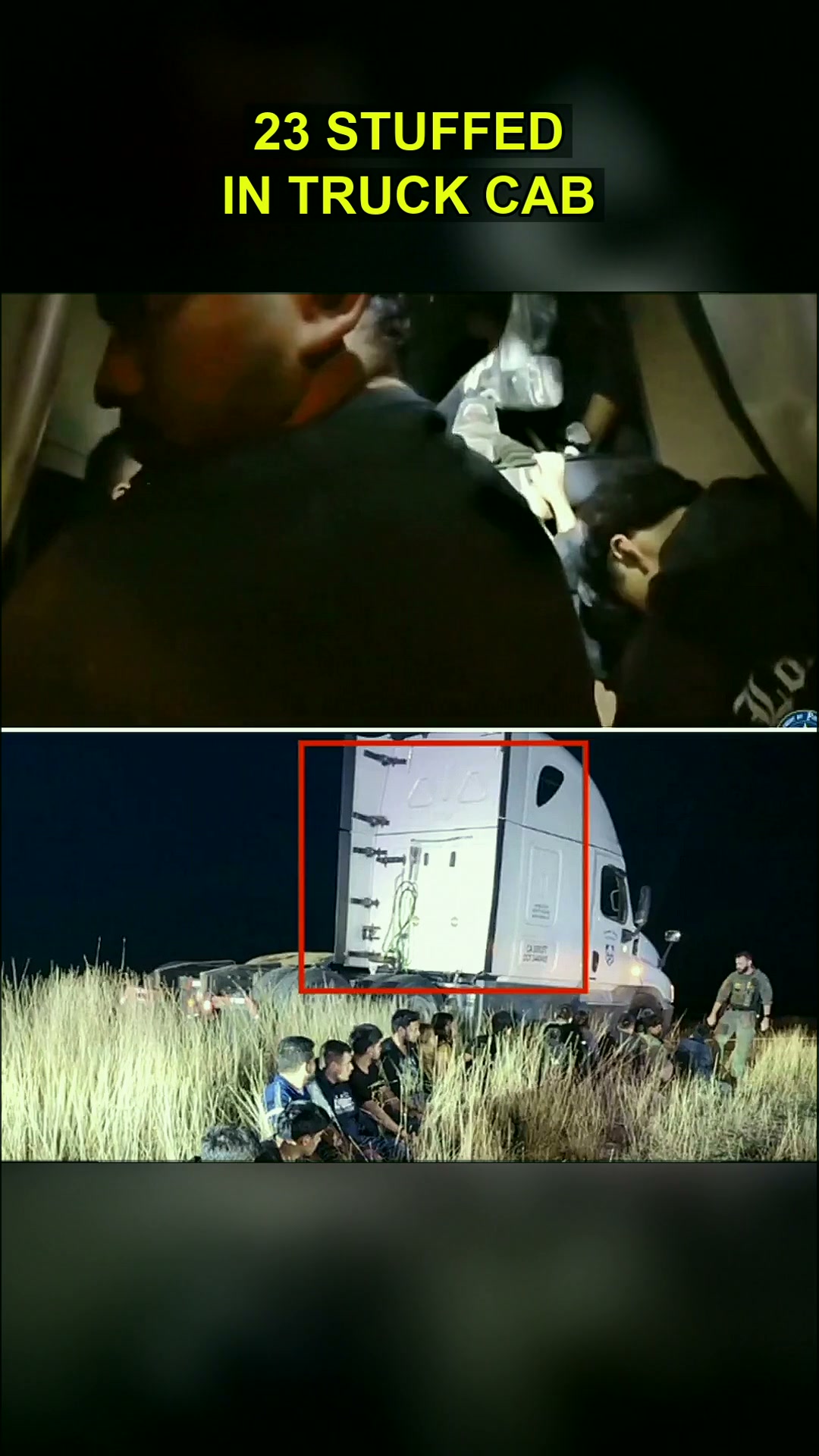
The sun was high over La Salle County when the flashing lights signaled a stop. To the driver, it was likely just another inconvenience. To the 23 souls packed into the cabin behind him, it was the moment their fragile journey collided with an unyielding reality. The videos emerging from the scene show a surreal sequence: doors opening, and person after person emerging from a space never designed for human cargo.
This wasn’t a smuggler’s trailer with air holes cut in the floor. This was the cab itself. The intimacy of the space makes the desperation of the occupants feel almost tangible. You can almost feel the heat, the silence, the fear of being discovered, and the strange, sudden relief when the doors finally opened.

The driver, 24-year-old John David Amaya, now sits at the center of a storm of consequences. Officials noted he was operating the heavy vehicle without the required commercial license. That detail is the mechanical failure that unraveled the entire operation. It is a textbook example of how cutting corners on the smallest legal requirement can lead to the largest of downfalls.
For the occupants, however, this is not a legal story. It is a human one. They are not statistics in a political debate; they are people who took a monumental risk because the alternative at home was likely worse. Their resilience is evident in the simple act of climbing down from that cab, blinking in the South Texas light, and following the shouted instructions that promised a moment of safety.
The Anatomy of a High-Risk Gamble
To look at the images is to ask a single question: How does a human being end up in the back of a truck on a desolate Texas highway? The answer is rarely simple. It is a cocktail of economic pressure, hope, and the calculated promises of those who profit from desperation.
The individuals found in the cab were not just passengers; they were participants in a high-stakes gamble where the house always wins. The cramped conditions are a physical manifestation of the disregard for human life that defines this illicit trade. The sheer number of people packed into that small space speaks to a logistics operation that values volume over safety, profit over breath.
When the troopers gave the commands, the response was immediate compliance. There was no resistance, only the quiet relief of being seen. The video captures a moment of unspoken surrender—hands on heads, bodies moving in unison—a choreography of exhaustion.
“The space was never designed for human cargo, yet hope found a way to squeeze in anyway.”
This is where the story transcends the typical border narrative. It is not about walls or policies. It is about the human capacity to endure discomfort for a chance at a future. The community in La Salle County has seen this before, but the visual of so many people emerging from a single cab still shocks the conscience.
The Weight of a Single Decision
For John David Amaya, the decision to drive without the proper credentials was the crack in the dam. It turned a potentially successful run into a catastrophic failure. The ripple effects of that choice will be felt in courtrooms and in the lives of the 23 people who now face an uncertain path forward.
There is a tendency to dehumanize the driver or the occupants, to turn them into symbols of a broken system. But the unedited truth is that they are all part of a complex ecosystem. The driver is a young man who likely saw a quick payday. The occupants are individuals who saw a glimmer of opportunity. The tragedy is that their interests aligned in a space that offered no safety net.
What happens next is a maze of legal processing, humanitarian aid, and political rhetoric. But for a moment, on that roadside, they were just people—hot, scared, and caught. The troopers did their job with professional calm, turning a potential tragedy into a controlled outcome.
The Community’s Reflection
For the residents of La Salle County, this incident is a reminder that the border is not a distant concept. It is their neighbor. It is the road they drive every day. The discovery forces a local conversation about safety, empathy, and the relentless flow of humanity through their backyard.
The resilience shown by the group is a mirror to the resilience of the communities that deal with these events daily. They adapt, they watch, and they continue to live their lives with a heightened awareness that the world is more complex than the headlines suggest.
The story does not end with the closing of the truck doors. It continues in the holding cells, the shelters, and the quiet homes of those who wonder if their gamble was worth it. The driver faces the consequences of his choices, while the 23 others face a bureaucratic labyrinth that will determine their immediate future.
There is no tidy resolution here. There is only the stark reality of a road taken and the unknown destination that follows. The human spirit, however, remains unbroken, even when trapped in the back of a cab on a hot Texas day.