The Day a Texas Officer Decided Your Free Speech Is a Crime
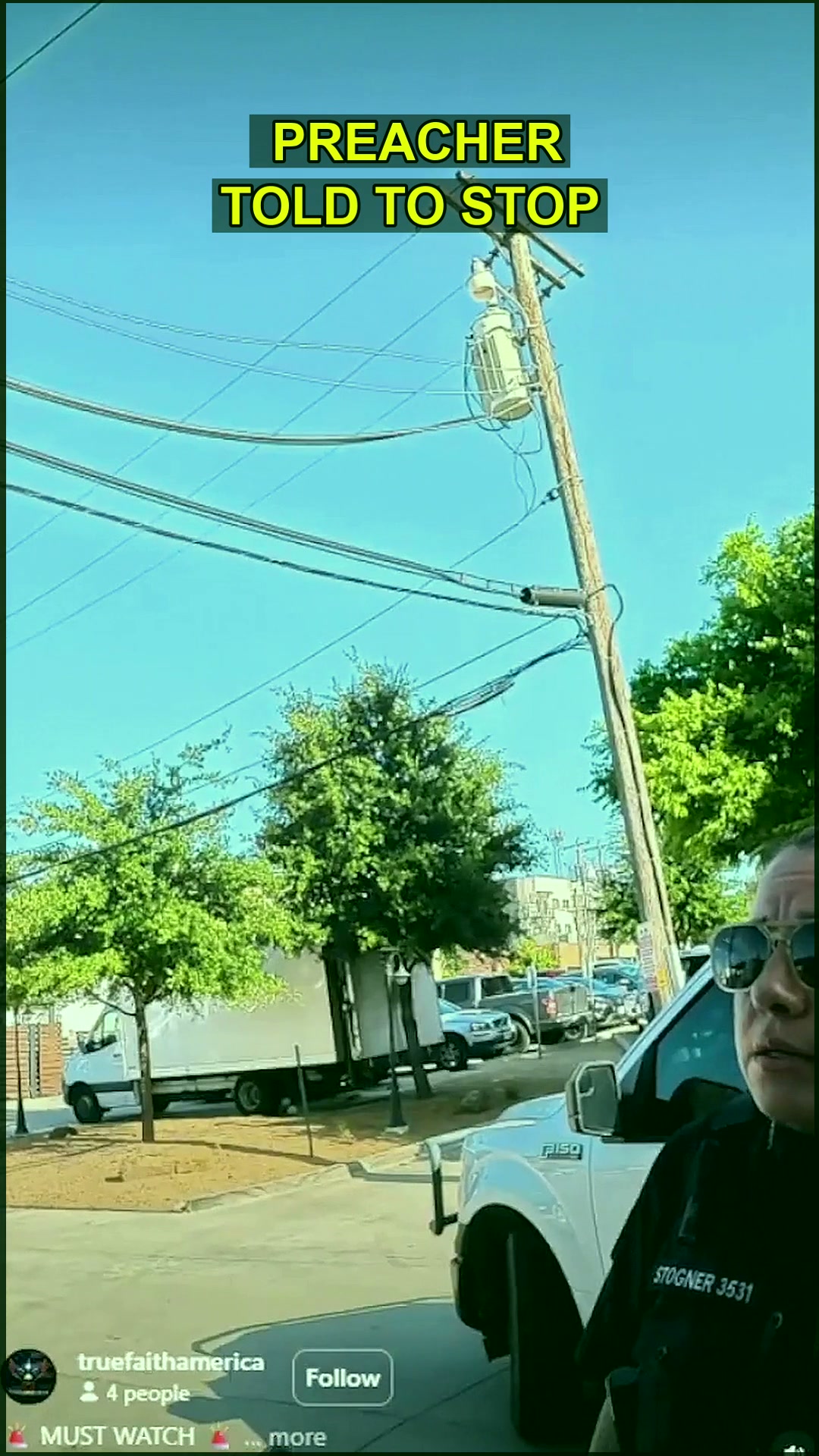
When a retired officer and street preacher was threatened with a disorderly conduct citation, the conversation exposed a terrifying reality about who decides what you are allowed to say.
- A Texas officer explicitly stated she would issue a citation for “offensive speech” under the guise of disorderly conduct.
- The exchange reveals how quickly a complaint from one person can trigger a constitutional rights violation on a public sidewalk.
- Legal experts note that disorderly conduct statutes require actual disruptive behavior, not merely unpopular or offensive words.
Picture this: You are standing on a public sidewalk, speaking your mind. Maybe you are preaching. Maybe you are protesting. Maybe you are simply sharing an opinion that rubs someone the wrong way. A passerby gets annoyed. They call the authorities. And then, a uniformed officer walks up to you and calmly explains that your words are now a ticketable offense.
That is not a dystopian movie script. That is a recorded, real-life exchange on the streets of Texas, and the footage is making waves for one very simple reason: the officer says the quiet part out loud.
When the man in the video, a retired officer and Christian street preacher, asks for clarification, the response is chilling. The officer confirms that if someone is offended by his talking, she will write him up. Not for blocking traffic. Not for inciting a crowd. For the content of his speech.
The Dispute That Exposes a Dangerous Assumption
Let’s break down exactly what happened here. The preacher is doing his thing, speaking on a public sidewalk. Someone, we do not know who, decides they are offended. That person complains. The officer arrives and immediately takes the side of the offended party.
Here is where the logic falls apart. The officer claims the speech itself constitutes disorderly conduct. But disorderly conduct, by legal definition in nearly every jurisdiction, requires some form of actual disruption. Noise that physically prevents others from using the space. Fighting words that incite immediate violence. Blocking pedestrian flow.
Merely causing offense? That is not a crime. It never has been. And it never should be.

Yet here we have an officer of the law, someone sworn to uphold the Constitution, threatening to weaponize a citation against a retired officer who served his community. The irony is not lost on anyone watching this footage.
The man’s response cuts straight to the heart of the issue. He notes that disorderly conduct has to be accompanied by actual conduct. The officer’s reply is almost unbelievable: she points at the act of speaking itself and says, “This is the conduct.”
“If someone is offended by your talking, then we have a problem with the mind of the head.”
Read that quote again. Slowly. The officer is suggesting that the problem lies with the person speaking, not the person who is offended. In her worldview, the mere existence of speech that bothers someone is a public safety issue. That is a terrifying standard.
The Legal Precedent That Should Terrify Every American
Let’s be crystal clear about what the law actually says. The Supreme Court has ruled time and time again that the government cannot silence speech simply because it is offensive. In landmark cases, the Court has protected Nazi marches, flag burning, and deeply hateful rhetoric. The standard is uncomfortable, but it is essential.
Why? Because if the government gets the power to decide what is offensive, they will use that power against everyone. Today it is a street preacher. Tomorrow it could be a journalist. Next week it could be you, complaining about your landlord, your boss, or your local government.

When an officer threatens a citation for “offensive speech,” they are not enforcing the law. They are enforcing the subjective feelings of one person. That is not justice. That is tyranny by complaint.
Here is the part that should make you uneasy. This officer was not shy about her intentions. She said it plainly, on camera. Imagine what happens off camera. Imagine how many people have already been cited for this exact reason, without the footage, without the public outcry.
- Offensive speech is protected under the First Amendment, no matter how much it annoys others.
- Disorderly conduct requires a genuine disruption of public order, not just a complaint from a bystander.
- Public sidewalks are considered traditional public forums with the highest level of speech protection.
- Any citation for speech content would likely be dismissed in court and could expose the department to civil liability.
Your Rights Are Only as Safe as Your Willingness to Document
This entire incident was caught on camera. That is the only reason we are talking about it today. Without that footage, this would have been another quiet, unaccountable abuse of authority. Another citizen intimidated into silence.
The retired officer in this video did exactly the right thing. He stayed calm. He asked clarifying questions. He stated his position clearly. He did not escalate. He let the officer dig her own hole with her own words.
That is the playbook for anyone who finds themselves in this situation. Keep your phone recording. Keep your mouth respectful. Keep your questions pointed. Let the overreach happen on camera.
Because here is the unedited truth: accountability only happens when there is evidence. And evidence only exists when someone is brave enough to hit record.
The officer in this video walked away without issuing a citation, likely because she realized how foolish she would look in front of a judge. But the damage is done. The footage exists. The precedent is set. And every person who watches this video now knows that their local authorities might not fully understand the rights they are sworn to protect.

What happens next is up to the community. Will this officer receive additional training? Will the department issue a statement clarifying its policy on free speech? Or will this footage be buried and ignored, until the next person is threatened for the “crime” of saying something someone else dislikes?
You already know the answer. The uncomfortable truth about accountability is that it never happens voluntarily. It happens when the public refuses to look away. It happens when videos go viral. It happens when citizens realize that their rights are not self-enforcing.
So, what do you do with this information? You stay vigilant. You stay informed. And you remember that the next time someone tells you your speech is offensive, you do not have to argue with them. You just have to know that they are wrong, and that the Constitution is on your side. The question is whether the person holding the ticket book knows it too.