The Shocking Tilt: When Reclaiming Your Own Property Turns You Into the Villain
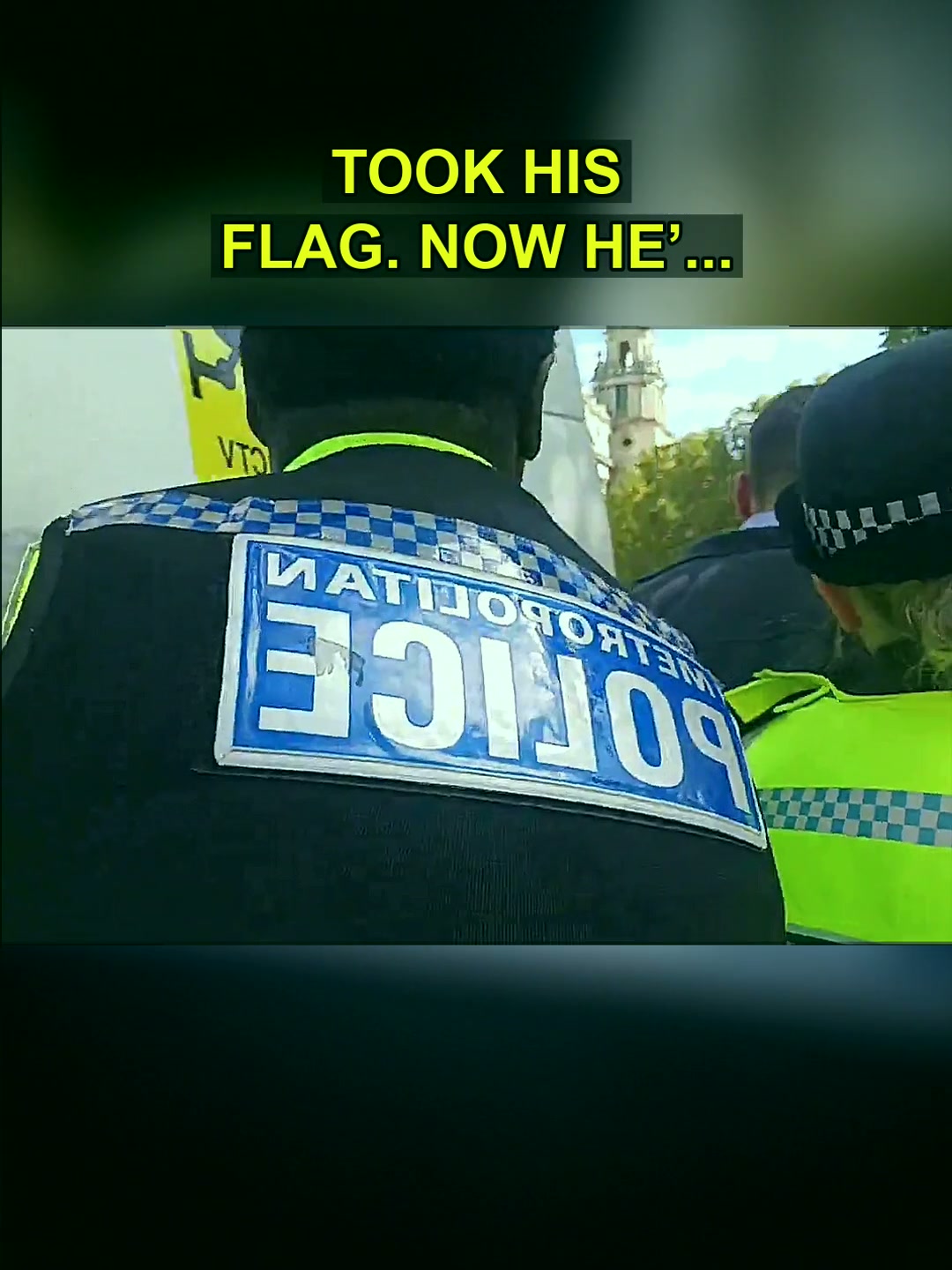
How a simple act of retrieving a stolen flag in the UK raises terrifying questions about who the justice system actually protects.
- An individual who retrieved his stolen property is facing legal scrutiny while the alleged thief walks free.
- The incident highlights a growing concern over how authorities handle accountability in property disputes.
- Community members are asking what this means for the average person’s right to self-defense of belongings.
Picture this: you are standing in a public space, perhaps at a community gathering or a local event. You have brought a flag that represents your identity, your faith, your deepest convictions. Suddenly, without warning, a stranger lunges forward and snatches it from your hands. The sheer audacity leaves you frozen for a split second. But then instinct kicks in. That item is yours. You paid for it. It holds meaning. So you do the only thing that makes sense: you take it back.
In a world governed by common sense, that would be the end of the story. The thief slinks away in embarrassment, and you go back to your day, clutching your property a little tighter. But this is not a world governed by common sense. This is the United Kingdom in 2024, where the rules seem to have been flipped upside down. The person who stole is not the one in trouble. The person who dared to reclaim what was rightfully his is the one now facing the machinery of the legal system.
The video footage circulating online shows a scene that is equal parts absurd and infuriating. A man, referred to as “Bob,” had his Christian flag aggressively taken by a political opponent. The video captures the moment Bob decides he has had enough. He moves toward the individual who took his property and retrieves it. In the scuffle that follows, the person who initiated the theft ends up on the floor. It is a fall that looks more like a dramatic flop than a serious injury, but the consequences for Bob are anything but theatrical.
The Uncomfortable Question of Accountability
Here is where the story takes a turn that should send a chill down the spine of every law-abiding citizen. The authorities were called. Statements were taken. And in the end, the person who was simply trying to enjoy a public event while displaying his faith is now the one facing legal proceedings. The alleged thief? They are not facing charges. They are not being held accountable for initiating the entire incident.

Let that sink in for a moment. If you were walking down the street and someone snatched your phone from your hand, would you chase them? Would you try to get it back? Most people would say yes without hesitation. But this incident suggests that doing so might put you in legal jeopardy while the actual thief walks away scot-free. It is a scenario that creates a perverse incentive for wrongdoers. Why not steal? The worst that happens is you fall down and play the victim. The best that happens is you get away with someone else’s property.
The Legal Precedent That Should Terrify You
This is not an isolated case of a confused magistrate making a bad call. This pattern is becoming increasingly visible in legal systems across the Western world. The focus has shifted from who initiated the wrongdoing to who caused the final physical outcome, regardless of self-defense or property retrieval context. In legal circles, this is known as focusing on the “result” rather than the “intent.” The result here is that someone fell. The intent was that someone was stealing.
“Taking back your stolen property now leads to legal trouble in the UK. And they wonder why people are losing faith in the system.”
The implications are staggering. If the person who steals is protected by the law, and the person who retrieves is punished, then the message is clear: do not resist. Do not try to get your stuff back. Just let them take it and file a report later. But what happens when the authorities do nothing? What happens when the report goes nowhere? The victim is left with nothing but a sense of violation and a bitter taste of injustice.

This is exactly why our community needs to stay vigilant. It is not about encouraging confrontation. It is about understanding that the system may not have your back when you need it most. The man in this video, Bob, is not a violent criminal. He is not a threat to public safety. He is a person who had his property taken and wanted it back. His face is now attached to a legal case, his reputation potentially tarnished, all because he refused to be a passive victim.
What Justice Looks Like After the Dust Settles
So what is the path forward for someone like Bob? This is where the concept of community accountability comes into sharp focus. When the formal justice system fails to distinguish between the aggressor and the defender, the community must step in to provide support. This is not about taking the law into one’s own hands. It is about creating a network of resources for individuals who find themselves trapped in an unjust legal process.
Legal defense funds, community advocacy groups, and public awareness campaigns are the tools available to fight back. If you or someone you know is facing a similar situation, documenting everything is critical. The video footage in this case is the only reason the public knows the full story. Without it, there would only be the narrative pushed by the person who fell, a narrative that conveniently omits the initial theft.
- Citizens Advice Bureau for legal guidance on property disputes.
- Local MP offices for raising concerns about police conduct and charging decisions.
- Independent legal counsel for cases where the initial aggressor is not being held accountable.
The anger that is brewing over this incident is not about partisanship. It is about the erosion of a basic right that every person should hold dear: the right to not be a victim. When you tell a person that they cannot reclaim their stolen property because the thief might get hurt, you are telling them that their rights are secondary to the comfort of the wrongdoer.
Bob’s case is a microcosm of a larger societal shift that is causing deep concern among ordinary citizens. The men in Dover, referenced in the original post, had their faces covered for a reason. They understood that the system was not going to protect them from being labeled as aggressors, even when they were acting in defense of their own community and values. The fear of being criminalized for defending oneself or one’s property is now a legitimate concern.
As the legal process unfolds for Bob, the rest of us are left to wonder: if this can happen to him, what stops it from happening to us? The flag is just a piece of fabric, but the principle is worth everything. And right now, that principle is hanging by a thread, with the full weight of a confused legal system pressing down on it.
The next time you see someone snatch a flag, a phone, or a purse, remember this story. Remember that the person who takes it back might be the one who ends up in trouble. And ask yourself: is that the kind of world we want to live in? The answer, for most of us, is a resounding no. But the question remains: what are we going to do about it? The video is out there. The outrage is building. And Bob is waiting for the justice that seems so far out of reach.