The Unspoken Cost of Defiance: When Refusing an Order Becomes a Legal Trap
Why resisting the inevitable only stacks the odds against you, and what it reveals about power, procedure, and your rights in the workplace and on the street.
- Non-compliance with a direct order rarely changes the final outcome; it only adds complications.
- Understanding the legal boundary between questioning authority and obstructing procedure is critical.
- Whether facing an officer or a boss, your rights have limits that are often defined in the moment.
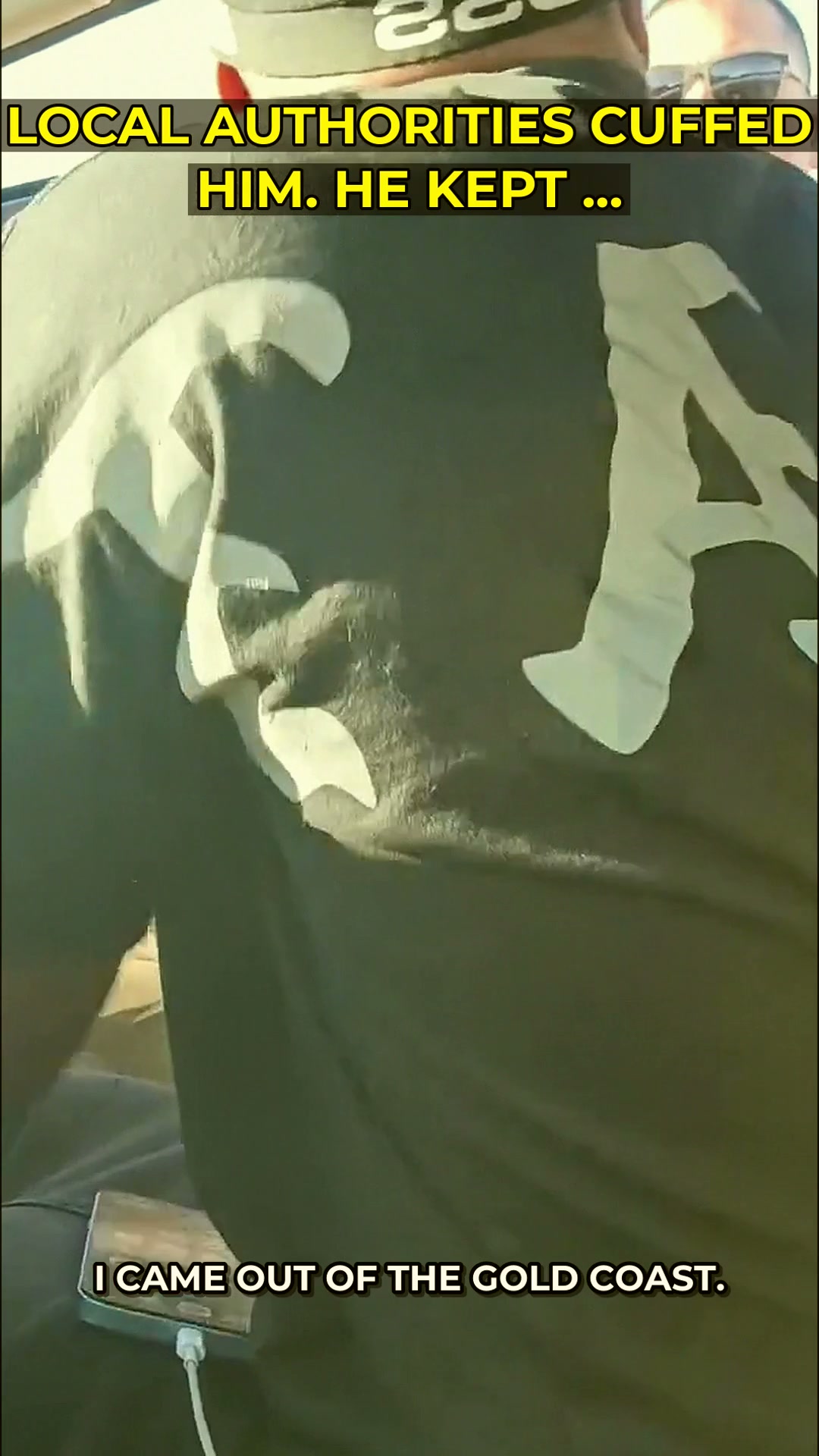
The video starts mid-chaos. A man is sitting in his car, windows down, and the air is thick with tension. A Las Vegas officer is giving a direct command: “Get out the car right now.” The driver isn’t having it. He fires back with questions, with denials, with pleas to his girlfriend to keep recording. “I didn’t run a red light,” he insists. But the order comes again, sharper. “Get out the car now.”
This is not a scene from a movie. It is a raw, unedited glimpse into a moment where a simple traffic stop spirals into a standoff. The driver’s refusal to comply is not just about this specific request; it is a stand against what he perceives as an injustice. But in that stubbornness, he is walking into a legal minefield that most people do not fully understand until it is far too late.
The officer repeats the command at least four times. The driver does not move. He is not aggressive in a physical way, but his inaction is a declaration. He is betting that his version of events, his insistence on his innocence, will somehow shield him from the process. It does not. The moment the officer reaches in, the dynamic shifts from a discussion to an enforcement action. The driver’s screams become louder, but the outcome is already sealed.

The Illusion of Control in a No-Win Situation
Why do people resist when the odds are stacked against them? Psychologists call it a cognitive bias where we overestimate our ability to control an uncontrollable situation. The driver in this video is not thinking about the legal code; he is thinking about the principle. He feels wronged. He believes that if he just holds his ground, the authority figure will realize the mistake and let him go.
That logic is flawed. In the real world, compliance is often the only currency that buys you the opportunity to argue your case later. Once you refuse a lawful order, you are no longer just the subject of a traffic inquiry; you are the subject of a power struggle. And in that struggle, the system is designed to win.
This dynamic is not exclusive to the pavement. It mirrors the workplace. Think about the boss who gives an unreasonable directive. The employee who pushes back, who refuses to do the task, is not often rewarded for their bravery. They are flagged, documented, and sometimes shown the door. The process is slower than handcuffs, but the result is just as definitive.
“You cannot negotiate with a procedure. You can only survive it or fight it later in a room where the power dynamic is level.”
The Legal Precedent: Where Does Refusal End and Obstruction Begin?
In the eyes of the law, there is a stark difference between asking for clarification and outright defiance. An officer is not required to explain their probable cause at the window. They are required to enforce the law. When a driver refuses to exit the vehicle after a lawful stop, that action can be construed as obstruction, a separate charge that carries its own penalties.
This is the trap. The original infraction, whether it was a rolling stop or a mistaken light, is minor. The refusal is what escalates the situation from a citation to a physical altercation. The driver in the video is not fighting the initial accusation; he is fighting the process. And the process does not care about his feelings, his innocence, or his audience.
For workers, the precedent is similar. At-will employment means you can be let go for almost any reason, as long as it is not discriminatory. Refusing a task, even one you believe is unfair, is often seen as insubordination. HR departments are not mediators of your frustration; they are risk managers for the company. If you refuse, you are flagged as a liability.

The Brutal Math of Escalation
Let us look at the math. The driver claims he did not run a red light. Let us assume he is correct. What was the cost of his defiance? He was forcibly removed from his vehicle. He was handcuffed. He now faces potential charges for obstruction or resisting, regardless of the outcome of the original traffic stop. He traded a possible ticket for a guaranteed ride to the station.
It is a terrible trade. The same principle applies in the office. An employee who feels they are being asked to work off the clock, or to sign a document they do not agree with, has options. Those options are not to scream or refuse on the spot. The option is to document the request, state your concern in writing, and consult an employment attorney. The moment you refuse a direct order without a legal basis, you hand the employer the weapon to fire you for cause.
This is not about cowardice; it is about strategy. The system is not built to reward emotional outbursts. It is built to process paperwork, evidence, and legal arguments. The only way to win is to stop acting like a participant in a street fight and start acting like a plaintiff in a lawsuit.
The Unedited Truth About Power
What is the point of the struggle? The video ends with the man in cuffs, still yelling. He has not changed the outcome. He has only added to his own suffering. This is the unedited truth about power dynamics, whether on the Las Vegas strip or in a corporate boardroom: the person with the authority to issue the order usually has the authority to enforce it.
Common sense dictates that you pick your battles. But common sense often goes out the window when adrenaline kicks in. The man in the video is not thinking about the consequences; he is thinking about the insult. He is thinking about the audience watching him. He would rather be a martyr in a viral video than a compliant citizen who fights the ticket in court.
That is a dangerous trade. The court system is where you get justice. The sidewalk is where you get hurt. The employer’s HR office is where you file a grievance. The hallway is where you get walked out by security. There is a time and a place for everything, and the moment a command is given is not the time to argue.

So, what is the point of the pain? For the observer, it is a lesson in what not to do. For the participant, it is a hard fall into reality. The rules apply to everyone, but they are enforced with a heavy hand on those who refuse to play along. The system does not care about your excuses. It cares about your compliance. And when you refuse, it will make an example of you.
The video is a snapshot of a terrible decision. But it is also a mirror. Look at it and ask yourself: in that situation, would you have the wisdom to swallow your pride, step out of the car, and fight the battle in a room where you have a chance of winning? Or would you scream into the void, hoping that volume will somehow rewrite the law? The answer determines whether you walk away with a citation or a record.
He is still in cuffs. The camera is still rolling. And the ending, for him, has already been written. He just refuses to read it.