The Unspoken Code of the Street: When Pride Meets the Crowd’s Loud Whisper
What a Viral Confrontation Reveals About the Fragile Threads of Human Restraint and the Bystander Effect
- The video captures a raw, unedited moment of human conflict where pride and crowd pressure collide.
- Bystanders play a dual role—some stoking the fire, others desperately pulling it back from the edge.
- The incident highlights how quickly a verbal dispute can escalate into physical chaos without a cooling-off period.
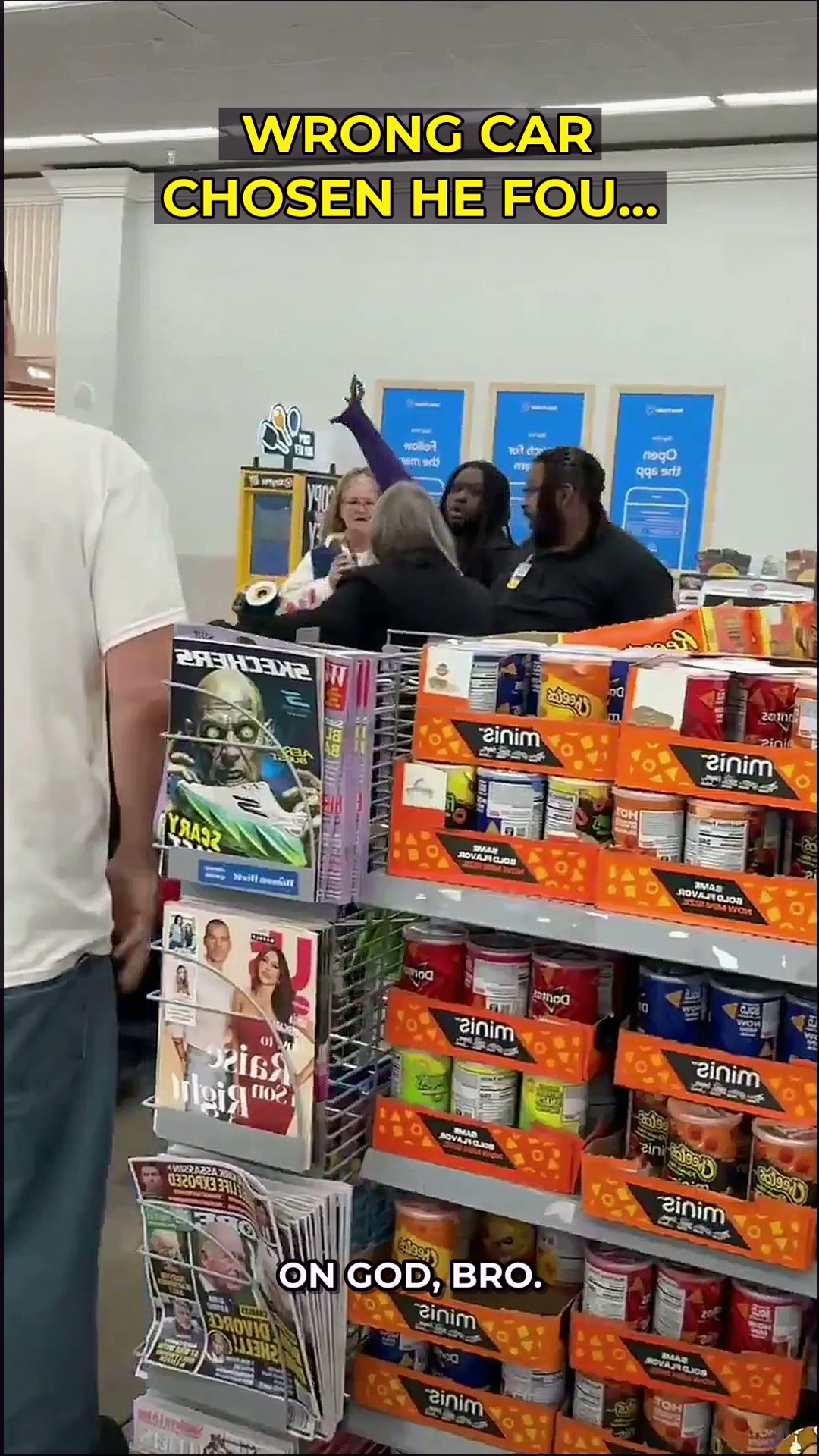
The footage is grainy, shaky, and uncomfortably real. A young man stands his ground, voice cracking with adrenaline, repeating the same defiant phrase over and over: “I’m right here. I’m right here.” The words are not a statement of location. They are a dare. A line drawn in the sand. And the crowd around him? They are not neutral observers. They are the fuel, the fire, and occasionally, the fragile voice of reason.
In the chaotic seconds that follow, the scene devolves into a blur of movement and shouting. Someone yells, “Let’s go. Let’s go.” Another voice, desperate and sharp, cuts through the noise: “Knock this motherfucker out, bro.” The pressure is palpable. It is the ancient, tribal call of the crowd, demanding a spectacle, hungry for a resolution that only violence can provide.
But then, a counter-current emerges. A louder, more commanding voice breaks the spell: “Stop it. Stop it.” And just as quickly, a practical plea: “Take your asses in the back.” It is a strange, almost parental instruction in the middle of a storm. The fight is not to happen here, not in front of everyone. The implication is clear: this is not about justice or defense. It is about performance.

The Anatomy of a Standoff
What makes this particular clip so compelling is not the violence itself—which, thankfully, seems to be mostly averted—but the invisible forces pulling at every person in that room. The central figure, the one repeating “I’m right here,” is not just defending his physical space. He is defending his identity, his reputation, his very place in the social hierarchy of that moment.
Psychologists call this “face-threatening acts.” When someone challenges you publicly, your brain does not just process a disagreement. It registers a threat to your social standing, a primal trigger that floods the body with cortisol and adrenaline. The result is a fight-or-flight response that is incredibly difficult to override, especially when an audience is watching.
And the audience? They are not passive. Research on the “bystander effect” often focuses on the diffusion of responsibility—why people don’t help. But there is a darker flip side: the “audience effect,” where the presence of others amplifies our behavior, making us more likely to act out to gain approval or status. The shouts of “Let’s go” are not just noise. They are social rewards for aggression.
“The most dangerous thing in any dispute is not the two people arguing. It is the crowd that decides the fight must go on.”
In the blur of the video, you see the intervention. A person steps between the two young men, not with force, but with presence. The shout of “Chill, chill, chill” is repeated, a mantra against the rising tide of chaos. This is the unsung hero of the story—not the one who throws a punch, but the one who absorbs the tension and tries to dissipate it.
These peacemakers often operate on instinct. They have no training, no authority, just a deep-seated understanding that once the first blow lands, the situation spirals beyond anyone’s control. They are the human circuit breakers, and their actions are a testament to the resilience of community, the quiet power of someone simply saying, “Enough.”

The Unedited Truth of Human Connection
This video, stripped of context and uploaded for the world to judge, is a raw snapshot of a universal truth: we are all just one bad moment away from losing control. The man shouting “I’m right here” could be any of us, backed into a corner by pride and public pressure. The onlookers could be our friends, our neighbors, our colleagues.
What is missing from the clip is the backstory. What was said before the cameras started rolling? What history exists between these two? The internet is quick to assign roles—villain, victim, hero—but reality is rarely that clean. Every confrontation is a complex web of slights, real or imagined, that culminates in a single, explosive second.
This is where the concept of accountability comes into play. Not just for the two men at the center of the storm, but for the crowd that egged them on. The voices shouting for a knockout are not innocent. They are co-authors of a narrative that could have ended in tragedy. The video serves as a sobering reminder of why we must all be more mindful of the energy we bring into a tense room.
There is a strange intimacy in watching strangers almost come to blows. We see the sweat on their brows, the tremor in their hands, the wild look in their eyes. It is a mirror held up to our own capacity for rage. It is uncomfortable. It is unedited truth.
But within that discomfort, there is also a glimmer of something else: resilience. The resilience of the person who chose to step in. The resilience of the community that, despite its loud and violent calls, also produced a voice of reason. The clip is a testament to the fact that even in our darkest, most primal moments, there is a part of us that wants to pull back from the brink.

The Social Mirror We Cannot Look Away From
Why do these videos go viral? Why do we click, watch, and share? It is not just morbid curiosity. It is a deep, anthropological need to understand the rules of our own tribe. We want to see how conflicts are resolved—or not resolved—so we can be better prepared for our own.
This incident, for all its raw edges, is a lesson in common sense and respect. The respect that was demanded by one man, and the common sense that was pleaded for by another. In a world that often feels like it is spinning faster than we can handle, these small, human moments of intervention remind us that our greatest strength is not our ability to fight, but our ability to stop.
The video ends without a clean conclusion. We do not know if the two men eventually shook hands, or if they found each other later in a parking lot. That uncertainty is the most terrifying part. It is a reminder that for every dispute that is captured and dissected online, there are thousands more that happen in the shadows, away from the judgment of the internet, where the only thing standing between a bad outcome and a worse one is a single, brave voice saying, “Chill.”
And that voice, as fragile as it sounds, is the very fabric that holds our communities together. It is the reason we can still walk down the street without constant fear. It is the quiet heroism of the ordinary person who decides that enough is enough. The crowd may have wanted blood, but the human spirit, in that fleeting moment, wanted peace.