The Unedited Truth From Harehills: When Child Protection Meets a Mob, Who Answers for the Chaos?
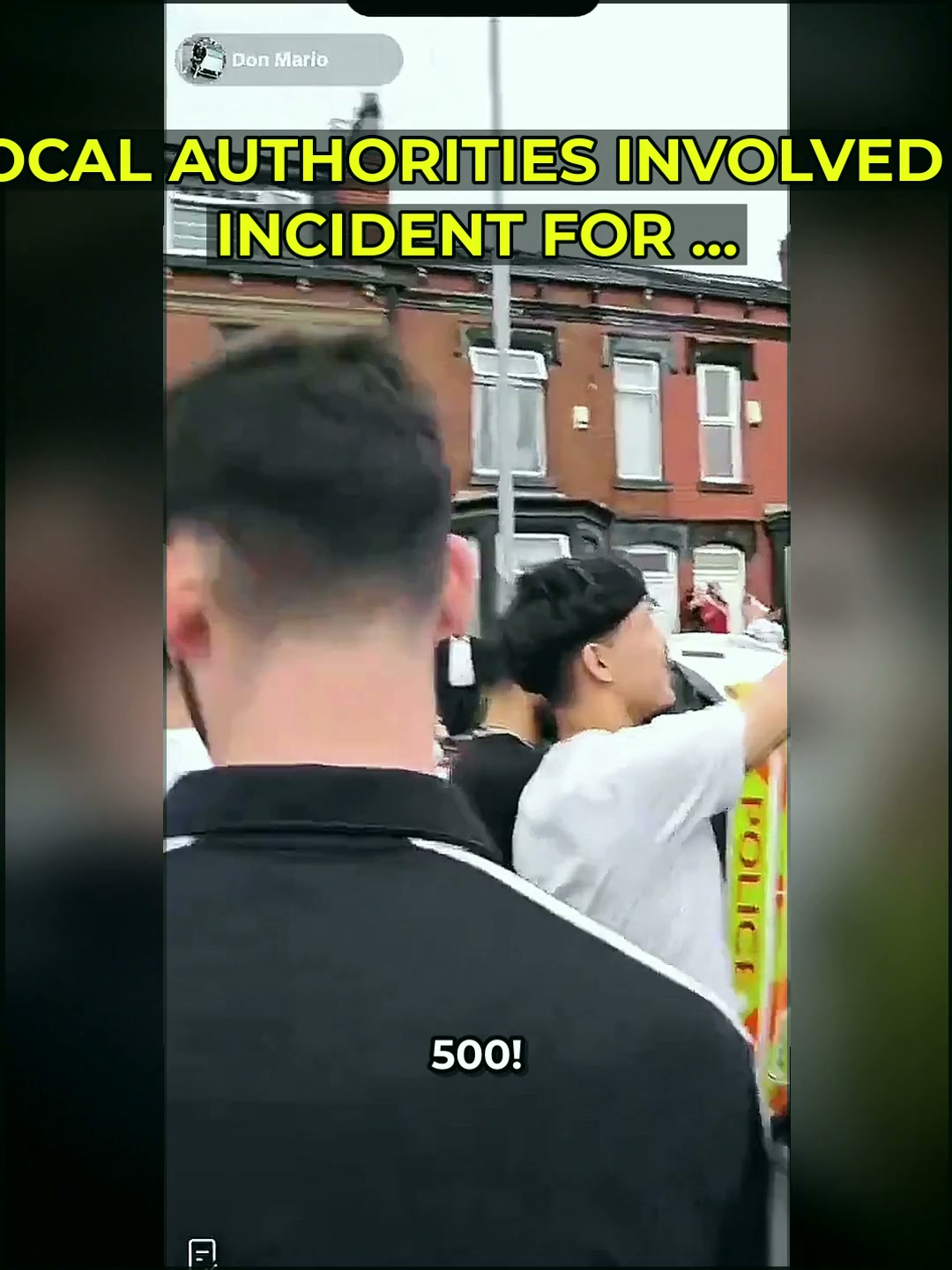
A viral spectacle masks a deeply troubling reality about state intervention, community fear, and the terrifying vacuum of accountability that follows.
- The central dispute began when child protective workers, accompanied by local authorities, visited a home to check on endangered children.
- A crowd of onlookers escalated the situation into a full-blown public disorder incident, with taunts captured on video daring state forces to respond.
- The aftermath leaves residents asking hard questions about who protects the children, who holds the mob accountable, and what legal recourse exists for families caught in the crossfire.
Picture this: A quiet Tuesday afternoon on your street. Suddenly, a convoy of unmarked cars pulls up. Social workers step out, clipboards in hand, flanked by uniformed officials. They are there for one reason—to check on a child they believe is in danger. It is a scene ripped from any parent’s worst nightmare.
But in the Harehills district of Leeds, that nightmare didn’t stay behind closed doors. It exploded onto the pavement, engulfed by a crowd whose rage was captured on a cellphone video that is now burning up the internet. The footage is raw, chaotic, and deeply unsettling—not just for what it shows, but for the questions it refuses to answer.

The Flashpoint: A Home Visit Gone Horribly Wrong
The official reason for the visit is straightforward: child protective services had received a referral concerning endangered children at a specific residence. It is a routine, albeit sensitive, procedure carried out thousands of times a week across the UK. The execution, however, was anything but routine.
As the workers attempted to do their job, a crowd gathered. Within minutes, the situation morphed from a private family matter into a public spectacle of defiance. The video shows vehicles being rocked, objects thrown, and a crescendo of shouting that drowns out any attempt at de-escalation.
This is the moment where common sense and basic respect take a back seat to raw, unadulterated fury. And it is terrifyingly effective.
“Rămâne istorie!” the crowd chants—”This will go down in history!” They aren’t begging for mercy; they are daring the state to bring its full force, mocking the very institutions sent to protect the vulnerable.
The taunts are specific. One voice yells about “the riot police from Bucharest,” a bizarre reference that suggests a deep-seated distrust of authority, possibly imported from experiences in their country of origin. It highlights a fracture between community perception and the reality of British social services—a gap that can have lethal consequences.

The Legal Precedent: When Intimidation Overrides Intervention
This incident is not occurring in a vacuum. Across the United States and Europe, there is a growing, documented trend of social workers being physically blocked or verbally assaulted during home visits. The result is a chilling effect: workers hesitate to enter volatile neighborhoods, and children slip through the cracks of a system that is literally too scared to save them.
The legal framework exists to punish this behavior. Charges of obstructing justice, affray, and child endangerment are all on the table. Yet, the reality on the ground is that mass participation creates a diffusion of responsibility. When a crowd acts as one, pinning individual accountability on any single person becomes a legal nightmare.
And what about the children? The ones who were reportedly in danger in the first place? In the chaos of the protest, their fate becomes secondary. They are shuffled inside, the door slams shut, and the system retreats. The message sent to that household, and to others watching, is that aggressive resistance works.

The Fallout: A Community on the Brink
The aftermath of the Harehills incident leaves a bitter taste. Local authorities have promised a “full investigation,” which is bureaucratic code for “we will look into it for six months and then issue a report no one reads.” For the residents who want to live in peace, the fear is palpable.
They worry that their neighborhood is now branded as a “no-go zone” for officials. They worry that the children at the center of the storm have been permanently traumatized, not by the initial danger, but by the circus that erupted around them. They worry that the unedited truth is that the system failed—not because of a lack of laws, but because of a lack of will to enforce them in the face of a screaming mob.
The call for accountability now shifts to the justice system. Will the instigators be identified from the viral footage? Will charges be filed? Or will this become another statistic, a cautionary tale told in hushed tones at community meetings, where everyone agrees something must be done, and then does nothing?
For the families in Harehills, and for social workers everywhere, the scariest question remains unanswered: If a child is in danger tomorrow, who will be brave enough to knock on the door?