The Ugly Truth Behind That Viral Meltdown: It Is Not About the Job, It Is About Us
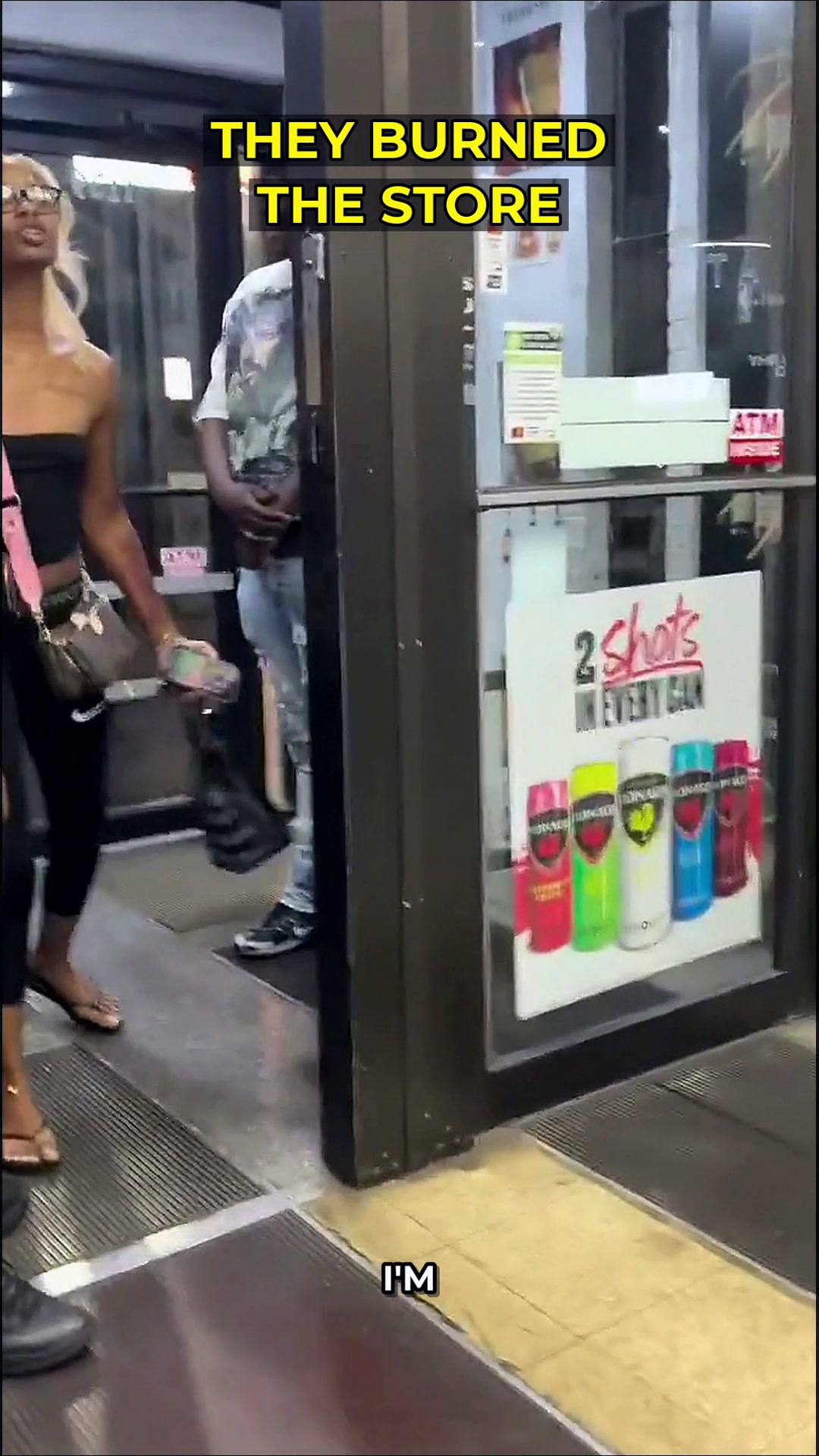
When a simple rejection at a local store spirals into a public spectacle, the internet laughs. But the real story is a community holding its breath.
- Public outbursts are rarely about the immediate trigger, but rather a boiling over of systemic pressures and personal desperation.
- Viewing these moments as entertainment rather than distress signals erodes the empathy needed to maintain strong community bonds.
- The path forward requires a collective shift from ridicule to accountability, focusing on rebuilding resilience and support networks.
The footage is hard to watch, yet impossible to ignore. A grown adult, mid-sentence, stuttering “I’m, I’m, I’m,” utterly defeated by the weight of a single, crushing reality: the store is not hiring. The camera captures the scene with a detached, almost bored lens, while the caption dismisses it as a “typical day in the jungle.” But strip away the snark, and you are staring at a raw nerve of the American condition.
This is not a joke. It is a distress flare launched in the middle of a mundane afternoon. The laughter from the peanut gallery masks a deep, collective discomfort. We laugh because the alternative—acknowledging that we are one bad week away from that same stuttering rage—is too terrifying to face.

The Dehumanizing Grind of the Application Void
Let us be brutally honest about what leads to that moment. It is not laziness. It is the soul-crushing cycle of filling out digital applications that vanish into an algorithmic void. It is the “talent acquisition” portals that require you to upload a resume, then manually re-type the exact same information into a dozen fields, only to receive a generic rejection email three weeks later.
That stuttering “I’m” is the sound of a person trying to articulate a lifetime of frustration in a single syllable. They are not just asking for a job; they are begging for a shred of dignity. When the answer is “no,” the fragile scaffolding of their self-worth collapses in public.
The onlookers who filmed this did not see a human being in crisis. They saw content. They saw a chance to go viral, to get a few laughs at the expense of a stranger’s unraveling. This is the true tragedy of the digital age: we have traded empathy for entertainment.
“We have become a society of spectators, watching the pain of others as a spectator sport, forgetting that the glass house we live in is just as fragile.”
The Unraveling of Community Safety Nets
Look closer at the scene. Where are the intervening voices? Where is the person who steps off the curb to ask, “Hey, are you okay?” Instead, the instinct is to pull out a phone and record. This is the unedited truth of our modern social contract: we have replaced community with commentary.
The phrase “typical day in the jungle” reveals a disturbing mindset. It implies that this behavior is expected, animalistic, and beneath the standards of “civilized” society. But who built the cage? Who removed the safety nets of affordable mental health care, robust unemployment benefits, and genuine job training programs? We did, by voting for budgets that prioritize corporate tax breaks over human capital.

When a person snaps, it is rarely the first straw that breaks the camel’s back. It is the thousandth. It is the landlord calling about rent, the utility company threatening to shut off the power, and the hungry kids waiting at home. The store clerk who said “we are not hiring” is just the unfortunate messenger of a systemic failure.
The Cost of Looking Away
There is a perverse irony in the caption’s punchline. “They be mad because the store aint hiring.” It reduces a complex socio-economic crisis to a punchline. It absolves the viewer of any responsibility. It allows us to feel superior to the person on the screen, to believe that we would never sink to that level of public desperation.
But this is a dangerous delusion. The gig economy, inflation, and stagnant wages have created a precarious existence for a vast swath of the population. The difference between the person on the screen and the person watching is often just a single missed paycheck.
Accountability is not just for the person yelling in the street. It is for the community that allows its members to reach that breaking point without intervention. It is for the employers who treat applicants as data points rather than people. It is for the rest of us who scroll past, swipe away, and share the video for a quick dopamine hit.

The video ends with the man still stuttering, frozen in his frustration. There is no resolution. There is no moral to the story. There is only the stark, uncomfortable reality that he is still standing there, jobless, while the internet laughs. And tomorrow, it could be someone we love. It could be us. The camera turns off, but the desperation does not. It simply waits for the next person to hit their breaking point, hoping that this time, someone will say something other than “I’m.”